Sunday, July 14, 2019

The Great Garry Gates

When you have a friend playing in the World Series of Poker Main Event, a $10,000 buy-in tournament considered the most prestigious event in all of poker, you don’t expect your friend to make the final table.

I mean thousands play the sucker. These days, to make the final table means making enough correct decisions and being lucky (and avoiding being unlucky) enough times to survive seven long days of poker -- more than 70 hours of actual play.

Like most years, I knew a few dozen folks playing the Main this time around, and among them could count several good friends. A few were still in there after three or four days. One of them -- Andrew Brokos -- even got all the way to the end of Day 5 (again!) before bowing out.

When Day 7 started with 35 players left from the 8,569-player starting field, I still had one buddy in there. And after another crazy, long, dramatic day and night of poker he’s still part of the story as one of the nine with a chance at the $10 million first prize.

Garry Gates has made the final table of the World Series of Poker Main Event. My friend is one of the final nine. No shinola.

As a poker fan, I’ve followed the World Series of Poker for many years. When I started writing this blog in 2006, the WSOP was a frequent topic about which I couldn’t help but write, including that summer when the Main Event drew 8,773 entrants, the most in its storied history. (This year they nearly eclipsed that mark; next year, I think they will.)

Soon I unwittingly began what would become a full-blown second career as a freelance writer focusing on poker, and during the 2007 WSOP I was writing articles and doing some work from afar for PokerNews to assist them as they provided live updates for the first time. The following summer I was in Las Vegas and reporting on the WSOP myself with the PN team.

Since I was writing every day here on Hard-Boiled Poker and the blog therefore serves as kind of an obsessively-detailed diary recording all of these events, I can read about everything I experienced during the 2008 WSOP. For the entry posted May 28, 2008 and in the midst of several posts mentioning people I was meeting for the first time who would become some of my closest friends, I note how I first met “Garry Gates, PokerNews’ Tournament Reporting Manager and cool guy.”

Garry led the team again the following year 2009, then some time after that moved over to work with PokerStars where I once again had the chance to collaborate with him in various ways. He’s had a couple of positions within PokerStars since then, both as an events manager and as Senior Consultant of Player Affairs, which means we’ve been able to work together many times since that day we first met.

Garry is a cool guy, incredibly friendly and outgoing. Back in ’08 he made things very easy for me as I made what was frankly an abrupt and unusual transition from teaching and writing at home to tournament reporting.

Ask anyone who was part of that group back then, Garry was a tremendous leader, supporting us in numerous ways at every turn. There was one moment in particular during 2009 when I remember Garry having my back when a certain poker player apparently objected to something I had written -- not for PokerNews, but here on my personal blog. I didn’t tell the story until many years later, and when I did I didn’t mention Garry by name, though he was the one who made it clear to me I had zero to be concerned about with regard to the situation.

Here is the post, the title of which gives you a clue regarding the identity of the player involved: “That Time I Learned That Jesus Didn’t Love Me.”

I remember thinking then how much better Garry was as a “boss” than were those in the administration at the school where I taught full-time (and would eventually leave primarily because of that unpleasant work environment). I didn’t always know there whether those above me would support me if the need ever arose, but with Garry there was never any doubt.

I use scare quotes around the word “boss” because Garry very deliberately minimized the idea that he was “managing” us -- rather, it was the reporting he managed, and he did it well. (In fact, Garry exerted significant and positive influence over how tournament reporting would be done going forward.)

As I say, Garry has remained a great friend and colleague ever since. I’ve written about before how those experiences reporting on tournaments can be especially formative. Even working a single event with someone can create a meaningful relationship that lasts well beyond the few days you spend with each other. In my book Poker & Pop Culture, I have a very long list of people I thank in the acknowledgments (Garry included) who helped inspire my interest in poker. I listed a lot of those whom I’ve worked over the years, because those experiences meant a lot to me and I continue to appreciate having had them.

Garry has always been a serious poker player, even if he has only played part-time since having (like me) gotten himself into the “industry” in a full-time way. I remember how in 2011 he played in several WSOP events, and even made a deep run in the Main to finish 173rd.

I specifically recall talking to Garry after he busted that year and what he said to me when reflecting on the experience. The best part about it, he said, was getting to share the fun and excitement with others. It really was as much about everyone else as it was about himself. (Garry cashed two more times in the Main Event in 2015 and 2017.)

You might’ve heard about how Garry was at the Route 91 Harvest music festival in Las Vegas when the horrific shooting took place where 58 died and more than 800 were injured. Six months later Garry opened up to Lance Bradley about it for a piece titled “Garry Gates: One of the Lucky Ones.”

I messaged Garry afterwards, and he let me know he was doing okay. I remember thinking then how Garry was the sort of person who was likely better equipped to handle such a trauma, given the way he instinctively focuses so much on others’ welfare. You learn that in the interview with Lance. For Garry, letting family and friends know that he was okay (and thus lessening their stress) was an immediate focus, and soon after he was finding ways to help others affected by the event.

You’re hearing a lot of people sharing similar sentiments about Garry over the last few days, many of whom are associated with poker in a variety of ways. Garry Gates? Great guy, they say. They were saying that before this crazy run, of course, and will continue to do so after, however things ultimately play out.

I’m starting to imagine watching Garry and the others begin the final table tonight. In one way, it doesn’t even seem real, like some sort of weird “sim” constructed to divert us all. Like I say, no one expected this.

Then again, it makes perfect sense to see Garry in this position, representing (in a way) so many of us who play and love poker and whom he has helped and supported in countless ways.

My friend is playing in the WSOP Main Event. Still!

I’m loving it for Garry. Loving it as well for all of us, too.

#LFGGG!

EDIT (added 7/21/19): Garry ultimately made it all of the way to fourth place for a mind-boggling $3 million cash. I wrote a bit more about Garry and his run for the PokerStars blog here: “Gates, Moneymaker, and how poker brings us together.”

Photos courtesy Neil Stoddart (upper) and Joe Giron (lower), PokerStars blog.

Labels: , , , , , ,

Wednesday, July 18, 2018

World Series of Poker Main Event Final Table Tips

The 2018 World Series of Poker Main Event is history, with all 78 bracelets having been won. The final table was entertaining from start to finish, although that final night with the marathon heads-up was quite a test for viewers.

Being able to see every hand including hole cards is of course quite educational for poker players. So, too, were these strategy tips reflecting the changing dynamic that occurs as the table goes from nine-headed to heads-up.

Labels: , , , ,

Friday, July 07, 2017

Back to Vegas

This morning I was trying to calculate just how many days I’ve been in Las Vegas before. It’s probably the one place where I’ve lived the most without having actually moved there.

Going off to college or grad school doesn’t count, as those were genuine “moves” wherein I was more or less living full-time somewhere new. Nor does that year Vera and I spent living in France, even though we knew all along that was a temporary thing.

I spent six summers total reporting on the World Series of Poker (from 2008-2013). The first three I was there the entire way, meaning stays of about seven-and-a-half weeks. The latter three times I only went for four weeks. Add to that other visits here and there, and it probably adds up to 10 months or so living in hotel rooms and apartments in Sin City.

Feels like a lot, although I have friends and colleagues who have spent a lot more of their lives in Vegas while actually living elsewhere. And some who started out going there for a few weeks at at time, then moved there permanently.

In any case, the time I’ve spent in Vegas has been more than enough to make coming back here today seem a bit like some kind of faux homecoming.

So many familiar sights and sounds. I’m staying in the Rio this time, too, and already I’m realizing I long ago memorized many of the details of the place. Have already made that long walk through the casino, down the halls and past the Penn & Teller, down to the ballrooms where everything is still full blast as the last prelims play out and they ready for the Main to start tomorrow.

I’ll be here 16 nights altogether to help report on this year’s WSOP Main Event. More features and interviews and “color” this time than in the past when it was mostly all about hand reports and chip counts for your humble scribbler.

A couple more differences from past summers -- I won’t be updating here everyday along the way, although I will try to check in occasionally. And with the November Nine having been jettisoned (finally), I’ll finally see the sucker through to the end.

Best part of this whole trip is getting to reunite with many friends, a lot of whom I’ve worked with or alongside before, and most of whom I’ve only been interacting online since my last Vegas trip. A lot of been-there-done-that feel, then, but a lot to look forward to as well.

Image: “Las Vegas: Welcome to Vegas” (adapted), WriterGal39. CC BY-ND 2.0.

Labels: , , , , , ,

Thursday, June 15, 2017

Revelation Regarding the (Alleged) Moss-Dandolos Match

Busy days here on the farm of late, although like everyone I’ve been following all that has gone on at the World Series of Poker thus far. Hard to believe they are only about two weeks into the series, as they’ve already gotten up to the 30th event today.

Have been glad to track the updates on PokerNews once more, and am tuning in over at PokerGO now and then. Speaking of the latter, they finally did get PayPal working and so I got a monthly subscription. They have it on Roku now, too, although I never have been able to get anything to load over there (it seems to stick in a “Retrieving” cycle and never quite opens the live event).

I did want to touch base, though, and let visitors know about a recent “Poker & Pop Culture” column of mine that relates somewhat to the history of the WSOP.

A few weeks back I ran a revised and expanded version of a column focusing on a famous heads-up poker game between Johnny Moss and Nick “The Greek” Dandolos. If you’re reading this blog you’ve probably heard of that match before.

According to most accounts, the pair got together sometime around 1951 (or thereabouts) at Binion’s Horseshoe to play a high-stakes match that lasted several months, with Moss ultimately said to have come away a big winner ($2 million or more, say some). The game was open to the public, goes the story, and for that reason sometimes gets linked to the later idea of the WSOP first run at Binion’s in 1970.

That column, titled “Moss and Dandolos at the Horseshoe - Legend or Myth?” was really more about the many stories about the game than about the game itself.

I included in there how one of the most referenced sources for details regarding the match is Al Alvarez’s The Biggest Game in Town (1983), a favorite poker book of mine that I’ve written about here many, many times over the years.

I also included a bit from Jesse May regarding how some of those who talked to Alvarez for his book (including Moss) likely embellished their tales more than a little bit.

In any case, about a week after that column went up I had a nice surprise when I got a note from a person who works for Jack Binion. The note asked if I could get in touch, as Mr. Binion had some information to share about the Moss-Dandolos story that could help clear up a lot of the uncertainty surrounding it.

I called and after a couple more exchanges ended up getting some fairly remarkable memories from Jack Binion regarding the alleged match. I say “alleged” because one of the clarifications he made was to explain that the match never really happened! At least not at Binion’s, and not in public. And likely not for the super-high stakes often cited, either.

I won’t give away the rest of the story here, but instead point you over to the newer article that shares Jack Binion’s insight:

Poker & Pop Culture: Jack Binion Sorts Fact From Fiction Regarding Moss-Dandolos Match.”

Labels: , , , , , , , , , ,

Tuesday, October 25, 2016

Travel Report: EPT13 Malta, Day 6 -- Star Turn

Day 2 of the European Poker Tour Malta Main Event played out today. There were 468 starters in the €5,300 buy-in event (including the few who late regged at the start of play today), and from that group 90 have made it through to Wednesday’s Day 3.

One player who didn’t get to tomorrow was William Kassouf. He started today at the feature table and garnered a bit of time on EPT Live, but busted relatively early in the day in a three-way all-in. Despite the involvement in the hand of another short stack, Vladimir Troyanovskiy, who was in there with pocket deuces, the hand nonetheless uncannily recalled Kassouf’s 17th-place bustout from this summer’s World Series of Poker Main Event, as he once again ran pocket kings into an opponent’s pocket aces (this time Brian Altman was the winner).

I’ve now had a chance to see this week’s ESPN episodes of the WSOP Main Event which carried things down from 21 players to the final nine, setting up the restart that finally comes this Sunday. Many here in Malta have seen them by now, too, or at least the end of Episode 13 featuring Kassouf’s knockout at the hands of Griffin Benger (who went on to make the final nine).

Heard some table talk about the hand and situation surrounding it today, and while it’s all just a tiny anecdotal sampling it does seem as though many are “siding” with Kassouf (if this must be set up as an either/or-type debate, which it shouldn’t be), finding his behavior not nearly as objectionable as that of some of the other players who played with him on that Day 7 this summer, Benger included.

I mentioned a few days ago meeting Kassouf and finding him a friendly, likeable dude. He’s certainly drawn attention to himself in tournaments here with his table talk and gregarious demeanor, but over the course of a long eight- or 10-hour day of poker the “Kassouf experience” it isn’t quite the same as the distilled, highlight reel version shown on ESPN. He’s silent for significant periods when not in hands, and frankly when he does talk it doesn’t seem all that remarkable other than by the contrast he provides with the majority of players who these days choose to remain silent when they play hands.

There was one funny moment late on Day 1b, I recall, when an older French player said to Kassouf that “each ante is... like a movie to you.” The table broke up in laughter, and Kassouf grinningly responded “and you are part of the production!”

Kassouf is obviously very comfortable in the spotlight amid this “star turn” he's found himself taking our strange little poker world. Others have made that observation to me this week, in each case punctuating it with some version of “more power to him” for doing so.

At the start of the ESPN episode that concluded with Kassouf’s knockout and the genuinely startling, emotional eruption by Griffin Benger that preceded it, Lon McEachern and Norman Chad in their introduction once again highlighted Kassouf as the central character of the drama. In fact the show started with a whole montage of Kassouf moments interspersed with an awkward-seeming sit down between him and WSOP Tournament Director Jack Effel.

“Will Kassouf is the most polarizing player of the 21 remaining,” said McEachern, and in his rejoinder Chad ticked off a list of adjectives to describe the British pro: “Too disruptive, too disrespectful, too distasteful, and too damn slow,” said Chad.

Once again making the disclaimer I’ve made before here that all we get is what we see in these sculpted, abbreviated versions of reality shown in each WSOP episode, I can’t say I agree with Chad’s list. Sure, in certain hands he’s been shown to have played “too damn slow.” Whether his play is “disruptive” or not is debatable -- as I’ve said, watching him perform here in Malta, that does not at all seem to be the case. Meanwhile “disrespectful” and “distasteful” seem even further off-base, although I suppose differing views can exist.

The Benger-Kassouf hand was incredibly interesting to watch, though, particularly because Benger had only briefly been covered at all during any of the episodes -- and never playing with Kassouf -- making his transformation in the hand from a silent statue to a raving maniac all the more astonishing to see. Kassouf’s reaction was fascinating as well, as was both players’ trumpeting before the community cards came that it didn’t matter how the hand ended, each felt as though he’d “won.”

If his pocket aces were to be cracked by Kassouf’s kings, says Benger, “it doesn’t matter -- he’s still miserable, I’m happy.” Meanwhile Kassouf says “you can’t take it... you let it get to you, you’re losing it.” Both knew the cards had essentially played themselves in the hand, but they were continuing on with another, different game in which the result of the hand wasn’t relevant.

If you haven’t seen it, someone has carved it out and posted it on YouTube. Even without having sat through the many weeks’ worth of previous episodes, it’s something to see:


In the end, I think neither of the two deserve much criticism here. It was an unusual moment for sure, and poker would be way too stressful to tolerate were it always played this way. But obviously it isn’t, which is why the hand was remarkable.

Back to business here in Malta for tomorrow’s Day 3. Check your privilege if you like, but also check the PokerStars blog.

Photo: courtesy Neil Stoddart / PokerStars blog.

Labels: , , , , , , ,

Friday, October 14, 2016

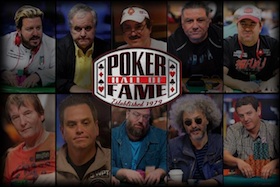
Poker Hall of Fame: Carlos Mortensen and Todd Brunson Make 52

Saw yesterday how Carlos Mortensen and Todd Brunson had been elected as the 51st and 52nd members of the Poker Hall of Fame. Now’s the time for the World Series of Poker to create a commemorative deck of cards featuring pictures of all 52 members.

If I’d had a vote I certainly would’ve given support to Mortensen’s candidacy, though there were other nominees I’d have probably chosen this year ahead of the younger Brunson (though he’s certainly deserving).

Mortensen is a WSOP Main Event champion (2001), and I tend to have a bit of a prejudice in favor of that select group when it comes to the PHOF. With three WPT titles, nearly $12 million in career tourney earnings, and a near-miss to make a second WSOP Main Event final table in 2013 (when he finished 10th), he was a shoo-in. That’s not even counting the highly advanced chip stacking skills that further distinguish the Spaniard (originally from Ecuador).

Todd Brunson has won a lot in tournaments as well (nearly $4.3 million, including a WSOP bracelet in 2005), although he’s much better known as a high-stakes cash game player. His notable heads-up battles with Andy Beal -- including a $13.5 million win over two days (as chronicled in Michael Craig’s The Professor, the Banker, and the Suicide King), then another belated reprise versus Beal in early 2015 which Brunson is said to have won another $5 million -- are legend-making and probably enough to earn him serious PHOF consideration.

I’m going to guess he got a lot of support from the living Poker Hall of Famers, and perhaps not quite as much from the media who voted. Speaking of living PHOFers, he joins his dad, Doyle Brunson, as a PHOF member, which has to be fairly unusual as far as hall of fames go, generally speaking.

The only other father-son combo I can think of in any sports hall of fame would be Bobby and Brett Hull, even if Ken Griffey, Sr. and Jr. spring to mind (Jr. got in this year, Sr. isn’t a HOFer).

In any case, congrats to both. And if the WSOP is reading, feel free to steal that special WSOP PHOF deck idea!

Image: WSOP.com.

Labels: , , , , , ,

Tuesday, October 11, 2016

Hail to the New Bubblebassador

This year’s World Series of Poker Main Event saw the top 1,011 finishers make the money. From a starting field of 6,737 for the $10,000 buy-in event, that meant the top 15% cashed. Those who made the minimum of $15,000 still realized a decent return, plus the not insignificant story of cashing in the world’s most famous poker tournament.

This year a fellow named Adam Furgatch was the player who late on Day 3 found himself finishing 1,012th, one spot shy of the money. All in for exactly one big blind with Q-9 versus Georgios Zisimopoulos’s A-7, Furgatch failed to improve and was out even before hand-for-hand play could begin.

The Californian was hardly in sour spirits, though. In fact, from his perspective, he’d earned a pretty neat story out of the deal, too.

I remember reading Howard Swains’s post about Furgatch’s knockout on the PokerStars blog back in July, where Howard noted Furgatch “actually seemed pretty delighted with the way things panned out.”

Knowing he was either barely going to miss the money or make that min-cash, Furgatch found a lot of silver lining in the result -- which also happened to include a free entry into next year’s WSOP Main Event (not a bad consolation prize).

“I was going to go out soon more than likely, with my chip stack,” Furgatch told Howard. “But now I get the experience of being the bubble boy.”

Marty Derbyshire talked to Furgatch for PokerNews as well, and he similarly told Marty how much he valued the experience of bubbling, noting that “the difference between that and maybe going out a few hands later for an extra $5,000... the experience may be worth $5,000.”

I was reminded of Furgatch this week when watching the new episodes of the WSOP Main Event coverage on ESPN. They’re up to Day 6, but for some reason decided this week to flash back to Day 3 and share Furgatch talking again about how interesting and worthwhile the experience of being the bubble was to him.

Along the way, this year’s 1,012th-place finisher jokingly invented a title for himself.

“I must say that I will take my duties as bubblebassador -- poker’s bubblebassador -- very seriously,” says Furgatch. “Because for everybody who plays for hours and hours and days and days and doesn’t quite get to the money... just never give up, never give up. Which I didn’t and all of a sudden something very strange and magical happened. So you just never know in the game of poker.”

Had to grin at that, as well as his concluding promise to “do my best to represent all... the poker bubblers everywhere.”

Just by inventing and assuming the “bubblebassador” title, Furgatch has already gotten his tenure off to an excellent start. Which is important, because bubblers tend to start better than they finish.

Image: ESPN

Labels: , , ,

Thursday, October 06, 2016

Helping Hands

I have been keeping up with the 2016 World Series of Poker Main Event coverage on ESPN. I never watch them live, only picking them up on YouTube later -- much better without the commercials.

They’ve been rolling out a couple of episodes every Sunday, having gotten through eight so far. The last one this week finished partway through Day 6 with 51 players remaining.

I marvel at how good Lon McEachern and Norman Chad continue to be with their commentary. They do especially well pitching things in such a way that different kinds of viewers -- from the most casual fans to hardcore strategy-nerds -- can find something to focus on and enjoy. They work in plenty of grins, too, and I find myself genuinely laughing out loud a couple of times per hour either at the more overt jokes or sly “inside baseball” references occasionally snuck into the proceedings.

The first episode this week (Episode 7) began with the start of Day 6 and an interesting situation involving the player Jason McConnon. Returning to a about 25 big blinds, McConnon had brought to the feature table a “cheat sheet” ostensibly offering guidance for when to push or fold a short stack with certain hands in certain spots. You know, kind of a helping hand (pun intended).

Kenny Hallaert was sitting to McConnon’s left and mentioned to McConnon before they started how he wouldn’t be able to use the sheets during a hand. (Hallaert, who went on to make the November Nine, is a tournament director himself, likely to know something about the issue.) Then during the very first hand McConnon picked up ace-queen offsuit and pulled out the sheets to take a look. That led to a visit to the table by Tournament Director Jack Effel and a ruling that McConnon had to put his notes away while playing his hand.

There’s an article over on PokerNews today reviewing the situation and highlighting some of the WSOP’s rules that are pertinent. It actually sounds like a bit of a judgment call, though just stepping back from this particular situation I prefer players not using notes or other helpers during hands. On the broadcast Norman Chad offers a similar take as a humorous rant (made even funnier when his teleprompter “fails” him as he’s trying to finish).

The situation reminds a little of my teaching days when it did happen (rarely, but now and then) that I’d catch students trying to cheat in various ways. I’m vaguely recalling a little joke I’d make whenever passing out exams. I’d say something like, “Put your books away -- all you need is a pencil... and your brain.”

Back when I was teaching full-time, I didn’t have to deal with students being constantly online with smartphones and/or laptops, of course. Now that’s become part of the reality of the classroom, greatly affecting many instructors’ approaches to teaching and testing -- changing the pedagogical “game,” so to speak.

Some teachers ask students to put away all their electronics, kind of reverting back to a more “primitive” or even exotic-seeming situation of just simply talking to one another, perhaps with a book open and a pen and pad nearby for note-taking. I’d kind of like poker to be played that way, too -- with the phones and iPads put away and players interacting minus such interference.

But that’s not our world anymore, so I understand as well those who wouldn’t want to play that way.

Image: “110725-G-EM820-800,” US Coast Guard Academy. Public domain.

Labels: , , , , , , ,

Tuesday, September 20, 2016

Judgment Calls

Been watching the 2016 World Series of Poker Main Event coverage on ESPN again which finally got going a week-and-a-half ago. There have been four episodes thus far, picking up the action on Day 4 (post-bubble) and now already around halfway through Day 5 with just 140 players left.

This week’s episodes featured a ton of table talk, thanks largely to Alex Keating being on the feature table where he was engaging everyone fairly constantly, and William Kassouf drawing the cameras’ attention at other tables.

A bit of buzz this week over Kassouf’s performance, in particular in a couple of hands with Stacy Matuson. Both involved Kassouf pushing all in and putting Matuson to a test for the rest of her stack, and in both cases -- after an avalanche of disorienting chatter from Kassouf -- she folded (once correctly, once after being bluffed).

I remember when these hands happened back in July, in particular the one following which Kassouf was actually given a one-round penalty by WSOP tournament director Jack Effel for “taunting” (as Effel described it).

Following it online at the time over Twitter and then via the hand report on WSOP.com, an admittedly partial view of the affair. Seemed perhaps as though Kassouf must have crossed some not-so-obvious line somewhere with his behavior, but it was hard to say.

The way things were shown on ESPN revealed more of the interaction, but it remains incomplete evidence for those of us who weren’t there. Indeed, even the two hands featured between Kassouf and Matuson are only partially shown, with the action only being picked up postflop when the “speech play” (as Kassouf refers to his table table) began in earnest.

It’s interesting following some of the belated back-and-forthing about it happening thanks to the ESPN coverage finally being shown (here, some two months later). Deservedly or not, Kassouf is clearly being set up to fill the “villain” role for ESPN right through to the final table which starts in late October.

Hard for me to make any profound judgments about those Kassouf-Matuson hands, though, or about how the WSOP staff chose to respond to them. From afar I want to say everything we witnessed is “part of the game” and shouldn’t be proscribed, but who knows, really? Just too much we can’t see or be sure about here -- including a lot of obviously relevant context -- although that doesn’t make the speculating any less interesting.

Kind of like how poker works -- we know what we can see, and have to guess about a lot else.

Labels: , , , , , , ,

Friday, September 09, 2016

Poker Hall of Fame Talk (Again)

Today the World Series of Poker announced its 10 “finalists” for this year’s Poker Hall of Fame, and the chorus of criticism has already begun over Twitter and elsewhere.

Following a procedure first adopted in 2009, the WSOP invites the public to nominate players, but then has a Poker Hall of Fame Governing Council go through those nominations and select 10 names to include on the final ballot.

That second step was introduced into the process in 2010 after the public managed to stuff the ballot box that first year with nominations of Tom Dwan. It was a bit hilarious for Dwan to be among the 10 PHOF nominees, given he was only 23 years old at the time. (This was before the “Chip Reese Rule” was instituted in 2011 requiring nominees to be at least 40.)

In fact, the powers that be took Dwan off the list, thus forwarding along only nine names to the voters, a group consisting of living Poker Hall of Famers and a “blue ribbon panel” of poker media members. The voting process was a little different in 2009, requiring a nominee to get 75% “yes” votes from voters to get in. That resulted in only one inductee that year (Mike Sexton), and so going forward they tweaked things again, essentially assuring that two of the 10 would get in each year. (If you’re curious, you can read this post from a year ago for a little more about how the voting is done.)

Obviously there were problems with having the public choose nominees. That said, with that PHOF Governing Council stepping in to select the 10 finalists, that creates other issues, opening the door to some of the complaints people fire off each year regarding who gets picked and who gets left out.

The 10 finalists this year are Chris Bjorin, Humberto Brenes, Todd Brunson, Eli Elezra, Bruno Fitoussi, Chris Moneymaker, Carlos Mortensen, Max Pescatori, Matt Savage, and Dave “Devilfish” Ulliott. Seven of the 10 have appeared on ballots before, the new names being Brunson, Elezra, and Moneymaker.

No surprise, really, to see Moneymaker -- who turned 40 last November -- on the list. In fact it wouldn’t be a surprise to see him voted in, even if some might argue others should be getting in before him. Meanwhile Elezra is not a great surprise either as a nominee, although Brunson seems like it could be a stretch. Can’t see either of those two being voted in, though.

Some are wondering where Phil Ivey is on the list of nominees, but in fact he doesn’t turn 40 until early next year.

If I had to predict, I’d say Mortensen and Ulliott get the votes this time (if Moneymaker doesn’t). Who would you vote in, and who should be nominated who isn’t on this year’s list?

Photo: WSOP.com

Labels: , ,

Thursday, September 08, 2016

Football, Finally

I’ve been guilty more than once here over the last couple of months of grumbling about the relative paucity of televised sports entertainment. It’s my own fault, really. Imprisoned by my own tastes.

Sometimes the whining has come under the heading of pining for more poker on the teevee -- such as during the WSOP Main Event (which still hasn’t begun to be aired on ESPN and won’t start until Sunday). Definitely feel like there’s a valley here in the summer that poker could fill for a certain segment of sports watchers.

I realize there are sports to watch during the couple of months that follow the NBA finals. It’s not that I don’t enjoy watching the occasional tennis match, fourth round of a golf tournament, soccer match, or baseball game. Or even (this year) the panoply of Olympic sports from last month, which I spent some hours enjoying during the first week at least before taking off for Barcelona halfway through the sucker.

But for me the most enjoyable sport to watch on television is football, and I mean professional football. College is an okay diversion, but it ain’t nearly as engaging to me as the pro game.

This year begins uniquely for a Panthers fan like myself, given how Carolina gets to play in tonight’s Thursday kickoff game in a Super Bowl rematch versus the Denver Broncos. It’s not an ideal spot to begin a season -- on the road, on a short week, and versus an above average opponent. But it’ll give us all an early idea how bullish we should be on the team this time around.

Tonight’ll mark the first of 256 attempts at picking winners again as well as I jump back into another Pigskin Pick’em campaign. Hard to have much perspective with tonight’s pick, as we’re pretty well overwhelmed with unreasonable optimism regarding the Panthers around these parts. No Peyton for the Broncos (and an untested fellow in his place behind center) is encouraging many to go with Carolina as well, although I don’t necessarily think the QB situation will hurt Denver all that much.

Ah well... no more fussing over it. Time to make a pick. The second-guessing is just hours away!

Image: “Pigskin,” Eric Kilby. CC BY-SA 2.0.

Labels: , , , , , ,

Monday, August 08, 2016

Passive Viewing

Dipping into the Olympics here, as I imagine you have been doing as well. It appears that between the rack of channels coming in via the dish and the Roku, we can watch practically anything whenever we want, which is nice.

Funny, though, I’m still finding it preferable in the evening simply to tune into the local NBC channel and let the network decide what events to show me and when. I suppose I fall into the large category of “passive” Olympics viewers. I’m referring to those of us who aren’t super enthused about being delivered every moment from every sport, or even that curious about any one sport in particular.

The same is probably true for most of those who end up watching the WSOP Main Event coverage on ESPN. They aren’t hanging on every twist and turn back in July like some of us, and so it’s actually more palatable for them to watch the sucker get strung out over several months however ESPN sees fit.

Vera is interested in the dressage portion of the equestrian events, of course (which don’t really crank up for a couple of days). And I’m dialing up men’s basketball sometimes, too, particularly when the U.S. is playing as they need earlier tonight. But otherwise, we’re content just to let it play as ambient sound-and-image, looking up whenever the announcers’ excitement captures our attention.

Speaking of that men’s basketball game earlier, the U.S. team found itself tied 18-18 with Venezuela after the first 10-minute quarter. Was a sorta-kinda surprising start considering they’d opened up the Olympics beating China by 57 points and were expected to do something similar in their second game tonight. (The matchup with Australia on Wednesday ought to be more competitive, I’d think.)

Even so, it felt an awful lot like a much-outclassed poker player winning a few pots early on in a session, but destined to lose it all back eventually -- and likely sooner than later. Sure enough the U.S. outscored Venezuela 30-8 in the second quarter, ultimately going on to win by 44.

When games go in that direction, they, too, become part of the background as I do other things, only looking up occasionally to check the score and watch another U.S. fast break.

Image: “Play the long ball,” (adapted), Craig Sunter. CC BY-ND 2.0.

Labels: , , , , , ,

Tuesday, July 19, 2016

The Return of the American Online Grinder

Have to confess I hit the sack early last night, only following those hand-for-hand updates from the World Series of Poker Main Event until they’d gotten down to just under two tables. Looks like they managed to hit the nine-handed final table right at midnight (judging by the time stamps at WSOP.com), so it wasn’t a short final day but not too outrageously long either.

Eyeing the final nine players, I can say for sure I’ve covered four of them previously in tournaments -- Cliff Josephy, Kenny Hallaert, Vojtech Ruzicka, and Griffin Benger. I probably also reported on Jerry Wong at some point, though don’t remember him quite as well.

Probably the most interesting, obvious thread when looking at the final nine is the extensive and well known online background of Josephy (“JohnnyBax”), Hallaert (“SpaceyFCB”), Benger (“Flush_Entity”), Ruzicka (“Vojta_R”), Wong (“hummylun”), and Gordon Vayo (“holla@yoboy”).

There were other big online winners who nearly got there, too, like James Obst (“Andy McLEOD”) who ended in 13th, Tom Marchese (“Kingsofcards”) who took 14th, and Jared Bleznick (“Harrington10”) who finished 16th.

Of course for guys like Josephy, Vayo, Wong, and Marchese (Americans), online poker hasn’t been that much of an option for the past five-plus years. (Bleznick, of course, has been the focus of a lot of multi-accounting speculation in the past, including post-Black Friday.)

Sam “@SamSquid” Grafton -- Benger’s co-commentator on the Global Poker League -- tweeted today how he was looking back on the entire series as having signaled a next, belated chapter in the story of U.S. online pros.

“This year’s WSOP seems to confirm the reinvention of the last generation of US online regs into the dominant force in the post-BF live arena,” suggested Grafton. He went on to list Andrew Lichtenberger, Tony Dunst, Ryan D’Angelo, Paul Volpe, Kyle Julius, Shaun Deeb, Michael Gagliano, and Josephy as players who did well this summer in Vegas who formerly played prominent roles online -- all “top names on P5s and on training sites” when Grafton first started playing online.

“Real impressive the way these guys have survived and thrived after being stripped of their main source of income,” Grafton concluded.

It does seem like kind of a milestone of sorts being passed, perhaps given even more emphasis by Josephy being chip leader among the final nine. As he noted in his interview with the PokerNews Podcast a couple of days ago, Josephy “retired” the “JohnnyBax” nickname back in April 2011, having been made to step away from that version of himself.

Josephy’s extensive backing of other players also makes him the hub of a huge network of others, many of whom likewise transitioned from online to live. He made reference to his backing of others in this year’s Main Event in the PNPod interview, too, saying how they’d all busted and joking “I guess sometimes you gotta do the work yourself.”

These players represent a small subset of the most skilled and successful U.S. online pros, although they do (as Grafton suggests) represent a larger group who have managed to make the online-to-live transition. Of course, a much larger group made the online-to-something-else transition, but it’s still interesting and notable to consider the significance of the success of these few.

Image: Full Tilt Poker.

Labels: , , , , , , , , ,

Monday, July 18, 2016

The Last Long Day

The World Series of Poker Main Event has long been a special one in terms of its structure, with the two-hour levels being more or less entirely unique when it comes to tournament poker. I can’t think of another live tournament that has ever employed such lengthy levels.

I don’t know when the WSOP first instituted the two-hour levels. I know they were in place in 2003, and perhaps before that as well. Of course, a starting stack back in 2003 was just 10,000 chips (one chip = one dollar).

In 2007 they moved to what they called “double stacks” for many events including the Main, which meant ME players began with 20,000. Then in 2009 they upped it again to “triple stacks” of 30,000 where it stayed until 2015. Then this year Main Event players (still paying $10K to play) began with 50,000, superficially turning the event into a “deep-stacked” tournament.

Of course, the schedule of increases for the blinds and antes have been adjusted as well, which diminishes somewhat the depth of the stacks in a relative sense, making them more comparable to what has been used before.

Today is the last day of the summer for the WSOP and the Main Event, with 27 players returning and a plan to play down to a final table of nine. Looks like they are partway through Level 31, where the blinds are 100,000/200,000 with a 30,000 ante. The average stack with 27 players left is about 12.475 million, or just over 63 big blinds.

Last year when Day 7 began there were also 27 players left. They had about 40 minutes left to go in Level 30 to begin that day, where the blinds were 60,000/120,000 with a 20,000 ante. The average stack to begin the day was 7,133,333, which meant they were on average a little over 59 big blinds deep, not too far off where they will be to begin today.

They made it just over halfway through Level 35 on Day 7 last year -- i.e., just about 10 hours’ (or five levels’) worth of poker. Could go a little longer today, I suppose, and just eyeballing the blinds/antes increases over the next half-dozen levels (and comparing them to last year), they’ll go up just a little more slowly this time; e.g., five levels in today and the blinds will be three times what they are now; last year they went up 3.33 times over that stretch.

I can’t quite remember which year it was -- I believe it was 2009 -- that we all expected a marathon final day thanks to the 27 players returning to super-deep stacks. As noted, 2009 was the first year of the “triple stacks,” and looking back at the coverage the average stack was more than 72 big blinds to start that last day (although the level was about to end).

I think that was the year I actually brought my suitcases to the Amazon room, half-expecting to be cabbing it straight from there to the airport as I had a very early flight at 6 a.m. or something. But the day ended up going by in a blur, finishing in around four levels, and I was able to take my stuff back to my apartment for one last night.

It’ll be a reasonable-length day for those covering the sucker today and tonight, I expect. Then again, let’s not say that out loud and jinx it for them.

Labels: , , ,

Friday, July 15, 2016

Checking in the Dark

I have been idly checking in on where things stand in the World Series of Poker Main Event from time to time today. Mainly I’m just noting who is leading and players left, while occasionally being moved to look a little more closely at the updates after noticing someone tweet about the tournament.

As I was talking about earlier in the week, for those not at the Rio All-Suites Hotel and Casino right now, it’s like the entire Main Event is being played in semi-secrecy. Sure, updates and chip counts give us the stats and essentials, but that can be a lot like watching a self-refreshing box score of a live game on the ESPN site or Yahoo! Sports. Or a scrolling stock ticker. Or the clock on your microwave oven ticking down.

Don’t get me wrong -- I’m a huge proponent of “live updates” (or whatever you want to call them) and their centrality to poker tournaments. I’m also a big fan of the folks on site there right now churning them out hour after hour, day after day.

I partly value updates for their historical value and the way they capture and chronicle these very stats and essentials I’m referring to (like a box score). But I also think when done well they enable interesting storytelling, and can even help underscore what makes poker a special game to so many.

I’m remembering writing a post here nearly five years ago in which I was praising good poker reporting. I quoted James McManus making a reference to Al Alvarez and his high-watermark reporting on the WSOP from years ago. In the quote, McManus noted how Alvarez proved a well-crafted “prose account of poker action is quite a bit more exciting than watching the game in person, or even on television with hole cards revealed.”

In that earlier post, I expressed agreement with McManus, although today I’m realizing I’d like to add a qualification to my agreement.

I think when looking back on reporting from a tournament, a rich, detailed narrative recounting hands and other goings-on really can potentially be as engaging and entertaining as any televised broadcast.

That isn’t so much the case for hyper-literal recounting of action minus any color whatsoever (which really is more or less like reading old box scores). But when the updates manage to incorporate elements of strong storytelling -- well-drawn characters, a sense of plot, mindful scene-setting, an interesting style, and so on -- I absolutely believe they can challenge or even exceed the excitement level of televised poker.

Meanwhile, when it comes to following an event as it is happening, the live stream (or “almost live” stream on a slight delay) is always going to be a preferred way to experience a tournament.

Five years ago live streams weren’t nearly as prevalent. Nor were they as trivially easy both to produce and to consume. But today they are the norm, and even small tournaments wishing to attract an audience routinely post some kind of video in order to provide those not on site a way to follow the action.

I’ll make do, as will others who are fans of the game. But we’ll also keep on hoping one year the WSOP will figure out a way to let more people enjoy the early, middle, and penultimate stages of its marquee event as they are playing out.

Image: “SMPTE Color Bars - Test card,” Denelson83. CC BY-SA 3.0.

Labels: , , , , , , , ,

Wednesday, July 06, 2016

The Return of the $50K

The $50K “Poker Players Championship” event has circled back around at this year’s World Series of Poker, and in fact has already played down to a six-handed final table from a starting field of 91 players. Will probably have to tune in to watch the live stream a bit later today with this one.

A couple of former PPC winners are still in the mix -- Michael Mizrachi (who has won twice) and Brian Rast -- while Justin Bonomo is the chip leader.

That 91-entry field represents a slight increase from the 84 who took part last year when Mike Gorodinsky topped the smallest field ever for the tournament which began in 2006. Entries over the years (since 2006) have been 143, 148, 148, 95, 116, 128, 108, 132, 102, 84, and 91. (See this post from last summer for a summary of results from the tournament’s first decade, minus Gorodinsky’s win).

The tournament was switched back to an eight-game mix this time after experimenting with the 10-game format a year ago, with Badugi and 2-7 NL draw being dropped again from the rotation after being included for one year.

Hard to believe, actually, that the “$50K” (as it’s often called) has been around for more than a decade now, given how well I remember both the announcement of the first one and watching the final table play out on ESPN where David “Chip” Reese outlasted Andy Bloch in a marathon finish heads-up.

Was an altogether novel thing suddenly to introduce a preliminary event featuring a buy-in five times that of the Main, with a lot of talk at the time about how it could eclipse the Main in terms of prestige and even thoughts about who exactly would be considered poker’s “world champion” for a given year.

That latter discussion faded away long ago with regard to the $50K, despite the introduction of that “Poker Players Championship” name for it back in 2010. It’s now mostly regarded as another “high roller” -- one of many on the tournament calendar, although the only one to step outside of the no-limit hold’em circle to include other variants in the mix.

For that reason alone it continues to pique my interest, as I’m sure today’s finale will grab the attention of many.

Photo: PokerNews.

Labels: , , , , , ,

Tuesday, June 28, 2016

That Time I Learned That Jesus Didn’t Love Me

I think any of us who work long enough “in poker” -- as players, staff or tournament organizers, agents, promoters, reporters and “media,” or in other capacities -- end up collecting quite a few stories that we can’t really share, for a variety of reasons.

Some of the stories can’t be told because they involve “sensitive” information never intended to be publicized. Others have to remain hidden because they might endanger a person’s current employment. Still more are kept quiet because they reflect badly on either the one telling the story or others who for whatever reason are judged not to deserve such treatment.

I know over the ten-plus years of this blog I’ve “self-censored” a number of times, although to be honest I wouldn’t suggest any the stories I’ve suppressed were all that scandalous. One of the stories I consciously chose not to tell before I’m gonna share today, as it seems both a little timely and at this far remove fairly innocuous.

My first time covering the World Series of Poker was for PokerNews back in 2008, and as I’ve written about here many times before during those first couple of summers everything seemed especially interesting and exciting thanks largely to the novelty of it all. The interest remained even by the fifth or sixth summer I was there, even if the excitement had waned a bit by then.

Chris Ferguson -- a.k.a. “Jesus” (a nickname I tend not to employ anymore) -- was of course one of the more recognizable “poker celebs” back then. One of the early events I helped cover in 2009 was a $2,500 buy-in pot-limit hold’em/pot-limit Omaha event, and Ferguson played. While at the table he had out his phone and was playing Chinese poker, and I remember writing a live update in which I mentioned this fact.

It was kind of a novel thing back then to see someone on a device playing a different poker game while at the table -- not nearly as ubiquitous as it would soon become -- making for a bit of color worth mentioning amid an otherwise not-so-exciting Day 1. Kind of thing wouldn’t deserve being pointed out even a year later, I’d say, but at that time it was curious enough to include. I seem to recall making a joke in the update about two games not being enough, since the tourney featured PLH and PLO and Ferguson was playing a third game on his phone.

Anyhow, in my next “travel report” post here on the blog, I retold that story and a few others from the day. When referencing Ferguson, I said something about peeking over his shoulder to see him playing Chinese poker, taking a bit of poetic license in the way I described the scene (as though I had captured a little “inside dope”). Truthfully, there was no reason to look all that closely to see what he was playing. In fact, he was talking about the game with Andy Bloch who asked him about it.

In that post I also mentioned an “Approved Electronic Device Rule” the WSOP had in place that year which was not being enforced at all. I explicitly said I didn’t care one way or the other about players being on phones or other devices while playing, but I did note it seemed inconsistent to have a rule that no one heeded and that no one seemed interested in requiring anyone to heed.

There was a short sequel to the story -- this is the part I haven’t told before.

The next day I was back at the Rio where I first heard from a fellow reporter, then from the head of the team something about Ferguson not being happy with my posting about his Chinese poker playing. It was never 100% clear to me whether the objection concerned the live update or my HBP post (it seems like it was the latter, actually), but apparently “Jesus” was concerned enough to have spoken to then-WSOP Commissioner Jeffrey Pollack about it.

This is all very vague in my memory, I’m afraid, but I have a fleeting recollection of Ferguson having said something about how the WSOP shouldn’t allow the reporters to nose around in private business, with there even being some suggestion about credentials being revoked. However severe his objection really was, Ferguson was eventually told whatever he needed to be told, and the matter went no further. Meanwhile I was assured I’d done nothing wrong -- either in the live updates or on my blog -- and not to worry about it.

I also remember being told how Ferguson and I would probably get along quite well -- that we have similar personalities and interests, and seemed like we’d hit it off. Needless to say, I never sought out meeting him to find out if that were true.

I didn’t tell the story at the time partly because I was a little embarrassed by it, even if I shouldn’t have been. As a reporter, I didn’t like being noticed at all, never mind in a negative way. And if given the choice, I would have much rather reported that Ferguson liked me than that he had been made upset by anything I’d done.

I thought about the story again after Ferguson made his inglorious return to the WSOP earlier this month. When asked by PokerNews if he had anything to say regarding his absence since 2010 and/or his feelings regarding what had happened with Full Tilt Poker, he repeatedly responded “I’m just here to play poker.” It was a little like back in ’09, when he didn’t like anyone reporting on his doing anything other than playing in an event.

Ferguson has cashed seven times already this summer, including finishing fourth in an event over the weekend. His appearance at that final table created a bit of a stir, as PokerListings described in detail. He was asked again about whether or not he planned to apologize to the poker community, he responded “What are you talking about? No comment” before walking away.

Howard Lederer has also returned to the WSOP, the prospect of which I wrote about here back in May following his apology (which seemed at the time an unsubtle prelude to his returning). I mentioned in that post how his playing in any events would be a bit like men playing in the ladies event, necessarily producing a lot of unpleasantness and ill will, especially should he be successful. The same obviously goes for Ferguson, and it sounds a lot like that final table scene over the weekend confirmed that prediction.

Of course, while Lederer’s apology caused us to wonder about his sincerity, Ferguson seems unequivocally sincere in his non-avowal of responsibility for what happened at Full Tilt Poker.

No, people aren’t really loving Ferguson very much these days, and his success in WSOP events only seems to be adding still more negativity to a poker community he and others damaged so greatly already. Can’t say I’m that bothered, though, given how I found out long ago “Jesus” didn’t love me.

Image: “Jesus eyes the next table,” Matt Waldron. CC BY 2.0.

Labels: , , , , , , , , ,

Thursday, June 23, 2016

The Summer Slowdown

With the NBA season over and the NFL’s first regular season game not scheduled until September 8, sports fans are facing a long summer.

Baseball, tennis, and golf can occasionally work as a stop-gap. The conclusions of both the Copa America and UEFA European Championships will also provide some diversion for those with an interest. And of course the 2016 Summer Olympics in Brazil, set to play out from August 5-21, will be welcomed by sports fans, too.

But for the majority of sports fans -- in the U.S., at least -- these are the super-slow months, with none of these options necessarily presenting too much that tempts.

Meanwhile the World Series of Poker continues. Poker fans are already following what’s happening out in Las Vegas this summer via updates and the various reporting sites. But once again -- as I’ve thought before right around this time of year -- it seems like there’s an opportunity perhaps being missed.

I mentioned yesterday how I’ve dipped into the live streams now and then on WSOP.com this summer and have been impressed, particularly with the stud games where they’ve discovered a method to handle the graphics in what seems to me a viewer-friendly way.

I don’t really think any of these preliminary events necessarily warrant a larger platform, although I found myself imagining half-hour recaps of key final table moments being shown on one of the many sports networks. WSOP.com is already doing something similar at times when showing highlights/bustout hands from past final tables while waiting for a new stream to begin.

I do think, though, that ESPN could well do something with the Main Event in July to fill a week’s worth of otherwise slow summer nights, sports-wise.

I know there’s the long-standing argument that ESPN wants to avoid potentially affecting viewership negatively for the weekly edited shows -- that tend to air opposite NFL games, actually -- by showing Main Event coverage in July. If memory serves, 2011 was the only year they did try some July shows from the Main Event, to mixed reviews.

Unfortunately, not only won’t there be anything like that on ESPN in July, but there won’t even be any live streaming of the Main Event either. Ah well... there will probably a baseball game on somewhere.

Image: “Blue Skies & Hot Sun” (adapted), Michele Frazier. CC BY 2.0.

Labels: , , , ,

Tuesday, May 24, 2016

Summer’s Coming

The World Series of Poker gets started in a little over a week, with the first of 69 bracelet events starting on June 1 (the $565 buy-in Casino Employees Event).

I watched that “Twitch Town Hall” last week hosted by the WSOP “brass” (as my buddy Mo Nuwwarah likes to refer to them). To be honest, I had it on but ended up getting distracted by other things as the sound was muddy and it was occasionally hard to follow. Seems to be a common thing on Twitch when folks don’t use microphones but rather just the internal mics in laptops. (It is often listenable enough with earbuds, but I don’t always want to use those.)

I did pick up on the fact that they were answering a lot of questions about this year’s “Colossus” (or “Colossus II,” as they’re dubbing it), mostly to do with registration concerns. Sounds like they think it’ll be even bigger than the 22,374-entry field from last year, which is nuts.

There was other stuff having to do with the WSOPE and WSOP APAC (both up in the air, it sounds like), the WSOP POY and the GPI working on a better formula, the earlier start times, Uber, All-American Dave, and so on. But nothing huge to get excited or bothered about, from what I could tell.

There will be some good stories again this summer, as there always are. The whole enterprise has definitely grown to the point now that it feels more like a big lumbering machine -- even more so than just five or seven years ago, I think. And with all of the other tours circling the globe to keep each week -- each day, even -- filled with tourney talk, the WSOP has definitely become less central, though still unique.

Photo: “Temperature,” Jan. CC BY 2.0.

Labels: , , ,

Monday, May 23, 2016

WSOP-Related Reads on PokerNews

A few good reads over on PokerNews today, IMHO (as they say). All have something to do with the 2016 World Series of Poker, which starts in just about a week.

For one there’s the first part of PN’s annual predictions for the upcoming World Series of Poker, where I’m chiming in along with several others. We give thoughts about 10 different questions in this part, with more to come.

We guess who will win WSOP POY, who will win various marquee events, opine about how various pros will do, and weigh in as well on this question of whether or not Howard Lederer and/or Chris Ferguson will turn up at the Rio this summer.

I’m more or less okay with my predictions in this part, though I’m less confident about some of the ones I ventured in the second part. In any case, check out “2016 World Series of Poker Predictions, Part 1: Will Ferguson or Lederer Return?” and compare your own ideas about what’s going to happen this summer.

Two good strategy articles additionally went up today, also both relevant to the upcoming WSOP.

One is by Darrel Plant, who took a close look at the structures for the low buy-in events at this year’s WSOP and saw the early levels go much faster this time versus last year. The $565 buy-in Colossus gets most of the focus, and what Darrel has to say should be pretty interesting (and useful) to those playing in that one.

See “Playing the Colossus? Structure Changes to Early Levels Make Fast Start Crucial.”

Also, our friend Robert Woolley, a.k.a. the “Poker Grump,” wrote what I think has to be the first strategy article I’ve seen that specifically focuses on seniors events such as the $1K one the WSOP has for players aged 50 and up.

Check it out: “Thinking of a Seniors Event? Tips to Make it Fun and Profitable.”

Photo: courtesy PokerNews.

Labels: , , , , , , ,


Older Posts

Copyright © 2006-2021 Hard-Boiled Poker.
All Rights Reserved.