Tuesday, May 20, 2008

Sartre’s Gambler (3 of 3)

Jean-Paul SartreIf you ever to listen to PokerRoad Radio, you’ve probably heard a clip of T.J. Cloutier from his appearance on PRR back in early March. They’ve been using it repeatedly as a bumper on all of their shows. The clip begins with co-host Ali Nejad asking Cloutier what advice he has for players who are running bad or “who feel snakebit.”

“I wake up every day with a new attitude,” Cloutier responds. “I’m not gonna worry about what happened yeseterday. I just go on to the next day.” Then he adds, “How can anybody who’s won about 11 million in poker and lost about 3 million in craps worry about what happened yesterday?”

That last question elicits laughter -- and a bit of sarcasm -- from the PokerRoad crew. It’s a very existentialist thing for Cloutier to say, actually. In fact, every time I hear that clip, it makes me think again about Sartre’s gambler.

By describing each day as a new one -- or, to say it differently, to distinguish between what one is or does today from what one was or has done previously -- is to regard the past as Sartre does, as an example of “nothingness” that Cloutier says he chooses not to draw upon as he endeavors to make meaning of the present.

Of course, it isn’t as though Cloutier is “reborn” each day. There’s obviously a lot that he has experienced during those previous thousands of days that does help him figure out what today means for him. But his “attitude” or philosophy is basically existentialist, at least in the way he puts it. And frankly, all poker players who have enjoyed long-term success almost without exception adopt a similar approach in the way they view and interpret the game.

As a way to close the discussion, let me refer to three examples of poker writers also evoking this very existentialist view of life in their discussions of poker.

One comes from one of my favorite passages in Small Stakes Hold ‘em by Ed Miller, David Sklansky, and Mason Malmuth, that short little section early on titled “Random and Independent Events.” After talking a bit about how the human brain has a remarkable capacity for seeking out and identifying patterns, the trio explain how easy it is at the poker table to make the error of seeing patterns where none exist. “When it comes to gambling,” they point out, “mistaking false patterns as real has led many to ruin.”

In particular, many sometimes falsely conclude that the cards dealt in one hand have something to do with what gets dealt in the next. The authors underscore the importance of avoiding such a fallacy by using italics: “The cards dealt on any poker hand are, for practical purposes, completely random and independent of the cards dealt on any previous hands.” Indeed, the cards are simply “existents,” or “pieces of plastic” with “no knowledge, no memory, no cosmic plan.” An obvious point, perhaps, but we’ve all made that mistake at one time or another. (He can’t have aces again, can he?)

The second passage I’ll quote comes from the first volume of Dan Harrington’s Harrington on Hold ’em. It’s a point he makes over and over again when talking us through sample hands, particularly when he is narrating one in which his player has made an error early in the hand, and now faces a new quandary later on. “Once you’re in a hand,” he explains, “every subsequent decision has to be determined by your hand, the pot odds, and the total table situation.” Like the authors of SSHE, Harrington brings in the italics to emphasize the point: “Every betting decision is a new problem. Don’t forget that.”

Finally, I’ll share something from Barry Tanenbaum’s epilogue to his terrific Advanced Limit Hold ’em Strategy (published last year). Tanenbaum is especially gifted at explaining poker-related concepts, and in fact a lot of them apply regardless of the game one is playing.

The epilogue is titled “Forgive Yourself” and there Tanenbaum stresses the importance of not brooding over yr screw-ups (which, for most of us, are inevitable) and instead focusing on the next hand. “A positive attitude is essential,” Tanenbaum argues, thus the need to avoid beating oneself up over that missed bet or incorrect fold. “The better you get at not dwelling on past mistakes other than to learn from them and move on,” says Tanenbaum, “the better your play will be.”

Sounds a lot like Cloutier. And Sartre, in a way . . . .

The point, I suppose, is to understand that as humans we necessarily allow a lot of stuff that isn’t really “there” -- a lot of “nothingness” -- to creep into our understanding of what is there, such as all the different “existents” (cards, chips, people) gathered around a poker table at any given moment. We take that “nothingness” (be it from memories of the past, or ideas of the future, or wherever) and make meaning of our present. We can’t help it. We’re human.

But as we do, we should try to recognize and avoid those circumstances when we might be tempted to make meaning and then apply it incorrectly (and thus go down that path that “has led many to ruin”), e.g., expecting the next hand to balance the previous one, allowing a preflop mistake to affect unduly a post-flop decision, letting a bad session affect our play in the next one, and so forth.

All important to keep in mind, I would think. I just hope I remember it tomorrow.

Labels: , , , , , , ,

Wednesday, September 20, 2006

Poker and Nothingness

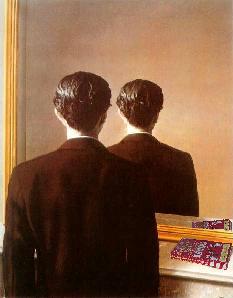
René Magritte's 'La Reproduction Interdit' (slightly altered)Been intending for a while to try to explain that reference to existentialism in the descriptive subtitle to “Hard-Boiled Poker.” Partly alludes to the great hard-boiled novels of writers like Hammett, Chandler, Cain, Thompson, Willeford, and others, all of which could -- in one way or another -- arguably be categorized as notable examples of “existentialist art.”

I also have in mind a more direct connection to existentialism as defined and explained by Jean-Paul Sartre and others -- an implied argument, if you will, for a connection between poker and existentialist thought. A lot of ideas produced by the existentialists seem to me to be readily applicable to poker. They may even be useful. But that (as the existentialists would insist) is up to each individual to decide.

First there’s Sartre’s famous observation that existence precedes essence (as far as humans are concerned). We start with existence, then formulate ideas about who we are, what our “essence” or “nature” might be. Thus might we say that the experience of the poker player is what defines him. He plays a number of hands, then becomes a certain kind of player (to himself and to others). He plays more hands, and his so-called “essence” changes still again.

The way we exist -- what we say, what we do, whether we call preflop raises from late position with suited one-gappers -- defines who we are. (You might want to argue the reverse -- e.g., that my conservative “nature” is what makes me fold ace-rag preflop -- but the existentialist knows better. He knows that folding ace-rag is what makes me a conservative player.)

It doesn’t help, of course, that the world in which we exist is indifferent to our plight. At times it may appear to follow some “order” (and thus imply some sort of creator having fashioned it thusly), but in actuality such order is only the result of our own idiosyncratic perceptions -- our relentless attempts at “meaning-making.”

In a previous post, I mentioned Miller/Sklansky/Malmuth’s observation in Small Stakes Hold ’em that “cards are pieces of plastic . . . [that] have no knowledge, no memory, no cosmic plan.” In other words, despite the frequency and/or conviction of our invocations, there are no poker gods. And not only do the cards have no “memory” or “plan” -- they have no meaning, either. Not on their own, anyway. (Just like everything else, actually.)

Facing such a circumstance, we could go the route of the nihilist and say that having accepted (1) existence precedes essence & (2) that the world is indifferent to us, there is no point in going forward. It’s a common mistake, actually, to say the existentialist believes life has no meaning. Not so. It’s the nihilist who believes life is without meaning, purpose, truth, what have you. (Sartre titled his book Being and Nothingness -- not simply “nothingness” -- deliberately choosing a phrase that implies a kind of ongoing conflict.)

Unlike the nihilist, the existentialist understands and accepts that we are the ones creating meaning -- that we are free, in fact, to make whatever we want of the world. To change the world, or what it means to us . . . for the better, even (if that’s your cup of tea).

We’re on our own, though. No “god” is going to help us. (Thus does such freedom produce a great deal of anxiety in us.) The poker player cannot control the cards. Nor can he perfectly control others’ actions at the table (although he can influence those actions). But he can certainly affect what those cards mean (to him). He can affect what his opponents’ actions mean (to him). And he can affect what his own actions mean (to himself). In fact, he not only can affect the meanings of those things -- he necessarily does affect what they mean. Every single hand.

In that earlier post (about Dostoevsky’s The Gambler -- another example of “existentialist” art, one might argue), I proposed that poker might be defined as “an activity in which each participant is trying to exert the most control in situations where everyone is a little out of control.”

In a way, that’s what I’m trying to say here about “meaning-making” at the poker table (and beyond). Poker is meaningful . . . because we give it meaning. And when we play, we not only confront other players, we confront that villainous “nothingness” who always seems to be following us around, showing up in the bathroom mirror, sitting across from us on the bus, waiting in line behind us at the store . . . .

And while we sometimes lose to the other players, we beat him . . . every time.

Image: Portrait of Edward James (a.k.a. Not to Be Reproduced) (1937) (adapted -- notice the book on the table), Rene Magritte, fair use.

Labels: , , , , , , , ,

Saturday, September 09, 2006

Testing, Testing . . .

You’re in a limit game and are dealt 9sQc in the big blind. It folds around to the cutoff who calls. The button folds, the small blind completes, and you check your option. So there are three of you in when the flop comes 9d4dQd. The small blind checks. What do you do?

This is a situation that comes up frequently enough to warrant some consideration. You find yourself barely committed to a hand, then a flop comes that changes everything. Like you’d been laying low, trying to figure out where the buffet line begins, when all of sudden you’ve been asked to deliver a toast to the happy couple. Now you’re the center of attention. You are expected to speak. But what are you going to say?

Do you bet? For as long as I can remember this was an automatic bet for me. I know that flopping a flush is a statistical rarity. For the guy holding two suited cards, he’s flopping a flush something like 1 out of 118 times. In fact, if three diamonds come out like this, it is more likely than not neither of my two opponents holds a single diamond. Of course, if one does have a diamond, he’s probably going to be sticking around for the turn (especially if that diamond isn’t especially low).

So it’s very likely -- almost a certainty, really -- that I’m ahead. And there are big draws out there, flush and straight. So I gotta protect, right?

Like I said, in the past, I would always bet. If the fourth diamond came on the turn, I’d often weakly remain in the hand (by check-calling) in the hopes of filling up on the river (even if pot odds weren’t quite enough to warrant sticking around). In other words, I hated letting go of my flopped two pair, and so often ended up paying off my drawing opponent when they didn’t hold up.

The other day, though, I was in this very situation and decided to do something different. I checked. And when the cutoff bet and the small blind folded, I just called. I figured if anyone was on a draw, he wasn’t folding to my open bet on the flop, nor would a check-raise likely scare him away. Pessimistic, I know . . . but I’d made up my mind that I didn’t want to lose a lot on this hand. I thought I’d try to keep the pot small and see what the turn brought.

The turn was the 3s. No straight. No flush. My top two pair was still the best hand, I was sure. I checked and as I’d hoped the cutoff bet. I check-raised, and he called me. The river was the 8s. I bet, he folded, and I took the pot of $6.20 (giving up thirty cents to the rake).

I don’t know what my opponent had, but clearly he didn’t have a queen. He likely had a diamond. And he may even have let go of bottom or middle pair. Of course, if he had flopped the flush (or made a set), I was doomed. But he didn’t, and I wasn’t. As it happened, I’d probably extracted the most I possibly could have from this particular hand.

I looked back in Miller/Sklansky/Malmuth’s Small Stakes Hold ’em to see if there were any sort of justification for how I’d played the hand. It had felt right to me, and (of course) the result made me think I’d done well here.

Speaking of “Slowplaying,” the trio point out that it is never a good idea to risk large pots by slowplaying. (I hadn’t done that.) But they don’t recommend giving free cards with draws on the board, either. (I had done that.)

However, in the section about “Protecting Your Hand,” they describe situations where a post-flop raise will not protect your hand. One example involves being in the big blind and flopping two pair with straight and flush draws on the board (e.g., you have T8 and the flop comes QT8 with two hearts). “If you raise now,” they explain, your opponents “will often call anyway,” particularly when there are multiple players still involved. “The best plan is to call now, hoping for a safe card. If fourth street is a blank, plan to check-raise then.” This was precisely the plan I had followed in the hand (although I wasn’t necessarily conscious of any theoretical basis for playing it this way).

Does the math support the play? Doesn’t seem to, really. When I check-raised the turn, my opponent faced 4.5-to-1 pot odds to call; thus, he was certainly justified to call if indeed he was hoping to complete his flush (around 4-to-1 to hit). However, a bet on the flop wouldn’t have been much better, odds-wise. If I had bet, the cutoff would’ve had 4-to-1 to call (and surely would’ve, if he’s chasing that flush). If I had check-raised the flop, the cutoff would’ve had 6-to-1 to call . . . even better.

So it seems like waiting until the turn indeed maximized my profit, although it also maximized my potential loss had my opponent made his draw. Still, I’m over 80% to win after that turn card -- a good place to be with one card to come, no matter how you look at it.

Did I stumble my way into a viable strategy for this kind of situation? What do you say? Here . . . take this microphone . . . I’m gonna go see if there are any of those little shrimp thingys left . . . .

Labels: , , , , ,

Monday, July 31, 2006

Fingering Those Four-Flushers (Redux)

Shamus hits the booksThat problem I discussed in my previous post continues to linger in my mind. Ran into the same situation more than once over the last couple of days of play. For example, had a hand where I was dealt AsQc in the cutoff and raised. Only one caller (the big blind). Flop comes Qh2d6h. He checks, I bet, he calls. Turn is the 7c. He checks, I bet, he calls. River is the 8h. He checks, I check, and he shows 4h4d. Don’t know if he’d have called a bet on the end, but given how he’d played the hand he probably would have as there would have been $6.25 in the pot. I won the hand but (likely) lost an extra big bet. I decided it was time to consult the experts about the problem.
David Sklansky has a chapter titled “Heads-Up On The End” in his The Theory of Poker where he addresses this very circumstance. The chapter is divided into “first position play” and “last position play.” Since the difficulty I face comes up most frequently when I am in last position, I reviewed what Sklansky had to say there.

He talks about those times when the last card comes and your opponent bets out and those times when your opponent checks to you. Now when I’m only holding top pair and that third heart appears, if my opponent bets out I’m definitely only going to call. That’s essentially what Sklansky recommends here -- he says to raise if I think I have a better hand or if I think my opponent is bluffing, but otherwise just to call. (Pot odds generally mean folding isn’t an option.) Since I usually don’t know if my opponent is bluffing in this situation, and since I also usually am not certain I have a better hand here, I call.

Now those times when my opponent checks to me on the end, Sklansky says “Bet your hand for value if you are a favorite,” but “don’t bet in close situations to avoid a check-raise.” As I’ve already established, I consider this a close situation, especially if multiple players saw the flop and only one or two of them decided to chase it to the river against me. So it appears Sklansky is here telling me that checking behind (as I have usually been doing) is probably a sound play.

It's important to note that Sklansky is offering only general guidelines in The Theory of Poker. For more particular advice about my game -- low limit hold ’em -- I go to Miller/Sklansky/Malmuth’s Small Stakes Hold ’em. In the back of the book they list a series of “Hand Quizzes,” and, in fact, the very last one closely resembles the “four-flusher” situation I’m investigating. In their example, you are dealt big slick on the button and two limpers call your raise. You flop a king (with two diamonds on the board), and so bet your top-pair, top-kicker. Both limpers check-call. The turn is a non-diamond blank, and both limpers again check-call. Then the river puts a third diamond on the board and your two opponents both check it to you.

This is precisely where I’ve almost always been checking down the hand, but Miller/Sklansky/Malmuth say this is a time to bet. Their reasoning is that “it is more likely that you are still ahead after your opponents check [on the river] than it is before they check.” It is also true that your opponent isn’t always going to check-raise you, even if he has hit his hand. They then add a “game theory”-type explanation that I’m not going to try to paraphrase here (see pp. 308-09 of SSHE, if'n yr innersted) that essentially says not betting here causes you to lose more bets in the long term than betting does.

I see how it is more likely that if my opponent(s) check to me in late position here -- as the fellow with the pocket fours did -- that I’m still ahead. Most who make their flush will indeed bet out on the end so as not to miss getting one more big bet on the river. Now that I think about it, I don’t recall that many instances where I check that hand down and then see my opponent has made his flush.

Every situation is different, of course, but I think I’ll probably be betting out here more often than I have been in the past. As Miller/Sklansky/Malmuth say, "Do not let every river card scare you. Bet!"

Photo: Tom Neal from the 1945 film Detour (adapted), public domain.

Labels: , , , , , ,

Tuesday, July 04, 2006

Is Patience a Virtue?

Shamus waits to play his first hand.Played some Stud 8/b yesterday and had a decent, brief session. Had a hand where I managed to catch a wheel on sixth street, capturing a nice pot. With the antes and bring-ins, Stud has a different character than blinds-driven games like Hold ’em. One of several ways Hold ’em plays like a circle, Stud like a straight line.

I ended up back at the limit Hold ’em tables afterwards. I joined one table (full limit, $1.00/$2.00) and got a seat just after the big blind had passed. So I clicked “Wait for the BB” (as I usually do) and watched six or seven hands. I almost always choose to wait for the BB, particularly if I am looking at calling the blind from middle position or earlier. Finally we came to the point where the next hand would bring the BB back to me. That’s when the player to my right decided to leave, thereby causing the button to pass me by yet again. So once again I sat there watching the wheel go 'round (only a few minutes, although online a few minutes can seem an eternity) until I finally got to play.

I had considered going ahead and putting my BB out there the second time I was given the opportunity to do so -- from the cutoff -- but by force of habit did not. There’s certainly a benefit to sitting and watching other players for a few hands before jumping in. A few months ago, Roy Cooke wrote an article in CardPlayer titled “Increasing Edge by Observing a Hand” in which he discussed this very topic. One can often learn quite a bit from paying attention to what the players around you are doing while you await the big blind.

Of course, by choosing to wait you are also signalling something about yourself as a player -- cultivating an image of sorts even before you play your first hand. At the low limits, folks aren’t always paying a lot of mind to this sort of thing. Still, by not playing right away, I may well be announcing (quite accurately, in fact) to attentive players that I am a somewhat conservative player, selective with his starting hands and careful not to take too many unreasonable risks.

I’m reminded of one of my favorite sentences in Miller/Sklansky/ Malmuth’s Small Stakes Hold ’em -- not so much for what it says but for the trio’s curious choice of vocabulary. “When you enter a game,” they explain, “you usually have the option either to post an amount equal to the big blind and take a hand immediately or wait for the big blind to come to you. Mathematically, the choice you make does not much matter. (Nevertheless, people seem to like to debate this picayune topic.)”

Picayune? What a word. I can just imagine the look on Sklansky’s face when he pronounces it. (Try it -- pick-uh-YOON -- you can’t help but sneer.) A fancy way of saying “trivial” or “petty.” Etymologically, the word actually refers to money, coming as it does from the French word picaillon (meaning "small coin"). Le chump change.

As the trio go on to explain, while there is little mathematical significance to whether or not you decide to wait, there can be -- as I’ve already suggested -- a significant psychological significance. “If you sit out seven hands before you play,” they explain, “you will appear too serious” to your opponents, causing them to play more carefully against you. This phenomenon is certainly more meaningful in the live game situation than online, I’d venture. Still, it makes me think that perhaps I should go ahead and jump into the fray once in a while and perhaps mislead the table into thinking I’m a looser cannon than I actually am.

I’m curious to hear what others think about this issue. Do you routinely wait for the blinds, or jump right in? This topic is probably more meaningful for limit games, although I’m interested to hear what the difference might be for NL players as well.

Or is it all just too picayune to matter?

Labels: , , , , , , , ,

Monday, June 26, 2006

Assuming the Worst

Assuming the WorstThis week’s installment of Card Club on Lord Admiral Radio (an entertaining, informative podcast primarily aimed at the lower limit player) featured the conclusion of Episode 19 of Columbo’s “One Minute Mystery,” titled “The Case of the Clichéd Players.” If you haven’t heard ’em, Columbo’s OMMs generally come in two parts, and usually the Card Club guys make us wait a week to find out how each OMM turned out for Columbo. (See my earlier review of Card Club for more about both the show and the OMMs.)

“The Case of the Clichéd Players” generated a thoughtful discussion on the Card Clubs forum that was continued on the show once the hosts played the second part of the OMM. An issue that arose -- really the main issue of significance, I’d say -- concerned the quality of play in online, low buy-in, multitable tourneys. In the hand, Columbo faced what appeared to be some very loose, very questionable betting and calling before and after the flop. Having to make a tricky post-flop decision, Columbo decided he was up against a couple of inexperienced and/or inexpert players and so acted accordingly. It turned out well for him, with his correct assumption that his two opponents were playing the hand poorly allowing him to triple up.

The OMM and the discussion surrounding it got me thinking a bit about how easy it is to underestimate one’s opponents at the table. I essentially agreed with Columbo’s cogitatin' in this here situation -- the minimum raises and calls of big bets by his foes did seem to indicate the likelihood that he was up against some untutored adversaries. It is easy, though, to fall into the trap of “assuming the worst” about the level of one’s opponents’ abilities, especially in these low buy-in tourneys or in low limit cash games. I know I’m guilty of making such assumptions -- sometimes on scant evidence -- and usually end up paying the price when an apparent donk turns out to be more crafty that I had realized.

In some of my recent posts I may have given the impression that I’m the only sane one at a table of lunatics -- that all of the other players at these low limits are operating at less than full capacity, thereby giving me the right to sit back and judge their awful play. Such is hardly the case. Looking back at the three hands I shared in “Life in the Land of the Blue Chips,” I can certainly question the level of my own thinking in a couple of instances (particularly “Hand 1” where I recklessly ride big slick to the bottom of the river). While those hands all certainly demonstrate some unorthodox play, none of them can be taken as irrefutable evidence that those involved (even me) are bad players. Indeed, the fellow in “Hand 1” (Underpants) who preraised with 82-suited could well have been pursuing a simple blind steal, was caught (with his pants down, so to speak) by my BB reraise and had to call, then fortunately flopped two pair and turned the boat. If I proceed from that point assuming he’s preraisin’ with any ol’ suited crap, I’m likely gonna be donating even more to his stack.

In Small Stakes Hold ’em, Miller/Sklansky/Malmuth make two sets of recommendations regarding starting hand selections, one for a “loose” table (where 6-8 players are seeing the flop) and one for a “tight” table (where only 3-5 players see the flop). When first arriving at a low limit hold ’em table where you don’t know any of the players, they recommend presuming you are at a loose table and continuing to think that way until proven otherwise. This advice goes against conventional wisdom, actually, which says to begin cautiously and try to learn about your opponents’ tendencies before mixing it up. However (argue Miller/Sklanskly/Malmuth), “at the small stakes there are so many confused and poorly-skilled players that failing to play extra hands should prove more costly those times when you should play them than they will save you those times you should throw them away.”

Notice that the authors are not saying to assume you are up against bad players -- rather, they say to assume you are up against loose players (implying, perhaps, that one or two or more might in fact be “poorly-skilled” enough to pay you off if you time things well). When I first arrive at a low limit table I try to follow the trio’s advice and assume it’s a loose table, but also try to avoid assuming the players are clueless. In fact, I attempt to give them all credit for knowing what they’re doing -- again, until they make a play that cannot possibly be interpreted as an intelligent one. In truth, I usually find it better policy to assume the worst about my own hand -- not about my opponents’ abilities -- and let folks showdown a few bottom pairs or busted draws to me before concocting any overly-elaborate theories about them.

If you haven’t done so, do check out Card Club and the OMMs. I always liked the Columbo TV series, where “who done it” was usually less of an issue than how it was done (and how Columbo is going to figure it all out). We all know the murderer will be caught in the end, so the result matters less to us than the process by which the result was achieved. The OMMs tend to operate similarly. It (usually) doesn’t matter so much how the hands turn out; what matters is process, that is, the thinking that leads to -- hopefully -- correct decision-making. And a big part of such correct decision-making is not assuming your opponents all think they’re playing blackjack.

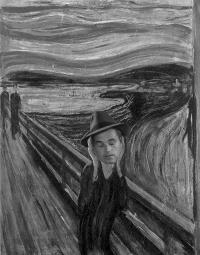
Image: Edvard Munch, The Scream (1892) and Tom Neal from the 1945 film Detour (adapted), public domain (both).

Labels: , , , , , ,

Tuesday, June 13, 2006

Dostoevsky is Not Considered Summer Reading (Pt. II)

As I mentioned before, I want to discuss three ideas of interest to poker players that come up in Fyodor Dostoevsky’s The Gambler. The first concerns the human tendency to see patterns where they don't exist.

Alexey Ivanovitch is not the only character in The Gambler who becomes obsessed with roulette. Other characters are shown succumbing to the lure of the wheel, the most colorful being Granny. Granny is the grandmother of the family for whom Alexey works as a tutor, and for the first half of the novel most members of the family appear impatient to see Granny die and leave them her estate. Without warning, Granny suddenly appears in Roulettenburg -- in good health, at that. She’s a bit eccentric and certainly enjoys the discomfort she has produced by appearing so unexpectedly.

“I want to see everything here,” Granny tells everyone, and soon has made Alexey take her to the casino. Within minutes she’s at the roulette table. After a rapid tutorial from Alexey about how the game works, she’s ready to play. Before placing any money down, they watch as the wheel lands on zéro. Alexey explains to Granny that if one bets on zéro and it hits one wins 35 times the bet. “Why don’t they stake on it, the fools?” she asks. “There are thirty-six chances against it, Granny,” Alexey explains. “What nonsense,” she replies, and fishing out a friedrich d’or from her purse orders her servant to “Stake it on the zéro at once.”

Her bet concerns Alexey, who with the appearance of rationality explains “Granny, zéro has only just turned up . . . so now it won’t turn up for a long time. You will lose a great deal; wait a little, anyway.” “Oh nonsense, nonsense” says Granny. “If you are afraid of the wolf you shouldn’t go in the forest.”

After losing three times running, Granny decides to stake two friedrichs d’or and the zéro hits. Much to Alexey’s dismay, she bets as much as is allowed on zéro again and loses. Undeterred, she bets on zéro yet again. “Zéro!” cries the croupier, and once more she’s won a bundle. Alexey describes how he felt upon realizing the zéro had hit three times within a dozen turns: “I felt that at the moment my arms and legs were trembling, there was a throbbing in my head.” Granny puts the bulk of her winnings on rouge, wins again, then announces “That’s enough! Home! Wheel my chair out.” All told Granny had staked five friedrichs d’or and was now leaving the casino with about 220 times that, an amount nearly equal to that of her entire estate.

There are a few different ideas present in this episode familiar to poker players (e.g., running well, playing one’s rush, boldly taking risks, hitting longshots, etc.), but the one I find most interesting concerns Alexey’s claim that since the zéro had recently hit it was less likely to hit again in the near future. Earlier in the novel Alexey describes players who “sit with papers before them scrawled over in pencil, note the strokes, reckon, deduce the chances, calculate, finally stake and -- lose exactly as we simple mortals who play without calculations.” Alexey instinctively knows these players are self-deluded. He knows that one turn of the wheel has no bearing whatsoever on the next. Nevertheless, he still advises Granny against betting on zéro since it had so recently hit.

In Small Stakes Hold 'Em, Miller/Sklansky/Malmuth discuss the tendency for poker players to believe how the cards are dealt in one hand actually affects how they will be dealt in the next hand. “The human brain is terrific at identifying patterns,” they point out, though sometimes -- especially when playing poker -- “people see false patterns that they believe are real.” “Most gamblers,” they claim, “tend to ascribe meaning to purely random, independent events.” Have you ever (like Alexey) allowed the appearance of such false patterns affect your thought process during a given hand? If you are human, you probably have.

Just today I had newly arrived at a $1/$2 limit table where I was dealt Jh 3c in the BB. A late position player raised, the SB called, and after a moment I decided to let it go. Sure, I’d be getting 5-to-1 by calling, but I knew zilch about the other two players. Besides, I didn’t want to get in trouble here on my first hand and thereby create an unwanted table image from the get-go. I folded and watched as the flop came 9h 3s Jd. The SB called bets on both the flop and turn, then after an Ace came on the river fireworks erupted and the pair capped. Both had big slick and so chopped a huge pot -- $25 or so -- although they ended up only coming out even on the hand after the $1 rake (precisely what I had put into the pot).

Before I had time to grieve my missed oppportunity, I chuckled to see I’d been dealt J3-offsuit once again in the small blind. “When most people play poker,” write Miller/Sklansky/Malmuth, “they tend to expect that which has recently occurred to recur.” Hmmm . . . . As I waited for the action to come back to me I couldn’t help thinking how attractive J3 looked. Would I dare? Luckily for me, a raise and reraise kept me from pursuing my relationship with this garbage hand any further. (And yes, the flop did not bring a J or 3 this time.)

Barring six limpers (and thus even greater odds than the previous hand offered), I probably would’ve let the hand go again, but not for the correct reasons. Rather, I felt like Alexey did after seeing the zéro hit the first time -- it somehow seemed less likely to flop two pair (or something else favorable, like trips) because it had “only just turned up . . . so now it won’t turn up for a long time.”

Nonsense! (As Granny would say.) Miller/Sklansky/Malmuth say the same thing in a different way: “The cards dealt on any poker hand are, for practical purposes, completely random and independent of the cards dealt on any previous hand.” The odds of my flopping two pair hadn't changed an iota. They remained about 1 in 49 -- the same as every other hand where one holds two unmatched cards.

Granny herself eventually shows that she, too, can’t resist believing in false patterns when she returns to the casino and loses all she won and then some, mostly by betting on zéro. She would have done well to heed the advice of Miller/Sklansky/Malmuth: “Stop your pattern-recognizer before it goes haywire by telling yourself, ‘There is no pattern! There is no pattern!’”

In my next post I'll say something about how The Gambler illustrates another “mind game” poker players often experience, namely the way the game can cause us to shut out past and future and live only in the moment.

Photo: “Roulette ball,” Ralf Foletschek. CC BY-SA 3.0

Labels: , , , , , , ,

Sunday, June 11, 2006

Dostoevsky is Not Considered Summer Reading (Pt. I)

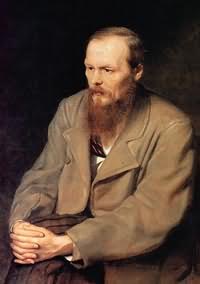
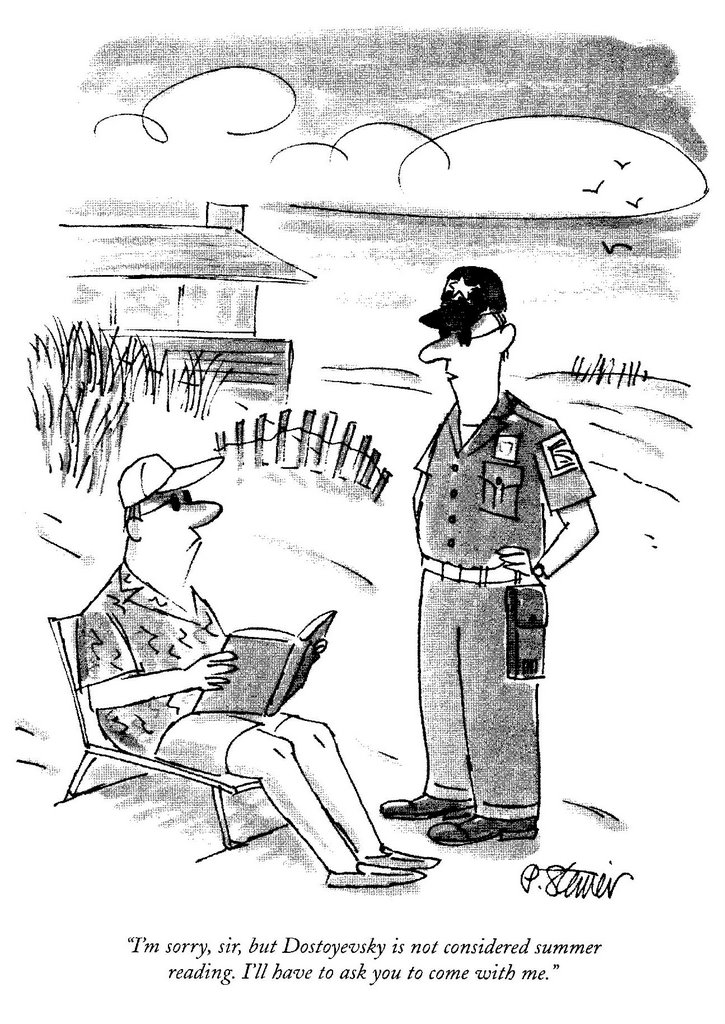
Fyodor DostoevskyThere’s a New Yorker cartoon in which a guy reading a book on the beach is approached by a policeman. “I’m sorry, sir,” the cop says to him, “but Dostoevsky is not considered summer reading. I’ll have to ask you to come with me.”

I thought of that cartoon last week as I read Fyodor Dostoevsky’s The Gambler -- one of the 19th-century Russian novelist’s lesser known novels, although certainly his most popular in the poker world. References to The Gambler pop up in many poker books, particularly “literary” ones like Anthony Holden’s Big Deal, the late David Spanier’s The Hand I Played, and James McManus’s Positively Fifth Street.

The novel is set in the fictional German city of Roulettenburg -- kind of a 19th-century European version of Vegas -- where the main character, a tutor named Alexey Ivanovitch, unsuccessfully battles his obsession with the game after which the city is named. There is one card game that comes up occasionally in the novel, a game called trente et quarante (a.k.a. rouge et noir) that is essentially a kind of roulette using six decks of playing cards rather than a wheel and a ball. (You can still get a game of trente et quarante in Monte Carlo, apparently.) However, roulette is the game that Alexey plays the most, and that’s the game about which Dostoevsky (himself a roulette addict) has the most interesting things to say.

Anyone at all serious about poker will be quick to point out that poker ain’t roulette. Some go so far as to distinguish poker from gambling altogether, insisting that it’s a skill game wherein the better-equipped players always win out over time. I like how Miller/Sklansky/Malmuth treat this subject in the opening sections of Small Stakes Hold ’em. They assert that, in fact, “poker is gambling,” and the schmo who says it ain’t “does not understand poker as well as he should.” Poker is gambling because it always involves some measure of uncertainty, particularly with regard to the cards. Sure, at times we might be uncertain about our opponents’ play or holdings, but better players eventually can get a line on those things.

Yet even the very best poker player cannot get a line on precisely what card is gonna come on the turn or river. (Raise yer paw if you’ve also lost a 20+ BB pot to a river one-outer . . . . There we go.) So while in poker you can (as Miller/Sklansky/Malmuth explain) play in such a way so “that your expectation can be positive,” when you play poker you’re still gambling. That's why The Gambler ultimately touches on so many concepts of interest to poker players.

As a way of responding to the book, I thought I’d focus on a few ideas related to gambling that come up in The Gambler that might be of particular interest to poker players. I’ve pulled out three ideas or concepts, all of which could be made to relate to the “psychology of poker” -- that is, all three concern how our minds work (and, at times, fail to work) when we play.

The first has to do with how a particular sequence of hands will affect our thinking regarding what comes next. The second involves the way the game tends to consume us, causing us to forget about everything else besides the “here and now.” The third has to do with issues of control and personal responsibility, and how poker (or any form of gambling) strangely satisfies certain, contradictory desires most of us seem to possess.

I’ll discuss these ideas in separate posts over the next few days. Afterwards you can decide if you want to check out The Gambler yourself. Of course, you’ll want to keep one eye out for the summer reading cops if you do.

Image: Vasily Perov, portrait of Fyodor Dostoevsky (1871), public domain.

Labels: , , , , , , , , , ,

Monday, May 22, 2006

How To Survive If Your Parachute Fails to Open

The Worst-Case Scenario Survival HandbookI’m in an online ring game of $.50/$1.00 limit hold ’em. A loose cat limps in early position. Rest of the table folds to me sitting right of the cutoff and I see a pair of ladies looking back. I put in the raise. The cutoff and button both fold. The small blind waits a beat and reraises. Big blind folds. Limper calls. I think about it for a moment then decide just to call and see the flop. Capping ain’t chasin’ anyone and I have position, so I say let’s just buckle up and see what’s what. The pot is an even $5.00.

The out-of-sync rhythm of the small blind’s reraise (combined with earlier info gleaned from playing a few dozen hands with him) adds up to big slick or maybe a pair of hooks. He could have the bullets or cowboys, sure, but something tells me he ain’t got it quite that good. The limper? Could have anything at all.

Flop comes a sweet QT7 rainbow. Both of my opponents check. I bet, the small blind calls, and the limper decides he’ll put his spoon in the dish as well. The pot is now $6.50. As I silently mouth the words “no jack” the turn comes a J. Again, both opponents check. Now what?

How often does this happen? You make a read with confidence, a sequence of events unfolds from which you may potentially benefit from that read, and yet you act otherwise? There I was in the cutoff with my no-longer-pretty set of queens and a feeling of utter certainty that I was up against an opponent slow-playing his straight.

What did I do?

I bet, of course. (“Jingle-brained” ain’t exactly a compliment, if you were wondering.) I cringe as the small blind (inevitably, it seemed) check-raises. Then the madman limper on the other side of the table surprisingly three-bets. What? Has he plugged a gutshot as well (holding K9)? Or maybe he has 98? Criminy.

Do I give up my set? I do potentially have 10 outs here that help me beat a straight (the case queen, three jacks, three tens, and three sevens) -- about 3.5-to-1 against. I’m now looking at a pot of $12.50. It’s $2.00 to call, although I’m a victim of the “sandwich effect” (as Harrington puts it) and so likely it’s gonna cost me another buck to stay in after the small blind caps. That means I’m looking at putting in a total of $3.00 for a shot at $15.50, so the actual pot odds are going to be a little better than 5-to-1.

So math is telling me to stick around. To be honest, I ain’t listening too much to math here. I flopped top set, dammit, and now I’m gonna bust that lucky palooka with the horseshoe up his ass. (After I get lucky and fill up on the river, that is . . . .) So I call (and call) and we have a pot of $18.50 when the river brings a lousy 4.

Poof. Where the hell did I put my Worst-Case Scenario Survival Handbook?

The small blind bets. The limper raises. The pot has grown to a ridiculous $21.50. Practically a small field of cabbage for these stakes. If I fold, I’ve lost a total of $6.00 on this hand. If I make two (or even three) more crying calls as the final round of betting gets capped, I’ll have put in $10.00 altogether. I could calculate pot odds once more and perhaps rationalize that somehow I’m still good here -- or even that I’ve got a 10% shot of being good and so should keep calling -- but that would be strictly non compos mentis. I sigh and let it go. My two friends cap it and it turns out they’re a regular chopper squad with both of ’em holding big slick.

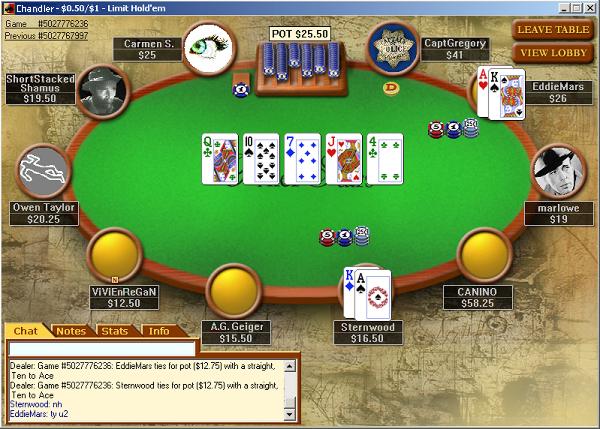
Short-Stacked's parachute fails to open. (Click to enlarge)

Now there might have been ways I could have lost less on this hand, though I’m not bright enough to see them. Seems more like a cold deck to me, but if anyone has any ideas, I’m all ears. If I were a look-on-the-bright-side type, I might say I “made” $4.00 by folding on the river. (As Miller/Sklansky/Malmuth would put it, folding made my "expectation for the entire hand less negative than the alternatives.") I don’t order my eggs sunny-side up, though. Strictly hard-boiled around here . . . .

Images: The Worst-Case Scenario Survival Handbook (1999), Joshua Piven, David Borgenicht (top); PokerStars screenshot (adapted) (bottom).

Labels: , , , , , , , , ,


Older Posts

Copyright © 2006-2021 Hard-Boiled Poker.
All Rights Reserved.