Friday, August 14, 2015

Tuning In: A Few Recent Poker Podcasts

Was doing some work in the barn today and listened to a few poker podcasts while I did.

I first went back about a month to hear Bill Chen’s segment on Episode 371 of the Two Plus Two Pokercast. Chen’s always an interesting one to listen to -- very relatable for me, not because of the depth of his analytical thinking, but for the place of poker in his life as something very important but not all-consuming.

Then I checked out the latest PokerNews podcast -- Episode 326 -- which started with some discussion from Donnie and Rich about the recently completed PokerStars Pro Tour in California and then featured a enjoyable conversation with WSOP National Championship winner Loni Harwood. All interesting and fun and a good quick catch-up on recent events in poker.

Finally I dialed up a podcast I hadn’t tuned into for a while -- Ante Up! -- which just last month made it a full decade’s worth of podcasting. I used to listen to these guys -- Chris Cosenza and Scott Long -- constantly back when they first started out and wrote about their shows here fairly frequently, too. Tuning in again, I had to grin at how much the show had remained the same with the familiar mix of personal anecdotes about their own play, a run-through of news items, and some strategy talk.

They aren’t numbering their shows, but 10-plus years’ worth of weekly podcasts must add up to well over 500 by this point. Kind of brings to mind the story of this blog (into its 10th year now) which I know by this point readers sometimes drift away from and then return occasionally, perhaps surprised to see things still chugging along as usual.

The episode I grabbed was from a couple of weeks back, the one in which they discussed Matt Savage’s recent Facebook poll and discussion inviting players to weigh in about what they thought constituted an excellent tournament structure -- the 7/30/15 episode.

If you didn’t follow that whole discussion from Savage, the Ante Up! show is a good way to catch up with its particulars. (Indeed, as one of the few not on Facebook, I’ll admit I didn’t quite follow the entire structure discussion.) They get into it about the 12-minute mark and the discussion lasts about 15 minutes.

By the way, according to those responding to Savage’s poll, the most-important to least-important factors when it comes to creating an excellent structure were determined to be (1) time; (2) levels; (3) player ability; and (4) chips, or starting stack.

Savage agreed that of these four, the number of chips in the starting stack should be considered the least important -- since the length of levels and schedule of blinds/antes increases can obviously make a “deep” stack less deep, relatively speaking. Meanwhile, Savage agreed with the importance of having well measured levels (e.g., not skipping steps along the way), and that the length of levels does in fact have a lot to do with how great and/or appropriate a structure is.

Gonna have to get Ante Up! back into the regular rotation here. Have always enjoyed the way Chris and Scott approach all things poker, representing as they do the perspective of the great majority of us -- i.e., non-pros who greatly enjoy playing the game and following the stories surrounding it (including the stories involving those who are pros).

Labels: , , , , , , , , , , ,

Tuesday, August 04, 2015

Backstory: Norman Chad on the Remko Report

Listening today to the latest “Remko Report” over on PokerNews in which Remko Rinkema has an entertaining and interesting conversation with Norman Chad, the longtime co-host of ESPN’s World Series of Poker broadcasts.

I’m a big fan of both of these guys. I’ve written here before (not too long ago) about how infectious Remko’s enthusiasm can be -- especially when it comes to poker. And Chad, too, has added a great deal to my enjoyment of the game, dating back of course to those first WSOP shows he and Lon McEachern hosted back in 2003 -- shows I vividly remember watching when they first aired and which get discussed at length on the podcast.

The pair cover a lot over the course of the show, including going back to his pre-poker days and start as a sports columnist at The Washington Post in 1984, a move to L.A. and Sports Illustrated in the early 1990s, then a fortuitous first trip to the poker rooms there in 1999.

They eventually come to Chad’s getting recruited by ESPN for that first seven-show series back in 2003, though before that is some interesting talk about Twitch and Twitter, creativity and writing/creating for an audience (and for oneself), different approaches to poker television (e.g., the “reality show” approach vs. the “poker as a sport” one), and the extent to which poker strategy and poker entertainment overlap (and are distinct).

I like hearing Chad’s discussion of the contributions of 441 Productions -- the group who produced ESPN’s WSOP broadcasts from 2003 through 2010 -- and his praise for how smartly they pulled together the shows, creating all of those many compelling stories and characters that hooked us all.

Chad also talks insightfully (and honestly) about the “creative curve” that exists with any endeavor, in his case referring to the challenge of finding ways to remain engaged and productive after 12-plus years of doing the same thing. (As someone who has kept a poker blog as long as I have, that discussion certainly resonated with me.)

There are a lot of interesting behind-the-scenes details shared regarding those early years at ESPN, and it’s funny to hear Chad confess to some initial (and, as it turned out, inaccurate) ideas about what they were up to, in particular his doubts about whether or not the shows would succeed. For example, his reasoning for why he thought Sam Farha would be a better winner than Moneymaker for poker in ’03 is both humorous and entirely understandable.

I’m kind of a sucker for this stuff -- heck, I was writing about looking back at these old WSOPs just last week. If you’re the same way or at all a fan of televised poker, check out the show.

Labels: , , , , , , ,

Wednesday, September 10, 2014

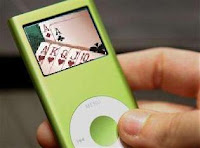
iPod Ode

Heard some of that rumble today related to Apple announcing a new phone and some other products. Not the most interesting thing to follow for me, although over time I have found myself gravitating over to using a Mac for almost all my computing, and I also have an iPhone and iPod.

Like I say I wasn’t really paying too much attention to the new phone and whatever else, but I did take note at some of the articles noting how the so-called “iPod classic” was being discontinued. “Apple Quietly Says Goodbye to the iPod Classic” went the headlines, referring to how the product which has been around in some form for 12 years was being “unceremoniously killed off.”

Shows how fast everything is flying about, that “classic” doesn’t seem odd at all to apply to something just over a decade old.

I remember Vera giving me an mp3 player -- not an iPod -- about eight or nine years ago. At the time I was actually uncertain I’d ever really get any use out of it, but before long I was listening to it every day. I remember during the early years of poker podcasts routinely downloading them and putting them on the sucker (it would still be a while before we listened to them on our phones). Actually, because I listened to those shows that way, I still have some of those old podcasts tucked away on hard drives here and there.

It wasn’t too long after getting that first mp3 player that I bought myself an 80 GB iPod. That must have been at least five years ago, perhaps longer. Thing has held up ever since, despite my using it practically every single day, too.

I still stick with the LP format, almost always putting tunes on there an album at a time rather than singly. That goes against the grain of how music is generally consumed today, but I can’t get away from preferring leisurely listening to a long-player rather than shuffling about from song to song.

I might just have to grab another iPod before they disappear. Not that this one is showing any signs of giving up, but I think I’ve arrived at a point in the way I listen to music where I don’t want to be without it.

Labels: , , ,

Friday, August 16, 2013

The Hard-Boiled Poker Radio Show, Episode 21: Lucille Ball

Years later, my podcast has returned! Episode 21 of The Hard-Boiled Poker Radio Show has now been posted. If you click over to the show’s blog you can see the entry with my “show notes.” You can download the show there (or just listen to it online), or you can just click here. It ought to be turning up in iTunes as well before too long, I imagine. (All of the previous 20 episodes are still there.)

This episode features the great Lucille Ball and includes some stories about her and Desi Arnaz, a full episode of an old time radio show in which she starred, as well as a couple of funny poker-related excerpts from I Love Lucy. There’s also a pretty humorous (and catchy) song from the Andrews Sisters in there, too, called “Strip Polka.”

I started the podcast with great enthusiasm long ago, pumping out episodes every two weeks or so there at the beginning, then slowing down the pace but still getting all of the way to Episode 20 fairly quickly. Then a few months passed, I claimed the show was on “hiatus,” and before long it became clear I was drawing thin to ever revive the sucker.

Not really sure what exactly inspired me finally to pull together a new episode this week, other than having a little bit of free time in between tourney trips and other obligations.

I actually had ideas for new episodes on multiple occasions over that long period of procrastination, even recording segments and pursuing themes on a couple of occasions. Once my buddy the Poker Grump and I even recorded a conversation about A Streetcar Named Desire that I’d intended to use in an episode, but I never got around to bringing that idea to fruition.

We’d both written posts about the movie, which in fact incorporates poker in fairly significant ways. Incidentally, here’s his post about the film, titled “Poker, ‘this party of apes,’” and here’s mine, “Men, Women, and Poker in A Streetcar Named Desire.” We both discuss how the film uses poker as a context for exploring the movie’s broader themes regarding men and women and cultural expectations or “gender roles” for each.

That same topic actually comes up in the old time radio show I highlight in Episode 21, an episode of My Favorite Husband. As I explain on the podcast, the radio show which ran from 1948 to 1951 featured the same sort of situation that would later get picked up and used for the I Love Lucy show that premiered in 1951 -- that is, a domestic setting with Ball starring as a housewife and getting into funny situations with her working husband. In fact, the TV show even borrowed some of the plots from the radio show, including the one I play on the podcast.

As you might have guessed, the episode finds Lucy -- on the radio show playing a character named Liz Cooper -- jumping into her husband’s poker game, a men-only sphere in which her presence creates some conflict. However, unlike in A Streetcar Named Desire, the result of the conflict are lots of laughs and no tense-filled drama.

Anyhow, check out the show if you’re curious. Despite all the time passing, I basically made the episode without any significant change to the format and without even making too much of a deal of having let so much time go by between shows. The idea for the podcast all along has been to create shows that weren’t time-bound in any way, meaning you could listen to them at any time and they’d still make sense and be as interesting or entertaining as when they were first created.

If you do happen to listen, I’d love feedback either here on this post, over on the post on the HBPRS blog, or via reviews in iTunes. Would also like suggestions, too, for future shows, if anyone’s got ’em.

Labels: , , , , , ,

Thursday, August 08, 2013

Radio Show Revival

This week’s posts -- about Richard Nixon, then the one noting the 2,000th post milestone -- have had me spending time looking back into history, generally speaking, as well as the history of the blog.

When perusing some of the old posts from years ago I was reminded yet again of my excursion into poker podcasting which ultimately saw me producing 20 episodes of something called The Hard-Boiled Poker Radio Show. It’s been a good while since the last one. Indeed, over on the HBPRS website I’ve had a post promising a “Season Two” up for a long time now and still haven’t delivered.

But for various reasons I’m starting to think it might be fun to revive the podcast, and even have a plan for Episode 21 which I might try to pull together in the next few days.

Those who heard the show before will remember how it was primarily based around presenting programs from the so-called “Golden Age of Radio” that began way back in the 1920s and lasted into the 1950s until television came along. Each episode of the HBPRS would feature at least one of those old shows, picked because it featured poker and/or gambling in some fashion.

There’s a pretty good variety represented in those 20 episodes with lots of mysteries, some comedies, a few westerns, and other types of old shows. In fact, if I’m remembering correctly I don’t think I even repeated any specific radio show along the way. Thus if you went through and listened to all of the HBPRS episodes you’d get a wide exposure to old time radio and its stars, generally speaking.

The podcast also often featured poker-themed songs and some other examples of cultural productions in which poker figured in some fashion. I had guests occasionally contributing to the show as well, especially early on, although for the most part it was just me introducing and discussing the various segments.

Like I say, I have an idea for a new episode and some enthusiasm to get the show up and running once again, perhaps to aim for producing at least a few more episodes of it and see where it goes. So as a further means to motivate myself I thought I’d post about this idea to revive the show here today, and ask for suggestions, too.

I think I’d like to keep old time radio as part of the format going forward, although I’m open to incorporating other things, too, in order to keep the show interesting and also not be limited to a certain kind of show -- one of the reasons, really, why I “pod-faded” (as they say) and let the show fall into this extended hiatus.

It would be fun, for instance, to feature segments that present and perhaps build on some of the topics I’ve written about in the past and for various outlets under the heading of “poker and pop culture.”

For example, long ago I wrote a lengthy piece for PokerNews about poker’s prominence on Star Trek: The Next Generation, going through pretty much all of the episodes in which poker came up (and there were a lot of them). I’ve had a number of ST:TNG fans who play poker mention that piece to me over the years, and it could be fun to do an episode talking about the show and perhaps including some clips along the way.

I can also definitely imagine venturing into other kinds of segments, such as one sharing some of this material about Nixon and his poker playing that I have been gathering of late.

One other reason why I found it hard to keep doing the show was the fact that I was flying solo, and thus there wasn’t anyone else to motivate me to keep making the shows. I’m thinking if I do revive it I’d like to have more involvement from others, if possible, perhaps as guests coming on to talk about various topics or to contribute in other ways.

For example, with this ST:TNG idea, I could have a devotee of that show come on to comment further on those poker-themed episodes while also maybe giving more context for them that I can as someone who didn’t necessarily follow the entire series as closely as some. Same for other topics in which others have a particular interest.

Anyhow, like I say I am posting this as both a way to motivate myself to get going again and to ask for suggestions as well. And if you have an idea and perhaps want to contribute in some fashion to the HBPRS revival, too, by all means let me know either with a comment or by dropping me a note at shortstackedshamus at gmail dot com.

Incidentally, if anyone who never heard the show before is curious, all 20 of the episodes are still there and downloadable. You can get to them through the HBPRS website and they are on iTunes, too. (The sound quality on some of the early ones is a little sketchy, so you might start with one of the later ones where the audio is definitely improved.)

Labels: , ,

Wednesday, May 22, 2013

Looking Back at the OP on UB

Yesterday I listened to episode 7 of the poker podcast Life With Face Cards, featuring an interview with poker player David Paredes.

I hadn’t heard the show before -- it just debuted in April -- but I enjoyed listening, with the host David Podgurski giving his guest lots of room to discuss in detail various topics while also keeping the interview moving forward. (I hope I’m spelling Podgurski’s name correctly.) Past guests have included Dan Cates, Jay Rosenkrantz, and Dani Stern.

It helped that Paredes proved an interesting guest. I remember first covering Paredes in a tournament back in early 2010 when he final tabled the NAPT Main Event at the Venetian, finishing fifth. I’ve seen him now and then at other tourneys since, I believe most recently at the one at the Sands Bethlehem last winter.

The show reminds us all that Paredes was in fact right in the middle of things way back in January 2008 when the initial discoveries regarding cheating on Ultimate Bet first surfaced.

It was during the fall of the previous year that Paredes, a.k.a. “dplnyc21” on Two Plus Two, had compared notes with Mike “trambopoline” Fosco regarding some unusual losses both had experienced on UB when playing against the player “NioNio” from July-Sept. 2007. They noted both the player’s insanely high win rate -- more than 60BB/100 hands -- and the fact that the player was playing more than 65% of hands (well over twice that of a typical, successful NLHE player).

Using PokerTracker, the pair were able to identify other unusual patterns in the relatively small sample size of 3,000 hands or so, and decided to take their findings and concerns to the High Stakes PL/NL forum on Two Plus Two.

A little after midnight on January 8, 2008, Fosco started a thread with the title “Suspected super user on UB: NioNio” with a long post starting with a brief summary of NioNio’s unusual stats followed by about 25 hand histories.

We now know this was just the beginning, with the NioNio account being one of dozens employed by the many who used the so-called “AuditMonster” program to cheat opponents on the site. Many more threads would appear after this one, as would a more careful marshaling of evidence by numerous others to compile a more substantial (and convincing) case regarding the cheating.

It was exactly two months later on March 8, 2008 that Ultimate Bet issued its “Interim Statement” acknowledging that a cheating “scheme” had been perpetrated on the site. Of course, the recent revelation of that audio recording secretly made by primary cheater Russ Hamilton of a meeting involving himself, Greg Pierson, Dan Friedberg, and Sandy Millar, we now know definitively that the statement and other machinations by Ultimate Bet going forward were part of a new scheme to cover up as much as possible so as to minimize player refunds and enable the site to continue operating. (That first three-hour recording came a few weeks after the first 2+2 thread appeared; the second two-hour recording was from July 2008.)

And with the benefit of hindsight we also know the latter scheme in fact worked, with the subsequent signing of more sponsored pros including Joe Sebok, the continued support of spokespersons Annie Duke (until a few days ago an aggressive champion of UB, old and new) and Phil Hellmuth (a.k.a. “Completely Oblivious”). The site stumbled for a while, but recovered and in fact thrived right up until April 2011 and Black Friday, with its Full Tilt Poker-like failure to segregate player funds resulting in the loss of about $55 million worth of funds by those who continued to play on the site.

Speaking of hindsight, reading through that original “Suspected super user on UB: NioNio” thread is kind of fascinating. It begins and ends on 1/8/08, and I think might have actually been locked or even temporarily deleted amid criticisms that the accusations presented by trambopoline and dplnyc21 were without merit.

It’s interesting to see the overwhelmingly negative response to the pair’s findings. A few chimed in to agree that they, too, had played with NioNio and were suspicious, with others also saying that Fosco’s findings provided reasonable cause for suspicion and warranted further investigation. But most of those posting express serious doubts in response to the OP.

Isaac “Ike” Haxton is the most skeptical of that latter group, saying he “bet this guy is just a lucky fish” and that from what had been presented “there is no evidence this guy is anything other than a lucksack.” After speculating further regarding some of the hands that were posted, Haxton even goes on to say “you could make a much stronger case that i'm a superuser.”

(Haxton, incidentally, would go on to build a $300K bankroll on the “new UB” and Absolute only to see that money evaporate on Black Friday. I know he was trying to sell those funds off at 20 cents on the dollar about six weeks later, but I’m not sure what came of that.)

To be fair, the small sample size and selection of hands presented wasn’t nearly enough to build a convincing case, thus it is completely understandable to see posters on that day regarding the idea as belonging to the large category of “online-poker-is-rigged” arguments instinctively made by players following losing sessions or a preponderance of bad beats.

That is to say, I’m not suggesting any sort of criticism regarding those who initially doubted Paredes and Fosco -- after all, if we think back, they were voicing what was really a majority view at the time.

It is amazing, really, to think about the climate of trust in which online poker operated during those years. Trust which we now know was in several cases misplaced, but then had little or no hesitation to give.

The great majority were convinced the games had to be on the up-and-up, even after the Absolute Poker scandal had surfaced in the fall of 2007. And no site would ever be so kill-the-golden-goose reckless as to cheat its own customers, right?

Labels: , , , , , ,

Tuesday, October 16, 2012

The Thinking Poker Podcast

I’d been meaning to write a post for a couple of weeks now pointing everyone to a new podcast hosted by Andrew “Foucault” Brokos and Nate Meyvis, the Thinking Poker Podcast (so named after Brokos’s excellent blog).

As it happened, I was invited to appear as a guest on the most recent episode of the show, and so what was going to be selfless promotion of others’ efforts might now sound a little more like someone saying “Look at me!” But really, it’s a cool, smart show and should be of interest to anyone who enjoys playing and thinking about poker.

(Also, look at me!)

The Thinking Poker podcast debuted about a month ago. As the pair explained on the first episode, the purpose of the show is to provide “intelligent discussion of any aspect of poker -- the strategy, the news, the culture, the ethics” and more -- in other words, to explore the world of poker and the interesting people who inhabit it.

They’ve already had some interesting guests on the first few shows. Shane “Shaniac” Schleger appeared on the first one, discussing among other topics life as an itinerant online poker player going down to Mexico frequently in order to play. Tommy Angelo was the guest on the second episode, talking about his books and other fun stuff. And Jason Strasser was on for Episode 3, drawing some comparisons between online poker and options trading.

On Episode 4, the pair begin with some emails and a short strategy segment (as usual), then I come on to talk about tourney reporting, my “Poker in American Film and Culture” class, freelancing, the WSOP, and other aspects of poker in culture.

Andrew and Nate asked some great questions and we ended up having an interesting conversation that I think fits well into what they’re trying to do with the show -- namely, provide some thoughtful poker talk that’s perhaps a little off the beaten path.

So check out the show. You can grab it over in iTunes. Or download right here. And after you listen, let Andrew and Nate know what you’re thinking about Thinking Poker with some feedback over on Andrew’s blog.

Labels: , , , ,

Thursday, September 27, 2012

Poker Podcast Review: Full Tilt Poker's Tips from the Pros, Episode 5 -- Your Online Poker Bankroll feat. Howard Lederer

I see the Two Plus Two Pokercast guys have conducted their interview with poker’s most interviewed subject of late, Howard Lederer. They posted the show just a few moments ago, actually. Four hours long, this one.

As I was saying a few days back, I’ll certainly be listening in, even though I have a feeling that while there may be some new nuggets, there will be a lot that will be similar to what we heard last week in the PokerNews interview -- i.e., deflecting blame, rationalizing inexcusable decisions, selectively forgetting unflattering details, and the like.

Before I listen, though, I wanted to share one little find I had while sorting through some old files, something that kind of relates both to the Two Plus Two Pokercast and to Lederer.

When I started the blog way back in 2006, I was inspired to do so by a few different factors, one of which was the poker podcasts I had begun listening to just a few months before. In particular it was the Card Club on Lord Admiral Radio podcast on which the subject of poker blogs occasionally arose that got me thinking of trying something similar.

Among those early podcasts was Rounders, the Poker Show, the one hosted by Mike Johnson and Adam Schwartz who later on would move over to host the consistently excellent 2+2 show. Those early Rounders shows were good, too, many of which focused on one lengthy interview with a poker personality. Indeed, given their track record and experience with interviewing, I do look forward to hearing how Johnson and Schwartz handled the interview with Lederer (and am inclined to guess they likely did well).
Anyhow, just yesterday I happened to be searching for some old music files among a stack of CDs and DVDs and noticed I had a few on which there were folders labeled “Poker Podcasts.” During those early days of listening to podcasts I’d save them onto the computer before listening, and for some reason I was compelled to back those files up along with everything else.

Looking through those folders I am seeing a bunch of old episodes of Rounders, the Poker Show as well as Card Club, Poker Diagram, The Circuit (from back when it first appeared on the CardPlayer site), Ante Up!, The Poker Edge (with Phil Gordon), and some other obscure ones like California Poker Radio, NetBettor, and so on.

Also tucked in there are some old files labeled “Full Tilt Poker” which upon closer inspection turn out to be episodes of a kind of half-hearted attempt at podcasting by the FTP crew. The shows were all just a few minutes long and featured members of Team Full Tilt being interviewed by a host (who doesn’t identify himself) to talk about various strategy tips -- e.g., how to play ace-king, slow-playing, heads-up play, and so on. I think most were recorded either late 2005 or early 2006.

One of those I found featured Lederer, of course. The topic? Bankroll management. I had to listen.

“The number one consideration when it comes to bankroll management is working on your game and making sure you have the best of it,” Lederer begins. “If you don’t have the best of it, no bankroll management system is going to help you win.”

It’s an obvious point, of course, that if you aren’t a winning player then you can’t possibly come up with a scheme to prevent your bankroll from dwindling rather than growing. Lederer follows that with a few other guidelines regarding how much you need to have in your account in order to play different games comfortably (e.g., SNGs, limit games, no-limit).

Lederer then gets into other standard stuff about how, say, if you are a limit hold’em player you want to have a certain number of big bets in order to avoid going broke (Lederer says 500 big bets per table). He goes on to recommend “limits per session” (i.e., “stop-loss” limits) and the need to walk away once you’ve lost a certain amount.

“Poker’s going to be there, you know, Full Tilt Poker’s going to be open,” he says with a laugh. “There’s always going to be a game.”

The discussion then moves on to address the importance of tracking one’s play and keeping good records. “Being a good poker player takes a lot of self-honesty,” says Lederer. “Keep accurate records of how you do... those records won’t lie,” he adds. And for players who are losing overall, a check of the ledger can be especially helpful. Says Lederer, “you need to be objective, you need to be self-critical, you need to figure out what you’re doing wrong, and you need to fix it.”

I know, I know... it’s an easy target. Still, pretty funny hearing all of this advice about how to avoid risk of ruin coming from one of those involved with losing track of hundreds of millions of dollars. By the way, there’s another episode featuring Chris Ferguson also on the topic of bankroll management advice (talking about the “The Chris Ferguson Challenge.”)

(I’d point you to the shows on the web, but am having trouble finding them anywhere anymore.)

Will be thinking of all of these tips, then -- about the need to keep accurate records, about the value of setting limits for oneself, about the importance of self-honesty and figuring out what’s one is doing wrong -- when listening to Lederer’s 2+2 interview.

Labels: , , , , , ,

Wednesday, April 27, 2011

The Show Must Go On: QuadJacks Live

QuadJacks LiveI was, oh, 3,200 miles or so from where I am today. It was sometime early Saturday morning, around 3 a.m., I believe. I had just worked what I’d normally describe to have been a “marathon” of a day helping report on the LAPT Lima event. That’s when I first dialed up the QuadJacks podcast, the one I’d seen a few folks referring to on my Twitter feed among all of the other frenzied back-and-forthing happening on “Black Friday.”

They’d been on since early evening, at least six or seven hours, I guessed. Then I tuned in the next night. They were still on. I’d tune in once more during the wee hours of Monday morning. There they were again. In fact, they’d never left the air.

I started to rethink the significance of that term “marathon.”

And aside from a few breaks here and there to re-air interviews or to relocate over on Justin.tv, the gang is still at it. Led primarily by “Agent” Marco Valerio and Zekda “Zekday0” Art, a rotating cast of co-hosts, “panelists,” and guests have incredibly kept the conversation -- about “Black Friday” and its aftermath, as well as just about everything else to do with poker’s current affairs -- going for nearly two weeks now.

That first weekend the show felt something akin to a trauma counseling session, the kind of thing that might follow a natural disaster or some other calamity in which a large group of people are affected, with victims invited to call in and share their stories.

What had happened was hardly a disaster. But the sudden news that those who ran the largest U.S.-facing online poker sites were facing federal indictments and thus the sites were closing their doors to Americans was nonetheless highly unsettling. And disconcerting, given all the uncertainty regarding consequences for so many of us for whose lives are affected one way or another by online poker.

It was good to hear people talking about it all. Even if no one really knew much for certain about what was to come.

QuadJacksBy the time I got back to the U.S. and continued checking in, the show had evolved into something different, perhaps even more constructive. I like how Zimba (of Cardrunners) explains how “with a mix of humor, outrage, education and community, QuadJacks created an uninterrupted forum for the poker community to react to the incredibly disrupting news.” Having moved beyond the initial shock, the show had emerged from those first few days to become a kind of meeting place to share news and opinions about the fast-changing story. And more than a few grins, too.

Like many, I kept listening.

Yesterday I spent some time trying to compile a list of people who have appeared on the show, enlisting the help of Kevin “Kevmath” Mathers to do so. Then I saw Zimba had already put together a comprehensive catalogue of the many poker pros, industry insiders, media types, legal experts, and others who have appeared thus far. Click here to see the list of more than 80 contributors. (I believe Zimba continues to update the list as more folks appear.)

I’m a long-time listener of poker podcasts. Indeed, you could say the whole idea of starting this blog -- fifth anniversary tomorrow! -- was partly inspired by hearing Cincy Sean and Brent talk about blogs on the Lord Admiral Card Club show way back when. I’ve always thought podcasts provided something important to the poker community -- a uniquely immediate medium that served us in ways that were distinct from news sites, blogs, television shows, and other modes of communication.

Thus was I perhaps more predisposed than most to like the QuadJacks radio show. But during this second week of the show -- by which it has now further evolved into a sort of an ongoing 24-hour poker news channel -- I’ve been especially impressed by the level of discussion often on display.

I’m not saying every single time I’ve tuned in I’ve been thoroughly entertained and/or enlightened. But that has definitely been the case more often than not.

Wombat PokerWhere will QuadJacks and the “Wombat Nation” -- named for Wombat Poker, an imagined utopia of a poker site where we all can play and no one can tell us we can’t -- next proceed? Who knows? My sense is whatever form the show subsequently takes, its further growth will not happen carelessly, but with thoughtfulness and care.

For example, last night/this morning, the panel -- which included Zimba, Karak (“Lawdonk”), Mark Gahagan, SrslySirius, B.J. Nemeth, and Marco -- engaged in a lengthy discussion of the poker media and its various biases, most of which could be traced back to the advertising dollars of the online sites.

As I’ve written here many times before, I agree such compromise is generally the rule when it comes to the productions of the “so-called poker ‘media’” (as the Entities over at Wicked Chops so call it). I also think there’s nonetheless still a lot of solid reporting being done by some of those who “write about people who play cards” (as Benjo describes what he does).

All on the panel agreed that the relative “independence” of QuadJacks (at present free from advertisers) is preferable when it comes to the business of unfettered reporting and/or editorializing. But I liked how all didn’t therefore automatically dismiss all other efforts to report on the poker world as without value. And there was also a willingness shown in the discussion to rethink what QuadJacks is “about,” too.

Such self-reflection at least partly explains how QuadJacks has been able to keep the sucker going this long, I’d say. Keeps me listening, too.

Click here to listen yourself.

Labels: , , ,

Wednesday, May 20, 2009

Praise the Lord Admirals

Lord Admiral chipsI mentioned a while back how the chefs over at Poker Soup had invited me into their kitchen a few episodes back (episode 15). I had a lot of fun chatting with them about poker, podcasts, and the upcoming WSOP. Am gonna swing me a decent headset here soon and perhaps might join them again at some point this summer when I’m out in Vegas helping cover the WSOP for PokerNews.

During our conversation, the subject of the old Card Club on Lord Admiral Radio show came up. We all agreed it was a terrific show -- really the first poker podcast of any note, having started way back in November 2004 and run up through August 2006. There was some talk when I was on there of trying to get the Lord Admirals on Poker Soup, and sure enough this week they were able to do so, having Cincinnati Sean, Brent Stacks, and Headhunter Mark on for the first hour or so of episode 18.

Some of you may remember Card Club on Lord Admiral Radio, though I’m going to guess many reading this blog do not. When I first started Hard-Boiled Poker (a little over three years ago), I frequently wrote about the podcast in which two amateur players from Toronto got together weekly -- usually with others from their home game -- to talk about poker. If you’re curious to learn more about the show, here’s a post I wrote shortly after they went off the air in 2006 in which I recounted some of what I thought to be the show’s particular highlights.

It was an oftentimes very funny show (the Admirals are witty guys -- something they proved yet again on the Poker Soup show the other night) that included a lot of great poker strategy discussion, though always presented from a suitably humble amateur’s perspective. One of the neatest aspects of the show was its inclusiveness. The Lord Admirals were consciously trying to build a community with that show, a task which they achieved especially well. As I wrote in that post linked to above, “listening to the show was a little bit like being part of a ‘Card Club’ that met on a weekly basis.” Indeed, I think anyone who remembers the show knows what I’m getting at there.

Card Club on Lord Admiral Radio (November 2004-August 2006)I wrote my first post here not that long after having found the Card Club podcast, and indeed it wouldn’t be that big of a stretch to say that listening to the show might well have been part of what inspired me to start a poker blog in the first place. That’s because Cincy Sean and Stacks frequently talked about poker blogs on their show. I remember they even had a “blog of the week” feature on there for a while, and had folks like Dr. Pauly and Iggy and others on there as guests, with whom they always had interesting, entertaining conversations about poker, media, life, what have you. (For example, click here to read a summary of Sean & Iggy’s interesting discussion from the summer of 2006 about the significance of poker blogs.)

In fact part of what Card Club on Lord Admiral Radio was about was to participate in (and perhaps inspire) a kind of “alternative press” when it came to poker, something other than what you found in the poker mags or on a few online sites. Sean in particular was always arguing for the value of independent voices, talking and listening to one another, and the show both exemplified what he was arguing for as well as encouraged others to participate in the conversation, too.

Some time after Card Club went off the air, I did an interview of sorts with Cincy Sean to find out what the Lord Admirals were up to as well as to get his thoughts on some of these subjects. If you’re curious to read more about both the history of the show and these other matters, you can read that interview here.

When Card Club first went on the air, there really weren’t any other poker podcasts, although Rounders, the Poker Show (which later became the Two Plus Two Pokercast) & Ante Up! came on board shortly afterwards.

Nowadays there are dozens, more than any of us can reasonably listen to on a regular basis. Some are quite good, some less so. All owe a debt -- at least indirectly -- to Card Club on Lord Admiral Radio, the first and certainly one of the best poker podcasts in the genre’s brief history.

Labels: , , ,

Friday, February 06, 2009

Poker Podcast Round-Up

Poker Podcast Round-UpI know last Friday I was promising in this space a new episode of the Hard-Boiled Poker Radio Show. Ended up taking longer to put together than expected. Always does, actually. Managed to create another modest “audio theater” thing that required extra effort. Anyhow, the show will most definitely go up tomorrow (Saturday). No shinola. Comedy stuff, this time around.

Speaking of podcasts, I continue to follow the ones listed down on the right-hand side of the page. There are a few others out there, but that list comprises the most popular ones out there at the moment, as far as I know. Not going to do a full-fledged review of all of ’em, but I thought it might be helpful to some just to give a brief rundown of what one generally finds when listening to each.

Two of the shows -- the Two Plus Two Pokercast and the PocketFives podcast -- are associated with popular poker forums, though the shows are quite different.

This year marks the second year for the 2+2 show, a version of an older show called Rounders, the Poker Show done by the same hosts, Mike Johnson and Adam Schwartz. On the 2+2 show, Johnson and Schwartz usually spend the first part of the show talking about various poker news and “forum static,” then eventually they have one or more guests on (usually) from the poker world. The pair have good chemistry and are good interviewers. Lately the podcast has become the Two-Plus Hour Pokercast, and sometimes it is difficult to find the time during the week to listen to the whole sucker. Good stuff, though.

The PocketFives show is generally just under a half-hour long and most often features interviews with online stars who participate in the P5s forums and/or write for the site. The last four episodes have all given attention to legal issues of various kinds, and frankly those shows are a bit more useful and interesting than the ones that concentrate on interviewing the wunderkinds.

A couple of other “poker news”-oriented podcasts that focus on current events in the poker world and generally feature interviews are the Hardcore Poker Show (which airs over on Sirius) and the Bernard Lee Poker Show (which airs on a Boston AM station, then gets syndicated over on Rounder’s Radio). I sometimes have a little trouble tracking down the Hardcore Poker Show as it doesn’t seem to come up in iTunes very easily. Maybe I’m just not looking in the right place over there.

And, of course, under the heading of “poker news” shows comes the new one from Scott Huff, The Poker Beat, which I discussed a little bit last Friday. I did like that first episode quite a bit, and especially like Huff’s idea to have various poker journalists and bloggers on to discuss the latest stories and issues. Have a feeling this one will likely be at the top of my queue each week.

Ante Up!, the Florida-based show hosted by Chris Cosenza and Scott Long, continues to put out new episodes every Friday. The show has gone through a few changes over the last six months or so, but still follows what (for me) is the same winning formula -- a couple of serious amateur players talking poker. As an amateur (or, more properly, “recreational”) player myself, I like being able to identify with the hosts, and Cosenza and Long do a nice job articulating various issues and concerns of interest to those in our group.

Shows that specifically concentrate on poker strategy discussions are the Deuces Cracked show (a.k.a. “Deuces Plays”) hosted by Bart Hanson, Killer Poker Analysis hosted by Tony Guerrera (author of some of those “Killer Poker” books), and All Strategy, the PokerRoad show hosted by Scott Huff, Daniel Negreanu, and Justin Bonomo. Actually All Strategy has been on hiatus for six weeks now, and perhaps may be done. I usually can only take these strategy-specific shows in small doses, to be honest, although I do think Hanson especially does a good job communicating ideas and asking interesting questions of his guests.

Other poker podcasts will also sometimes get into strategy segments while not exclusively concentrating on such. Phil Gordon’s The Poker Edge (the ESPN poker podcast) has now turned its attention to discussing nothing but no-limit hold’em multitable tourneys, although it doesn’t always have that bent to it. Three of the other Rounder’s Radio shows -- Pumped on Poker, Poker Talk Beyond the Books, and Lou Krieger’s Keep Flopping Aces -- will also often get into strategy talk, although they tend to cover other items of interest in the poker world. While all three of those are recorded live, the first two -- Pumped & Poker Talk -- are more free-form than Krieger’s show, which tends to have a bit more focus each week.

Speaking of free form, the NeverWin Poker podcast -- the “Cold Call” show -- is mainly that, too, with a lot of off-color stuff thrown in for good measure (as one would expect). Can be fairly compelling now and then, depending on the hosts and the relative frequency of crank calls, but is usually a lot of goofin’.

When it comes to genuinely compelling interviews, though, you probably can’t top Wise Hand Poker (also on Rounder’s) and the Gamblers Book Club podcast. Gary Wise tends to land guests who are most in demand, and invariably does an excellent job with the interviews (in my opinion). And Howard Schwartz’s podcast in which he interviews authors and other figures from poker and/or gambling is terrific, too. (Wrote about Schwartz’s show a couple of weeks back, if you want to read more.)

The PokerRoad Radio podcast has been mostly dormant over the last few weeks. That’s the one hosted by Ali Nejad, Joe Sebok, Gavin Smith, Court Harrington -- and maybe a couple of others -- which had been following the professional circuit and doing multiple shows at each stop. I think they’re working on changing the format, though, and perhaps going to a more regular weekly show or something. The shows are usually fun, although the games and whatnot that often fill the first half can be a bit repetitive (especially when they’re doing five shows in five days). But I do think Nejad especially does well with the interviews, and they routinely land interesting guests over there.

I think that’s all of ’em. Like I say, I know there are other shows out there. There’s the Ultimate Poker Show (on Rounder’s) -- which seems to me like a paid advertisement for UB. I think the Joe Average Poker Show still exists, but I lost track of it after its long hiatus last year. Have not really followed whatever is happening on Hold’em Radio these days, though I think they are still up and running. And I think there’s something called Poker Soup hosted by some of my buddies that I might need to check out here soon.

Let me know if there are any shows out there of which I don’t seem to be aware that you think I should know about. And share yr thoughts about these podcasts, too, if you wanna.

Meanwhile, as I say, the podcast that features old time radio shows & other storytellers bringing you tales about poker and/or gambling has a new episode tomorrow. No shinola.

Labels: ,

Thursday, October 09, 2008

Poker Podcasts: What’s Cookin’

Poker Podcasts:  What’s Cookin’Bounced back yesterday during a shorter session of PLO25. Quit after 60 hands this time, my board-reading abilities fully intact (see yesterday’s post). After that I joined a 45-player no-limit hold’em SNG ($5.50) and managed to end up seventh, thus earning a cool $2.37 for about an hour and 45 minutes’ work.

I have been mixing in the occasional MTT and SNG here lately. Have had some modest successes here and there, though nothing much to write about. A new goal here is to land a ticket to the Sunday Million via one of the many satellites on Stars. One variety that looks particularly promising is that 400-FPP rebuy tourney they run about six times a day. Played one of those last Friday in which the top seven got the $215 entries and just barely missed, finishing ninth. (Was down to a couple of big blinds and pushed with KQ-suited only to get called by Big Slick.)

Anyone have any other suggestions for good value, low buy-in satellites to the big MTTs?

A long while ago I happened to win one of those Sunday Million entries (and wrote about it here and here), but at the time was so unsure of my tourney chops I decided just to take the cash. Will definitely play the sucker if I happen to land another one, for sure.

I’ve mentioned before here how I have long preferred cash games over tourneys, mainly because I generally haven’t the time to commit to the long multi-table extravaganzas. Making it tougher is the fact that over the last few weeks I’ve taken on a number of extra writing tasks which have occupied a lot of those hours I might’ve spent playing. Not complaining, though. As anyone who stops by here with any regularity probably already suspects, I enjoy the writing as much or more than the playing.

Keeping so busy has also meant I’ve had little time for podcasts -- both making ’em and listening to ’em.

Shamus with headphonesAs far as listenin’ goes, I have been catching some now and then, but haven’t been following all of the 20 or so I have listed there on the right-hand column. (The “most recent episode” dates are all current, though, in case you were wonderin’.) I have about a 45-minute commute to work, meaning I’m in the car 7-8 hours every week. That’s the time when I often try to listen to these podcasts, although lately I’ve found it more relaxing putting on old Miles Davis Quintet sides. However, I have been following a few shows.

Bart Hanson’s Cash Plays provides consistently solid strategy discussions. The Two Plus Two Pokercast is also a good listen (although I’ll sometimes skip some segments when the show runs two-plus hours). The Ante Up! guys are still cranking ’em out, and their show remain just about the only one out there that focuses primarily on the amateur player. I also always catch Big Poker Sundays. Was sorry to hear that Haralabos Voulgaris is no longer co-hosting, but Scott Huff will certainly be able to carry on without him. Huff had Shane “Shaniac” Schleger as a guest co-host on the most recent show. Wouldn’t be bad at all if he decided to do the show on a regular basis, as Shaniac is (in my opinion) a thoughtful, funny commentator.

I can also currently recommend Wise Hand Poker and the Gamblers Book Club Podcast. I’ve opined before here about Gary Wise’s abilities as an interviewer. If you are at all interested in a guest of his, I’d definitely recommend checking him out. Howard Schwartz does a terrific job interviewing guests on the Gamblers Book Club show as well, and he brings in a lot of folks from both poker and other areas of gambling (mostly authors) whom you might not hear on other podcasts.

Beyond the TableFinally, let me belatedly announce that the Beyond the Table guys have made a comeback with a new episode, titled “The Resurrection.” Funny as ever. Click here to read my write-up of the new episode over on Pokerati. I believe they do plan to revive BTT here going forward. I think I heard at least one more episode has been done, so keep an eye out for more from Karridy, Pokerati Dan, Tom Schneider, and Sit-N-Go Steve.

With regard to the Hard-Boiled Poker Radio Show, it has been a while since the last episode, but I have intentions to create more episodes. Have already planned out the ninth show, but just haven’t had time to get to it. This delay gives all-a-youse who haven’t heard the show yet time to go back and listen to the previous eps. As I’ve mentioned before, these shows all feature stories and old radio shows devoted to poker and/or gambling, and none of them necessarily refer much to topics of the day -- hopefully meaning they don’t “date” they way other podcasts that deal more with current events do.

Here is a list of the eight episodes (linking to each):

Episode 1: Dead Man's Deal (4/1/08)
Episode 2: The Killer Cards (4/23/08)
Episode 3: Duffy's Tavern (5/15/08)
Episode 4: Hitchhike Poker (6/1/08)
Episode 5: The Queen of Spades (6/25/08)
Episode 6: The Ambassador of Poker (7/31/08)
Episode 7: Fibber McGee & Molly (8/21/08)
Episode 8: Aces and Eights (9/3/08)

You can read more about each over on the show’s blog.

Time for me to get back in the car, where I’ll probably dial up one of these here shows. Or perhaps Cookin’ with the Miles Davis Quintet.

Labels: ,

Friday, March 28, 2008

Brief Observations Designed To Accommodate Our Fast-Paced Lifestyles

Busy, busy. Too busy. Am in desperate need of physical exercise. I have a membership at the YMCA, and once a month they send me reports on my workouts. I won’t get into specifics, but let’s just say if I manage to get over there one time before March is done, I will eclipse my stats for February within the first minute.

For now, here’s a brief digest of my poker-related thoughts of the moment . . .

Name That Event

The World Series of PokerMentioned last week how I’ll be in Vegas this summer for the 2008 WSOP, which I’ll be helping cover for PokerNews. In the last few days I began looking into possible housing scenarios. We’re still just about two months away (the first event kicks off on Friday, May 30th), but I’m hoping to have all of that sorted out here earlier than later.

Aside from deciding where I’m gonna stay, the other great question hanging over this year’s WSOP has to be whether or not officials will adopt my suggested name for Event 8, the $10,000 buy-in World Championship Mixed Event (begins June 4th). My idea was that this event will be showcasing poker in all of its S.P.L.E.N.D.O.R. as the players rotate through the eight different games: Stud, Pot Limit Omaha, Limit Hold ’em, Stud Eight-or-Better, No Limit Hold ’em, 2-7 Triple Draw, Omaha Eight-or-Better, and Razz. Here’s the full pitch.

Okay, maybe there are other questions of greater importance. But we’ve still got sixty-plus days to get to those.

Shamus Plugs

ApplesauceHad a prospective advertiser bargaining with me this week over a possible text ad. Dude tells me according to his analysis, I had fewer than ten unique hits during a particular 24-hour period. I told him he was full of applesauce. He didn’t respond.

It is possible, of course, he may not understand what exactly applesauce means. In any event, I tend to doubt we’ll be seeing his ad on Hard-Boiled Poker.

Perhaps I, Too, Might Become a Very Important Player

PokerStars Silver StarAm closing in on my Silver Star over at PokerStars. Am sitting at about 1,260 VPPs, meaning I have to grab 240 before month’s end to get my shiny badge. Am a bit ambivalent about the whole thing, frankly -- it seems like all I “win” here will be cheap entries into some April freerolls and the ability to accumulate FPPs at a higher clip (1.5 for each 1). But now that I’m getting close I realize I don’t want to have to start over again on April 1. So I’m putting in hands of LHE 1/2, where one picks up a point about every other hand. (A bit more quickly than at the PLO25 tables.)

Is That My Voice? Sheesh.

The Hard-Boiled Poker Radio ShowFinally, I wanted to mention that a new poker podcast is in the works. If all goes according to plan it will debut on April Fool’s Day. What will it be called . . . ?

The Hard-Boiled Poker Radio Show. No shinola.

Gonna try to do some final editing on the first episode over the weekend. I can tell you right now, this stuff is a lot harder than it sounds. Probably looking at a once-a-month type deal here. We’ll see. Anyhow, will be posting more info about the show -- and (hopefully) a link to the first ep. -- next week.

Have a good weekend. And let’s all try to make it to the gym at least once, okay?

Labels: , , , ,

Friday, September 22, 2006

Who Am Us, Anyway?

Chris Cosenza and Scott Long, hosts of the poker podcast, 'Ante Up!'To continue (for one more post, anyway) this discussion of “Poker and Nothingness” . . . . Okay, then. For those of us who keep playing, poker means something. But what?

This week’s episode of Ante Up! did a nifty job of presenting and examining several of the reasons why people play poker. If you haven’t heard the show this week (#67), check it out. And if you don’t know about Ante Up!, well, get off yr keyster and start listenin’. With the retirement of Card Club on Lord Admiral Radio, Ante Up! is probably the poker podcast I enjoy and look forward to the most (closely followed by PokerDiagram and Rounders).

The main subject of this here episode -- “Psychology and Poker” -- was inspired by Cosenza’s recent announcement that he was through with online poker, a decision specifically prompted by a brutal bad beat -- losing a $430 pot to a rivered one-outer -- that punctuated an especially miserable weekend of online NL hold ’em. Cosenza wrote about his decision on the Ante Up! blog, prompting numerous comments, a thread over on the Card Clubs Network forums, and responses from both Long and occasional co-host Mike Fasso.

The hosts’ conversation was sincere and genuinely insightful (in my opinion). Although regular listeners already had a pretty good idea of the respective “player profiles” of both Cosenza and Long, the episode distinctly spelled out their many differences.

Cosenza specializes in no limit hold ’em, routinely playing games (both live and online) that feature $200 maximum buy-ins (e.g., the $1/$2 game at Full Tilt Poker). While not a professional, Cosenza is a consistently winning player who keeps careful records of his earnings and also cashes out frequently (i.e., he doesn’t play with his entire bankroll, and has in fact used his winnings to pay part of the mortgage on his house). He’s endured downswings and bad beats before. He’s also frequently skeptical of the “random number generators” used by online sites (one aspect of which I discussed a bit in a couple of earlier posts).

Conversely, Long does not specialize in any game in particular, although he does prefer limit games to no limit. He typically does not play for the stakes Cosenza does, and (as he admitted during this episode) is a losing player overall, although he isn’t terribly affected by that fact. (He likens the cost of poker to “tuition” -- i.e., he’s willing to pay to learn.) He’s spoken on the show before about losing swings and having had to reload his online accounts. He sympathizes with Cosenza’s skepticism regarding the "randomness" of shuffling programs online, but doesn’t seem to feel as adamant about the issue as does his co-host.

I’m not going to rehearse every detail of their conversation here, but I will make a couple of observations. The first is how in the course of describing their own motives the pair managed to identify a remarkable number of reasons why people play poker. Of these, the five they discussed most were (1) to make money; (2) to satisfy a desire to compete; (3) to experience an intellectual challenge; (4) to have fun/obtain pleasure; and (5) to experience the thrill of risk (i.e., to gamble).

For example, Long explained that having fun was for him a primary goal, and he suggested that Cosenza was more motivated by other motives -- namely, the first three (to make some scratch, to compete, and to be challenged) -- than by a desire to have fun. And Cosenza agreed Long was likely correct in his assessment. (Long also suggested Cosenza didn’t enjoy risk or “gambling” . . . a characterization which Cosenza only partially accepted.)

Note how all of these reasons are different “meaning-making” strategies employed by poker players. Or (to return the rarified air of the last post) different ways of combating “nothingness.” And they are all related, really. Notice how it is practically impossible to talk about one of these five motives without touching upon one or more of the others. Despite what some players might say, none actually play poker solely to make money and for no other reason. There are other ways of making money, most of them much easier than via poker. Poker “means” something else to these players, whether they realize it or not.

The second observation I’ll make is how both Cosenza and Long appear to contradict accepted stereotypes about limit and no limit players. Somewhat, anyway. I say that because Long loves to have fun, to be challenged, and doesn’t mind losing money -- three characteristics that seem to go against how limit players are typically characterized. Long hardly sounds like the image of limit “grinders” presented in Al Alvarez’s The Biggest Game in Town -- i.e., unimaginative “technicians” for whom “poker playing is strictly a business.” Nor does Cosenza sound like Alvarez’s no limit player attracted by “the romance of gambling,” somehow spellbound by the pleasure of risk-taking.

Proving (yet again) that poker can mean all sorts of things to different people. And . . . when you’re sitting there wondering if your pocket queens are any good against that check-raise all-in . . . for that guy sitting across the table, poker probably means something else to him than it does to you.

(Firesign Theatre fans recognize that post title as a line from their 1969 comedy LP How Can You Be in Two Places At Once, If You're Not Anywhere at All? Others, go get on the funway!)

Image: Ante Up! (adapted).

Labels: , , , , , ,

Thursday, September 14, 2006

Thanks, Lord Admiral Radio

Card Club on Lord Admiral RadioAbout three months ago I spent a couple of posts writing up a “Podcast Line-Up” -- basically a ranking of ten poker podcasts of which I was aware at the time. For each of the ten I wrote a brief review -- here’s Part 1 (#6-#10) and here’s Part 2 (#1-#5). Since then, I’ve been regularly listening to a couple of other podcasts not mentioned in that list, including the weekly show produced by Pocket Fives (briefly discussed in a previous post) and Phil Gordon’s less frequently-produced The Poker Edge (part of ESPN’s “Poker Club”). I may in the not-too-distant future write a new post that updates the rankings by adding the new ones, dropping some of the old ones, and revising some of the reviews to reflect where some of these podcasts have gone since early summer.

Alas, any updated list of podcasts will necessarily omit the one I had rated at the very top of my rankings, Card Club on Lord Admiral Radio. Card Club bid us all farewell a couple of weeks ago, ceasing production after a whopping 84 episodes (and change). I just wanted to take a moment to thank “Cincinnati” Sean, Brent “Stacks,” “Headhunter” Mark, Evan “the Terrible,” Erik, Dan, and all the other Lord Admirals for having produced such a fine show over such a long period of time (from November 2004 through August 2006). There are numerous reasons why I enjoyed Card Club . . . I’ll just list three here.

The Lord Admirals letting us sit in . . . For one, Card Club was genuinely informative when it came to poker strategy and theory. The group often quizzed each other from their favorite poker books. They also intelligently discussed hands sent in by listeners and from their home game. And they didn’t just talk Hold ’em, but Omaha, Stud (five- and seven-card), Razz, and even the odd Anaconda hand. And, of course, Columbo’s terrific One Minute Mysteries (now relocated over to the Ante Up! podcast) added significantly to the proceedings.

Even though Sean and Stacks never once professed themselves to be experts about any game or aspect of poker, they were nevertheless routinely insightful in their discussions. The show was helpful in other ways as well. In their next-to-last broadcast (episode 83), Sean, Stacks, and Mark openly discussed the level of success each had achieved in their respective poker careers. I appreciated the openness with which they described their successes (and failures) at the tables. They also touched on their ambitions as poker players, all three identifying reasonable, modest goals for themselves.

Any successful poker player understands the importance of self-assessment, and it helps to hear or read others having such conversations as we try to interpret our own progress as players. I think most regular listeners would agree that they almost always benefitted in some tangible way from having listened to the show.

Secondly, the show was purposely geared toward the amateur player in a way that made it both unique and particularly rewarding to short-stacked types like myself. A few other poker podcasts aim for such a focus, and some (e.g., Ante Up!, PokerDiagram) are quite successful at doing so. Most podcasts still tend to be geared more towards the professional circuit, however. While shows like Rounders and CardPlayer’s The Circuit are always interesting and worth listening to, interviews with professional players are usually hit-or-miss affairs -- entertaining, perhaps, but not always of particular relevance to us players of lower limits.

Finally, I always appreciated the inclusive approach taken by the Lord Admirals -- indeed, listening to the show was a little bit like being part of a “Card Club” that met on a weekly basis. Sean repeatedly stressed the desire to build a community of poker players with the podcast. Judging from the always active Lord Admiral forum (located over on the Card Clubs Network), comments on the show’s blog, and the extensive network of poker bloggers who continually made the podcast a common point of reference, the show appears to have been successful at realizing such a community-building goal.

Thanks again, guys, for all of the effort creating and maintaining the show for so long. Well played.

(If you’re not familiar with Card Club, old shows remain available. Episodes 37-84 are still posted on the Lord Admiral’s blog; Episodes 2-24 & 26-36 are still up over at Feedburner.)

Image and Photo: Card Club on Lord Admiral Radio.

Labels: , , ,

Wednesday, June 07, 2006

Poker Podcast Line-Up (Part II, 1-5)

Okay, single file . . . everyone line up against the far wall there. What follows are my top five poker podcasts (6-10 appeared in my previous post). I should note that there are other podcasts out there, of course, that I've yet to hear. Also, my preferences are dictated (predictably) by my own interest in small stakes games, so someone with other interests may have different favorites. In any event, here goes:

Card Club on Lord Admiral Radio1. Card Club on Lord Admiral Radio
The longest-running poker podcast is also the best, in my opinion. Card Club began in November 2004 as a weekly podcast devoted to chronicling the adventures of a private poker club in Toronto. Soon the show expanded to include reports from Vegas, book reviews, listener contributions, and more, growing from a 25-30 minute show to what now generally approaches a hour’s worth of quality listening. The hosts, “Cincinnati” Sean and Brent Stacks, are smart, witty students of poker who (too) modestly describe themselves as low-limit hacks. They occasionally invite other members of Lord Admiral for “roundtable” discussions about hands or other poker-related topics. Last summer a listener, Ray or “Columbo” (of pokerwannabe.blogspot.com), began contributing his own “Columbo’s One-Minute Mysteries.” Each mystery features Columbo puzzling over a particular crisis point in a poker hand, at which time he invites the listener to consider “What would you do?” The Lord Admirals ponder their responses, then we get to hear a second, concluding part (either during the same show or the following week). The OMM’s are smartly constructed and made more humorous by the clever insertion of Peter Falk soundbites into each mystery. (They begin around episode 40 -- check ’em out.) That a listener has now become part of the regular program this way highlights one of the show’s greatest strengths -- its inclusiveness. “Cincy” Sean often repeats his desire for the show to participate in and help foster a larger “community” of poker players, a kind of common ground where small stakes players can meet and share ideas and experiences. The show entirely succeeds in realizing this purpose. I recall a “roundtable” from an early episode when the club discussed a Hold ’em hand that had been emailed in by a listener. As the discussion began, Sean mentioned that the hand came from a $0.50/$1.00 limit game, but quickly added that the stakes weren’t as important as the listener’s question about his play. Short-stacked players like myself appreciate such disclaimers. Many of us will never rise much further than the lower limits. For us poker will probably always be a much-valued recreational activity (and not a full-time profession). If you fall into this category of player, a show like Card Club will add significantly to your enjoyment of the game. Perhaps begin with the later shows, but do work your way back as the earlier ones -- even the first dozen -- remain good listening. Rating: a pair of aces; always play

Ante Up!2. Ante Up!
This Florida-based weekly podcast started approximately one year ago with hosts Christopher Cosenza (an editor at Tampa Bay Times) and Scott Long (an editor at the St. Petersburg Times also who writes a column called "Bet On It" for the TBT) having conversations about poker of modest length (15-20 minutes) and unexceptional depth. The early episodes are all fine, but none are terribly impressive. However, after 20 weeks or so the pair really began to hit their stride and shows became lengthier and much more engaging. The occasional appearance of avuncular Mike Fasso (a columnist for the St. Petersburg Times) also adds a lot to the proceedings. Cosenza and Long play all games at lower limits (online and live) and thus much of what they have to say is relevant and enjoyable to small stakes grinders such as myself. Episodes are organized around a particular topic or theme (e.g., “Pot Odds,” “First time in a casino,” “Check raising,” “Poker Books We’re Reading”). They’ve also devoted shows to games other than Hold ’em (Omaha, 7-Card Stud, Razz). Pick it up around the 20th episode or so and enjoy. Rating: ace-king suited; play often, particularly from late position

CardPlayer's The Circuit3. CardPlayer’s The Circuit
Last December CardPlayer magazine began producing these podcasts at the Five Diamond World Poker Classic, essentially daily reports from the event though augmented considerably by interviews and strategy discussions. Since then, CardPlayer has continued to produce four or five lengthy (usually around an hour-long) episodes from each major circuit event. The show was originally co-hosted by Scott Huff (an amateur player) and Mike “the Mouth” Matusow, and the earliest episodes (from the Five Diamond, the Caribbean Poker Adventure, and the Gold Strike World Poker Open) feature several moments where Huff successfully tames Matusow into an entertaining and informative contributor. Things deterioriate a bit after that, with Matusow frequently coming on and complaining endlessly about his misfortune at whatever tournament they happen to be covering, his self-loathing and/or whining often obscuring interviews with guests. (Even Huff’s attempts to toss the Mouth into “Radio Jail” -- i.e., turning off his mic -- seem not to have worked.) Matusow has now apparently moved on, with pros Joe Sebok and Gavin Smith having assumed co-hosting duties with Huff. This trio interacts very effectively -- all three are smart and articulate about poker and at times can be funny as hell. Huff’s perspective probably matches that of most of the show’s listeners (a low-limit grinder with more online than brick-and-mortar experience), and thus provides a nice way of interacting with Sebok, Smith, and the pros who come on the show. Huff frequently asks questions you or I would want asked (about strategy, moving up limits, bankroll considerations, etc.). The show can also be very entertaining. For some humor highlights, check out the episode featuring Steve Dannenman and the “New Cut Crew” from the WPT Winter Open, the one featuring Phil “I can dodge bullets baby” Hellmuth from the Five-Star World Poker Classic, or the one with Haralabos Voulgaris at the Mirage (which I’ve mentioned before). Great stuff. Rating: ace-king offsuit; plenty of reasons to play

Rounders, the Poker Show4. Rounders, the Poker Show
Rounders is a Canadian podcast that’s associated with an AM station out of Vancouver. The hosts Mike Johnson and Adam Schwartz are both smart and engaging, although their sometimes-overly-rapid delivery (esp. Johnson’s) is a clear tell that you’re listening to sports radio. The weekly, 45-minute show focuses primarily on the pros, with nearly all the top names having been interviewed at some point during the thirteen months or so it has been produced. There’s also a good deal of discussion about what’s happening in Vegas. So while you may now and then hear some strategy talk, the podcast is generally geared in other directions. The hosts are players as well, with Schwartz playing in some of the bigger money games and Johnson playing lower limits and online tourneys. So they will occasionally relate their own experiences, and since they are both good talkers the discussions are generally fairly compelling. The show is well-produced and always sounds great, and a lot of the older interviews are not so time-bound as to be less interesting today. If you’re interested in particular personalities, go through the archives and find their interviews among the 50+ episodes produced thus far. (Unlike some of the interviewers at the bottom of the list, these two do a fine job letting the guests speak their minds.) Rating: ace-queen offsuit; mostly play but can be let go now and then

Phil Gordon's 2005 WSOP Podcasts5. Phil Gordon’s 2005 WSOP podcasts
Last summer professional player and former co-host of Celebrity Poker Showdown Phil Gordon produced one of the more popular poker podcasts of the year during the World Series of Poker. From June 3rd to July 17th, he posted podcasts on an almost daily basis detailing his experiences playing multiple events at the WSOP. During breaks Gordon would record brief rundowns of how he had fared during the previous level, often narrating interesting hands or other notable events that had occurred. He’d also usually interview at least one other pro per episode (they run from 5-10 minutes up to a half hour or more). In the end, every episode includes something of interest, including genuinely helpful tournament strategy tips (from himself and from others). Gordon is a pretty likable guy who’s clearly knowledgable about poker. He also can be pretty damn funny at times, too. I found these sometime late last summer and had listened to all 29 of them within a couple of weeks. I’m sure I’m not alone in hoping he does something similar again this year. Rating: pocket jacks; a favorite over most of the field

Okay, move it on out. You've seen 'em all . . . now, check 'em out yer selves and tell me what you think.

Images: Card Club on Lord Admiral Radio, Ante Up!, CardPlayer’s The Circuit, Rounders, the Poker Show, Expert Insight (Phil Gordon).

Labels: , , , , , , ,


Older Posts

Copyright © 2006-2021 Hard-Boiled Poker.
All Rights Reserved.