Sunday, July 14, 2019

The Great Garry Gates

When you have a friend playing in the World Series of Poker Main Event, a $10,000 buy-in tournament considered the most prestigious event in all of poker, you don’t expect your friend to make the final table.

I mean thousands play the sucker. These days, to make the final table means making enough correct decisions and being lucky (and avoiding being unlucky) enough times to survive seven long days of poker -- more than 70 hours of actual play.

Like most years, I knew a few dozen folks playing the Main this time around, and among them could count several good friends. A few were still in there after three or four days. One of them -- Andrew Brokos -- even got all the way to the end of Day 5 (again!) before bowing out.

When Day 7 started with 35 players left from the 8,569-player starting field, I still had one buddy in there. And after another crazy, long, dramatic day and night of poker he’s still part of the story as one of the nine with a chance at the $10 million first prize.

Garry Gates has made the final table of the World Series of Poker Main Event. My friend is one of the final nine. No shinola.

As a poker fan, I’ve followed the World Series of Poker for many years. When I started writing this blog in 2006, the WSOP was a frequent topic about which I couldn’t help but write, including that summer when the Main Event drew 8,773 entrants, the most in its storied history. (This year they nearly eclipsed that mark; next year, I think they will.)

Soon I unwittingly began what would become a full-blown second career as a freelance writer focusing on poker, and during the 2007 WSOP I was writing articles and doing some work from afar for PokerNews to assist them as they provided live updates for the first time. The following summer I was in Las Vegas and reporting on the WSOP myself with the PN team.

Since I was writing every day here on Hard-Boiled Poker and the blog therefore serves as kind of an obsessively-detailed diary recording all of these events, I can read about everything I experienced during the 2008 WSOP. For the entry posted May 28, 2008 and in the midst of several posts mentioning people I was meeting for the first time who would become some of my closest friends, I note how I first met “Garry Gates, PokerNews’ Tournament Reporting Manager and cool guy.”

Garry led the team again the following year 2009, then some time after that moved over to work with PokerStars where I once again had the chance to collaborate with him in various ways. He’s had a couple of positions within PokerStars since then, both as an events manager and as Senior Consultant of Player Affairs, which means we’ve been able to work together many times since that day we first met.

Garry is a cool guy, incredibly friendly and outgoing. Back in ’08 he made things very easy for me as I made what was frankly an abrupt and unusual transition from teaching and writing at home to tournament reporting.

Ask anyone who was part of that group back then, Garry was a tremendous leader, supporting us in numerous ways at every turn. There was one moment in particular during 2009 when I remember Garry having my back when a certain poker player apparently objected to something I had written -- not for PokerNews, but here on my personal blog. I didn’t tell the story until many years later, and when I did I didn’t mention Garry by name, though he was the one who made it clear to me I had zero to be concerned about with regard to the situation.

Here is the post, the title of which gives you a clue regarding the identity of the player involved: “That Time I Learned That Jesus Didn’t Love Me.”

I remember thinking then how much better Garry was as a “boss” than were those in the administration at the school where I taught full-time (and would eventually leave primarily because of that unpleasant work environment). I didn’t always know there whether those above me would support me if the need ever arose, but with Garry there was never any doubt.

I use scare quotes around the word “boss” because Garry very deliberately minimized the idea that he was “managing” us -- rather, it was the reporting he managed, and he did it well. (In fact, Garry exerted significant and positive influence over how tournament reporting would be done going forward.)

As I say, Garry has remained a great friend and colleague ever since. I’ve written about before how those experiences reporting on tournaments can be especially formative. Even working a single event with someone can create a meaningful relationship that lasts well beyond the few days you spend with each other. In my book Poker & Pop Culture, I have a very long list of people I thank in the acknowledgments (Garry included) who helped inspire my interest in poker. I listed a lot of those whom I’ve worked over the years, because those experiences meant a lot to me and I continue to appreciate having had them.

Garry has always been a serious poker player, even if he has only played part-time since having (like me) gotten himself into the “industry” in a full-time way. I remember how in 2011 he played in several WSOP events, and even made a deep run in the Main to finish 173rd.

I specifically recall talking to Garry after he busted that year and what he said to me when reflecting on the experience. The best part about it, he said, was getting to share the fun and excitement with others. It really was as much about everyone else as it was about himself. (Garry cashed two more times in the Main Event in 2015 and 2017.)

You might’ve heard about how Garry was at the Route 91 Harvest music festival in Las Vegas when the horrific shooting took place where 58 died and more than 800 were injured. Six months later Garry opened up to Lance Bradley about it for a piece titled “Garry Gates: One of the Lucky Ones.”

I messaged Garry afterwards, and he let me know he was doing okay. I remember thinking then how Garry was the sort of person who was likely better equipped to handle such a trauma, given the way he instinctively focuses so much on others’ welfare. You learn that in the interview with Lance. For Garry, letting family and friends know that he was okay (and thus lessening their stress) was an immediate focus, and soon after he was finding ways to help others affected by the event.

You’re hearing a lot of people sharing similar sentiments about Garry over the last few days, many of whom are associated with poker in a variety of ways. Garry Gates? Great guy, they say. They were saying that before this crazy run, of course, and will continue to do so after, however things ultimately play out.

I’m starting to imagine watching Garry and the others begin the final table tonight. In one way, it doesn’t even seem real, like some sort of weird “sim” constructed to divert us all. Like I say, no one expected this.

Then again, it makes perfect sense to see Garry in this position, representing (in a way) so many of us who play and love poker and whom he has helped and supported in countless ways.

My friend is playing in the WSOP Main Event. Still!

I’m loving it for Garry. Loving it as well for all of us, too.

#LFGGG!

EDIT (added 7/21/19): Garry ultimately made it all of the way to fourth place for a mind-boggling $3 million cash. I wrote a bit more about Garry and his run for the PokerStars blog here: “Gates, Moneymaker, and how poker brings us together.”

Photos courtesy Neil Stoddart (upper) and Joe Giron (lower), PokerStars blog.

Labels: , , , , , ,

Tuesday, March 27, 2018

Return to Macau

I have made the long voyage to Macau again, my first visit there since late 2012. Made it all of the way back, too.

The first time I went was to cover the Asia Championship of Poker. This time I was there to help out covering the Asia Pacific Poker Tour Macau series (both for PokerStars). The previous trip was to Taipa and the Grand Waldo, while this time the poker happened at the City of Dreams on the Cotai Strip and I stayed nearby in the Sheraton Grand Macao.

I was just looking back over my entries here from 2012, in particular the last one detailing what was a stress-filled trip back home that included me missing an initial flight from Hong Kong. That was a foggy day, as evidenced by a picture in that post, and in truth the memory is a bit foggy, too.

All told, the traveling part of this trip went much more smoothly, and while I had a good time there before, the reporting side of things was a bit more fun, too, as I was part of a team this time rather than working on my own. A lot of the new building on Macau of late has happened on Cotai, too, which meant we had a chance to explore several of the new hotel-casinos nearby and be suitably dazzled by the views, both day and night.

For some time now I've been filing an "Inside Gaming" column over at PokerNews that requires me to look in on Macau quite frequently given its influential place in the casino industry landscape.

Thus have I been aware of the significant revenue slide for gaming in the Special Administration Region lasting more than two years (from mid-2014 to mid-2016), and the more recent recovery. The slide followed Xi Jinping coming into power as the President of the People's Republic of China in 2013 and then subsequently instituting restrictions that among other things limited VIPs' ability to move money back and forth to the SAR.

I've also been aware of the new building of late on Macau, including Studio City Macau (opened 2015), the Parisian (2016), Wynn Palace (2016), and MGM Cotai which just opened last month. Heck, Sands Cotai Central (where my hotel was) only went up in 2012 just before my last visit, although I didn’t make it over to Cotai then.

Below are shots of Studio City, the Parisian, and the MGM Cotai. Click all of the photos in this post to embiggen.

It was interesting, then, to see and visit these massive new hotel-casinos I'd been reading about (and occasionally writing about). In between work we had a chance to explore many of them, including sitting down for meals at a few. There were crowds in the casinos here and there, although strolling through the malls the shops didn't seem all that populated.

We even had the chance one afternoon to play a round at the Grado Mini Golf course at the Venetian Macao, a sprawling 18-hole course on the seventh floor affording a pretty cool view of Macau.

The poker was fun to follow and report on, with an exciting Main Event finale in which Team PokerStars Pro Aditya Agarwal just missed winning the sucker, being a card away from sealing it before ultimately losing to Lin Wu of China. The City of Dreams poker room is especially nice, taking up a big portion of the second floor with lots of good restaurants nearby.

Still reeling a bit from the travel -- something close to 30 hours door-to-door, I think, to get from my hotel room back to the farm. Despite the long haul Macau is definitely a fun destination, though, to which I'd like to return and explore even more.

Labels: , , , , , , ,

Thursday, June 15, 2017

Revelation Regarding the (Alleged) Moss-Dandolos Match

Busy days here on the farm of late, although like everyone I’ve been following all that has gone on at the World Series of Poker thus far. Hard to believe they are only about two weeks into the series, as they’ve already gotten up to the 30th event today.

Have been glad to track the updates on PokerNews once more, and am tuning in over at PokerGO now and then. Speaking of the latter, they finally did get PayPal working and so I got a monthly subscription. They have it on Roku now, too, although I never have been able to get anything to load over there (it seems to stick in a “Retrieving” cycle and never quite opens the live event).

I did want to touch base, though, and let visitors know about a recent “Poker & Pop Culture” column of mine that relates somewhat to the history of the WSOP.

A few weeks back I ran a revised and expanded version of a column focusing on a famous heads-up poker game between Johnny Moss and Nick “The Greek” Dandolos. If you’re reading this blog you’ve probably heard of that match before.

According to most accounts, the pair got together sometime around 1951 (or thereabouts) at Binion’s Horseshoe to play a high-stakes match that lasted several months, with Moss ultimately said to have come away a big winner ($2 million or more, say some). The game was open to the public, goes the story, and for that reason sometimes gets linked to the later idea of the WSOP first run at Binion’s in 1970.

That column, titled “Moss and Dandolos at the Horseshoe - Legend or Myth?” was really more about the many stories about the game than about the game itself.

I included in there how one of the most referenced sources for details regarding the match is Al Alvarez’s The Biggest Game in Town (1983), a favorite poker book of mine that I’ve written about here many, many times over the years.

I also included a bit from Jesse May regarding how some of those who talked to Alvarez for his book (including Moss) likely embellished their tales more than a little bit.

In any case, about a week after that column went up I had a nice surprise when I got a note from a person who works for Jack Binion. The note asked if I could get in touch, as Mr. Binion had some information to share about the Moss-Dandolos story that could help clear up a lot of the uncertainty surrounding it.

I called and after a couple more exchanges ended up getting some fairly remarkable memories from Jack Binion regarding the alleged match. I say “alleged” because one of the clarifications he made was to explain that the match never really happened! At least not at Binion’s, and not in public. And likely not for the super-high stakes often cited, either.

I won’t give away the rest of the story here, but instead point you over to the newer article that shares Jack Binion’s insight:

Poker & Pop Culture: Jack Binion Sorts Fact From Fiction Regarding Moss-Dandolos Match.”

Labels: , , , , , , , , , ,

Wednesday, May 17, 2017

The Recreational Poker Writer

For a couple of months now I’ve been aware of an anniversary of sorts coming up on the calendar. No, I’m not talking about me and Vera’s anniversary (although that’s coming up, too). Rather a poker-related one.

It was exactly 10 years ago today I wrote my first article for PokerNews.

I’d been writing on this blog for over a year by then. My memory is a little fuzzy, but I believe that PN article had to have been the first poker-related bit of scribbling for which I’d ever been paid. Which means, in turn, it represents the first, tiny indicator of what would become a big life pivot about four years after that -- away from full-time teaching and into full-time freelancing.

The article was a short one, just five paragraphs -- “Poker Bill Fails to Pass Louisiana House.” Pretty standard stuff, and the kind of thing we’d end up reading (and some of us writing) over and over for the entire decade that followed.

But even if I might look back with ambivalence (and even a little cynicism) at such a slight morsel of reporting, I do remember the excitement at seeing something I’d written show up on the site.

I’d placed some articles in academic journals, wrote columns and book reviews for The Charlotte Observer, and even had some poems published before (no shinola). But this was something new and different.

Like a lot of poker “enthusiasts” then (and now), I couldn’t get enough of poker -- playing the game, thinking about it, reading about it, and writing about it.

Getting paid even just a little for a poker article offered the same sort of thrill as winning those first few real money pots when playing online. In neither case did I think a career was in the offing, but both involved realizing a small profit from doing something that was already fun and intellectually stimulating.

I have Haley Hintze and John Caldwell to thank (again) for having recruited me to write that first article way back when. And a ton of other folks thereafter for giving me opportunities and helping guide me to become more than just a “recreational” poker writer.

Even now, so many years later, it doesn’t seem like a “regular” gig, even if that’s what it has been for quite a while. The constant flux of the poker world -- with people always coming and going -- is one obvious reason for that feeling, I’m sure.

But another is the fact that there’s still a lot of “play” involved when doing such “work.” And that’s a very good thing, whatever your job is.

Photo: courtesy Carlos Monti / PokerStars blog.

Labels: , , , , , ,

Monday, May 15, 2017

Nine Years Enough for November Nine

I never liked the November Nine. I got used to it, like everyone else. But I never liked the idea.

The World Series of Poker first introduced the “delayed final table” format for the Main Event in 2008, stopping the tournament at nine players in July and restarting it in November. That was also the first summer I went out to help cover the WSOP.

The announcement came at the beginning of May that year, a couple of weeks after I’d already signed on to go out for PokerNews. I remember being disappointed to learn at that late date that I wouldn’t be seeing the Main Event play to a conclusion. I thought the idea to pause a poker tournament for four months was absurd, wildly distorting whatever “standard” might have been established for tournament poker since its rise in popularity.

It’s a little silly, I know, to speak of poker tournaments as a format unable to withstand too much variation. That’s the beauty of poker, of course -- namely, the way the game can accommodate all sorts of imaginative twists and alterations. And in fact, over the last decade we’ve seen an incredible number of different kinds of poker tournaments developed, both live and online, to challenge all sorts of “traditional” ideas of what a poker tournament is or should be.

Tournaments are like novels in that way -- an incredibly elastic “genre” under which heading a seemingly endless array of different kinds of “narratives” can qualify.

But the idea of playing for a week-and-a-half, then waiting four months, then playing another day or two or three was just too much. Even the most experimental novelist would have difficulty selling the idea of presenting 90 percent of the book all at once, then withholding the last couple of chapters until everyone has forgotten the story and characters.

The WSOP and ESPN did what they could with the idea, and by the last couple of years managed to build it into something that was genuinely interesting to follow. Even so, the disconnect between what happened in the Main Event during the summer and how it ended always made it seem more like two, separate “events” than not.

Today -- at an even later date than in 2008 -- we learned the November Nine is finally being scrapped this year. And that there will be a lot of televised coverage in July on both ESPN and PokerCentral, starting with the Day 1 flights and lasting all of the way through to the end. All welcome news, as far as I’m concerned.

Sure, there will be no more coaching and simulations filling those four months in between to challenge ideas of “integrity” and further shape the Main Event into something barely resembling other poker tournaments. Most importantly, though, the story’s momentum won’t be interrupted, which means the building drama over the first seven days of poker will get to continue into the last three days of the final table.

There is still a delay before the final table, but one lasting just two days. Plenty of time, I think, to get to know the players and build some interest and excitement heading into the finale -- like that extra week before the Super Bowl.

After being away a few summers, I’m also plotting a return to the WSOP this time, meaning if all goes as intended I’ll be there to watch this Main Event play out -- all the way out, that is.

I’ll even get to lend a hand when it comes to telling the story of how the sucker ends, too. Finally. Nine years later.

Talk about a final table delay.

Image: PokerNews.

Labels: , , , , , , ,

Wednesday, November 16, 2016

Down from the Bookshelf

On Monday I mentioned in passing my ongoing “Poker & Pop Culture” series over on PokerNews, which continues on a weekly basis. This week I completed another section of columns and so wanted just to share those here.

Starting a few weeks ago I began looking at a number of poker books published from the 1870s through the 1920s, most of which fall under the “strategy” category. These include the first full-length books focused solely on poker -- i.e., that aren’t just devoting a section or chapter to the game, but deal with poker only.

The appearance of such books is itself proof of poker’s growing popularity post-Civil War and on up through the early 1900s. The books also provide a lot of evidence regarding poker’s place in the culture as well, including the way the game wasn’t so readily accepted by many and sometimes outwardly viewed as dangerous and something to be avoided -- even by the books’ authors in a couple of cases (no shinola).

In fact, when it comes to these books about strategy (most of which focus on five-card draw), I personally find these contextual references and allusions much more interesting than the actual strategy discussions. Actually in some cases the strategic advice is quite good and even prefigures a lot of later poker strategy, but wonky discussions of odds of probabilities aren’t nearly as compelling as the digressive tidbits and anecdotes revealing various cultural responses to poker.

Here are books covered in the five articles:

  • Robert C. Schenck, Draw. Rules for Playing Poker (1872)
  • Henry T. Winterblossom, The Game of Draw-Poker, Mathematically Illustrated (1875)
  • John Blackbridge, The Complete Poker-Player (1875)
  • Jack Abbott, A Treatise on Jack Pot Poker (1881)
  • Talk of Uncle George to his nephew about draw poker (1883)
  • William James Florence, The Handbook of Poker (1892)
  • Garrett Brown, How to Win at Poker (1899)
  • David A. Curtis, The Science of Draw Poker (1901)
  • R.F. Foster, Practical Poker (1904)
  • Algernon Crofton, Poker. Its Laws and Principles (1915)
  • H.T. Webster et al., Webster’s Poker Book (1925)

    And here are the columns in which discussions of these books appear:

  • The Congressman Who Accidentally Wrote a Poker Book (Schenck)
  • Professor Henry T. Winterblossom Does the Math (Winterblossom)
  • Strategy Books Telling How to Play, But Warning Not To (Blackbridge, “George,” Florence)
  • Laughing and Learning with “Webster’s Poker Book” (Webster)
  • Everything New Is Old Again (Abbott, Brown, Curtis, Foster, Crofton)

    The series will be moving away from these old musty books for a while, talking about other topics like poker during wartime, poker in the movies, poker in popular music, poker in the White House and more.

    Image: “Old Books 1,” Charles Hackley. CC BY 2.0.

    Labels: , ,

  • Tuesday, November 15, 2016

    A Nguyen-ner’s Story

    During the weeks leading up to the 2016 World Series of Poker Main Event final table, a series of articles appeared on PokerNews titled “Simulating the November Nine.”

    Marty Derbyshire got up with a poker training site called Advanced Poker Training and they ran some simulations of the final table based on the players’ profiles, stacks, and positions at the table. It was really more of an experiment than anything, not a genuine attempt to predict a winner.

    Somewhat unexpectedly, the simulations showed Qui Nguyen winning more often than any of the other players. I remember making a joke at the time that if Nguyen indeed managed to come out on top, the simulations could help show the Qui to his Nguyen.

    I don’t remember a lot of laughter in response. Perhaps a groan or two (which as all dedicated punsters know is the next-best thing.)

    As it happened, Nguyen did win the sucker. He had entered the final table second in chips, though I don’t think too many thought to guess he’d be the one the emerge from a group including many other higher profile players, some of whom had hugely impressive online résumés.

    Nguyen wasn’t covered too extensively on ESPN, either. By my count he was only shown in a half-dozen hands, most of which weren’t too interesting from a strategic standpoint. The most memorable one of Nguyen’s that was shown came with 14 left when he rivered trip fives with A-5 versus a short-stacked James Obst, and Obst made a tight fold despite having made a flush.

    Anyhow, if you watched the final table it was clear Nguyen was the most aggressive player of the bunch, and probably the most creative, too, although I haven’t studied the hands too closely.

    Today I read an interesting backstory of sorts regarding his final table run, written from the perspective of one of the Advanced Poker Training guys, Steve Blay. Thanks to the PN series and the simulations, Nguyen ended up getting together with APT and even wore a patch at the final table. Meanwhile Blay got to go out to Vegas and watch the final table play out, cheering on the eventual winner as part of Team Nguyen. Afterwards, Blay wrote an entertaining recap of the experience called “A Common Man’s Brush with Poker Royalty.”

    It’s an entertaining read, offering a bit of background on Nguyen plus some behind-the-scenes type stuff from the November Nine, all delivered very enthusiastically by a genuine poker fan. The article reminded me of some of the excitement I felt the first time I went to the WSOP, when such “brushes” with famous players and the novelty of it all made everything that much more fun to experience.

    Photo: Jayne Furman / WSOP.com.

    Labels: , , , ,

    Tuesday, October 04, 2016

    A 19th-Century Poker Movie: Poker at Dawson City

    Just a quick post today to share an interesting find I happened upon while doing some reading around for Poker & Pop Culture.

    The newest installment of the series went up on PokerNews today, a fun discussion of a couple of paintings by Frederic Remington featuring poker games -- one about to break into the violence, the other one having already ended in bloodshed. Check it out: “Poker & Pop Culture: Frederic Remington’s Cowboys, Cards, and Carnage.”

    While reading around for that one, I happened on another old, old, old poker-related film clip. A week ago in the series I wrote about the 1912 short A Cure for Pokeritis, a topic of earlier posts here on HBP. As I’ve noted here, it’s more or less the “first poker movie,” although there exists an earlier one from 1910 by D.W. Griffith called The Last Deal (something I mention in the column).

    Well, there’s an even older “poker movie,” although again it’s hard really to count this one as it is merely a 20-second clip directed by James H. White, one of about 1,200 films made by the Edison Manufacturing Company studio during the last years of the 19th century and first years of the 20th.

    The title suggests what we’re seeing takes place at Dawson City, a town in Yukon, Canada where the Yukon Gold Rush was attracting many at the time the film was made. However, the scene was certainly shot in New Jersey in Edison’s studio.

    There’s no poker at all, really -- just a funny-to-watch brawl apparently resulting from some sort of argument caused by the game. Kind of a humorous, light version of the deadly scene depicted in Remington’s painting, A Misdeal discussed in today’s column.

    Here’s the film, in its entirety -- neat to see:

    The mention of Edison gives me an excuse to point out that one of the tracks on my pop album Welcome to Muscle Beach is called “Thomas Edison” and is about the inventor. In fact, the song features Edison himself!

    Click here to visit my Bandcamp page to hear it. Then you might as well download it (and everything else from my seven albums) for free!

    (And if you do listen or download anything, let me know what you think.)

    Labels: , , , , , , , ,

    Friday, September 16, 2016

    A Super High Roller “What If?”

    I started the week recommending some poker podcasts. Gonna sign off here talking a little about another one, the PokerNews podcast.

    Today I was listening to the most recent episode of the “PNPod,” now hosted by Sarah Herring and Matthew Parvis. Among the topics covered was that $102,000 buy-in World Championship of Online Poker event that went off earlier in the week on PokerStars, the biggest buy-in event ever for online poker.

    I followed that one a bit last Sunday in between watching football, then again on Monday when it finished up with a two-way chop involving “bencb789” and Fedor “CrownUpGuy” Holz, both of whom ended up earning seven-figure paydays.

    Holz had won that much online before, taking away $1.3 million for winning the WCOOP Main Event two years ago. He’s also won more than $1 million in live tournaments no less than four times in 2016 alone, and a fifth time in December 2015. Just nuts.

    Frank Op de Woerd did live updates on the $102K event for PokerNews, and he appeared on the PNPod to talk a little about the tournament. He brought up an interesting point about how the event began with only five players there at the start time. That’s a screenshot up above of the five-handed action, included in Frank’s coverage.

    Late registration (as well as the ability to re-enter) lasted five hours on Sunday. As I recall they were still only at a single table after three hours or so, then finally the field filled out to the 28 total entries. That made the prize pool $2.8 million altogether, comfortably over the $2 million guarantee.

    Frank wondered what would have happened had the five players who began the event went all in on a hand, thus “ending” the tournament even before late registration was over. With that $2 million guarantee, the players had contributed only half a million total to that point, which (theoretically) would have meant a crazily huge overlay if all $2 million were paid out.

    Frank’s wondering about that five-way all-in scenario made me think of others -- say, one where only a couple of players showed up for the start of the event, then one felted the other before anyone else signed up (a much less implausible scenario than a five-way all-in).

    I’ve got to imagine there was some provision in place for the event that would have prevented it from being decided in this fashion. In fact, the very first item listed among PokerStars’ “Tournament Rules” would, I suppose, allow the site to come up with some procedure to avoid any of these imagined scenarios from affecting how the $102K Super High Roller played out:

    “We will, at all times, consider the best interests of the game and fairness as the top priority in the decision-making process. Unusual circumstances can, on occasion, dictate that decisions in the interest of fairness take priority over the technical rules.”

    Still kind of funny to imagine those other possibilities. I suppose when constructing them, we should by matter of course have Holz winning in all instances.

    Image: courtesy PokerNews.

    Labels: , , , , , ,

    Wednesday, August 10, 2016

    Canada Bill, Karl May, and Imagining the Old West

    This week’s installment of Poker & Pop Culture over on PokerNews is the last of a few entries discussing “steamboat poker” during the 19th century.

    The last of the characters covered in the steamboat sequence is William “Canada Bill” Jones, a hustler who was in fact better known for his prowess dealing three-card monte than for his poker playing. In fact, George Devol (with whom Jones partnered for a time) said “he was a fool at short cards” (i.e., poker).

    The section on Canada Bill includes mention of one of the more famous quotes attributed to him, one having to do with it being “immoral” to let suckers keep their money, a line that comes up in Rounders (among other places).

    One side road that I didn’t go down in the column regarding Canada Bill was the way he pops up in a couple of stories from the 1870s written by a popular German fiction writer named Karl May. One is titled “Ein Self-Man” and the other “Three carde monte,” and the last one gets retold early on in a later work of May’s called Old Surehand II.

    The stories are set in the Old West and involve a fictional version of Canada Bill. In the stories May pits his version of Canada Bill against Abraham Lincoln, kind of staging an odd, partly humorous “battle” between the Canada and the U.S. with the two characters representing their respective nations. With both characters, May is highly liberal with his embellishing and reimagining, so much so that the characters are really only superficially connected to their historical counterparts.

    May isn’t so well known in the U.S., but is very popular in Germany, having sold over 200 million books during a career that stretched from the 1870s to his death in 1912. He wrote adventure stories and novels set in various places far from Germany such as the Orient, the Middle East, and the U.S. A recent New Yorker profile of him says his “stories of the American West are to this day better known to Germans than the works of Thomas Mann.”

    Among his most popular works were a series of stories and novels about an Apache named Winnetou and his friend Old Shatterhand, a German immigrant who narrates. Well after his death during the 1960s, a bunch of film adaptations of May’s writings were made, most of them of his Old West stories. Whether via his writings or indirectly through the films, May’s many “Cowboys and Indians” stories have had a lot to do with how many Germans came to view the early history of the United States and especially Native Americans.

    I’m intrigued to read more of Karl May and get more familiar with this curious Europeanized version of 19th-century America. Perhaps what makes me most curious, though, is the fact that May never actually visited the U.S. (even though apparently he often told people that he had).

    That is to say, all he knew of the American West he had learned from books and others’ writings. Then he transformed it into something else. As The New Yorker piece explains, May’s writings never did that well in translation among American audiences, primarily because what they were describing was too familiar, or not as “exotic”-seeming as was the case for the Germans who read him.

    “Americans would be more likely to get the stories if they were set on another planet,” says an American publisher of May’s translated works. He adds that the books are in fact most popular among German immigrants.

    Seems like it could be an interesting detour to take, reading some more Karl May and learning more about this wholly imagined Old West he created in his writings.

    Meanwhile, if you’re curious to read about the actual Old West -- in particular poker playing on 19th century steamboats -- here are those Poker & Pop Culture columns:

  • Professional Card Sharps Rocking the Boat
  • George Devol, the Ultimate Steamboat Sharp
  • ‘It’s Immoral to Let a Sucker Keep His Money’
  • Image: Winnetou, Karl May, Amazon.

    Labels: , , , ,

    Tuesday, August 09, 2016

    Making the Case for Online Poker: Somerville On CNBC

    A post to share this clip of Twitch star, Team PokerStars Pro member, and ambassador of the game Jason Somerville appearing on today’s episode of Power Lunch on CNBC to “debate” the topic of legalizing and regulating online poker in the United States with Rev. James Butler of the California Coalition Against Gambling Expansion.

    The scare quotes are deliberately included there, as we’ve become well accustomed to the these versions of “debate” that mass media presents us that aren’t really debates at all, but dim parodies of actual dialogue and reasoned discourse.

    If you’ve watched any CNN or other cable news networks lately -- or any time, really -- you know what I’m describing. Every single news item is accompanied by a shouting match between two commentators taking “sides” even in cases when the issue isn’t even especially “debatable.” Sad! (As one of the subjects often discussed such contests would tweet.)

    It reminds me of an funny track from The Credibility Gap’s Bronze Age of Radio album (from 1977) titled “Editorial Reply.” A news station allows a citizen to come on the air and offer an opposing view to an editorial calling for an increase in safe driving. The commentator is introduced as Dr. Lewis de Longpra, Executive Secretary of the de Longpra Institute of Editorial Reply.

    The editorial -- delivered by David L. Lander (best known as Squiggy from Laverne & Shirley) -- begins with the observation that the argument in favor of safe driving “completely ignores the documented value of reckless driving as a form of self-expression.”

    From there he lists several complaints sounding the theme of unwanted governmental intrusions.

    “There is no area of modern life more highly regimented and controlled by the government than life behind the wheel,” he complains. “Between speed limits, mandatory headlights, and divided highways, today’s driver is encased in a web of womb-like precaution. We believe he should once again be able to enjoy driving in reverse down a mountain road -- that driving should once again stand for freedom, dignity, and grisly death.”

    Harry Shearer, playing the part of the station’s spokesperson, frames the bit with an intro and follow-up, reminding the audience at the end that while the station may allow such demented commentary, they obviously don’t endorse it.

    “It is the position of the management that Mr. de Longpra is brain damaged,” he concludes.

    Then comes a short commercial for “Credibility Gap Potato Chips,” subtly underscoring the larger, cynical point being made about commercial news.

    To be fair, the short six-minute segment on CNBC was at least well moderated, and there was some dialogue between Somerville and Butler, at least in the form of each refuting points made by the other. (Often in these spots it doesn’t even seem as though the sparring speakers are even aware of anything the other is saying.)

    Both Somerville and Butler manage to get across their main points quickly and succinctly in the short time each is given as well. Butler overdoes the moral objection to gambling, although doesn't sound as crazed as Mr. de Longpra or other online gambling opponents from whom we’ve heard over the years. That said, his arguments aren’t really specific to online gambling (though still apply, from his perspective at least).

    Meanwhile Somerville did well, I thought. I believe he’s only actually on camera and talking for a minute-and-a-half or so (total), but still communicates several points, including the most persuasive ones that (1) the rest of the world (practically) does license and regulate online poker; (2) Americans are already playing in high numbers on unregulated sites; and (3) other forms of gambling like betting on horse races and lotteries are legal in the U.S.

    If you haven’t seen the clip, you can click over to PokerNews and watch it here:

  • WATCH: Jason Somerville Discusses the Need for Regulation of Online Poker in the U.S. on CNBC
  • On a related note, I didn’t write anything here about Jason Mercier’s appearance on “The Dan Le Batard Show” last week, a show I listen to regularly. I thought Mercier did well representing poker in that forum as well, although I was a little disheartened that Le Batard and Jon “Stugotz” Weiner seemed less inspired with their questions and general fun-seeking as they often are.

    Click here for a summary of Mercier’s appearance over on PokerNews, including a link to the show.

    Images: CNBC; The Bronze Age of Radio (1977), The Credibility Gap, Amazon.

    Labels: , , , , , , , , ,

    Thursday, July 21, 2016

    Wild Bill’s Last Hand

    Over in the “Poker & Pop Culture” series on PokerNews I’ve reached the end of a section focusing on “saloon poker” during the 19th century, mostly focusing on some of the more notable names associated with poker of the era.

    This week’s column is all about James Butler “Wild Bill” Hickok, covering his story in brief including his famous murder at a poker table in 1876. From there, though, I move on to talk more broadly about the idea of the “dead man’s hand” as it has played out in popular culture over the almost 140 years since.

    Hickok, as many know, was said to be holding two pair, aces and eights, at the time he was murdered. In the column I talk about how in fact there were several other poker hands designated the “dead man’s hand” before a book about Hickock in the 1920s helped solidify the association between the term and his hand.

    I also get into some -- not all -- of the later references to the dead man’s hand and/or aces and eights, a catalogue that includes John Wayne, R.P. McMurphy of One Flew Over the Cuckoo’s Nest, Motörhead, and Bob Dylan among others.

    Here are links to all the “saloon poker” posts, if you’re curious to explore any of them:

  • Digging for Gold (and Aces) in California
  • Doc Holliday and Wyatt Earp, A Premium Pair
  • The Many Versions of Bat Masterson
  • Lady Gamblers and Poker Alice
  • The Long, Strange Life of the Dead Man’s Hand
  • My primary goal with these articles is to highlight the many ways poker enters “mainstream” popular culture, and not necessarily to write a straightforward history of poker as others have done (including most recently James McManus in his 2009 book Cowboys Full). However, particularly during these early installments of the series, I have nonetheless spent some time narrating the game’s early history to set up a useful context for what’s to come.

    The next few articles come under the heading of “steamboat poker,” then after a brief discussion of poker in the Civil War I’ll be moving on to consider the game as it appeared in a variety of contexts -- in early clubs, on the bookshelf (with the first poker strategy titles), and in homes of the late 19th and early 20th centuries.

    Photo: Wild Bill Hickok, public domain.

    Labels: , , , , , , ,

    Wednesday, July 13, 2016

    Ladies at the Saloon Tables

    Another “Poker & Pop Culture” entry I wanted to pass along today.

    Am still amid the Old West in the survey, working my way through some of the more celebrated examples of players of “saloon poker.” I’ll move over to the steamboats soon, as well as to the Civil War battlefields for a quick stop before moving forward into the 20th century in earnest.

    This week’s entry is titled “Lady Gamblers and Poker Alice” and compiles a few stories of women who were known to gamble and play cards during the Old West era. Alice Ivers -- a.k.a. “Poker Alice” -- generally grabs all the headlines when it comes to pre-1900 women poker players. But there are a ton of others with equally interesting stories, and so I included references to several in what amounted to a little survey.

    The culture’s response to the women who dared take seats at those saloon table games is intriguing as well, something I only get into briefly in the column. Many were predictably “punished” (in different ways) for their boldness, with a few even losing their lives as an indirect result. But some were also made into heroic figures (like some of the male gunslinging gamblers of the day), their stories celebrated and embellished greatly even while alive, and especially after death.

    Image: “Beware Poker Players and Loose Women” (adapted), Debra Drummond. CC BY-SA 2.0.

    Labels: , , ,

    Monday, July 11, 2016

    Tuning into the Main Event

    The World Series of Poker Main Event is now well underway, and in fact the last of the three Day 1 flights is already edging over into its latter levels.

    Back at the start of the WSOP I had predicted 6,613 for a total number of entrants this year, and for a while this afternoon and early evening it was looking like that might have been an uncannily close guess. They pushed past that mark, though, hitting 6,737 overall after a monstrous Day 1c field of 4,240 -- the largest single flight ever.

    As has been the case the last three summers, I’m realizing as the WSOP Main Event gets underway that without any sort of live streams or anything beyond the hand updates and chip counts, it feels as though there’s a hole in the coverage. Too bad they cannot have an EPT Live-style stream running these first several days of the event -- say, up until Day 4 or whenever edited ESPN shows are going to pick up the story once they start airing later in the summer.

    This is a point that keeps coming up every single summer. Matt Glantz tweeted about it a year ago (earning himself a block from the WSOP account for doing so). “Players would tell you that an absence of live streaming, in an event so big to the game, is a huge mistake that needs to be turned around for the upcoming year,” wrote Glantz. Alas, such a move didn’t happen, likely due to preexisting agreements with ESPN. Instead it’s almost as though with the Main Event the WSOP is already kind of over for the summer for those following from offsite. I’ll still eagerly check in on how things go from here, of course, particularly once the field shrinks to less than 100 and the pre-final table excitement starts to build. But it’s almost like mentally I’m recording everything to watch later, not fully focusing on it right now.

    I’ve had fun again this summer listening to the PokerNews Podcast with Remko Rinkema and Donnie Peters, catching it nearly every day while doing barn chores or other outdoor activities. Has been a fun way to follow results, while also including a lot of interesting discussions about various topics having to do with the current state of tournament poker. (Remko’s also terrific with interviews -- I marvel at how good he is.)

    The “PNPod” made me think some sort of live audio from the Main Event each night could be an entertaining and different way for audiences to experience the tournament. The final day in particular -- when they play from 27 to nine -- could be covered from start-to-finish as a radio show, interspersing interviews. I know I’d listen.

    Then again, I might be a bigger fan of radio and “theater of the mind” than the average content consumer. Still, it’s starting to feel like in this age of the live streaming and all of our nonstop “feeds” that live updates might finally be slipping over into anachronistic status.

    Labels: , , , , , ,

    Friday, July 01, 2016

    What Mitchell Towner Did On His Summer Vacation

    I’m kind of chuckling at this result from one of the World Series of Poker bracelet events this week, the so-called “Monster Stack” event that cost $1,500 to play and which attracted a huge field of 6,927.

    A fellow named Mitchell Towner won the sucker, collecting a $1,120,196 first prize that will end up being one of the biggest cashes anyone makes all summer at the Rio All-Suites Hotel and Casino.

    Towner is an Assistant Professor of Finance at the University of Arizona, which means he hasn’t gotten tenure yet and might have had to dodge teaching during summer session in order to take a Vegas vacation. Towner is a self-admitted amateur; in fact, he said afterwards (as reported by PokerNews), “I really don’t play poker.”

    The WSOP’s official report elaborates a bit more on Towner’s story, including his sharing how he only devotes about an hour a week to poker, and had only twice before played events with buy-ins of more than $100.

    Gotta love Towner’s Hendon Mob page, listing exactly one cash worth $1,120,196.

    I was listening to Remko Rinkema and Donnie Peters chatting about Towner’s win on the PokerNews Podcast, and Remko pointed out how players can safely assume the $1.12 milly Towner won was now gone for good from the poker “economy,” not likely to be put back in play by the 29-year-old teacher.

    Indeed, with a Ph.D. in finance, he probably has a good idea how smart it would be to put nearly all of those winnings away, perhaps only to play other small buy-in events here and there during the breaks between semesters.

    Am doubly glad to hear of fellow teacher and fellow amateur being the one to tame the “Monster Stack.”

    Photo: WSOP.com.

    Labels: , , , , , ,

    Tuesday, June 28, 2016

    That Time I Learned That Jesus Didn’t Love Me

    I think any of us who work long enough “in poker” -- as players, staff or tournament organizers, agents, promoters, reporters and “media,” or in other capacities -- end up collecting quite a few stories that we can’t really share, for a variety of reasons.

    Some of the stories can’t be told because they involve “sensitive” information never intended to be publicized. Others have to remain hidden because they might endanger a person’s current employment. Still more are kept quiet because they reflect badly on either the one telling the story or others who for whatever reason are judged not to deserve such treatment.

    I know over the ten-plus years of this blog I’ve “self-censored” a number of times, although to be honest I wouldn’t suggest any the stories I’ve suppressed were all that scandalous. One of the stories I consciously chose not to tell before I’m gonna share today, as it seems both a little timely and at this far remove fairly innocuous.

    My first time covering the World Series of Poker was for PokerNews back in 2008, and as I’ve written about here many times before during those first couple of summers everything seemed especially interesting and exciting thanks largely to the novelty of it all. The interest remained even by the fifth or sixth summer I was there, even if the excitement had waned a bit by then.

    Chris Ferguson -- a.k.a. “Jesus” (a nickname I tend not to employ anymore) -- was of course one of the more recognizable “poker celebs” back then. One of the early events I helped cover in 2009 was a $2,500 buy-in pot-limit hold’em/pot-limit Omaha event, and Ferguson played. While at the table he had out his phone and was playing Chinese poker, and I remember writing a live update in which I mentioned this fact.

    It was kind of a novel thing back then to see someone on a device playing a different poker game while at the table -- not nearly as ubiquitous as it would soon become -- making for a bit of color worth mentioning amid an otherwise not-so-exciting Day 1. Kind of thing wouldn’t deserve being pointed out even a year later, I’d say, but at that time it was curious enough to include. I seem to recall making a joke in the update about two games not being enough, since the tourney featured PLH and PLO and Ferguson was playing a third game on his phone.

    Anyhow, in my next “travel report” post here on the blog, I retold that story and a few others from the day. When referencing Ferguson, I said something about peeking over his shoulder to see him playing Chinese poker, taking a bit of poetic license in the way I described the scene (as though I had captured a little “inside dope”). Truthfully, there was no reason to look all that closely to see what he was playing. In fact, he was talking about the game with Andy Bloch who asked him about it.

    In that post I also mentioned an “Approved Electronic Device Rule” the WSOP had in place that year which was not being enforced at all. I explicitly said I didn’t care one way or the other about players being on phones or other devices while playing, but I did note it seemed inconsistent to have a rule that no one heeded and that no one seemed interested in requiring anyone to heed.

    There was a short sequel to the story -- this is the part I haven’t told before.

    The next day I was back at the Rio where I first heard from a fellow reporter, then from the head of the team something about Ferguson not being happy with my posting about his Chinese poker playing. It was never 100% clear to me whether the objection concerned the live update or my HBP post (it seems like it was the latter, actually), but apparently “Jesus” was concerned enough to have spoken to then-WSOP Commissioner Jeffrey Pollack about it.

    This is all very vague in my memory, I’m afraid, but I have a fleeting recollection of Ferguson having said something about how the WSOP shouldn’t allow the reporters to nose around in private business, with there even being some suggestion about credentials being revoked. However severe his objection really was, Ferguson was eventually told whatever he needed to be told, and the matter went no further. Meanwhile I was assured I’d done nothing wrong -- either in the live updates or on my blog -- and not to worry about it.

    I also remember being told how Ferguson and I would probably get along quite well -- that we have similar personalities and interests, and seemed like we’d hit it off. Needless to say, I never sought out meeting him to find out if that were true.

    I didn’t tell the story at the time partly because I was a little embarrassed by it, even if I shouldn’t have been. As a reporter, I didn’t like being noticed at all, never mind in a negative way. And if given the choice, I would have much rather reported that Ferguson liked me than that he had been made upset by anything I’d done.

    I thought about the story again after Ferguson made his inglorious return to the WSOP earlier this month. When asked by PokerNews if he had anything to say regarding his absence since 2010 and/or his feelings regarding what had happened with Full Tilt Poker, he repeatedly responded “I’m just here to play poker.” It was a little like back in ’09, when he didn’t like anyone reporting on his doing anything other than playing in an event.

    Ferguson has cashed seven times already this summer, including finishing fourth in an event over the weekend. His appearance at that final table created a bit of a stir, as PokerListings described in detail. He was asked again about whether or not he planned to apologize to the poker community, he responded “What are you talking about? No comment” before walking away.

    Howard Lederer has also returned to the WSOP, the prospect of which I wrote about here back in May following his apology (which seemed at the time an unsubtle prelude to his returning). I mentioned in that post how his playing in any events would be a bit like men playing in the ladies event, necessarily producing a lot of unpleasantness and ill will, especially should he be successful. The same obviously goes for Ferguson, and it sounds a lot like that final table scene over the weekend confirmed that prediction.

    Of course, while Lederer’s apology caused us to wonder about his sincerity, Ferguson seems unequivocally sincere in his non-avowal of responsibility for what happened at Full Tilt Poker.

    No, people aren’t really loving Ferguson very much these days, and his success in WSOP events only seems to be adding still more negativity to a poker community he and others damaged so greatly already. Can’t say I’m that bothered, though, given how I found out long ago “Jesus” didn’t love me.

    Image: “Jesus eyes the next table,” Matt Waldron. CC BY 2.0.

    Labels: , , , , , , , , ,

    Thursday, June 16, 2016

    Someone Is Writing About You on the Internet

    Visitors of the blog may have noticed I haven’t been writing here about the big tournament series happening in Las Vegas like I did for the 10 previous summers. Or not. In any case, there are plenty of other places to read about what’s happening out there just now, so I trust I’m not creating any sort of void here.

    That doesn’t mean I’m not supporting the efforts of the many who are reporting all summer from Las Vegas, including the official live updates team. I have a number of friends playing various roles in that group, and have been chatting with several over the last couple of weeks as they’ve started down the long, winding road that doesn’t end until mid-July.

    Haven’t been on the road myself for about a month. But I was reminded again of the travails of the tourney reporter today, including the occasional marathon days-slash-nights-slash-early-mornings they end up having to endure. A couple of times, actually.

    The first was early this morning, when I realized Mo Nuwwarah was still reporting from the iNinja World Championship at Planet Hollywood for PokerNews. And in fact he would be another six hours or so, making for what I think might have been around a 20-hour final day in that event.

    Then in the afternoon I read a blog post from my friend Darrel Plant (a.k.a. “Mutant Poker”), one of those reporting from the Rio this summer. I had to read it. After all, it had a tremendous title: “Damn you, Martin Harris!

    Sure, that’s some very specific click bait. But it worked!

    As I have done here many times before, Darrel’s both reporting on tournaments and chronicling his adventures doing so on his blog. Click on that above link and find out why he’s out there cursing me while he does.

    Image: PanicPosters.

    Labels: , , , ,

    Wednesday, June 15, 2016

    Running Into Cactus Jack

    For a few different reasons -- including this new “Poker & Pop Culture” series of articles I’m writing for PokerNews -- I’m finding myself burrowing deep in digressive, distracting paths after uncovering this or that historical nugget about people in the past playing poker.

    Recently there came one such distraction as I called up a copy of the September 1, 1934 Reading Eagle, the daily newspaper of Reading, Pennsylvania. In that issue appears a review of a new poker strategy book called the Stud Poker Blue Book by George Henry Fisher that had first been published three years before.

    I was scouting about for information about Fisher’s book for yesterday’s column, the focus of which has to do with the introduction of stud in the nineteenth century and the relative dominance of draw poker among cultural representations of the game thereafter (even while stud gained in popularity). Here’s that one, if you’re curious:

  • Poker & Pop Culture: Following Draw, “Stud-Horse Poker” Gallops In
  • The review of Fisher’s book -- written by Westbrook Pegler as an installment of his regular column, titled “Fair Enough” -- is a positive one, ending with a few almost tongue-in-cheek complaints about bridge having come to rival poker in popularity.

    “For some reason bridge has claimed rating as the gentleman’s game and is considered to be desirable nowadays as a part of the social equipment of young officers of the army, along with dancing, tennis and the etiquette of the seven-fork formal dinner,” writes a derisive-sounding Pegler.

    “There is yet time to reestablish stud poker as the old army game,” he continues hopefully. “Possibly Vice President Garner, who is one of the great American experts in stud would help to install Mr. Fisher’s Stud Poker Blue Book as one of the official studies at West Point.”

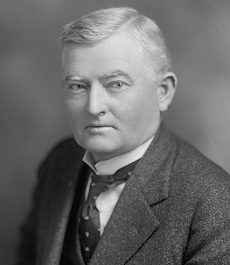
    Amid the kidding, I had to follow-up the reference to Franklin D. Roosevelt’s then-VP, John Nance Garner. FDR was of course an avid poker player, but I’d never thought much about Garner or his playing, so it was intriguing to see a casual reference to his stud expertise dropped here at the end of Pegler’s review.

    Hailing from Texas, “Cactus Jack” (as he was sometimes called) served in the Congress for three decades including as Speaker of the House for a couple of years, then was FDR’s VP for his first two four-year terms from 1933 to 1941. Though very active in Congress, he wasn’t so much as VP, and is famously quoted afterwards as having referred to the office of Vice-Presidency as “not worth a bucket of warm piss.” (The source for that quote isn’t clear, actually.)

    Like most politicians he had both proponents and enemies, and among the latter group belonged the famous labor leader John L. Lewis. Once while testifying to Congress in 1939, Lewis referred to Garner as “a labor-baiting, poker-playing, whiskey-drinking, evil old man” because “the majority of people will feel that anyone Lewis can’t control is all right.” (So reported Time magazine.)

    From what James McManus says about Garner in Cowboys Full, he actually “had grown up playing high-stakes draw” before becoming the stud expert (as Pegler calls him). McManus also points out how Garner wasn’t invited to FDR’s poker games, with their relationship deteriorating to the point that Roosevelt instead chose Henry Wallace to run with him as he won a third term.

    Incidentally, Garner would live to a ripe old age of 98. His 95th birthday happened to be November 22, 1963, the day John F. Kennedy was assassinated. Kennedy phoned Garner that morning at his home in Uvalde, Texas to wish him a happy birthday.

    Dan Rather -- then normally stationed in New Orleans -- was in Uvalde that morning to film a short piece with Garner, and had carried it to KRLD in Dallas where he dropped it off. Without an assignment for the rest of the day, Rather stuck around to watch the Kennedy motorcade. Shortly afterward he was among the first to pass along the news JFK had died, his report being picked up and shared over CBS radio even before Walter Cronkite’s famous pronouncement.

    There’s more to Cactus Jack’s poker story, I’m sure, though I’ve yet to dig further. Perhaps he was just too good of a player for FDR to want hanging around. In any case, that nickname suggests he was probably considered a bit prickly by others, too.

    Image: John Nance Garner, public domain.

    Labels: , , , , , , ,

    Wednesday, June 08, 2016

    The Draw and Stud Kingdoms in the Poker Domain

    I’ve been thinking about draw poker and stud poker lately, and the idea that, in a sense, all variants can be categorized as having been derived from one or the other category of poker games.

    That is to say, if we created a taxonomy of card games with poker being the “domain” up at the top, draw and stud would be the top two “kingdoms” just underneath, with all the other games belonging to one or the other.

    In modern poker parlance, it’s common to see three categories of games identified -- flop games, draw games, and stud games. That’s a helpful system, say, if you’re choosing variants for a mixed game and want to ensure you’ve got a balance between different game types.

    You could, for example, have a nine-game rotation with three flop games (no-limit hold’em, pot-limit Omaha, Omaha hi/lo), three stud games (seven-card stud, seven-card stud hi/lo, and razz), and three draw games (2-7 triple draw, 2-7 no-limit draw, Badugi), which would also provide a good mix of a few “big bet” games among the fixed-limit ones.

    Then if you added further variants, you could try to keep the three categories balanced so as not to favor one over the others, since many players often come at a mixed game with more experience and/or knowledge in one of the three.

    However, if you go back in history and think about how poker was initially introduced and developed in the 19th century, it actually makes sense to slide the later-introduced flop games over and think of them as a subcategory of stud (its own “phylum,” you might say). In other words, while the hundreds of different poker variants introduce all sorts of distinctions making each unique, the most significant one determines whether or not a game can be said to derive from draw or stud -- namely, whether or not players can see any of the cards making up their opponents’ hands.

    Games derived from draw typically involve players showing none of their cards as they proceed through whatever rules govern the order of play, betting, hand ranking, and so on. Meanwhile games derived from stud typically involve players revealing some portion of their hand to each other, e.g., as “up cards” or shared “community cards.”

    Even with these two seemingly unblendable characteristics -- i.e., either all your cards are hidden, or they are not -- there exist some hybrids (we might call them) that try to combine draw and stud in some fashion. I’m thinking of draw games that involve sharing cards, of which Spit in the Ocean might have been the first step down that road (a draw game that has one card dealt face up in the middle to indicate what is wild). There are other draw games incorporating something like “community cards,” too, that seem to combine the categories.

    But you could argue as soon as any portion of a player’s hand is no longer hidden, the game no longer belongs to the draw “kingdom” and should be forced to emigrate over into stud.

    This point -- that all poker variants essentially come from either draw or stud -- is one made by Al Alvarez in his Poker: Bets, Bluffs and Bad Beats (2001). There he points out that all poker games, “even the craziest, are variations on two basic themes: closed or draw poker, in which all the cards are dealt facedown, and stud, in which four of the player’s five or seven cards are dealt faceup.”

    Alvarez is speaking of earlier pre-hold’em variants when making that point, but the taxonomy being suggested could still be said to include the flop games, which obviously were derived from stud.

    Could be fun, working out an entire taxonomy of poker variants. How would we classify Badeucy, for example? Put the Badeucy species in the poker domain, then the draw kingdom, then the fixed-limit phylum, then the multiple-draw class, then the lowball order, then the Badugi family, and finally the deuce-to-seven genus?

    I wrote about the first references to draw poker in this week’s “Poker & Pop Culture” column, noting how the introduction of the draw was the first meaningful variation from what might be called the “original” form of poker sometimes called “Old Poker” in which five cards were dealt, a round of betting followed, and then there was a showdown.

    In the column I make a few gestures toward the idea that being able to discard and draw evokes (in a way) various “American” ideas of being free to try to improve your status if desired. Check it out and see if you buy that argument or not:

  • Poker & Pop Culture: Life, Liberty, and the Pursuit of a Better Hand
  • I’ll be talking about the introduction of stud next week, and will be suggesting this point as well that all poker variants might be thought of as belonging to one of these two “kingdoms” of games. Let me know if you have any thoughts about any of this as I pull together my own.

    Image: “Taxonomic ranks” (adapted), Annina Breen. CC BY-SA 4.0.

    Labels: , , , , , ,

    Thursday, June 02, 2016

    Presidential Candidates Playing Poker

    Still dealing with pre-Civil War poker during this week’s installment of “Poker & Pop Culture” over on PokerNews. The columns are following a chronological narrative, especially early on, although I imagine once we get to the later 20th century I will open things up a little and not be as attentive to the history-of-the-game side of things.

    With this one I share some details from an entertaining early poker story told by the English actor Joe Cowell in his memoirs. The book was published in 1844, and the story he tells concerns his being introduced to poker aboard a steamboat back in 1829.

    The story is fairly diverting, though it’s a digressive reference to Henry Clay by Cowell that I mostly focus on in the article. Cowell repeats the idea that the Kentucky politician actually invented poker. It’s an entirely spurious claim although still interesting given the fact that Clay was running for president (the fourth of five tries by Clay, none successful) the very year Cowell published his memoirs.

    I follow the Clay thread a bit to talk about some other likely apocryphal tales of him and fellow politician (and failed presidential candidate) Daniel Webster playing poker against each other, something they certainly did although the stories of their games seem more than a little embellished.

    Reflecting the cultural significance of poker circa the mid-1840s (still a relatively new game), supporters of Clay’s opponent, James K. Polk, publicized Clay’s poker playing as reason not to vote for the candidate.

    I write more about that in the column, too -- if you’re curious, check it out: “Poker & Pop Culture: Heads-Up for Pols -- Henry Clay v. Daniel Webster.”

    Images: Daniel Webster (left), painting by Richard Francis Nagle (ca. 1849); Henry Clay (right), painting by Henry F. Darby (ca. 1858) (public domain)

    Labels: , , , ,


    Older Posts

    Copyright © 2006-2021 Hard-Boiled Poker.
    All Rights Reserved.