Wednesday, June 15, 2016

Running Into Cactus Jack
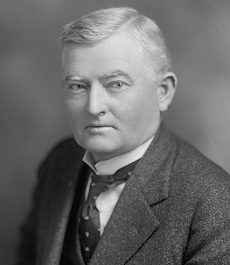
For a few different reasons -- including this new “Poker & Pop Culture” series of articles I’m writing for PokerNews -- I’m finding myself burrowing deep in digressive, distracting paths after uncovering this or that historical nugget about people in the past playing poker.

Recently there came one such distraction as I called up a copy of the September 1, 1934 Reading Eagle, the daily newspaper of Reading, Pennsylvania. In that issue appears a review of a new poker strategy book called the Stud Poker Blue Book by George Henry Fisher that had first been published three years before.

I was scouting about for information about Fisher’s book for yesterday’s column, the focus of which has to do with the introduction of stud in the nineteenth century and the relative dominance of draw poker among cultural representations of the game thereafter (even while stud gained in popularity). Here’s that one, if you’re curious:

  • Poker & Pop Culture: Following Draw, “Stud-Horse Poker” Gallops In
  • The review of Fisher’s book -- written by Westbrook Pegler as an installment of his regular column, titled “Fair Enough” -- is a positive one, ending with a few almost tongue-in-cheek complaints about bridge having come to rival poker in popularity.

    “For some reason bridge has claimed rating as the gentleman’s game and is considered to be desirable nowadays as a part of the social equipment of young officers of the army, along with dancing, tennis and the etiquette of the seven-fork formal dinner,” writes a derisive-sounding Pegler.

    “There is yet time to reestablish stud poker as the old army game,” he continues hopefully. “Possibly Vice President Garner, who is one of the great American experts in stud would help to install Mr. Fisher’s Stud Poker Blue Book as one of the official studies at West Point.”

    Amid the kidding, I had to follow-up the reference to Franklin D. Roosevelt’s then-VP, John Nance Garner. FDR was of course an avid poker player, but I’d never thought much about Garner or his playing, so it was intriguing to see a casual reference to his stud expertise dropped here at the end of Pegler’s review.

    Hailing from Texas, “Cactus Jack” (as he was sometimes called) served in the Congress for three decades including as Speaker of the House for a couple of years, then was FDR’s VP for his first two four-year terms from 1933 to 1941. Though very active in Congress, he wasn’t so much as VP, and is famously quoted afterwards as having referred to the office of Vice-Presidency as “not worth a bucket of warm piss.” (The source for that quote isn’t clear, actually.)

    Like most politicians he had both proponents and enemies, and among the latter group belonged the famous labor leader John L. Lewis. Once while testifying to Congress in 1939, Lewis referred to Garner as “a labor-baiting, poker-playing, whiskey-drinking, evil old man” because “the majority of people will feel that anyone Lewis can’t control is all right.” (So reported Time magazine.)

    From what James McManus says about Garner in Cowboys Full, he actually “had grown up playing high-stakes draw” before becoming the stud expert (as Pegler calls him). McManus also points out how Garner wasn’t invited to FDR’s poker games, with their relationship deteriorating to the point that Roosevelt instead chose Henry Wallace to run with him as he won a third term.

    Incidentally, Garner would live to a ripe old age of 98. His 95th birthday happened to be November 22, 1963, the day John F. Kennedy was assassinated. Kennedy phoned Garner that morning at his home in Uvalde, Texas to wish him a happy birthday.

    Dan Rather -- then normally stationed in New Orleans -- was in Uvalde that morning to film a short piece with Garner, and had carried it to KRLD in Dallas where he dropped it off. Without an assignment for the rest of the day, Rather stuck around to watch the Kennedy motorcade. Shortly afterward he was among the first to pass along the news JFK had died, his report being picked up and shared over CBS radio even before Walter Cronkite’s famous pronouncement.

    There’s more to Cactus Jack’s poker story, I’m sure, though I’ve yet to dig further. Perhaps he was just too good of a player for FDR to want hanging around. In any case, that nickname suggests he was probably considered a bit prickly by others, too.

    Image: John Nance Garner, public domain.

    Labels: , , , , , , ,

    Wednesday, June 08, 2016

    The Draw and Stud Kingdoms in the Poker Domain

    I’ve been thinking about draw poker and stud poker lately, and the idea that, in a sense, all variants can be categorized as having been derived from one or the other category of poker games.

    That is to say, if we created a taxonomy of card games with poker being the “domain” up at the top, draw and stud would be the top two “kingdoms” just underneath, with all the other games belonging to one or the other.

    In modern poker parlance, it’s common to see three categories of games identified -- flop games, draw games, and stud games. That’s a helpful system, say, if you’re choosing variants for a mixed game and want to ensure you’ve got a balance between different game types.

    You could, for example, have a nine-game rotation with three flop games (no-limit hold’em, pot-limit Omaha, Omaha hi/lo), three stud games (seven-card stud, seven-card stud hi/lo, and razz), and three draw games (2-7 triple draw, 2-7 no-limit draw, Badugi), which would also provide a good mix of a few “big bet” games among the fixed-limit ones.

    Then if you added further variants, you could try to keep the three categories balanced so as not to favor one over the others, since many players often come at a mixed game with more experience and/or knowledge in one of the three.

    However, if you go back in history and think about how poker was initially introduced and developed in the 19th century, it actually makes sense to slide the later-introduced flop games over and think of them as a subcategory of stud (its own “phylum,” you might say). In other words, while the hundreds of different poker variants introduce all sorts of distinctions making each unique, the most significant one determines whether or not a game can be said to derive from draw or stud -- namely, whether or not players can see any of the cards making up their opponents’ hands.

    Games derived from draw typically involve players showing none of their cards as they proceed through whatever rules govern the order of play, betting, hand ranking, and so on. Meanwhile games derived from stud typically involve players revealing some portion of their hand to each other, e.g., as “up cards” or shared “community cards.”

    Even with these two seemingly unblendable characteristics -- i.e., either all your cards are hidden, or they are not -- there exist some hybrids (we might call them) that try to combine draw and stud in some fashion. I’m thinking of draw games that involve sharing cards, of which Spit in the Ocean might have been the first step down that road (a draw game that has one card dealt face up in the middle to indicate what is wild). There are other draw games incorporating something like “community cards,” too, that seem to combine the categories.

    But you could argue as soon as any portion of a player’s hand is no longer hidden, the game no longer belongs to the draw “kingdom” and should be forced to emigrate over into stud.

    This point -- that all poker variants essentially come from either draw or stud -- is one made by Al Alvarez in his Poker: Bets, Bluffs and Bad Beats (2001). There he points out that all poker games, “even the craziest, are variations on two basic themes: closed or draw poker, in which all the cards are dealt facedown, and stud, in which four of the player’s five or seven cards are dealt faceup.”

    Alvarez is speaking of earlier pre-hold’em variants when making that point, but the taxonomy being suggested could still be said to include the flop games, which obviously were derived from stud.

    Could be fun, working out an entire taxonomy of poker variants. How would we classify Badeucy, for example? Put the Badeucy species in the poker domain, then the draw kingdom, then the fixed-limit phylum, then the multiple-draw class, then the lowball order, then the Badugi family, and finally the deuce-to-seven genus?

    I wrote about the first references to draw poker in this week’s “Poker & Pop Culture” column, noting how the introduction of the draw was the first meaningful variation from what might be called the “original” form of poker sometimes called “Old Poker” in which five cards were dealt, a round of betting followed, and then there was a showdown.

    In the column I make a few gestures toward the idea that being able to discard and draw evokes (in a way) various “American” ideas of being free to try to improve your status if desired. Check it out and see if you buy that argument or not:

  • Poker & Pop Culture: Life, Liberty, and the Pursuit of a Better Hand
  • I’ll be talking about the introduction of stud next week, and will be suggesting this point as well that all poker variants might be thought of as belonging to one of these two “kingdoms” of games. Let me know if you have any thoughts about any of this as I pull together my own.

    Image: “Taxonomic ranks” (adapted), Annina Breen. CC BY-SA 4.0.

    Labels: , , , , , ,

    Wednesday, September 08, 2010

    Triple Stud Ain’t Flipping Pennies

    Another late one with the World Championship of Online Poker, this time following Event No. 8, the $215 buy-in Triple Stud event (recap here). PokerStars introduced Triple Stud just last month, another mixed game variation which rotates between seven-card stud (high), razz, and seven-card stud high/low eight-or-better. So you go high, you go low, and then you try to go both.

    I don’t play these stud games all that often, aside from when I occasionally sit down in the 8-game mix games. (I also will play razz now and then.) And when I do play, it is just about always in ring games and practically never in tournaments.

    While watching the action last night, I thought more than once about John Lukacs’ denouncing of “seven-card stud, high-low” is his 1963 article “Poker and American Character.” That’s the piece I took a couple of posts to discuss last week (part 1 & part 2).

    Lukacs, raised on five-card draw (which he deems “classic” poker), says in his article that “seven-card stud resembles a gambling game with poker nomenclature but not very different from flipping seven pennies and betting on them in turn.” Too much luck, not enough skill -- or at least too much diminishment of the “psychological factors” -- says Lukacs.

    I suggested last week that Lukacs may not have understood seven-card stud especially well. It’s true, I suppose, that any game for which we lack a familiarity with strategy and/or an appreciation for its required skills has the potential to look like “flipping pennies” to us. As I said, I don’t play these games a lot, and I guess there were times last night when I might’ve talked myself into thinking it was just a card-drawing contest, if I didn’t know better.

    Heck, for someone who hasn’t played golf before, even that game perhaps might look like a collection of random actions compiled together in the name of competition. But for those who have played the game seriously, they know how complicated the strategy can be, as well as how greatly skill does affect players’ relative success.

    Last night’s event featured a number of skilled players, and once the final table began it was apparent from the rapidity of players’ actions that generally speaking all knew exactly what they were doing with pretty much every decision they were making. There was one notable exception, however, right at the final table bubble when there were nine players remaining.

    The game had just moved to razz (from stud high). The way the tourney worked, they played 20 minutes of each game before switching, with each game change also bringing an increase in the stakes. There were two tables left, one four-handed and the other five-handed.

    At the four-handed table, a few hands had gone by with a player named CianoMar having won a couple of pots to move his stack to around 325,000. That was below average at the time, but there were three or four other players in much worse shape at the time. Not sure, but I think in those hands he won CianoMar had started with an ace and was able to bet his opponents out of the hands by fourth or fifth street.

    Then came a hand in which CianoMar bet with a queen showing, then kept pushing the action as he drew a nine and then a jack. Finally the player folded on sixth street, but it was odd to see him remain aggressive with two face cards up.

    On the next hand, he stayed in again with a king showing, and when he stuck around after drawing a ten on fourth street it was obvious he hadn’t realized the game had changed to razz. I noticed railbirds in the chatbox starting to type “omg” and the like, noting there that CianoMar was in error. I also saw players on the other five-handed table start to talk to one another about how he didn’t realize the game was razz.

    Finally a player at CianoMar’s table typed “it’s razz dude” (or something) and CianoMar quickly corrected his course. By then he’d slipped all of the way down to 75,000 -- 9th out of 9! -- and was in danger of bubbling the final table. But he caught some cards and scraped back to nearly 500,000 by the end of the level. (He’d eventually finish fourth.)

    A bit of an ethical dilemma there, I suppose, for his opponents, one of whom decided it prudent to let him know of his mistake. I’d say it was unfortunate that observers in the chatbox could’ve affected the action there, too. (I believe it isn’t until the final table that observer chat is finally turned off.)

    Was kind of wild to see that happening at such a crucial moment in the tournament. Of course, we’ve all been there, I imagine. I know I have when playing mixed games, not realizing until after a hand or two the game had changed.

    I guess in a way those few hands which CianoMar misplayed could be said to help prove the point that these games are in fact very different from “flipping seven pennies.” After all, the player who thought he was playing stud during the razz level clearly didn’t have an equal chance to win those hands!

    Labels: , , , , , ,

    Friday, July 14, 2006

    Dazed and Confused; or, My Introductions to Omaha and Seven-Card Stud

    Still keeping an eye on that H.O.R.S.E. event at the WSOP. They’ve finally whittled the original field of 143 down to the final 9. Gotta love that final table, with Doyle Brunson and T.J. Cloutier still there. Talk about a couple of tough “horses" -- a couple of 70-plus-year-olds making it through that ungodly 19-hour second day. Phil Ivey, Andy Bloch, Chip Reese . . . should be a great finale. A shame that they will now play it out as a no-limit hold ’em event, but I’ll still be checking in to see who survives.

    Again, as a nod to the H.O.R.S.E. event, I wanted to make one more non-hold ’em post and talk a bit about Omaha and Stud. I used to play both games quite a bit, especially Pot Limit Omaha (high only), though not so much for the last six months or so. My introduction to Omaha was kind of interesting. I had only been playing for play chips on PokerStars for a month or so when some of the friends with whom I had been playing recommended giving Omaha a try. After only a few hands at a ring table, I entered one of those Sunday afternoon freeroll tournaments Stars regularly runs, a fixed limit Omaha (high only) tourney with over 6000 entrants. I searched around on the web a bit just before the tournament began and found what looked like a reasonable, simple little chart explaining how to rate Omaha starting hands by assigning certain points -- e.g., AA gets 30 pts., Ace & anything suited gets 10 pts., connectors get two points, etc. If your hand totalled 10-15 pts., you could call the BB. If you had more, you could call a raise. Even more and you could raise yourself. I propped my chart on the keyboard, loaded Led Zeppelin’s eight studio albums into Winamp, and watched as the first hand was dealt.

    Now these huge freerolls tend to attract a lot of less-than-serious players, and in the case of an Omaha tourney, I’m sure they also bring in a significant number of folks who aren’t even clear about the rules of the game. (I at least knew the rules, even if I didn’t have much of a clue about strategy.) I followed my little chart pretty closely, which I soon realized only permitted me to play about 10-15% of the hands. Such a super-tight approach allowed me to survive the first couple of thousand casualties pretty easily, although my stack wasn’t growing very much. Then somewhere around “Gallows Pole” I caught a rush of cards and found myself among the top hundred. I continued to limp along. A couple of hours later we were down to 800 and “Achilles’ Last Stand.” Then there were 300 left -- “Hot Dog”! Finally came the last, drawn-out chords of “I’m Gonna Crawl” . . . an appropriate title, as I had become one of the shorter stacks clinging for dear life. The music stopped and I looked up to see I was sitting at 9th out of 12 remaining. Then 9th out of 11. Then 9th out of 10.

    The “prize” for the tourney was only for those who made the final table (top 9) -- an entry into the “Weekly Round 2” tourney the following Sunday (a freeroll with a $100 prize pool). I remember being dealt something like AsAhJs5d and actually folding it, nervously eyeing the guy on the other table who only had a single big blind remaining. Finally, after folding a few more hands, I watched as he was bounced. “Congratulations, you have made the final table!” The very next hand was an all-in fest, and I happily went out in ninth place. Ninth! Out of over 6000. I was starting to think I might like Omaha.

    Only later did I realize that I had misread the chart I had used -- it was designed for Omaha 8-or-better (or “high-low”), not just Omaha high. So that’s why it awarded 15 pts. for having a deuce and a trey in your hand! (Shamus smacks forehead.) Still, somehow, I’d overcome even this self-imposed handicap to get through five-plus hours and thousands of opponents. Have to say, for someone who’d yet to make his first deposit to play real money games, this was some serious fun.

    I checked the schedule and saw the following Sunday’s “Weekly Round 2” was actually a limit Stud tourney. I didn’t realize at the time that Poker Stars allows you to bank tourney entries and use them whenever you wish, so I thought I had one week to learn yet another game. I picked up a copy of Roy West’s 7 Card Stud: 42 Lessons How to Win at Medium & Lower Limits -- not necessarily the best way to learn how to negotiate a stud tournament (although there is a section in the back by Tom McEvoy about “Tournament Tactics”), but definitely a nice introduction to the game. I read through the entire book, took lots of notes, and made up a chart that compiled West’s recommendations for starting hands and fourth-, fifth-, sixth-, and seventh-street play. Whereas I had prepared a total of ten minutes for the Omaha tourney, I had probably put in at least 15 hours getting ready for my big Stud debut.

    What happened? Not much. I busted out within the first hour. None of West’s recommendations seemed to work as described. I was placed at a table where five of the eight players had neglected to show up for the tourney, so it was just me, the five “sitting out” zombies, and two extremely aggressive players who appeared ready to cap the betting on every street. I couldn’t keep up at all, and thus received both an early exit and a short-lived prejudice against Stud.

    Eventually I came to appreciate Stud and played the ring games every now and then. Omaha I liked even better, and for a time played nothing but PLO on Stars (nothing above the $0.05/$0.10 tables, of course). I did reasonably well in a few PLO SNG’s, and I even made another final table in another Omaha freeroll, finishing ninth again out of another field of thousands. I gravitated back to hold ’em, however, where I’ve been mostly camped out ever since.

    I’ve been leafing through West’s book lately and occasionally sitting in on a few rounds of Stud. I’d like to get my hands on a good Omaha book, also, and get back into that game as well. I’ve seen recommended Ray Zee’s High-Low Split Poker (which covers both Stud and Omaha) -- I may pick it up. (Can anyone who has read it tell me what they think of that one?) Even if the WSOP has decided now that we’ve reached the final table of the H.O.R.S.E. event that these other games are no longer interesting, I’m still curious. Would hardly be a self-respecting detective if I weren't . . . .

    Image: Led Zeppelin, Led Zeppelin (1969), Amazon.

    Labels: , , , , , , , ,


    Older Posts

    Copyright © 2006-2021 Hard-Boiled Poker.
    All Rights Reserved.