Friday, February 24, 2012

To Sum Up

Among the writing assignments I have today is one involving the novel I’m working on, the first draft of which I have completed.

There’s still a way to go on this sucker, with much revising to do as well as a few additional scenes to include. But I’ve written the first version of the last chapter, which is satisfying in its own right.

My assignment today is to write a 50-word synopsis of the book, a “pitch” such as I might include in a query letter soliciting an agent or in other contexts. Not an easy thing to do, although I think I have a good idea of how I’m going to say it. My first novel, Same Difference, was just over 100,000 words long. This one will be shorter, but getting it all down to two or three sentences remains a challenge.

I’m unsure at the moment how I plan to go about publishing this one. I may not even get to the stage of trying to get an agent -- I didn’t use one for the first novel -- and even if I do, I may or may not be trying to get one via the query letter route. But I think it’s still a good exercise to try to boil it all down to a quick, understandable synopsis. In fact, I can tell already it will be a useful exercise when it comes to the revising, having focused my thoughts a bit more sharply regarding what the novel is really about.

When it comes to writing well, summarizing is often an underrated skill. Just about every kind of writing requires a least some form of summary, and a lot of times it takes more creative muscle to grasp the “gist” of something that has already been written than to write something wholly new or original.

A lot of people reading this site probably frequent other poker-related sites where summaries of the day’s news are regularly posted. You know, like PokerNews’ “Nightly Turbo,” the “Daily Rewind” at PokerStrategy, BLUFF Magazine’s “The Week That Was” and the like. Michael Gentile’s “This Week in Poker Podcasts” for PokerFuse can be listed, too, as an another example of the form.

Barry Carter recently wrote about these “news in brief”-type articles amid that series of posts about poker media I was recommending a while back. Such articles may appear relatively simple to pull together, but often require a lot of effort to be done effectively, with some of the hardest decisions being of the editorial variety where one has to be judicious when selecting what to include and what to leave out.

Of course, summarizing your own stuff presents a different challenge, too, since even great writers often have occasional blind spots when it comes to reading and evaluating their own work. But like I say, it can be a useful -- even enlightening -- exercise for a writer.

Here... for practice I’ll try boiling down this 500-word post to 10:

While summarizing his novel, Shamus procrastinates by writing about summarizing.

Labels: , , , , ,

Thursday, February 23, 2012

Daniel Damns, Doyle Defends

The first page of Doyle Brunson's handwritten blog post from 2/20/12One of the topics Jeff “PKRGSSP” Walsh and I discussed briefly on his podcast Tuesday night was the recent spate of commentary from top pros regarding Full Tilt Poker, specifically Daniel Negreanu’s video blog from last week (which I wrote briefly about here) and Doyle Brunson’s response-slash-commentary posted on his blog on Monday (see the 2/20/12 entry). Since then Negreanu has posted another video blog in which he talks further about FTP as well as Brunson’s post.

I’m not going to summarize all of the back-and-forthing going on, nor am I going to rehearse the short conversation PKRGSSP and I had about it. But I did want to chime in with a few thoughts both about Brunson’s post and Negreanu’s rejoinder.

If you’ve read Brunson’s post you saw him acknowledging those who ran FTP to be guilty of “gross negligence and terrible mismanagement,” though ultimately defending Howard Lederer and Chris Ferguson against the charge that they knowingly committed fraudulent actions. Instead Brunson -- who interestingly includes scans of the handwritten pages from which his posts are transcribed (a latter-day testament to the authority of the written word?) -- mostly blames CEO Ray Bitar for all that has happened. Brunson refers to Bitar as “an unknown person to the poker world,” kind of like an outsider who wandered into an Old West town and was given an unreasonable amount of authority regarding those who call it home.

There’s a lot of imprecision in Brunson’s post regarding the facts of the case. “Exactly how FT lost their cash is not clear to me,” he says. “Something about processors, electronic checks they couldn’t cash, etc.” This despite earlier professing some inside knowledge thanks his close relationship with Jack Binion who for a time was considering buying the beleaguered site.

These hand-waving, vague allusions to the “something” that happened at Full Tilt Poker don’t do much to bolster Brunson’s credibility on the matter, but they do fall in line with his general defense of Lederer and Ferguson as being out of their element as businessmen. “The bottom line was they were poker players, not corporate executives,” says Brunson, suggesting that as such they might be forgiven for transgressions occurring under their watch.

'The Godfather of Poker' (2009) by Doyle Brunson (with Mike Cochran)I can’t help but recall the succession of stories Brunson tells regarding his own failed business ventures in The Godfather of Poker, a few of which saw him and the late David “Chip” Reese losing money time and again on what Brunson calls “crazy schemes.” In other words, while his defense of Lederer and Ferguson partly stems from his friendships with the two (especially Lederer), I think it also comes from the fact that Brunson has been in a similar situation many times -- that is, being a poker player who found himself in over his head when trying to prevent a business venture from failing.

Of course, none of those “crazy schemes” Brunson describes in his book appear to have hurt others like the one Full Tilt Poker did. Significantly.

In his video response to Brunson’s post, Negreanu draws an interesting parallel between Brunson’s defense of Lederer/Ferguson and Barry Greenstein’s statements about Russ Hamilton during the early days of the UltimateBet scandal back in the summer of 2008. In that case, Hamilton had already apparently been advised by lawyers not to speak (or so he said), but had a two-hour meeting with Greenstein which the latter then reported in summary fashion on the old PokerRoad podcast.

I don’t believe Greenstein went as far as to say he thought Hamilton was innocent. Nor do I recall any suggestion that the now-disgraced 1994 WSOP Main Event champion looked Greenstein “dead in the eye” and said he wasn’t aware of the cheating or any other wrongdoing (as Lederer apparently did with Brunson when asked “about the financial problems”). But Greenstein did say he wanted to believe Hamilton, and also in an indirect way indicated he thought Hamilton perhaps wasn’t as guilty as some believed by saying he thought Hamilton knew the guilty party or parties. (See here for more on that Greenstein-Hamilton meeting.)

I think it is safe to say now that Greenstein was somewhat off-the-mark in his assessment of Hamilton. And while the parallel isn’t perfect I think Negreanu’s reference to it makes some sense in this context, especially given how Brunson’s defense similarly evokes the relative knowledge of the accused.

Start Playing for Real Money at Full Tilt PokerNegreanu also correctly brings up how the site continued to accept deposits from non-U.S. players after Black Friday (up until the end of June when the Alderney Gambling Control Commission suspended their license to operate). In the Department of Justice’s September 2011 amendment to the civil complaint, we see how Lederer was reporting “to others at Full Tilt Poker that there was only approximately $6 million left, and therefore no realistic ability to repay its new depositors.” In other words, Negreanu appears correct to point out that Lederer certainly knew something “about the financial problems” post-Black Friday (and of course likely knew things weren’t hunky dory before April 15, too).

To this point I would add what the amended complaint also alleges, namely how Full Tilt Poker continued right through the summer -- even after the site went down -- to claim repeatedly to all who asked that their “funds were safe and secure.” This, too, should go into the category of the numerous ethical failures on the part of Lederer et al., namely, to have allowed such reassurances to have been made when they certainly were false.

Brunson has already indicated he intends to follow up his post with more on the matter, so the dialogue between him and Negreanu will no doubt continue. As I said on PKRGSSP’s show, I think it is generally a good thing that these two are letting us know their thoughts on the issue given the prominent standing of both in the poker community. Their opinions matter, and will influence how others among us think about the situation going forward.

Ultimately, though, we’re still just dealing with the court of public opinion here, where the only real consequence is going to be the affecting of attitudes. We can and should keep talking about all this. But as far as resolution or reparation goes, for that we remain reliant on others.

Labels: , , , , , ,

Wednesday, February 22, 2012

Talkin’ ’Bout Luck, Talkin’ To PKRGSSP

A poker scene from the second episode of HBO's 'Luck'Just a quick note today to point to a couple of other items to satisfy your reading and/or listening pleasure.

First, I wrote something for the Epic Poker blog that was posted yesterday regarding the new HBO series Luck starring Dustin Hoffman and Nick Nolte. Those of you who have seen any or all of the first four episodes have noticed there are quite a few poker scenes, all involving one character, Jerry (Jason Gedrick).

I wrote about the way poker seems to have been presented thus far on the show -- as a kind of “leak” that is obviously detrimental to Jerry and potentially to his friends with whom he has business relationships. The post is titled “The Pull of Poker in HBO’s Luck.”

Incidentally, when I wrote the piece I was mindful of the fact that a lot of people watch TV differently these days, saving episodes on the DVR or planning later to watch them consecutively on DVDs or in other ways rather than watching week-to-week. I do get into some specifics regarding scenes in which Jerry plays poker, but give a warning in the article regarding which paragraphs to skip if you wish to avoid “spoilers.”

Jerry rechecks his cards during a hand in the second episode of HBO's 'Luck'The show is fairly gripping, perhaps more so for those interested in horse racing and/or gambling. There are a lot of threads going with little having been resolved during the first four shows -- kind of a “slow build” that perhaps takes into account how viewers now often don’t watch one show per week, but many at a time.

I’m guessing some will find Luck less immediately engaging than The Sopranos or other, similar “high end” dramas after which this series has clearly been patterned. But like I say, if you’re interested in poker and/or gambling, the show might be worth checking out.

The other item I wanted to let you know about was my appearing on The PKRGSSP Show last night on QuadJacks Radio. I was one of three guests, coming on in between my buddy Rich Ryan of PokerNews and the great tourney director Matt Savage. Had a lot of fun chatting with Jeff (a.k.a. our friend, Mr. Can-I-Buy-a-Vowel PKRGSSP) about blogging, my “Poker in American Film and Culture” class, and other topics of the day.

They uploaded the show onto YouTube overnight, and so if you’re interested you can listen. I come on around the 23-minute mark.


By the way, the QJ guys photoshopped that picture of me that pops up when I’m on, and in fact did an uncanny job of estimating my teaching disguise. Although I do like to unbutton that top button and loosen my tie just a little.

Labels: , , , ,

Tuesday, February 21, 2012

Crossing “the Borderline of Dishonor”

'Queer Luck' (1899) by David A. CurtisNot long ago I had a chance to read a very interesting collection of poker stories by David A. Curtis titled Queer Luck. The book was published in 1899 with the subtitle “Poker Stories from the New York Sun.”

There isn’t much in the way of specifics about the stories’ origins or even the names of the people who appear in them. I believe all of the stories appeared during the previous couple of years in the New York Sun, one of the three big newspapers in NYC during the late 19th century (along with the Times and Herald).

The 13 tales in the book are presented in literary fashion by Curtis -- they really read like short stories -- with a number of them introduced as related to Curtis by an unnamed “gray-haired young-looking man” after a game of cards. A couple of weeks ago I wrote about one of the stories for the Epic Poker blog, one titled “For a Senate Seat” in which a party’s senatorial nominee was allegedly determined by a poker game.

All of the stories are engaging and highly readable, but I wanted to share the first one -- probably my favorite -- titled “Why He Quit the Game,” which neatly introduces the theme suggested by the book’s title. The story also uncannily reminds me of a certain situation involving an online poker site on which a lot of us once played. Let me summarize the story here and I’ll let you decide why it might evoke such a connection.

“Why He Quit the Game” does not feature the narrative frame of the “gray-haired young-looking man.” Rather Curtis just launches into the story of a wild session of five-card draw jacks-or-better that took place at a regular underground game at an uptown club in New York City.

The five players are all referred to generically by their professions -- the Editor, the Congressman, the Colonel, the Doctor, and the Lawyer. The game usually featured a one-dollar ante, but thanks in part to a series of remarkable hands and big pots the stakes on this night had gradually been increased tenfold.

Indeed, a lot of “queer luck” had marked the session. “Fours had been shown several times... and beaten once,” we’re told. “Straight flushes had twice won important money,” too, and players were routinely being dealt “pat fulls and flushes.”

For a while no one remarked on the oddity of so many big hands routinely turning up at showdowns. “It was as if each man feared to break the run by mentioning it,” Curtis explains. At last one does make a reference to what has been happening, jokingly noting that “the devil himself has been playing with his picture books to-night,” and the others agree.

The Congressman then deals a hand, announcing the ante would be doubled to $20 for this one. The Lawyer is dealt a four-flush with two tens, the Doctor gets a pat king-high straight, the Congressman has a pair of queens, the Editor has three deuces, and the Colonel has at least two aces (he doesn’t look at his other three cards).

The Doctor opens for twenty, everyone calls, then comes the draw. Again the Doctor leads with a bet of $20, though with all of the big hands that have been shown he doesn’t feel very confident his straight is going to be best. The Editor didn’t improve on his three deuces, and sharing the same lack of confidence folds to the Doctor’s proportionately small small bet.

Both players were correct to be timid, as we learn the Congressman has improbably drawn three sixes to match his pair of queens (perhaps again evoking the idea that the devil might well be involved). He raises to $40, then the Colonel -- who when looking at his remaining cards had found a third ace before he drew -- reraises to $90.

'Queer Luck' title pageThe Lawyer, who had pitched one of his tens and kept QhTh9h8h, calls, and at that point the uncertain Doctor folds his straight. The Congressman then makes it $140 with his full house, to which the Colonel pushes it up a hundred more. Then the Lawyer reraises a hundy on top of that. The Congressman just calls, but when the other two continue to add more to the pot he finally folds his sixes full of queens, giving up the more than $300 he’s contributed to the pot.

The reraises continue unabated, with the Lawyer eventually going into his pocketbook to pull out a stack of hundred dollar bills to add to the pot. Ultimately the pot has been built up to more than $5,000 when the Lawyer finds himself facing yet another reraise from the Colonel for $1,000 more.

The Lawyer is about to reraise again when he suddenly stops himself. “The bills were still in his grasp,” writes Curtis, “and, instead of laying them down, he sat for a moment rigid as a statue, while his face grew white.” Thinking of various poker stories in fiction, one might assume the Lawyer is about to drop dead of a heart attack here, but this apparently true story goes in a different direction.

The Lawyer rechecks his cards -- which baffles the others -- then merely calls the Colonel’s last raise. The Colonel turns over four aces, but the Lawyer had drawn the Jh to make a winning straight flush. He then rakes the huge pot, though everyone remains tense, still feeling as though “some strange climax was coming, and none could even guess what it could be.”

Indeed, there is more to come here. The Lawyer counts up his winnings, then surprisingly hands $2,000 of it back to the Colonel. Then he delivers a speech.

“I am done with poker,” he begins, going on to explain that while he loves the game -- "To my mind there is no other sport that equals it" -- he recognizes that he “stepped across the borderline of dishonor” when playing the previous hand. And having done so, he now thinks the only appropriate response for him is to quit playing poker.

What was his transgression? Did he cheat? No. He had put money into the pot that was not his, but rather belonged to a client.

“If I had lost,” he explains, “I could not immediately have replaced it.” In the excitement of the hand he’d lost track of what money was his and what was not, and so had mistakenly used some of his client’s money that he had been carrying to continue. The amount he gave back to the Colonel corresponded to the amount the Lawyer had won with money that wasn’t his.

The Lawyer then asks the others if they believe he owes them as well. They recognize the Lawyer’s integrity, and noting how they were friends (having played the game regularly for over a year), agree that he owes them nothing.

The story ends with the Colonel extending his hand to the Lawyer, who “grasped it nervously. One after another, the three others shook hands with him also, and the game was over.”

As I said, I’ll let you work out how or whether this story might recall that online poker site alluded to above having transgressed “the borderline of dishonor” in the way it managed its operation. Instead I’ll just recommend the rest of Queer Luck as book containing many more surprisingly suspenseful and thought-provoking poker tales. The book is available online in the Internet Archive (via the University of California) as a .pdf file (about 7 MB) by clicking here.

Labels: , , ,

Monday, February 20, 2012

2013

2013There were a number of poker-related headlines late last week containing the above figure. Those headlines appeared over stories reporting on the swift, unceremonious end to the brief hope that an online poker bill would be attached to a $150 billion package covering the extension of the employee payroll tax cut, unemployment benefits, and Medicare-related items.

Initial reports surfaced about a week ago suggesting that Senate Majority Leader Harry Reid (D-NV) was going to attach the online poker legislation to the bill. Then, just a couple of days later, Reid squashed such thoughts in a comment to a reporter saying there’d be no such attachment.

Word filtered around subsequently indicating that to attach the online poker legislation would threaten the bill (which Reid supported). Julio Rodriguez reported for Card Player that Reid’s “last ditch effort” to include the online poker legislation “fell short when it became apparent that it could put the entire legislation in jeopardy.” Perhaps it did, or perhaps it didn’t. Apparently Reid tried to attach other provisions to the bill, too, but those were all rejected by fellow legislators and not included either.

To finish the story, the bill was voted upon on Friday without any sort of ideas about regulating and licensing online poker in the U.S. attached, and just over two-thirds of the House voted in favor (across party lines). It also passed the Senate 60-36, where the Democrats were mostly for and Republicans against.

Thus came the headlines, most of which dovetailed upon Howard Stutz’ report for the Las Vegas Review-Journal: “Online Poker seen folding its hand until 2013.” In addition to reporting on the non-inclusion of online poker in the federal bill, Stutz also alludes to Nevada having passed its own legislation last year and state regulators having further finalized regulations to ready the state to offer its own online gaming licenses. Stutz says 13 companies have applied for licenses thus far.

The “2013” Stutz included in his headline and lead paragraph -- and subsequently repeated every else you read the story being summarized (because, after all, we’re in an extensive echo chamber here) -- represents a gaming analyst’s speculation that no federal online poker bill will be brought up again during this election year, although the truth is that possibility remains only slightly less likely at present than it had been before. (In other words, still about the same long shot.)

There are other bills to which online poker legislation could get attached, but in truth few really know if or when such might be attempted. And as was the case last week when this talk suddenly arose for a couple of days before just as suddenly dying down, I don’t think there will be a lot of lead time if something along these lines were to occur.

In other words, “2013” is really not much more than a number here to represent a vague, calculated guess, because there’s a little less “2012” today than there was last week, and “2014” seems too far off to focus upon as a legitimate target for predictions.

All of which is to say I’m convinced no one is really sure of much of anything of substance when it comes to predicting what is going to happen on a federal level with regard to online gambling. Not with any real certainty, anyway.

What is easier to predict is that absent any real knowledge or information, we’ll keep repeating these numbers to each other.

Labels: , , , , ,

Friday, February 17, 2012

Kid Poker Not Kidding Around

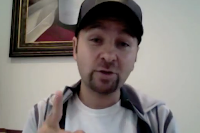
Daniel Negreanu, from his video blog of 2/15/12Many noticed the always forthright Daniel Negreanu made a short video blog this week in which he comments on various items, including the continued silence from those three Full Tilt Poker principals, Howard Lederer, Chris Ferguson, and Ray Bitar.

I said something on Monday about how I thought we’d probably hear other pros comment on FTP in the wake of Matt Glantz’ thoughtful post concerning “The Silence of Full Tilt,” so it wasn’t too surprising to see Negreanu’s video come when it did.

I still think as I did a few days ago that such petitions aren’t that likely to encourage anyone from Full Tilt to step forward and suddenly start communicating anything of significance to the rest of us. But as I said on Monday, I support those who insist on making sure we all don’t just forget about the hundreds of millions of dollars of players’ funds that remain inaccessible more than 10 months after Black Friday.

The level of vitriol in Negreanu’s statements captured some notice, something I think PokerLawyer did a nice job addressing in her post from yesterday, titled “Targets.” I think most are familiar enough with the context to understand what inspired Negreanu’s comments -- and frustration -- but it’s also worth pointing out the relationship between words and actions as PokerLawyer does.

I do believe that Negreanu is dead on, though, when he points out how those responsible at FTP “have no respect for our community.” The damage they’ve done to poker’s place in the culture, generally speaking, goes well beyond the theft of players’ funds.

It’ll be curious to see how everything develops with regard to the Full Tilt Poker saga as we get closer to the one-year anniversary of Black Friday, assuming that nothing happens with regard to the still-pending Groupe Bernard Tapie deal and players are still without their funds.

Even if something does happen and the deal somehow gets done before then, the logistics of players getting paid -- particularly for American players for whom the DOJ would be involved in facilitating such payments -- will mean a lot of time will necessarily have to pass before anyone actually gets their money back.

But even that slight ray of hope is pretty dim at present. And so the many who played on Full Tilt Poker -- and even those who didn’t but who have strong feelings about the game and the way it is perceived (and often proscribed) by the larger culture -- will continue to be frustrated. And justifiably so.

Labels: , , , , , ,

Thursday, February 16, 2012

Thinking About the Big One

The Big OneJust listened to this week’s Two Plus Two Pokercast, good as always. This one (episode 209, dated 2/14/12) featured a lengthy interview with WSOP Communications Director Seth Palansky.

The interview comes in a couple of segments, the first one (lasting a little over a half-hour) being all about the 2012 WSOP kicking off in Vegas in late May and the second one (going for another 40 minutes) mainly focusing on the Circuit events that run year-round. The interview starts at about the 48-minute mark, if you’re curious to dial up the show and listen.

During that second segment there was discussion of the various logistical challenges that arise at WSOP-C events, as well as some talk of the controversy regarding the “staff appreciation” fee at these events that has received a lot of scrutiny of late. For more on the latter -- really a hidden fee that has added to players’ costs without increasing prize pools -- see Todd “Dan Druff” Witteles’ summary and update regarding what has happened in the past and where things stand at present.

For me one of the more intriguing parts of the interview came during the first segment when they were discussing the 2012 WSOP, in particular the $1 million buy-in no-limit hold’em event, a.k.a. Event No. 51, a.k.a. “The Big One.”

Early in the interview there was some general discussion of this year’s schedule and its record-breaking 61 bracelet events, and Palansky was asked about the various factors that are considered when the schedule is drawn up. Somewhere in there the $1 million event came up and Palansky kind of casually suggested it “will get a few dozen players at most.” But then later they talked some more about it, and I was intrigued by the additional hints Palansky dropped regarding the potential field size for the event.

Palansky noted how when the event was first announced the WSOP decided to add a caveat that at least 22 players needed to play in order for it to be an actual bracelet event. He explained on the show how that was the field size for Doyle Brunson’s first WSOP Main Event win (in 1976), which is why it was chosen as a minimum here.

It has already been announced that they’ll meet that goal, as at least that many have confirmed they’ll be playing. They actually capped the event at 48 players -- why they did, I’m not sure -- and when speaking of the cap Palansky said “I really don’t feel there’s any chance we don’t get there.” In other words, it sounds like we should expect 48 to play in the sucker, or something close to that number, anyway.

Palansky further added that more than 50% of those who play in the event will be amateurs or “non-poker players,” including people from the sports world, hedge fund managers, lottery winners, and Macau businessmen. The mysterious Andy Beal will be there, too, adding further intrigue. Also, when co-host Adam Schwartz suggested a line of 0.5 for the number of women playing, Palansky responded “I’ll take the over,” thus indicating at least one woman has indicated she’ll be playing, too.

All told, Palansky expects the event to raise $5 million for the One Drop Foundation charity. Recall how $111,111 of each entry will be going to the charity (here’s the fact sheet for the event), which means there would need to be at least 45 players for $5 million to be raised.

When Jamie Gold received $12 million for winning the 2006 WSOP ME, it was the biggest prize ever won in poker, a record that continues to stand in early 2012 I was kind of amazed to hear that the WSOP really expects that many players to participate in the event. I believe Palansky, but am still kind of shaking my head about it.

When I appeared on “Keep Flopping Aces” last week, we discussed “The Big One” a bit and speculated about how big the field would be. One question that arose was whether or not it would sport the biggest first prize in poker history -- that is, would it exceed the $12 million first prize that Jamie Gold earned for winning the 2006 WSOP Main Event?

If 48 players actually play, that will create a total prize pool of $42,666,672. (Incidentally, there will be no additional juice taken from the prize pool for this event beyond what goes to One Drop.) The top 20% of players will be paid in this one, and according to the payout schedule if 48 play the top nine finishers will get paid, with the winner getting 43% of the prize pool. With 48 playing, that’ll be a cool $18,346,668.96!

If 25-29 players register, first place will be getting 48% of the prize pool, which means if 28 play, first place will earn just under $12 million ($11,946,668.16), while a 29-player field will be enough to break Gold’s record, with first getting $12,373,334.88.

When Lou Krieger asked me on the show to predict whether Gold’s record would be broken, I said I didn’t think it would. Even though we have known since December that at least 22 have said they would play, I couldn’t imagine too many more players would be winning to part with a million clams to participate. (Or could find enough backing to do so.)

But from what Palansky was saying on the podcast, it sounds as though Gold’s record is most certainly in jeopardy. The fact that the field will be containing a lot of “non-poker players” also indicates that the charity element more than anything is encouraging some to play poker for money that well exceeds what most poker pros would be willing to commit.

Indeed, I expect that regardless of what the total field size turns out to be, one would have to think there won’t be that many familiar faces among the bunch. Will still be a wild one to follow, though. And I wouldn’t be surprised to see the player who manages to grab that record-breaking first prize perhaps give a little more to One Drop when all is said and done.

Labels: , , , ,

Wednesday, February 15, 2012

The Challenge to Look at Ourselves

Warning... Challenges AheadOne reason why poker is such a fascinating game is the way it challenges us to look at ourselves. Relentlessly.

When we play poker we are forced to acknowledge that others’ perceptions of us actually have significance. Voluntarily or otherwise, we make impressions. We communicate ideas about who we are to others by our play, our demeanor, our talk, and in countless other ways. These ideas may provide genuine indicators of who we are. Or they might not, as we purposely or even unintentionally give off false signals to our opponents.

In any event, we know others are looking at us and trying to figure us out. And whether or not we try to deceive them, we are made to think about (1) who we really are, (2) who we are perceived to be, and (3) the relationship between the reality and the image.

In other words, it is a most self-conscious thing to play poker. And to play poker seriously is to be willing to accept the game’s challenge to look at ourselves. Relentlessly. As Anthony Holden smartly noted in Big Deal (1990), “Whether he likes it or not, a man’s character is stripped bare at the poker table; if the other players read him better than he does, he has only himself to blame. Unless he is both able and prepared to see himself as others do, flaws and all, he will be a loser in cards, as in life.”

Yesterday the poker pro Jason Somerville published a post to his blog titled “Real Talk” which begins with a simple, direct statement: “I’m a poker player.” Somerville then proceeds to share with his readers in a more detailed way another truth about himself, namely, that he is also a gay man.

Those of us who’ve watched Somerville play poker over the past few years and witnessed him amass over $1.7 million in tourney winnings, including picking up his first WSOP bracelet last summer in a $1,000 NLHE event, all knew about the first statement. That is, we all knew he was a poker player. And an above-average one at that.

I’ve covered Somerville in a few WSOP events, the most memorable probably being Event No. 35 from 2010, the $10,000 Heads-Up No-Limit Hold’em Championship in which he made it to the semifinals before finally losing to the eventual champ, Ayaz Mahmood, in a well-contested match. That event stands out for me as including what might have been the longest day-slash-night-slash-day of blogging I’ve ever experienced, with my partner Tim Duckworth and I going for 18 hours or something while covering the event’s last three rounds (and still not finishing!).

Few if any of us, however, were aware of the other revelation Somerville makes in the post about his sexual orientation. As he points out, other than Vanessa Selbst, he himself has never met a single openly gay professional player. He also mentions how, at present, “no man who is a well-known pro in poker is open about it.” And so there’s something noteworthy in his having decided to share this information about himself.

Jason Somerville after winning Event No. 20 at the 2011 WSOP, a $1,000 No-Limit Hold'em eventFinding the situation somewhat “archaic” while also professing a desire to be open about who he is and perhaps close the gap between reality and image a bit about himself, Somerville tells his story in a thoughtful, well-considered, and even inspiring post. It’s a personal statement written with goals and intentions that are in part wholly specific to Somerville. But it’s also obviously a public statement, too, written with a constructive purpose to help others as well as to affect the culture of poker in a positive way.

A few thoughts came to my mind when I read Somerville’s post, including some that are in fact on the personal side. I’ve had friends who’ve gone through similar trials to the ones Somerville describes in his post, and even once found myself involved in helping a friend discover a way to make his story known to a wider community. I’ll keep those thoughts to myself, though, and instead just share some other, more general ideas Somerville’s post inspired.

One was how poker resembles other sports, where the subject of sexual orientation continues to be avoided and/or treated in an “archaic” fashion (to use Somerville’s term). The number of men who play professional sports who have come out as gay is very small, and as far as I’m aware the few who have (at least here in the U.S.) all waited until after their careers were over to do so. Just take a look at this ESPN story from not that long ago about former NBA player Don Amaechi’s post-career coming out to get an idea of how mightily the professional sports world struggles with the issue.

As is the case with football or basketball or other sports, the culture of poker has long been especially male-dominated -- or, one might say, chauvinistic or sexist or outright intolerant of those failing to recognize it as a “man’s game” in which all of the traditional ideas of masculinity mustn’t be challenged. So all the forces to keep talk of male homosexuality out of other sports are in place in poker, too, perhaps even more so.

But poker is different from other sports, too, as Somerville notes early on in his post when he characterizes the game as especially inviting to all types and the poker community as being inclusive to just about all comers. “It doesn’t matter if you’re white, black, Christian, Jewish, a woman, physically disabled, a foreigner, a felon, or smell terrible, we’ll make room for you at the not-necessarily-proverbial table and let you play,” writes Somerville. Thus is Somerville hopeful that poker will be able to handle and accommodate another type of diversity, too.

And there’s that other thing about poker, what I was mentioning at the beginning about the way the game forces us to look at ourselves and become aware of how others look at us, too. That relentless challenge the game offers. Which can be difficult, but which I think most of us who play the game realize is worth the effort. And from which often comes rewards that go beyond the money we might win.

Instinctively most of us know it is good to look at ourselves and think about who we are. That’s something poker forces us to do. As has Somerville’s post.

Labels: , ,

Tuesday, February 14, 2012

Recommended Reading for Poker Writers

Click here to get started!Over the last couple of weeks, Barry Carter has offered a number of posts on his blog regarding the current state of poker media, including a series of a half-dozen posts presented under the heading of “Advice to New Poker Writers.” The posts contain numerous good tips to those hoping to break into the relatively small world of poker writing.

As I imagine there are a decent number who come around here to read my posts who are writers themselves -- including some with ideas about perhaps getting involved in poker writing, too -- I thought it worthwhile to point you to his posts.

Drawing on his six years of experience with poker writing -- including co-authoring The Mental Game of Poker (2011) with Jared Tendler -- Carter discusses various topics in the series, including “the state of the industry” (not a lot of work, but tons to write about), taking the initiative, finding topics, ideas about where to place one’s writing, and networking. Good advice throughout, and in fact, a lot of it should be of value not just to would-be poker writers but to anyone looking to be a freelancer, regardless of one’s subject area of preference and/or expertise.

The one entry in the series that resonated the most with me was the one in which Carter recommends to those wanting to get into poker writing that they start their own personal blogs.

Carter explains how it is possible to “create an impressive portfolio of work and learn a great deal at the same time” by keeping a blog -- both great points, in my opinion. (Indeed, he’s kind of describing how I got into poker writing via Hard-Boiled Poker.)

Barry CarterNumerous other benefits of keeping a personal blog are mentioned, and I concur with all of the points Carter makes. I’m not going to summarize them, though -- if you’re curious, go read for yourself.

Keeping this blog has proven especially rewarding for me in a number of ways. In truth, when I started writing Hard-Boiled Poker I had no thoughts of using the blog to help me find other work writing about poker, although it ended up playing a role in doing just that. Rather, I primarily began HBP for two reasons: (1) to see if writing about poker might help me become a better player, and (2) to give myself a creative outlet.

While I do believe the first purpose was achieved to some extent given how writing about the game forced me to try to think more clearly about decisions I made when I played, the second purpose also helped me improve -- as a writer. Ask anyone who has regularly kept a blog for more than a few months and most will likely tell you that they’ve learned something -- perhaps quite a lot -- about how to become better at communicating their ideas.

So I keep at it. And like Carter I’d encourage anyone else with ideas of becoming a full-time writer (about poker or anything else) to do the same. That is, keep a personal blog or at least follow some routine which encourages to write, maybe even every day. A journal or diary is fine, although by publishing to a blog you remain mindful of writing for an audience, which helps you continue to try to communicate clearly and effectively.

And keep reading, too. Because reading how others deliver their ideas can help you figure out how to deliver yours, too. Not to mention give you ideas of things to write about... sort of like Carter’s posts gave me the idea for something to write about today.

Labels: , ,

Monday, February 13, 2012

A Glantz-ing Blow: Making Noise About Full Tilt’s Silence

A Glantz-ing Blow: Making Noise About Full Tilt’s Silence Over the weekend, pro player Matt Glantz published another somewhat provocative post on his blog, this one titled “The Silence of Full Tilt.”

Glantz has kind of stepped forward over the last few weeks as one of the few high-stakes pros willing to speak out on various issues of significance to the poker community. Besides writing posts himself over on his blog, he’s also inviting others to write guest posts, with Matt Savage, David Bach, and Dan O’Brien among those who have taken him up on the offer.

In his most recent post, Glantz discusses the “black hole of silence” that has mostly characterized Full Tilt Poker over the 10 months that have passed since Black Friday, then petitions players and others associated with FTP -- some of whom he considers friends -- to come forward and finally begin communicating to the many players who still await the return of their funds.

“Friendships aside, I feel it would be disingenuous to defend the persons involved any longer,” writes Glantz. “At this point, there is nothing short of full disclosure regarding player funds that would change this opinion.”

Glantz goes on to outline how the lack of “concrete guidance” from Full Tilt Poker for players still hoping (perhaps in vain) for their money has made a bad situation much, much worse. He acknowledges that while most of those with information to share are likely withholding such on the advice of legal counsel, he nonetheless hopes that someone will consider “breaking ranks” and step forward to give players some idea what to expect going forward.

Matt GlantzI recently mentioned how I like and appreciate players like Glantz and others who are willing to speak their minds where many will not. And while I also appreciate the message Glantz is conveying in his recent post -- and share the frustration he expresses, too -- it feels like we’ve reached a point in the Full Tilt saga where any “breaking ranks” by anyone of consequence is highly unlikely.

I remember in the week or two following Black Friday talking with friends who knew a little more about Full Tilt’s situation than I did already telling me that the site was in deep, deep trouble. I was willing to cut FTP some slack at first -- this was even before PokerStars had successfully cashed out U.S. players -- and like many took that initial promise from Full Tilt of a May 15th statement at face value.

But as we know, the statement on 5/15/11 was the first of several empty promises serving to delay ever really communicating anything of substance. They were working “tirelessly,” dealing with “numerous hurdles and challenges,” and would “update our US players when [they had] more specific information to provide.”

Looking back, we can see how that last bit was kinda sorta truthful. They never did have more specific information to provide, and so they never did update us further.

Oh, there were a few more messages, but those stopped once the site was shut down in late June. And when the U.S. Department of Justice amended its civil complaint in September to add numerous new allegations against FTP -- as well as some names -- we all pretty much knew then that we were essentially drawing dead when it came to receiving any “concrete guidance” from the site.

So I don’t really think Glantz’ post will have much influence on the “friends at FTP” to whom it is addressed. But it will likely energize other, non-Full Tilt Poker folks -- including other high-stakes pros -- to start speaking out. Which again probably won’t have any tangible effect on what happens next, but will perhaps help prevent complacency from settling in among the players. And complacency, as we know, can easily lead to acceptance.

And that’s a good thing, I think. Because it would be unfortunate if the ultimate response to the “silence of Full Tilt” was to be silent in return.

Labels: , ,

Newer Posts
Older Posts

Copyright © 2006-2021 Hard-Boiled Poker.
All Rights Reserved.