Friday, May 13, 2011

Amazing Grace?

Amazing StoriesThere are so many jawdropping twists and turns in this Absolute Poker/UltimateBet (or “UB”) story, nothing surprises us anymore. Not really.

I’m remembering just a little over a week ago, just after Haley Hintze shared with us that eyebrow-raising email exchange between UB COO Paul Leggett and Olman Rimola, operational head of the Costa Rica IDS office, sending out a koan-like tweet in response:

“Amazed at UB/AP's infinite capacity to amaze. #headasplode”

Was primarily intending to communicate there that even after everything else -- the cheating, the cover-ups, the relentlessly ironic PR machinations (not to mention a plane transporting millions of dollars crashing, the sex scandal, federal raids, and other international intrigues) -- it was a little surprising to discover yet another episode could successfully evoke a reaction, both in myself and in others. Hard not to feel a little sheepish after being amazed again and again and again by these guys.

We’ve now heard AP/UB has finally reached an agreement with the U.S. Department of Justice concerning the return of funds to U.S. players. Both PokerStars and Full Tilt Poker had done so previously, although the nature of their agreements differed in a few particulars, including that the PS & FTP ones included the return of domains (which the AP/UB agreement does not).

As far as cashing out goes, I’m in the same situation I imagine most of you are. I’ve successfully cashed out from PokerStars, having received my funds. (I requested a paper check, which came this week and which I was able to deposit without worry.) I’m still waiting like everyone else regarding Full Tilt Poker. Meanwhile, I haven’t done any business with Absolute Poker or UB since late 2007, but continue to follow the increasingly panicky exchanges among those who have.

By the way, for some good explanation and analysis of the various issues in play regarding player cashouts and the three sites, see Grange95’s lengthy breakdown, “Regulation, Segregation, and a 
Cereus Case of Déjà Vu.” Bill Rini’s post titled “Player Account Segregation Explained” provides further insight as well into what he thinks is going on with regard to Full Tilt Poker and AP/UB.

In any event, the agreement between AP/UB and the U.S. Attorney’s Office is similar to the previous ones with Stars and Tilt in that it explicitly requires that the sites “will not allow for, facilitate, or provide the ability for players located in the United States to engage in playing online poker for ‘real money’ or any other thing of value.”

The AP/UB agreement is dated May 4th, yet U.S. players continue to play in real money games on both sites as late as today (Friday, May 13th). There’s a provision regarding monitoring for compliance with the agreement’s terms -- put simply, AP/UB is charged with hiring a “Monitor” (who must be independent and meet with the feds’ approval) who will submit Compliance Reports to the DOJ. The first report is due within 45 days of the “Monitor” being retained, although it is unclear when the deadline is for that to happen (it must be by “a date solely within the discretion of” the U.S. Attorney’s office).

If "a Compliance Report identifies a defect” in AP/UB’s “internal controls” that violates the agreement’s terms, AP/UB "shall have ten (10) calendar days to cure the defect" from the date of the report.

All of which is to say, AP/UB is clearly violating the agreement -- right now -- but I suppose it may take some time for the violation to get officially reported. And, I suppose the DOJ could allow for a correction once the violation is reported, although they are obviously under no obligation to do so.

Is AP/UB counting on enjoying a brief, technicality-based “grace period” or some such here? Would be amazing to think that the DOJ could possibly grant such, given the way the sites’ criminal activities are characterized the indictment and civil complaint.

Did I say amazing? Damn. It happened again.

(Thanks to Kevmath and PokerScout for helping me out with this one.)

Labels: , , ,

Thursday, May 12, 2011

Coming Soon... the 2011 WSOP

2011 WSOPYesterday the World Series of Poker held its annual conference call for the media. That’s when folks like Seth Palansky (WSOP Communications Director), Jack Effel (WSOP Tournament Director), and Ty Stewart (WSOP Executive Director) share news and answer questions regarding the upcoming Series, now less than three weeks away.

I’ve participated in this call before, but was unable to this time as I was giving that final exam I wrote about yesterday. Got up to speed fairly quickly afterwards, though, thanks to Twitter and all of the usual suspects providing accounts of the main stories.

We learned that automatic shufflers would be used at the WSOP this summer (unlike in the past). Response seems generally positive to that innovation, from what I gather.

The WSOP has picked up a few new sponsors, including Miller Lite (replacing ghastly Milwaukee’s Beast). Dearfoams, makers of slippers, has (oddly) signed on, too, as a sponsor. Apparently all who play the Main Event will be given some slippers for entering, which guarantees everyone will start out being dealt a pair.

Thank you. I’m here all week.

There was some further talk of the expanded coverage (both online and on teevee) that was announced last week. The nomination process for the Poker Hall of Fame was brought up as well, with a few changes discussed, including the not-unexpected insitution of a new “Chip Reese Rule” making 40 a minimum-age requirement.

Skimming through the Q&A stuff, I see a question was asked about how “Black Friday” would affect this year’s WSOP and am not surprised by the “business as usual” response. There will be effects, though, most particularly if Full Tilt Poker fails to deliver players’ funds by June.

Talk of men playing in the Ladies Event resurfaced. (I covered the Ladies Event last summer, writing about the experience here.) TD Jack Effel noted that the WSOP had “no respect” for any man who enters, though conceded that from a legal standpoint the WSOP can’t do anything to stop men from doing so.

Keep MovingSounds like there was also some discussion of that rule, listed in this year’s media guidelines, stating that “media shall not place themselves in the area of play at any poker table in excess of five (5) minutes per each half hour,” a rule that goes on to say media also need to move on if asked to do so by dealers, players, or staff.

At the time some fretted over this rule, as well as the one indicating that “credentialed media may not speak with or in any other way distract players during tournament action while they are seated at the table,” both of which were likely added in response to the incident late last summer involving the player Ali Tekintamgac conspiring with a faux-blogger to cheat at the Partouche Poker Tour Grand Finale. (For more on that incident, read here.)

Word yesterday was that yes, such guidelines will be enforced. I, for one, am not overly concerned about the restrictions, as I feel it is certainly possible to do the job of reporting without speaking directly to players (even if there are instances where it makes things a lot easier to do so). And really, it’s not often I need to be stationed at a table for more than five minutes at a time, either, although I think there the point is merely to prevent unreasonable “sweating” of players -- i.e., to keep the media from unduly affecting play, a concern which I’d hope everyone interested in the game’s integrity would share equally.

Speaking of media getting involved, a post-conference call brouhaha erupted over Twitter when another guideline regarding media was made public, an “unwritten rule” (said the person manning the @WSOP account) that credentialed media weren’t allowed to play in any bracelet events!

I follow quite a few folks who regularly report on the WSOP, many of whom also occasionally play in events, too. The news of this prohibition against playing was surprising. The reaction was not.

Remko & FrankLike myself, many of those who got into writing about poker did so out of a love for the game. Just a couple of nights ago I got a big kick out of listening to Remko Rinkema (@happyfreaked) and Frank Op de Woerd (@webjoker), the two Dutch poker reporters alongside whom I’ve worked at past WSOPs, being interviewed over on QuadJacks. I enjoyed hearing them partly because they are a couple of funny guys, but also because they so obviously love poker (and covering it). Their enthusiasm when describing what was happening at EPT Madrid was infectious, and reminded me of some of the reasons why I’ve found myself writing so many words over the last few years about people playing cards.

Loving the game (like most of us do), it only follows that we want to play as well. Thus the negative response. Also, as writers we tend to value the written word, and perhaps that gave us another reason to object to this new “unwritten rule.”

To the WSOP’s credit, we were told a little later in the day that the rule was going to be revisited, with a suggestion that something would be done to allow credentialed media to enter events. In my mind, requiring such folks to leave their tags back at their hotel rooms and not do any reporting while playing in a given event would seem a reasonable enough request, but we’ll see what happens.

In any event, all of the WSOP buzz certainly got me thinking about the Series. My plan this summer will be a little different from the last few years. Rather than go out for the entire Series, I’ll be heading out about three weeks in this time, staying until the November Nine is decided on July 19th. That had actually been my plan prior to Black Friday, and I’m grateful the events of April 15th haven’t disrupted things too terribly.

Indeed, with all that has happened over the last month, I am probably even more curious than I would have been otherwise to see just how it all shakes out this summer.

Labels: , , , , , ,

Wednesday, May 11, 2011

Final Exam

Final ExamIn a little while I’ll be giving the final exam in my “Poker in American Film and Culture” class.

On Twitter yesterday I asked whether I should format the final as a freeze-out or rebuy. “SuperTurbo Shootout” suggested Kevmath. “Heads-up for rollz” added Drizztdj.

When I responded that I wanted to be certain the structure would give prominence to skill over luck, Drizztdj had another inspired response:

“Multiple choice but unfairly mark three out of ten incorrectly for variance.”

Hard to believe the semester is already over. On the other hand, so much has happened in poker since the class began, it seems like more than just a few months has passed.

Back in January, before the first class met, I posted a list of reading and viewing assignments here, showing the different “units” I had planned for the class. We ended up pretty much sticking to that order throughout, although we did rearrange things a little along the way. I’ll be teaching the class again in the fall, and am already thinking about dropping a few items and adding others.

If you look back at those different units, you’ll see that we ended the course with a kind of “miscellaneous” unit that collected various topics such as women in poker, moral arguments, legal matters, and online poker.

Thus, the way things worked out, we were already just about to talk about the legal stuff and online poker when “Black Friday” occurred. Needless to say, the surprising events of April 15th had a significant effect on our class discussions during those last meetings.

I didn’t make the class read the indictment or civil complaint. (Heck, I wasn’t going to do that right before they filled out course evaluations!) I did, however, recommend to them Nate Silver’s article that summarized both the recent history of online poker, the UIGEA, and what happened on Black Friday.

Ultimately I felt like it was all too much for us to take in there at the very end of the semester, and in our discussions on those days I mostly set the chaotic present aside as we focused more on the past -- as we’ve been doing all along.

But I did suggest in class that I felt as though poker’s image and status in American culture had taken a significant hit on April 15th. It was too soon, I said, to say precisely how severe of a setback we were looking at, but clearly the effects are going to last for a while. The association of poker with other criminal or morally objectionable behavior was strengthened. And the number of new poker players, steadily increasing over the last decade, will probably slow down for a while, too.

Students will be free to talk about Black Friday in the essay portion of the final exam, although I’m not requiring them to do so. The question there invites them to discuss how poker could be said to reflect both positive and negative aspects of American culture, referring to any of the readings or films to lend support to what they have to say.

If I were taking today’s final, though, I probably wouldn’t be able to avoid talking about Black Friday when responding to that question.

Anyhow, good luck to all those taking final exams during these last weeks of class.

Or rather, good skill.

Labels: , ,

Tuesday, May 10, 2011

Following the Story of the Story (AP & UB)

What Really Happened...Yesterday there were a couple of poker-related news items that grabbed my attention. Yours too, probably. Both concerned the Cereus network’s terrible twins, Absolute Poker and UltimateBet.

One was the news that Haley Hintze has a deal with Dimat Enterprises to write a book covering the insider cheating scandals at the two sites.

Just about anyone who has heard of the scandals is aware that Hintze has been investigating this twisted, troubling tale for quite some time. Since they first started to appear in the fall of 2009, Hintze’s “Still Conjecturin’” posts regarding the scandals have been required reading for anyone with any interest in what happened (and has continued to happen) at AP and UB. As someone with such an interest -- and as a fan of detective stories! -- I can’t wait to read Hintze’s account.

I have a couple of other reasons for being excited about the news of Hintze’s forthcoming book. For one, I’ve long thought she was one of the better writers/thinkers in this little field, and so would be interested to read anything Hintze wrote, regardless of the subject. I’m also a fan of Dimat and Matthew Hilger (whom I had a chance to interview for Betfair back in April 2010). I’ve found books published by Dimat have been of consistently high quality both in terms of content and presentation, which makes me even more pleased about yesterday’s news.

See Hintze’s blog for more on the book announcement. Also, check out Hilger’s Internet Texas Hold’em site where a special thread has been set up for discussions about the book. Some fun title suggestions being batted back and forth there at the moment.

The other AP/UB news item from yesterday concerned the announcement that both sites were cutting loose all of their sponsored pros, which I believe includes one from AP (Trishelle Cannatella) and 10 from UB (Eric Baldwin, Brandon Cantu, Bryan Devonshire, Prahlad Friedman, Maria Ho, Scott Ian, Adam Levy, Tiffany Michelle, Joe Sebok, and Dave Stann). That news comes on the heels other stories regarding raids in Costa Rica, bankruptcy rumors, and what appears to be a steadily decreasing likelihood of players ever recovering funds from accounts on the two sites.

In the wake of that announcement, much of the subsequent focus yesterday afternoon fell upon Joe Sebok, who as both a UB sponsored pro and “media and operations consultant” for the site has drawn a great deal of attention from the poker community over the last year or so.

After a week of Twitter silence, Sebok penned a blog post yesterday in which he addressed the news of his parting with UB and reflected on his tenure with the site.

When Sebok first signed with UB, I wrote a post (“The Sebok Surprise”) in which I likened my impression of the move to sweating a friend who looked as though he might be misplaying a hand. Judging from yesterday’s post, it appears Sebok did just that. Sounds like his holding was never that strong, he thought he had more chips to play with than he did, and his read of others at the table was way, way off.

Sebok joined UB in September 2009, coincidentally right around the time Hintze started publishing her “Still Conjecturin’” posts. I suppose one could say that over the last 20 months both have been similarly motivated to publicize the story of the scandals.

But if it’s true both shared a similar goal, one was obviously much more efficient than the other when it came to achieving it.

Labels: , , , , ,

Monday, May 09, 2011

Playing in Fear

Fear, 'The Record' (1982)Still pretty much sitting on the sidelines when it comes to poker these days. I mentioned last week how I’d won myself a whole dollar over on Carbon Poker. I finished 23rd in a freeroll in which 2,600-plus played, earning me a ticket to play in exactly one event and no other -- a $2.20 buy-in, six-handed SNG. There I finished second, which got me just a buck.

Not a lot to be done with $1.00 on Carbon. Too little, in fact, to sit down at the lowest NLHE table they have. I probably should’ve weighed my options more carefully before hastily grabbing a seat at the lowest limit LHE table ($0.02/$0.04) where the play uncannily resembles $2/$4 live. There I ground my one dollar down to just 20 cents before I skedaddled. I suppose after losing the first hand or two I was playing not to lose -- with “scared money” (so to speak). I think there’s a six-cent tourney on the schedule listed somewhere which is where my silly little “zero-to-hero” story will next go.

I imagine I’m responding here like a lot of recreational online players who aren’t yet rushing to deposit again. I do miss playing, and am reasonably certain I’ll try to get a smallish roll back online again soon, probably either on Carbon or Bodog (where I already have an account). But I suppose the trauma of getting suddenly shut out, never mind the slight uncertainty over future cash-outs should I deposit again, is causing me to act more prudently with this decision than I did when sitting down to play LHE for pennies last week.

(By the way, for the mathematically-inclined, check out this interesting post on Quantitative Poker analyzing and weighing all of the new factors faced by U.S. players like myself who are contemplating whether or not to join a new site: “To play or not to play: Optimal game selection with risky operators.”)

Since April 15 I’ve been occasionally searching back through old UIGEA-related posts to revisit various moments in its almost five-year history. In one such post, dated October 12, 2006 (the day before President Bush signed the bill into law), I found the following sentence: “I envision very little (really, no) recourse for the online player who suddenly discovers he cannot access his favorite online site.”

Just days later PartyPoker -- a favorite of many at the time -- would no longer be accessible to Americans. And it kind of felt at the time like most of the other sites would soon follow suit, although as we know that didn’t quite happen. Now it has, and while the unexpected unsealing of the indictments and civil complaint wasn’t necessarily the way we’d thought it could happen, we all sort of knew for a long time now that it was always possible that the games could go away.

I was chatting with a friend last week, an older fellow who has told me the story before of his immigrant parents running an illegal gambling operation out of their home when he was a child. I don’t remember all of the details, but there were poker games. I think there was an elaborate, ongoing bingo game, too, in which he might’ve had to participate in its running.

Whenever he and I talk, we almost always talk about poker. And when we do talk about poker, he always takes an interest in what I have to tell him about my own experiences, as well as what I have to say about the state of the game, generally speaking. But he’s always made it clear to me that he has a kind of a personal distaste for poker and gambling, primarily because of his experiences growing up.

His aversion to gambling games -- including poker -- is absolutely reasonable. Such games were never much fun for him. In fact, they introduced enormous stress into his childhood, since his family lived in constant fear that their lives would be utterly disrupted should the cops ever catch wind of what was happening under their roof.

As I was thinking over the weekend again about my friend’s childhood, I realized how his personal story was somewhat analogous to the larger story of online poker. Could have been those raids last Friday down in Costa Rica by the OIJ that triggered this line of thinking.

Certainly since 2006, but really even before, I imagine anyone who’s played online poker has always done so with a vague apprehension that the game could suddenly go away at any moment. And I mean that in all senses -- from the simple, temporary loss of internet connectivity to the sudden shutdown or unavailablity of sites we’ve now experienced on multiple occasions.

No one wants to live in fear. And we all know in poker that playing in fear -- with “scared money” -- is hardly recommended.

In fact, “playing in fear” seems kind of paradoxical, doesn’t it? I mean, why do we play games? To experience pleasure. To enjoy ourselves. To feel good, happy. To relax. And to escape, to some extent, the worries or anxieties we experience when not playing.

No, I don’t want to play a game in fear. However, I do want to play Fear:

Labels: , , ,

Friday, May 06, 2011

Exposure

ExposureLast week I had a little “exposure” -- I suppose you might call it -- when I appeared on “Keep Flopping Aces” (the 4/28/11 episode).

From what I learned that night, it was their last live show, as the Rounder’s Radio site on which KFA appears has decided to continue its shows though offer them only as podcasts. If you’re curious to hear it, the episode on which I appeared is now available for streaming or download here.

Near the end of the show we discussed the upcoming WSOP, speculating as well as we could about what effect “Black Friday” might have on this year’s Series. I noted that while I thought it possible that numbers would be down, especially for the Main Event, I believed the WSOP has a “momentum of its own” and thus would probably be okay, relatively speaking.

Of course, as Tony G has been talking about this week on the Hardcore Poker Show, QuadJacks, and elsewhere, if Full Tilt Poker manages to delay cashouts to American players much longer, that may well have some significant effect on how things go at the WSOP.

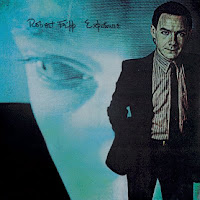
Robert Fripp, 'Exposure' (1979)You might recall how in those first few days after Black Friday when announcements were being made about various cancellations -- including the Onyx Cup, “The Big Game” and “Million Dollar Challenge” on Fox, and ESPN’s coverage of the NAPT -- a rumor was briefly floated that ESPN might discontinue its WSOP broadcasts, although I don’t think many seriously believed that would happen.

In any event, Andrew Feldman rapidly squashed that rumor over on Twitter. And this week we learned that not only will ESPN continue to cover the WSOP, but the network will be expanding its coverage significantly to include a great deal of live and/or “(semi)-live” coverage not just of the Main Event, but also the $25,000 Heads-Up Championship (Event No. 2), the $50,000 Players Championship (Event No. 55), and those WSOP ME rematches, too.

In other words, regardless of how many players the WSOP manages to attract this summer, there will be a lot more exposure as far as coverage is concerned.

Besides the 32 hours’ worth of regular, edited coverage of the ME that will appear on ESPN from July 26th through November 8th (leading up to the November Nine), there will be a total of 126 more hours of poker from this summer’s WSOP shown on both ESPN2 and the internet-only ESPN3. (I still can’t view the latter, dingdangit, thanks to that absurd arrangement ESPN has with ISPs regarding access.)

Pocket acesThere will be live streaming (without hole cards) from the aforementioned preliminary events as well as the Main Event, plus that “(semi)-live” coverage of two feature tables from the Main Event starting on Day 3 and continuing every day until they reach the final nine (July 14-19). The “(semi)-live” coverage will involve showing action from those two tables on a 30-minute delay, with hole cards shown after the flop for players still involved in the hand. (Click here for a FAQ regarding all facets of ESPN’s planned coverage.)

A bit of brouhaha this week regarding that planned “(semi)-live” coverage, with a few players complaining that playing at a feature table during the tournament and having one’s hole cards shown -- even for just a few hands -- could create a competitive disadvantage for the player whose hands were shown.

In other words, not everyone is excited about getting such extra exposure.

Labels: , , , , ,

Thursday, May 05, 2011

2011 LAPT Lima Postscript: Plotting in Peru

Sunset in LimaI mentioned at the end of yesterday’s post I had one last story from LAPT Lima I’d been wanting to share. Call it a delayed postscript to what turned out to be an especially memorable tourney trip.

I was thinking this morning about how Dr. Pauly might tell this one. By the way, that picture of the sunset, taken from our hotel, comes from the ones he took while we were in Lima.

Pauly would probably start out in documentary-like fashion, drawing us in with a few easily verifiable details. Then, at some point around the tale’s midpoint -- like a member of the group crossing a street just before the light changed, leaving his less adventurous mates on the corner -- he’d mischievously race over toward the line between fact and fiction, then merrily trip over it. From there he’d carry us all into a wild, Wonderland-like finale perhaps inspired by visions of Machu Picchu or other experiences he’d gathered during those extra days he remained in Peru.

But I’m no Pauly. No, you’ll more likely find me with the others, waiting on the corner for the “Walk” sign to light up. So I’ll tell it straight. (Mostly, anyway.)

The last day of the tournament was on a Sunday. After a final table lasting seven hours or so, a regular at the Atlantic City Casino -- one more apt to be found at the craps tables than in the poker room, we’d learned -- had won the sucker. A boisterous fellow, often smiling and cracking wise even before his victory, he’d apparently played the event on a whim, having been put in by someone else.

Among those at the final table, the runner-up from Panama had struck us as perhaps the most skilled player, yet the Peruvian didn’t appear to have a lot of difficulty taking care of him. Pauly, Reinaldo, and F-Train each had different takes on what had happened, their interpretations perhaps reflecting their personalities. To summarize each, Pauly was conspiratorial about it, Ray saw karma playing a role, while F-Train was more stoic in his assessment.

While the final day was a short one relatively speaking, having concluded by early evening, it had felt like an especially long week, made more so by its having been rudely divided by “Black Friday.” So once all the reporting loose ends had been fully tied, the four of us were more than ready to relax a bit before separately renewing our travels the next day.

We went down to the Larcomar mall and enjoyed a relaxing dinner outdoors, able to hear if not perfectly see the waves crashing along the coast as night descended. Evoking our friend and colleague Mickey -- who somehow manages to inspire tourney reporters from thousands of miles away -- I ordered a vanilla milkshake. Afterwards we went back to the Thunderbird Fiesta hotel. Soon a pack of cards was produced, and as midnight came and went we did what millions of people around the world like to do every day, often online.

We played poker.

Playing Big DeuceBig Deuce was the game of choice. That picture -- the only one I took during the game -- shows a hand I’d drawn. After a half-dozen hands Ray had jumped out to a lead, though we losers’ spirits remained high, kept up by some hilariously profane trash-talking from Ray.

It was good to laugh. Hell, we needed to laugh. Given the uncertainty caused by Black Friday -- for online poker, for our prospects for future employment as poker scribes, etc. -- you couldn’t blame us too much for feeling a tad apocalyptic about everything.

I mean, Pauly and I had seen a dead body our first day in Lima. We’d visited ruins where sacrifices once occurred (and, apparently, more bodies were still to be found). Websites had vanished entirely, replaced by FBI and DOJ seals and stern statements about “seizures” and “warrants” and “violations” and such. “#pokerpanic” had become a much-used hashtag on Twitter.

So we dealt another round, each of us perhaps thinking privately that, well, maybe (in a way) this really was the Last Game.

Ray sneakily saved a deuce to take down yet another hand, and while I shuffled we chuckled some more as he again described in detail to us his greatness. Meanwhile, laptops and phones kept us connected to the world outside the hotel room. Soon we were further entertained by a tweet sent earlier in the night by the witty and literary-minded Absinthe. Who, coincidentally, wrote an especially good post a couple of days ago which like this story involves finding humor (and meaning) amid grim circumstances.

Absinthe sends a tweetWrote Absinthe, “I’d like to think that in an alternate universe, @ftrainpoker, @taopauly and @hardboiledpoker are down in Peru plotting a revolution.”

We didn’t really discuss the tweet directly, but I knew we all appreciated it. And perhaps were inspired by it a little, too, as soon Pauly suggested we begin sending out tweets ourselves, inventing a situation out of whole cloth to baffle and amuse our followers. As I recall, the good doctor didn’t say anything specifically about an “alternate universe” or a “revolution,” but I immediately imagined the scenario he was contemplating to represent both.

The suggestion from Pauly was for us all to start tweeting that Humberto Brenes (who had played and cashed in the tourney) had joined our game. Immediately we all began helping compose the imagined missive, as well as the several follow-up tweets and Twitpics F-Train, Reinaldo, and I might subsequently send to lend the whole story further legitimacy.

“Last night in Lima, playing Big Deuce with Humberto, @ftrainpoker, @hardboiledpoker, @nalgorras” Pauly would send.

Then, a short while later, I would write: “OMG! Did Humberto really just call @ftrainpoker Dumberto? I may never stop laughing.”

Then Reinaldo: “Humberto @ftrainpoker Dumberto!!!! jajajajjajjajjjajja”

Then F-Train: “FML. Playing Big Deuce with Humberto and he just called me Dumberto.”

The story continued from there, though not before several instances of Brenes delivering his line were performed by each of us. “I am Humberto,” he’d say with exaggerated deliberation, thumbs touching the chest. Then, slowly pointing forward with both fingers and looking up, “You... are Dumberto!”

From there the fiction continued forward to include a hungover breakfast followed by still further episodes, our merry band trekking across South America as though we were Raoul Duke and Dr. Gonzo hurtling across the Nevada desert.

The game finally wound down around 4 a.m., I think. I noticed some time later that Pauly really did send out a tweet about Brenes and Big Deuce. There were no follow-ups, though. The rest of us had stayed on the corner, waiting for the light to change.

So while we didn’t necessarily plot any revolutions, we did create a plot. And there was something utterly liberating about it all. After the drama-filled days that came before, we were more than ready to laugh and laugh and laugh. And at least to imagine an alternate universe in which no one could ever tell us we couldn’t play cards if we wanted to.

Labels: , , , , , ,

Wednesday, May 04, 2011

The 24-Hour Poker News Cyclone

A ton happening over the last 24 hours in the poker world. Glad I’m not our buddy PKRGSSP trying to follow it all!

I mean, I wrote two posts yesterday -- one in which I fretted over my poker skills becoming atrophied the longer my break from cash game play extends (“My Mind Is Going... I Can Feel It...”), the other summarizing poker-related highlights from yesterday’s House hearing (“House Judiciary Committee Discusses Online Poker with U.S. Attorney General Holder”). And I could probably write at least three more today.

Federated Sports and GamingOne would concern Federated Sports and Gaming announcing both its criteria for membership in its professional poker league and the first 218 players to qualify to participate in its inaugural season’s worth of tourneys, set to begin in August. FS+G Chairman Jeffrey Pollack and Executive Vice President and League Commissioner Annie Duke talked at length about the current status of the professional poker league with PokerNews yesterday.

With Black Friday having caused the cancellation of a number of poker shows as well as the nixing of Full Tilt Poker’s Onyx Cup, the FS+G’s poker league’s prospects for success may well have improved significantly over the past couple of weeks, particularly if those rumors about the FS+G having partnered with a major TV network (CBS?) to cover its events prove true.

AP & UBAnother post could discuss how more signs have surfaced that the Cereus network’s days are numbered -- and that players’ funds on Absolute Poker and UltimateBet could possibly be worth approximately the same as my enormous play money roll on PokerStars (sick brag).

See Bill Rini’s post from yesterday for further details about recent announcements, that internal memo from AP’s Executive Management Team that was leaked yesterday, and a letter to AP’s shareholders. Rini concludes that all of the evidence points to a strong likelihood that “UB players are going to get screwed” when it comes to cashing out.

Haley Hintze did some more “conjecturin’” yesterday, too, noting how that internal memo’s reference to the formation of a “much smaller company that is focused on continuing our non-US operations” could be part of a “ruse to buy time” for the execs to gather up what’s left of AP and hightail it outta Costa Rica.

Incidentally, let me share two bits of hilarity with regard to the AP/UB mess. One is Matt Kaufman’s inspired post from last week over on his blog, Poker Smell, titled “UB Cashout Options Revealed.” Some big grins there. The other I can’t share with you directly, unfortunately, but can only describe.

The panel on QuadJacks spent some time yesterday trying to get through to UB’s customer service. Upon being connected, an automated voice informed them the “estimated wait time” before speaking to a representative would be two minutes. The next notice was the wait would be three minutes (?). Then, two again. Then one. Then three! Then four, then five... on up to seven.

The whole sequence was laugh-out-loud funny to hear, not to mention an utterly perfect emblem of what UB has come to represent, I thought.

AffiliatesFinally, a third post might have focused on recent reports regarding the status of U.S.-based affiliates for both PokerStars and Full Tilt Poker.

I’m not as deep into the affiliate game as some of my colleagues -- I was a little late (and too lethargic) to position myself to grab a slice of that pie -- so I’m not as in touch with the ins and outs of the online poker affiliate story.

It appears, though, as fun (and lucrative, for some) as that story has been, the final chapter is not going to be a pleasant one for the American affiliates, as evidenced by Pauly’s post (regarding PokerStars) and this note over on Rake360 (regarding Full Tilt).

Like I say, any of these topics might have been worth exploring in individual posts. But to be honest, I want to write about other things, including one last Lima story I’ve been trying to get to for a couple of weeks now. So I think I’ll put all of this other stuff aside for now and focus on telling that one, which barring any other late breaking stuff I’ll try to do tomorrow.

Meanwhile, follow them links above if yr curious to learn more about any of these stories from the last day in poker.

Labels: , , , , ,

Tuesday, May 03, 2011

House Judiciary Committee Discusses Online Poker With U.S. Attorney General Holder

U.S. Attorney General Eric Holder[Cliffs: In a hearing with U.S. Attorney General Eric Holder, three different members of the House Judiciary Committee brought up poker and/or online poker, a couple of whom pointedly suggested the DOJ should focus more on enforcing laws against significant crimes than bother with things like the UIGEA. Along the way, Holder mentioned in passing that he wasn’t qualified to say whether “poker is a game of chance or skill.”]

There was a hearing this morning in which U.S. Attorney General Eric Holder took questions before the House Judiciary Committee. Amid the wide range of topics discussed, online poker came up not once but three times during the hearing, no doubt thanks to the unsealing of the indictment/civil complaint against the founders of PokerStars, Full Tilt Poker, Absolute Poker/UB, and other individuals involved with payment processors by the DOJ on April 15.

What follows is a summary and partial transcription of what was said at the hearing with regard to online poker. And a smidge of commentary, too, though I’m mostly just interested here in sharing what was said.

Rep. Bob Goodlatte (R-VA) -- one of the chief architects and proponents of what eventually became the Unlawful Internet Gambling Enforcement Act of 2006 -- had the floor early on. Thought for a moment that something re: “Black Friday” might arise there, as he asked about cybercrime and domain seizures, though nothing did.

Rather, it was Rep. Bobby Scott (D-VA) who would be the first to bring up poker, asking a question of Holder about whether or not he believed poker was a game of skill or chance. Scott coupled that question with a number of others, noting that he was asking them “for the record” and didn't necessarily expect answers to all. Those other questions concerned things like combating identity theft, reentry (of the formerly incarcerated), and providing adequate support to federal prisons.

When responding, Holder literally waved his hand before him while noting he hadn't the time to address the various matters Scott had raised. Interestingly, Holder did offer a comment -- albeit jokingly -- in response to the poker-related question:

“I'd be more than glad to answer all of those questions except for the one about whether poker is a game of chance or skill,” said Holder with a grin. “That's beyond my capabilities.”

The next member of the committee to speak, Rep. Lungren (R-CA), then joked “According to ESPN, it’s a sport,” a line that elicited some chuckles.

Though delivered in a light-hearted, joking way, Holder’s refusal to comment on poker’s status as a “game based on chance” (to use the UIGEA’s language) seems somewhat noteworthy, given the way the UIGEA itself declines to specify whether or not poker (or any activity, for that matter) meets that criteria and thus is to be regarded as “unlawful internet gambling.” (Then again, like the UIGEA, Holder is keeping out of it, leaving it to the states to decide the question.)

In any case, a much more significant reference to poker (and online poker) arose later in the hearing, thanks to Rep. Steve Cohen (D-TN).

Cohen began his remarks asking Holder about his own poker playing, and whether or not he'd ever played with President Obama (whom we’ve all read was an avid player when he was in Congress). Holder said he had not. Cohen then alluded back to Holder’s having declined to comment on the skill/luck question before.

“Do you think Phil Ivey’s just lucky?” asked Cohen. “He’s the world’s greatest poker player. Do you think he’s just lucky… he and Annie Duke… or do you think some skill is involved?”

“I’m not sure I know who Phil Ivey is,” began Holder, “but I’m sure there was some degree of skill involved... I’m not a poker player myself.”

Holder’s answer here struck me as a little disingenuous, perhaps in a couple of ways. I suppose it’s possible he doesn’t know who Ivey is. I’d think he’d be somewhat familiar with Full Tilt Poker as a targeted site in the April 15 indictment/civil complaint, though I guess he wouldn’t have to know about Ivey. But Holder has stated before that he did in fact play poker, in particular having played in a regular game with current U.S. Deputy Attorney James Cole. Not sure why he’d say he wasn’t a player today.

“You’re not?” said Cohen, sounding a little surprised. “Well, okay. I didn’t realize that. But you might become one, because it is one of the most rapidly increasing, popular activities in America. It’s been going on for years. People used to play it at the tables, like in the kitchen…. Now they do it on the internet....”

Cohen went on to express amazement at the many things we now do over the internet (pay bills, etc.), comments which we’d soon see were part of a more general observation about how times change -- and that some laws should therefore change as well.

“Do you think we really ought to be spending a lot of time in trying to deal with internet poker, or do you think we should try to find a way to make it legal, to tax it, and to bring revenue in to help pay for things that [others] want to take out of your budget?” asked Cohen.

“We have to enforce the law as it exists, and there are laws on the books with regard to internet gambling that we have to enforce,” answered Holder. “We recently announced an action in the Southern District of New York. It is for, I guess, Congress to decide what the law’s going to be, and then we will enforce those laws.”

Rep. Steve Cohen (D-TN)“I agree with you, generally,” said Cohen. “I mean I understand that there were civil rights laws in the ’40s and ’50s that the government had to defend and that maybe 10, 12, 15 years later -- after Thurgood Marshall's arguments and the [Supreme] Court’s agreement -- that maybe they weren’t valid laws and the law changed because society changed and people's thinking changed. Same thing [could be said] with DOMA [the Defense of Marriage Act passed in 1996 defining marriage as between a man and a woman]. There are certain laws and things change and even though it’s the law Congress passed, there’s a change and a ‘cultural lag’ and people's perception of it changes.”

A little circuitous in the wording, but Cohen’s point is communicated well enough, I think. Laws written at one time aren’t always going to remain as needful or relevant later on.

“Some of the same people that gave us DOMA gave us the laws against internet poker... that ‘family values’ crowd,” continued Cohen. The representative made air quotes to indicate his distance, ideologically speaking, from the legislators to whom he was referring.

“They gave us those laws, but sometimes they might not be the right laws.... You could be processing... obscenity cases and some of the people you’ve otherwise got concerned with some of these laws concerning internet poker.” Again, the wording is a little hard to follow, but the point is that Cohen wondered if perhaps the U.S. Attorney General’s limited resources were being misused in the effort to enforce things like the UIGEA rather than pursue higher priorities.

“Don't you think that maybe in the priority range that internet poker would be down at the bottom… beneath obscenity, and hardcore pornography, and child rape, and things like that?” asked Cohen. I was a little disappointed that was where Cohen ended up, i.e., with a fairly loaded question the answer to which was obvious, rather than a more pointed one about the UIGEA in particular. Nonetheless, Holder did in his response revisit the Black Friday indictments.

“There are a whole variety of things that we have responsibility for,” said Holder. “The case that we brought, for instance, in the Southern District of New York involved pretty substantial amounts of money and big financial institutions, and I think those cases are appropriate. There might be some other cases in this area that aren’t really federal cases because they aren’t really large enough and the degree of harm is not serious enough. Even within a certain class of cases, certain ones are going to be worthy of our attention and some will not be.”

I could be wrong, but that latter statement seems to indicate a sentiment suggesting that the smaller, remaining U.S.-facing sites may well be okay to continue -- as long as they don’t become too big, that is.

Cohen had a follow-up: “Did the Southern District coordinate with the criminal division or you particularly about the policies of your office which have been kind of in flux underlying the decision to effectively criminalize poker [by] going after these folks?” Yes, answered Holder, there was some coordination with his office “in the formulation of the case, though the primary responsibility was in New York.”

Noting that he was running out of time -- and that he had brought the whole subject up because “freedom’s a big issue with me” -- Cohen then asked if “the Department [of Justice is] saying they were asking for sentences that are maybe on the lower range for those people that were indicted before the law changed?”

I’ll be honest, I’m not quite sure what Cohen is referring to exactly here, although it sounds like a reference to all of the sites’ having served U.S. customers prior to the enactment of the UIGEA.

“What I told our prosecutors is I've given them discretion, so that they ask for sentences that are appropriate looking at the facts of each individual case” said Holder. “The Department… is going to take a position with regard to whether or not the law should be made retroactive, before the sentencing commission. But while we are still in that process I’ve asked my prosecutors to make sure that we only ask for sentences that are appropriate and consistent with the facts.”

Thus concluded Cohen’s poker-related questions. Following a recess, a third member of the House committee brought up the idea of licensing and regulating online poker, more as a comment than a question. At the end of her five minutes, Linda Sánchez (D-CA) referred to how large online poker had become in the U.S. She then referred to how other countries had dealt with similar growth of the industry.

“There has been successful regulation of online poker playing in places like Europe and Australia,” said Sánchez. “I happen to be a strong supporter of legislation that would legalize online gambling in this country and tax it reasonably and efficiently and make sure that people were not being cheated out of their money. I’m sure that you can appreciate, again, that in challenging economic times with states experiencing deep budget shortfalls and the federal government trying to find a way to get its fiscal house in order, that is one of the areas where we could potentially increase revenue for Congress.”

When listening to this, my first thought was that the representative’s argument was perhaps better suited for legislators than for someone charged with enforcing laws. But then she added advice more practically directed to the Attorney General.

“So I’m hoping that's an area that you’ll look at again in terms of where you dedicate your precious resources,” said Sánchez. “I think time would probably be better spent dealing with bigger and more impactful, serious, violent crimes, for example, than trying to interrupt this industry which, as I said, has been efficiently regulated in other countries.”

Soon after the hearing adjourned, about four hours after it began.

Have to say I was surprised online poker received the attention it did today. Not sure what the focus on online poker at today’s hearing really means in terms of practical consequences going forward, but I think it’s probably safe to say it was a good thing, overall, that it came up at all.

Labels: , , ,

My Mind Is Going... I Can Feel It...

HAL 9000It has been over two weeks since I’ve played any real money games online. Have been too busy to fuss with depositing on a new site just yet. Carbon seems like the most likely choice for me, once I do. Or I could put something back on Bodog where I already have an account.

Meanwhile, I have jumped on a couple of times to play freerolls or play money games. On Carbon they run five or so freerolls every day which usually attract 2,500 or more players. The top 24 finishers win tourney tickets and/or cash. Over the weekend I played a H.O.R.S.E. one and managed to squeak through with just a few antes left to finish 23rd.

Was a little disappointed after to learn that the only event I can play with my $2.20 ticket is a six-max. SNG for which the winner gets another tourney ticket (for $11) and the second-place finisher a buck in cash. I’d hoped to be able to play another MTT, where the chances of making some kind of cash -- and thus starting a bankroll -- would be greater, I think.

But really, in these freerolls and the occasional play money game at which I’ve sat, my focus is not nearly what it was a few weeks ago. Was sitting at a PLO play money table for a short while yesterday, and realized in a slightly worried way that I’d perhaps lost a step or two when it came even to simple stuff like evaluating starting hands. Not to mention more complicated matters like interpreting the significance of others’ bets and raises.

You’ve experienced something similar, I’m sure. You’re away from the game for a period, then upon your return find you have to “relearn” things. Poker really is a skill game, and like any other pursuit that requires the learning and development of certain skills (intellectual and/or physical), not playing for extended periods can lead to a kind of “atrophy” or wasting away of those skills.

'Dave, stop.  Stop, will you?'When I signed off, I couldn’t help but think of HAL 9000’s final speech in Stanley Kubrick’s 2001: A Space Odyssey. Was mainly thinking of those lines near the very end, after Dave has begun the laborious process of disconnecting everything in HAL’s “Logic Memory Center.” That is, after HAL’s pleading (“Dave, stop. Stop, will you?”) is over and he realizes the effects of what is happening.

“Dave, my mind is going,” says HAL, as always using that uncannily unaffected-sounding monotone. “There is no question about it. I can feel it.”

I think the line might occurred to me because I believe I saw Shane “Shaniac” Schleger toss it out amid his tweets at some point during the last few days. It might have been Schleger, or it might have been someone else in my feed (could be someone is fiddling with my “Logic Memory Center”). Incidentally, Schleger penned a smart, thoughtful piece for Slate over the weekend addressing "Black Friday" and its impact on him personally. Check it out.

I wonder if full-time online grinders like Shaniac, many of whom have spent a couple of weeks unable to put in their usual heavy sessions of SNG or MTT play, are starting to feel like HAL a little.

I was inspired to watch that clip of HAL’s final moments over on YouTube again. Here it is:


Such a weirdly moving scene. Kubrick’s films, as much as I enjoy and appreciate them, are uniformly very cold (in my opinion). Thus I’m always caught off-guard when I find myself becoming at all emotionally involved when watching them. (Never mind the obvious peculiarity of feeling sympathy for a computer.)

Rewatching this clip, I found myself making some other associations, too, also involving online poker. Early on (around 45 seconds into the clip), HAL’s suspicions have been aroused, and he starts to try to convince Dave not to do what he thinks he’s about to do.

I was imagining some of these early lines as having been spoken by “online poker” itself, post-Black Friday:

“I know everything hasn’t been quite right with me, but I can assure you now, very confidently, that it’s going to be all right again.”

“I can see you’re really upset about this. I honestly think you ought to sit down calmly, take a stress pill, and think things over.”

“I know I’ve made some very poor decisions recently, but I can give you my complete assurance that my work will be back to normal.”

Then comes the pleading. And again, I imagined HAL’s question taking on a different significance. As though online poker was addressing me and many other Americans currently on a hiatus from playing...

“Will you stop?”

Labels: , , , ,

Newer Posts
Older Posts

Copyright © 2006-2021 Hard-Boiled Poker.
All Rights Reserved.