Friday, July 27, 2012

Black Friday Defendants Behind Bars

Black Friday Defendants Behind BarsAmong the poker-related headlines this week were some reporting the sentencing of two of the “Black Friday” defendants -- Brent Beckley, who headed up payments at Absolute Poker, and Ira Rubin, a payment processor who worked with all three of the targeted sites (PokerStars, Full Tilt Poker, and AP/UltimateBet).

The pair were co-defendants, with their method of working together spelled out in court during the course of their trial. In his role with AP, Beckley would identify third-party guys like Rubin who could facilitate the moving of money back and forth between players and the site. Rubin, of course, created all of those phony-baloney websites to help falsify to banks and other institutions the true nature of the transactions.

Earlier in the week, Beckley was given a 14-month sentence and ordered to pay $300,000. He was apparently given some leniency for complying with prosecutors from the get-go.

A couple of weeks ago, Haley Hintze explained Beckley’s situation and some of the reasons why he might avoid longer sentencing in a post for Kick Ass Poker. Hintze also shares the interesting brief filed by Arlo Devlin-Brown on behalf of the DOJ outlining to U.S. District Judge Lewis Kaplan reasons why Beckley’s punishment shouldn’t exceed that which was recommended by the applicable guidelines.

Meanwhile in Rubin’s case it sounds like the payment processor earned scant sympathy in court, with his long history of criminal charges stretching back several decades stacking up against him. For the curious, Diamond Flush has compiled an interesting mini-bio of Rubin detailing his life of crime.

When handing down Rubin’s punishment yesterday, U.S. District Judge Lewis Kaplan characterized Rubin as “an unreformed con man and fraudster,” actually giving him a longer sentence than the 18-24 months recommended by both prosecutors and Rubin’s attorney. Rather, in addition to being ordered to forfeit $5 million, Rubin was sentenced to three years’ imprisonment. He’s already been in jail for 15 months, which will count as time served.

Hard not to read stories about the fates of some of these Black Friday folks with a certain ambivalence.

They broke laws, they surrendered and pleaded guilty, they got punished. Yes, they helped herald what has become a new era of online poker in the United States, a dark age that continues to the present and looks like will extend at least several months further, if not longer. But it’s not as though what happens to these guys now has a heckuva lot to do with those of us who once played on the targeted sites. Not specifically, anyway.

The headlines do matter, especially when they arrive as non-specific references to people being jailed for online poker. Sort of thing tends to further all of those associations between online poker and criminal behavior already well established in the minds of many. That is to say, all that’s happening now will have at least some influence on what’s to come, as far as online poker in the U.S. is concerned.

For various reasons we’ll all be a little more curious to see what happens with Full Tilt Poker CEO Ray Bitar, another one of those originally named in the Black Friday indictment who had a host of additional charges levied against him in the amended civil complaint last September.

Bitar finally came to the U.S. to give himself up earlier this month, pleaded not guilty, and has posted bail. Interestingly, Judge Kaplan -- who in general hasn’t been too receptive to the Black Friday defendants who have come before him -- recused himself from Bitar’s trial since Bitar is being represented by the law firm for which Kaplan once worked.

Bitar’s trial may clue us all in a little more about what happened to our still missing FTP money, thus increasing its apparent relevance to us.

'The Good, the Bad and the Ugly' (1966)And while finding out as much as we can about what transpired during the initial “wild West” period of online poker is important, it’s already starting to feel like that era is slipping further and further away.

Some of us will continue to remember what it was like “back in the day,” though. And how just like with the real wild West there was a lot that was good, plenty that was bad, and more ugly than most of us ever imagined.

Labels: , , , ,

Wednesday, March 07, 2012

A Bitar Taste

A Bitar TasteLate yesterday PokerStrategy posted a very brief interview with Ray Bitar, one of Full Tilt Poker’s founders and CEO of Tiltware, the site’s software and marketing company. Or its “shell” company, we might more properly say.

Bitar, of course, has become a much-reviled figure in the poker community thanks to his close involvement in the exceedingly poor management of FTP. Indeed, many single him out as a primary fall guy for the site’s many misdeeds, which include activities resulting in the site becoming the target of an indictment and civil complaint by the U.S. Department of Justice in April, further violations resulting in the loss of its license to operate and full shutdown in late June, and its apparent wasting away of the $350 million or so players thought they had in their accounts when the site went dark.

Amid “the rumble” we’ve lately been hearing several calls for Bitar, Howard Lederer, and/or Chris Ferguson to break their collective silence and say something about what happened to their popular online poker site. While Bitar was listed among those initially targeted by the DOJ’s indictment and civil complaint back in April, Lederer and Ferguson’s names were added as well in September to an amended version of the complaint.

It’s not really clear why those calls for these three to speak have become louder over the last few weeks, although I suspect the nearing of the one-year anniversary of Black Friday has something to do with it. I have said before here how I thought the petitions weren’t likely to be answered, as there seemed no reason now for Bitar, Lederer, or Ferguson to say anything at all given their considerable legal problems.

My initial thought, then, on hearing that Bitar had given an interview was to be surprised. Then I read the piece, another “exclusive” that recalls some of those we saw on PokerStrategy last fall when news of the possible purchase of FTP by Groupe Bernard Tapie first arose. I remember surmising then that perhaps FTP was settling some debts with its biggest affiliate by granting such traffic-heightening pieces.

Sort of feels like the same purpose has been served by this Bitar interview, which offers practically nothing of tangible value to FTP players but does certainly generate a lot of hits over on PokerStrategy, a site whose own CEO, Dominik Kofert, was recently voted as the 12th-most powerful person in poker on BLUFF’s Power 20. No slight to Matt Kaufman (he of the witty though now apparently erstwhile Poker Smell comic) who conducted the interview, but it’s pretty obvious there wasn’t much chance Bitar was going to offer much if anything for us to chew on.

Kaufman appeared on PKRGSSP’s show last night to give a little bit of background about the interview. It sounds like Kaufman had been bugging FTP attorneys (including Jeff Ifrah) to get an interview with Bitar and they’d long refused such requests. But this week they had “a change of heart,” saying “they wanted to do something.”

PokerStrategyKaufman did allude to PokerStrategy’s significant affiliate-relationship with FTP as likely not unrelated to the site landing such “exclusives.” The prominence of the news and strategy site outside of the U.S. likely also encourages Full Tilt’s wish to deliver their messages there, since so many of those who could possibly play on a new version of FTP (if it were ever to be relaunched) are likely familiar with PokerStrategy.

So Ifrah requested the interview and asked for questions to be submitted -- which were then vetted -- and answers were emailed back to Kaufman with no chance for follow-ups (obviously). The questions that were chosen were all of a very general nature, asking Bitar why he hasn’t spoken before, what he’s been doing since Black Friday, and “is there anything you would like to say?” And the answers were all very general as well, stating essentially that Bitar still hoped to get players their money, that he also hoped Full Tilt would somehow survive this mess in some form or another, and that he was sorry.

There is a lot of redundancy, too, among the responses. Even though his three answers only total about 450 words, Bitar managed to repeat the declaration that he is working toward getting players paid and keeping Full Tilt Poker alive no less than six times.

Bitar says that he has “been working every single day since Black Friday to ensure players are repaid,” which he calls his “top priority.” His also says his “primary focus has been and continues to be... the repayment of the players and the survival of the company.” And again, he mentions he is “doing everything possible” to make these things happen.

“I spend a good deal of my time making sure that FTP survives and that the players get paid,” Bitar goes on to say. “I continue to work on these issues, day and night until we resolve them,” he adds. And, in case we missed it before, he once more reminds us his “entire focus is on obtaining a successful resolution for the players.”

Alas, it’s hard not to be cynical and call the Bitar interview a weak echo of one of those FTPDoug “updates” that strung us along last spring and summer. Even the phrasing directly recalls those spoonfuls of poorly-conceived PR applesauce in which the mouthpiece informed us time and again that FTP “has worked tirelessly” and are “absolutely committed” and “we have been working around the clock to get this done” and so on. Recall as well how those updates often concluded with statements -- again, like Bitar’s -- that “it has not been easy to stay silent and watch the damage being done to our company brand.”

Ray BitarSo while I was surprised Bitar spoke at all, it isn’t that much of a surprise to find him sounding a lot like FTPDoug, since we all knew FTPDoug wasn’t speaking for himself, but just passing along what the higher-ups -- including Bitar -- told him to report. (At least he didn’t repeat another of FTPDoug’s infamous statements -- highlighted by the DOJ in the amended civil complaint in September -- that “your funds remain safe and secure at FTP.”)

Thus, as I say, there’s nothing tangible to take away from Bitar’s bite-sized blurbs. But really, why would we think he’d feed us anything? We already knew the shell game had ended long before. And that there wasn’t a single pea under any of them.

Labels: , , , ,

Friday, February 17, 2012

Kid Poker Not Kidding Around

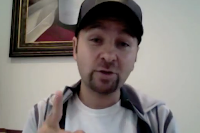
Daniel Negreanu, from his video blog of 2/15/12Many noticed the always forthright Daniel Negreanu made a short video blog this week in which he comments on various items, including the continued silence from those three Full Tilt Poker principals, Howard Lederer, Chris Ferguson, and Ray Bitar.

I said something on Monday about how I thought we’d probably hear other pros comment on FTP in the wake of Matt Glantz’ thoughtful post concerning “The Silence of Full Tilt,” so it wasn’t too surprising to see Negreanu’s video come when it did.

I still think as I did a few days ago that such petitions aren’t that likely to encourage anyone from Full Tilt to step forward and suddenly start communicating anything of significance to the rest of us. But as I said on Monday, I support those who insist on making sure we all don’t just forget about the hundreds of millions of dollars of players’ funds that remain inaccessible more than 10 months after Black Friday.

The level of vitriol in Negreanu’s statements captured some notice, something I think PokerLawyer did a nice job addressing in her post from yesterday, titled “Targets.” I think most are familiar enough with the context to understand what inspired Negreanu’s comments -- and frustration -- but it’s also worth pointing out the relationship between words and actions as PokerLawyer does.

I do believe that Negreanu is dead on, though, when he points out how those responsible at FTP “have no respect for our community.” The damage they’ve done to poker’s place in the culture, generally speaking, goes well beyond the theft of players’ funds.

It’ll be curious to see how everything develops with regard to the Full Tilt Poker saga as we get closer to the one-year anniversary of Black Friday, assuming that nothing happens with regard to the still-pending Groupe Bernard Tapie deal and players are still without their funds.

Even if something does happen and the deal somehow gets done before then, the logistics of players getting paid -- particularly for American players for whom the DOJ would be involved in facilitating such payments -- will mean a lot of time will necessarily have to pass before anyone actually gets their money back.

But even that slight ray of hope is pretty dim at present. And so the many who played on Full Tilt Poker -- and even those who didn’t but who have strong feelings about the game and the way it is perceived (and often proscribed) by the larger culture -- will continue to be frustrated. And justifiably so.

Labels: , , , , , ,

Friday, December 02, 2011

Talkin’ Bitar, Facebook, and Bodog

Wicked Chops InsiderA few items stood out this week among the various articles and headlines falling under the “poker news” heading.

F-Train’s lengthy feature on embattled and indicted Full Tilt Poker CEO Ray Bitar that appeared on the Wicked Chops Insider site was damned riveting. He interviewed a number of Full Tilt Poker employees who while remaining anonymous otherwise opined openly about the “rise and fall” of Bitar and FTP.

It’s an enlightening read start-to-finish, in truth an important part of a larger narrative about the history of online poker that currently exists only in fragments all over the web. Haley Hintze’s forthcoming book on the UB/AP scandals will be another important part of that story, too. (By the way, Haley has an interesting new post up this week regarding Phil “The Chairman of the Board” Tom, father of Absolute Poker’s also-indicted owner Scott Tom, a story that kind of resonates with the Bitar article in a couple of spots.)

As I was talking about here a couple of weeks ago, one needs a subscription to read the Wicked Chops “Insider” pieces, although the cost for one is quite modest. As indicated by a minor furor on Twitter prompted by the appearance of F-Train’s article earlier this week, there are some who are opposed to the idea of paying anything for this variety of what might be called “intellectual property” online.

As I think I implied in my post a couple of weeks ago, I definitely share some of that same skepticism. Nonetheless, I have gotten myself a subscription to the Insider Wicked Chops site, partly out of simple curiosity, and partly out of a desire to support some friends and colleagues. Whether you choose to or not is your call, but if you do, a captivating read awaits.

Facebook logoSpeaking of transitioning into the real-money world, another story of note this week concerned the social media behemoth Facebook contemplating entering into agreements with PokerStars, 888, and a half-dozen other online gaming companies. The report appeared on another subscription-only site, the eGaming Review, the cost of which is much too prohibitive for your short-stacked friend. But Paul Hoppe offered a nice summary on PokerFuse that provides some details.

It sounds like Facebook may follow the affiliate model and start directing users (not U.S., of course, and over 18 years of age) to the online gambling sites. It’s further possible that the site could let some companies work up apps that would run within Facebook, too. In any case, should Facebook make this step they’d instantly become a massive player in real money online gambling outside the U.S. (and maybe, eventually, in the U.S., too).

While I have a Twitter account (@hardboiledpoker) I use fairly often, I have continued to resist Facebook pretty much altogether. I do have a Facebook account, created mainly to set up a page for my novel, Same Difference. But don’t bother “friending” me or anything, because I almost never log in.

Part of it is because I’m too lazy to get in there and learn how to use the site, but I’m mostly staying off because of what sounds like a constant need to update settings in order to keep Facebook (and who knows who else) at arm’s length from my bidness. Not to get all Tao of Fear or anything, but I’m half-convinced if I log into Facebook for more than a minute or two I’ll wind up under such heavy surveillance I might as well be part of a Witness Protection Program.

Bodog's new anonymous tablesFinally -- to segue to one last story from this week -- this desire to remain anonymous online came up again with Bodog’s announcement that they were suddenly removing all usernames and avatars from cash games and tournaments. Can no longer see mucked cards in hand histories anymore, either (if you can even see HHs at all -- I am not 100% clear on that).

The move is being dubbed as further underscoring the “Recreational Poker Model” the site is championing since it thwarts the use of HUDs or tracking programs to compile data on opponents. Whether it hurts or helps the recreational player is in fact an issue over which reasonable people might disagree. In any case, this development follows a move back in September to remove full tables from being listed in the lobby, thus making it harder for sites like PokerScout to count players. (Read more on that here.)

I still have an empty account at Bodog, a site on which I used to regularly back in the day. I haven’t bothered to log in over there in a good while, partly because I tend to work on my laptop (a Mac) and not my desktop (a PC), and Bodog doesn’t run on the Mac.

While the idea of non-trackable, anonymous play might sound okay, not being able to consult my hand histories seems highly problematic, particularly if any suspicions regarding cheating/collusion were to arise. Again, while I’ve always been highly circumspect about putting cash on an online poker site, I’d be even more so when it came to a site where there were no identifiers at all for players, nor any simple way of keeping track of your play. (For more concern being expressed about the new anonymous tables, see this article over on Pocket Fives.)

Sure is a wild, weird world online. Thanks again for tripping over to my little corner of it this week.

Labels: , , , , , ,

Monday, October 24, 2011

Reports from the Department of Redundancy Department: Full Tilt Poker’s Ex-Employees Speaking Out

RedundancyWas diverted somewhat over weekend by these new threads popping up over on Two Plus Two in which ex-employees of Full Tilt Poker (or, rather, Pocket Kings Ltd.) are answering questions about their experiences working for the company.

Apparently close to 200 employees were finally let go from Full Tilt Poker last week -- their positions having been deemed “redundant” -- after several grim months of what sounds like reporting to work and doing nothing. (For a snapshot of the scene from the Dublin offices circa late summer, check out this melancholic post by another employee from August 25 by “solongdue.”)

All of the layers of secrecy and subterfuge surrounding FTP’s operations make these revelations from ex-employees -- even the minor ones -- a bit more intriguing than they would be otherwise. Of course, there is a lot of, well, redundancy going on here, with much of what is being said merely going over ground that has already been well covered over the last few months.

Still, it’s kind of absorbing. And there are a few tidbits in these threads that are not entirely old news, including at least one item that I think qualifies as altogether new (at least to me).

(I should add as a disclaimer that we’re assuming all of these posters are indeed who they say they are -- i.e., recently let-go employees of FTP. Evidence and in some cases corroboration in the threads seems to confirm one can assume as much.)

The first of these “Q & A” threads that I became aware of was started by a poster named “AnyQuestions” early Saturday. (EDIT [added 10/25/11]: This thread was eventually deleted; see bottom of post.) Within 24 hours he’d posted over 100 times to respond to others’ questions, and the thread continued to have momentum until late Sunday night when the questions finally stopped coming.

A lot of AnyQuestions’ thread involves him confirming things either suspected or known, such as that there are many players with “seven figures” locked up on the site, that employees started to become aware of the company’s massive (and increasing) shortfall late in December 2010 or January 2011, and that morale has been understandably low around the Dublin offices over the last few months.

Oh, and that Ray Bitar and the board members seemed to eat a lot of lobster. But we’d heard about that.

This office will not tolerate redundancy in this officeAt one point AnyQuestions notes that after last week’s layoffs there are now less than 200 people left with the company. He does not sound very confident the Bernard Tapie deal will go through, and believes if it doesn’t the company will be done by January.

He speculates about the possibility of players getting paid (possibly in part) even if the sale doesn’t happen. There are other items in there regarding security, customer service, and various trivia, with AnyQuestions’ earnestly answering all questions as well as he can while not naming names.

Another ex-employee actually started a thread earlier (on Thursday), although he did so over in the Brags, Beats, and Variance forum rather than NVG and so I didn’t notice that one until the weekend. That poster -- “Amphitryon” -- appeared to have worked in security at FTP.

Amphitryon is a little less forthcoming about the behind-the-scenes stuff than AnyQuestions, but is more explicit with his expressions of disappointment with the company, at least early on in the thread. But the level of conversation over there is mostly less serious and more given to joking around about FTP’s many follies, and by Sunday morning it had evolved into another funny photoshop thread before pretty much petering out.

Amphitryon does provide a few minor insights into how security operated, though. He also notes how over in security they had no idea beforehand that anything like what happened on Black Friday was about to occur. Both he and AnyQuestions sound as though they sincerely loved their jobs with FTP, repeatedly expressing variations on the “good while it lasted” theme.

Now hiring nowA third ex-employee, who alluded to the manner in which he lost his job by taking the name “Redundo,” then started yet another thread on Sunday morning, which after several hours was deleted from the site by moderators after the poster expressed regret for starting it. In fact, the same “Redundo” started a similar thread over on HighStakes.db where his post has not been removed.

While Redundo also stated he was ready to answer questions from 2+2ers, he clearly wasn’t as interested in doing so as were the other two thread-starters. He only came back into the thread a couple of times afterwards, and then only to ask that the thread be deleted. Rather, it looks like he just wanted to share a few pieces of information and express some frustration.

In that initial post (which as I say, can still be read over at the HighStakes.db forum), Redundo addresses a number of topics that were being discussed in the other threads. He, too, expressed pessimism about FTP’s future prospects (“it is sad to say but full tilt is gone”). He also suggests he believed players’ chances of getting their money returned was slight (“i don’t think it will happen”).

Then, during the next part of his post, Redundo showed a much greater willingness to name names than is the case with either AnyQuestions or Amphitryon.

He confirms that “FTPDoug” was still part of Pocket Kings (something being discussed in AnyQuestions’ thread). He then mentioned how Gil Coronado, the company’s Chief Financial Officer, has largely managed to avoid censure or legal trouble to this point despite being “probably number 2 guy in whole company” behind Ray Bitar and “largely responsible” for the current situation.

He next speaks of two others among the company’s management team -- Deirdre O’Shaughnessy and Caroline Lynch. O’Shaughnessy’s a co-director with Bitar at Pocket Kings (and at several other of the companies they set up), while Lynch heads Human Resources. Redundo largely absolves O’Shaughnessy (“i dont think [she] knew just how badly coronada and bitar ****ed up”) though is critical of Lynch (whom he called a “snake” and a “not nice person”). (That post by “solongdue” referenced above also includes comments about these two.)

Help stamp out and abolish redundancyRedundo then notes how Phil Gordon and Andy Bloch were more heavily involved in decision making than many realize. (AnyQuestions confirms in his thread that “to the best of [his] knowledge” Gordon’s involvement was substantial, and that Bloch is a major shareholder.)

Additionally -- and perhaps most notably -- Redundo briefly shares details of a “secret project” called “Project Coyote” that Full Tilt Poker had been working on that involved an agreement with the Facebook folks in Dublin to try to get an FTP game up and running on the social networking site.

The game would “connect to the back end of full tilt play money games and make the network really big,” the idea being to have the biggest site in the industry in terms of player base. “Then they woiuld [sic] try to convert to real money players,” Redundo goes on to explain, an idea he says “could have fixed the shortfall of funds if it didn’t get so many bugs and was delayed so much.”

Presumably, such a move represented part of the company’s plan for “global domination in the poker world” (a line from Ray Bitar that AnyQuestions quotes in his thread). Later in his thread, AnyQuestions acknowledges -- without going into specifics -- that the Facebook idea was indeed in the works.

It was the sharing of this news that led to Redundo’s thread being deleted. Two Plus Two moderator NoahSD (of Subject:Poker) had chimed in to point out how the Project Coyote stuff was perhaps better left undiscussed, Redundo agreed, and thereafter he asked that his thread be removed.

Interesting how one of the few non-redundant items to appear in any of the threads would raise ethical concerns about how much ex-employees should be willing to share. I suppose there are still some who think the “FTP on Facebook” idea -- which sounds like it might have been relatively close to happening prior to Black Friday -- still has some significance at this point as a bargaining chip for FTP with the Tapie group. I can’t see it mattering much now, though. After all that has happened this year, how could Facebook possibly be interested in working with the site going forward? (Besides, several others have already started down the Facebook road by this point, yes?)

Warning Road Sign AheadThere’s another ex-employee (or, perhaps, current employee?) of FTP who started doing something similar over in a Swedish poker forum a few days ago, too. A 2+2er has translated a lot of the Swede’s responses and posted his translations here.

The Swede is offering more specifics regarding how the remaining employees are working in preparation for a relaunch, although people are quitting, too, and it appears that given who’s left the company probably would be quite challenged to handle a relaunch should it occur.

Like Amphitryon, the Swede notes how Black Friday and its aftermath took him by surprise. He says Chris “Jesus” Ferguson -- whom he finds most culpable along with Bitar and Howard Lederer -- is still hanging around the offices there in Dublin. He also suggests the alarming possibility that Full Tilt Poker never donated money it collected from charity tournaments set up to deliver aid to Haiti and Japan. (Dealing in speculation here, obviously.)

Like I say, all of this was quite interesting to read through, even if relatively speaking there wasn’t a ton of new information to discover. It’s also interesting to consider the possibility of others speaking out, including those with more extensive knowledge of the site’s management -- in other words, people who might start providing information that isn’t so redundant.

(I believe the great Firesign Theatre were the first to create the Dept. of Redundancy Dept. -- on their 1970 album Don’t Crush That Dwarf, Hand Me the Pliers -- although I know Monty Python slipped it into a “Flying Circus” sketch somewhere in there as well.)

(EDIT [added 10/25/11]: The AnyQuestions thread had continued throughout the day on Monday with many more questions about Full Tilt’s operations being answered. However, as Mr Glich notes in his comment, the thread was deleted from the 2+2 site after AQ was apparently threated with a lawsuit. Here’s the new thread in which the removal of the original thread is discussed.)

Labels: , , , , , ,

Thursday, September 22, 2011

Talk About Red Pros (More on the DOJ vs. Full Tilt Poker)

The DOJ's Amended Complaint (click to read)Have been perusing that amended civil complaint a bit this morning.

Like PokerStars and UB/Absolute Poker, Full Tilt Poker was accused in April of violating the Unlawful Internet Gambling Enforcement Act, bank fraud, and money laundering. Now the DOJ’s amendment to the civil complaint, besides adding Howard Lederer, Chris Ferguson, and Rafe Furst to those being accused, adds a few other major allegations as well, including...

(1) that the company’s manner of crediting accounts without first securing those deposits plunged the company into serious financial trouble;

(2) that the owners were skimming from players’ funds in a major way, thus further accelerating the company’s progress down that road to ruin; and

(3) that all along the way the company was inaccurately telling players everything was hunky dory.

Looking at these separately...

(1) “Phantom Money”

Start Playing for Real MoneyThat first item is mentioned early on in the amended complaint when the DOJ explains how “Full Tilt Poker’s payment processing channels were so disrupted that the company faced increasing difficulty to collect funds from players in the United States,” and thus made the grievous decision to begin crediting accounts without finalizing transactions.

The complaint estimates the site did this to the tune of about $130 million worth of so-called “phantom money,” funds that appeared on the site between the summer of 2010 and April 2011.

I read a piece yesterday over at the Reason site arguing that “The Government Blames Full Tilt Poker for the Disruption the Government Deliberately Created.”

The author, Jacob Sullum, makes a couple of good points in the piece. Alluding to what has surely been the most-quoted line this week regarding the DOJ’s action, the one from U.S. Attorney Preet Bharara (in the press release) stating that “Full Tilt was not a legitimate poker company, but a global Ponzi scheme,” Sullum correctly points out that in Bharara’s eyes, there is probably no such thing as a “legitimate poker company” operating online and serving U.S. players.

I thought the exact same thing when I first read Bharara’s statement. That never mind the “Ponzi scheme” stuff... what the heck does he mean by a “legitimate poker company”?

Sullum also points out how by passing the UIGEA, “it was the U.S. government, of course, that deliberately disrupted Full Tilt Poker's payment processing network in the United States in the name of preventing Americans from playing online poker.” Again, that is eminently the case. If not for the UIGEA, the site’s payment processing channels would likely not have been “so disrupted.”

But from there Sullum draws the odd conclusion that “the government created the very situation it is now blaming on Full Tilt Poker.” Which makes no sense.

Full Tilt Poker is being accused of a host of blameworthy offenses, none of which are “the situation” created by the passage of the UIGEA. Some of those offenses may well have never been committed had not the UIGEA been passed. But it’s silly to say the DOJ is blaming Full Tilt Poker for the “disruption” because it’s not. And it’s also silly to suggest that when it comes these other allegations -- of owners’ skimming funds or the site’s deliberately misleading communications to players -- that culpability can somehow be transferred away from Full Tilt Poker and rested at the feet of the U.S. government.

(2) “FTP Insider Accounts”

Team Full TiltThe amended complaint includes some remarkably precise details, obviously obtained by the DOJ from someone inside of Full Tilt Poker. These details include information that helps to measure just how deep the doo-doo was in which FTP found itself as well as the extent to which the owners were apparently funneling money at a rapid clip into their own “FTP Insider Accounts.”

We learn that “according to a balance sheet prepared by Full Tilt Poker, as of March 31, 2011, Full Tilt Poker owed players from around the world over approximately $390,695,788 but had only approximately $59,579,413 in its bank accounts.”

We also find details about how much “Defendant Bitar,” “Defendant Lederer,” “Defendant Ferguson,” and “Defendant Furst” each allegedly received into their personal accounts between April 2007 and April 2011, an amount totaling about $120 million, with about $60 million more “allocated” to Ferguson though not paid.

“The other approximately 19 owners of Tiltware LLC” are said to have received the rest of the $443,860,529.89, including one unnamed owner (“Player Owner 1”) who received about $40 million plus another $4.4 million in “loans,” a person many have surmised must be Phil Ivey.

These are all just allegations, of course. Rafe Furst, one of those named in the amended complaint, has already denied any wrongdoing. Other Team Full Tilters who might be among the “approximately 19” who could be considered “owners” have made statements as well, including Tom Dwan and Gus Hansen.

And Ferguson’s lawyer, while not denying the specific charges against his client, issued a statement yesterday decrying Bharara’s use of the term “Ponzi scheme” to describe Full Tilt Poker, claiming the characterization is both inaccurate and “inflammatory... in the post-Madoff era,” and thus “may violate pre-trial publicity rules of professional responsibility.”

Whatever you want to call it, should these allegations prove true they certainly suggest some pretty serious culpability. And while I suppose one could argue that if it weren’t for the UIGEA there wouldn’t be a need to be moving funds around like this -- including into personal accounts -- it looks pretty bad, regardless.

(3) “Please Know That Your Funds Are Safe and Secure”
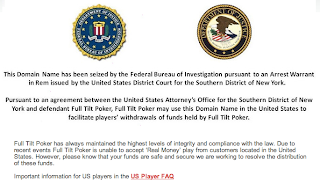
'Please Know That Your Funds Are Safe and Secure'Here’s where I think the average Full Tilt Poker player gathers most of his or her outrage -- from those statements by the company, repeated ad infinitum, that funds were “safe and secure.”

The amendment compiles a bunch of examples of such statements made between 2008 and 2011, although most of us are already familiar with them via our email inboxes, Two Plus Two, or simply visiting the fulltiltpoker.com website.

We read how in May 2008, Full Tilt Poker was emailing customers saying “we would like to assure you that your money is not at all at risk and there is no poker site on the Internet where your money would be any safer than at Full Tilt Poker.”

Think back to the summer of 2008. When one site told you then that your money was safer with them than with all other sites, which of those other sites would have sprung to mind? The ones where “super-users” and cheating occurred, right? Over which the poker community was split regarding whether or not one should feel safe when playing. The fact was, in such an environment, reassurances that Full Tilt Poker was no UB or Absolute Poker had some effect.

Along the same lines, the complaint quotes another boilerplate sent out around the same time in which the company pointed out that “unlike some companies in our industry, we completely understand and accept that your account money belongs to you, not Full Tilt Poker.”

Then come more specific assurances regarding the segregation of funds, such as “FTPDoug”’s July 2008 contribution to a thread on Two Plus Two (referred to generically in the amended complaint as the “Poker Forum”) in which he responds to posters’ apprehensions about the site's using players' funds for operational expenses. “I can say with authority,” writes FTPDoug, “that we do not mix deposits with operational expenses.”

Again in another thread, this one begun in June 2009, concerning the seizure of funds from a payment processor, FTPDoug chimes in “to reassure everyone that your funds remain safe and secure at FTP.... We always make sure we can cash out any of our players at any time. You should never have to worry that you won't get your money, and we’re doing everything we can to ensure you always have plenty of methods available for both deposits and withdrawals.”

Full Tilt made similar claims to the Alderney Gambling Control Commission apparently, too. The amended complaint quotes from a document (no date is given) in which the site ensured its licenser that “[a]ll players have an account that holds money that is available to them on the Full Tilt Poker system,” that “[t]he player may withdraw funds up to the current balance of their account at any time, subject to any applicable bonus terms and conditions,” and that “[n]o play may commence unless the player has credited his account with cleared funds and has adequate funds to participate in the selected game.”

Such was certainly not the case starting some time in 2010, if not before.

Then, in response to Black Friday, came a “Statement from Full Tilt Poker Regarding Recent Check Withdrawal Issues.” “In light of recent events involving the freezing of certain accounts,” the statement goes, “Full Tilt Poker would like to assure all players that their funds remain safe and secure. Processing of both deposit and withdrawal requests is proceeding as normal and is still available to all of our players.”

As noted above, this came a couple a weeks after that internal balance sheet was showing Full Tilt Poker owing its players about $390 million while only having a little under $60 million in its accounts.

And apparently it got even worse rather quickly, as another communication, this one an email sent by Ray Bitar on June 12, 2011, noted how “at this point we can’t even take a five million run” should players suddenly begin withdrawing.

The complaint also notes -- sort of like a weak, almost obvious punch-line -- how “As of September 19, 2011, Full Tilt Poker’s website stated that players’ funds were ‘safe and secure.’” Indeed, that line continues to appear on the site today.

There was clearly a moment, one that came well before Black Friday, when Full Tilt Poker knew it was operating in a way that could not be sustained indefinitely. In other words, even if it didn’t exactly match the criteria some would require to call it a “Ponzi scheme,” it was like a Ponzi scheme insofar as it was destined to fail.

What’s next for Full Tilt Poker? The amended complaint outlines its argument for forfeiture -- i.e., when it comes to whatever is left of the company’s assets, the government wants whatever it can get. F-Train and Chops (in that podcast I was referring to yesterday) speculated about a possible “widening of the net” by the DOJ to include other yet-to-be-named individuals. And there’s that still ongoing hearing with the Alderney Gambling Control Commission, where rumors about possible investors continue to swirl.

Who knows, really? There will surely be more drama, but from the perspective of most who played on the site, it appears the damage has been done.

The players sponsored by Full Tilt were called “red pros.” The innocent among them are now red with embarrassment and/or anger. Those less so are being colored red as well as a symbolic reference to their guilt. And, of course, the whole dang outfit is deep in the red, now, too.

Labels: , , , , , , , ,


Older Posts

Copyright © 2006-2021 Hard-Boiled Poker.
All Rights Reserved.