Monday, December 29, 2014

End-of-Year Lists

With the end of the calendar year come a lot of those “top ten stories”-type lists to help us realize just how poor our short term memories really are. Have seen several poker-related ones, including the countdown of story recaps currently appearing one per day over on PokerNews.

I cast a vote for that PN list, and in past years actually compiled similar lists on my own (e.g., for Betfair Poker). Not as easy as it looks.

Like “best of” rankings, Hall of Fame votes, and other such exercises, lists of a given year’s top stories are always subjective and thus open to criticism and debate. That’s because they not only reflect the various predilections of those making the selections, but the criteria being followed when designating what a “top story” is can be pretty amorphous, too.

Poker, for instance, is a game around which several different subcultures exist, groups that overlap in some ways but are distinct, too, and thus can have very different interests or concerns. For example, the divide between online poker and live poker was once larger than it is today, but there still exist many issues which only affect one or the other, thus making stories exclusively about one either highly important or nearly irrelevant depending on the audience.

Stories about online poker legislation, then, might rate high on some lists or fail to chart on others, depending on who’s doing the listing. Same goes for poker tournament results -- they directly affect many who play poker and are of special interest to fans and those who follow it, but they can be largely meaningless to many others.

Industry news including items about casinos and online sites can often be more significant than many players and/or fans realize, but those stories don’t always capture the public’s attention. Meanwhile cheating scandals and other untoward activities always draw lots of rubberneckers, but sometimes aren’t as important as they seem. And while there may not be as many “poker celebrities” diverting us today as there were a decade ago, the words and actions of certain players and others still fascinate some, thus getting those “Did you hear what he/she said/did?!” stories a lot of play.

Looking back a few years, in 2009 Phil Ivey making the WSOP Main Event final table while winning two other bracelets was a consensus pick for top story that year. In 2010, Michael Mizrachi’s $50K PPC win and final-table run topped a few lists, although Harry Reid’s late-year failed online poker bill got a lot of play in the rankings, too (even topping some lists).

In 2011, Black Friday was the unchallenged choice for top poker story by practically everyone. In 2012, the PokerStars-DOJ-FTP deal provided a significant sequel that many rated that year’s most important poker story. Last year Daniel Negreanu’s big year topped some lists, while the reintroduction of online poker in the U.S. headed others.

So what poker story tops your list for 2014?

Labels: , , , , , ,

Wednesday, December 10, 2014

Railbirding RAWA

A few months after I started this blog -- more than eight-and-a-half years ago, if you can believe that -- the Unlawful Internet Gambling Enforcement Act of 2006 was passed into law. Suddenly I found myself writing about a host of other topics besides simply playing poker, among them legal matters affecting my ability to play the game online.

As we’ve been reminding each other over and over again since the UIGEA was passed -- kind of like repeatedly relieving a bad beat -- that bill was snuck onto another one in the dead of night just before that Congress adjourned for the final push of campaigning prior to the ’06 elections. Thus did it become law without going through what many would rate a legitimate process of thoughtful debate and decision-making -- that is to say, via a process other than one in which our elected representatives would appear unequivocally to be representing the wishes of those who voted them into office (not that such an ideal is so often realized).

From there followed several years of mixing in posts in which I’d write about various legal developments that followed the UIGEA, including the long, drawn-out process of the regulations getting finalized by late 2008, as well as the many rival federal bills introduced by Barney Frank and others hoping to legalize and regulate online gambling in the U.S.

Then came Black Friday, which I might call a game-changer but in truth more or less stopped the game altogether, at least for most online poker players in the U.S. Before then, though, I remember somewhere along the way finding an analogy between poker and legal machinations surrounding the online game, the parallel having to do with both involving a combination of luck and skill.

That’s a generalization, but the point was that when it came to legislation regarding online poker, the process was in some respects controlled by the “players” (i.e., legislators, judges, lobbying groups, plaintiffs and defendants and those representing them, and so on) and also -- seemingly -- by what often appeared “chance” elements insofar as the combination of individuals and circumstances would result in lots of unpredictable outcomes.

Some “players” in the legislative game -- like in poker -- have a lot more influence than others, with money often making the difference in both contexts. Such is what we’ve been seeing happening over the last couple of years with Sheldon Adelson’s ongoing efforts to curb online gambling of all kinds. The CEO of Las Vegas Sands (parent company of the Venetian Macao Limited) is purportedly the 10th richest person in the world (as of this past summer), thus it hasn’t been difficult at all for him to toss chips various legislators’ way in order to lean on them to play his way.

The most recent orbit of this game has involved Adelson backing this new Restoration of America’s Wire Act (RAWA) first introduced in both houses back in March of this year. This federal law would rewrite the Federal Wire Act of 1961 (which the DOJ opined in late 2011 only applied to sports betting) to prohibit most forms of online gambling in the U.S., including making current state-regulated online gambling (in Nevada, New Jersey, and Delaware) illegal. (Horse racing and fantasy sports would still get a pass.)

RAWA has gotten some co-sponsors but not huge traction this year, but during this “lame duck” session some surmised it could be tossed into this huge $1.1 trillion omnibus spending bill, with a lot of talk about how the Senate Majority Leader Harry Reid (NV) was being goaded by Adelson (and his money) into sneaking it in there in UIGEA-like fashion. You’ll recall how during an earlier lame duck session (in 2010), Reid was introducing a federal bill to license and regulate online poker while curbing other forms of online gambling. Well, now he apparently is sitting behind someone else’s stack.

During the day yesterday I noticed Rich Muny, Vice President of Player Relations for the Poker Players Alliance, noting how on his most recent webcast a former member of the House, Jon Porter, said it was “50-50” the RAWA would get added to the spending bill. The bill finally dropped last night without RAWA, and as one commentator in a Two Plus Two thread about the situation noted, “we went from about a 50% chance of being safe, to about... 85%.”

Again, just following the story makes it hard not to think of poker analogies. In this latest hand, those not wanting to see a federal bill outlawing online gambling across the U.S. were all in preflop with Q-Q versus an opponent’s A-K-suited, and now have faded both the flop and turn to have a big edge with one card to come.

The problem with those analogies, though, is that most who oppose RAWA aren’t even sitting at the table, never mind making decisions about pushing their stack in behind a premium hand. They’re on the rail, watching others with big stacks keep buying back in and playing the game on their own.

Labels: , , , , , , , , ,

Tuesday, October 23, 2012

Meanwhile... Reid-Kyl

We’re careening toward the end of another Congress, to be punctuated again by one of those weird little stretches between elections and the start of the new year. I’m talking about the so-called “lame duck session” when certain legislation that has been avoided during the pre-election period sometimes gets entertained.

And once again, talk about some sort of federal online poker bill sneaking its way through before the Congressional finish line has arisen. Turning into kind of a tradition, really.

You’ll recall how two years ago the month of December was dominated by talk of the “Reid Bill,” a.k.a. the Prohibition of Internet Gaming, Internet Poker Regulation and UIGEA Enforcement Act sponsored by senator Harry Reid (D-NV).

Looking back through my old posts from the end of 2010, I see how I was distracted enough by the story to write several times on the topic, the titles of those posts kind of describing in shorthand form the narrative’s trajectory: “Getting a Reid on the Situation,” “Adding to the Cacophony: More on the ‘Reid Bill,’” and “Zombie Bill Dies, UIGEA Monster Lives.”

This time we’re hearing about a new federal bill, dubbed the “Reid-Kyl bill” thanks to the co-sponsorship of former UIGEA architect Jon Kyl (R-AZ). This full title of this one is the Internet Gambling Prohibition, Poker Consumer Protection, and Strengthening UIGEA Act of 2012.

A summary of this bill began circulating in September, and I’ll admit that at the time I didn’t pay too much attention to either the bill or the chatter surrounding it. I might cite having been too busy to pay it much mind as a reason for my neglect, although in truth, despite having devoted a lot of posts to trying to sort through various legislative intrigues over the years, I’m mostly bored by the topic.

Also, the bits of early commentary on the Reid-Kyl bill I did catch seemed to suggest it had so little hope of passage that it wasn’t worth too much attention. (I am referring to commentary by people I tend to trust.) In other words, kind of like “Full House with Johnny Chan,” there didn’t seem to be much future for the bill, and so my response was necessarily muted.

The very first item in the Reid-Kyl summary talked about undoing “the impact” of that DOJ memorandum that became public in late 2011 which offered the opinion that the 1961 Wire Act only applied to sports betting -- that is, what opened the door for states to start exploring licensing and regulating online poker (and other non-sports related gambling) on their own. Later comes the talk of online poker, which would be permitted although with the provision that states or reservations could opt out if they wished.

Also present in that summary was an item indicating that in order “To deter U.S. players from patronizing illegal sites, the bill makes explicit that any property involved in or traceable to a gambling transaction in violation of the new act (including winnings) is subject to forfeiture.” That item understandably raised some eyebrows, insofar as it represented for the first time talk of players potentially being penalized for playing on non-licensed sites.

Late last week a full-text draft of the Reid-Kyl bill surfaced, and with it discussion about the bill has been revived. QuadJacks provides a copy, if you’re curious.

The actual bill appears to correspond fairly closely to the summary in pretty much all respects. However, the big news accompanying the publication of the actual bill was the apparent omission of that business about the feds being able to grab the funds of players who patronized unlawful sites.

This take on the Reid-Kyl bill -- repeated on practically every poker news site -- was largely influenced by the Poker Players Alliance. In an article for Pokerfuse last Friday, Rich Muny, the PPA’s Vice-President of Player Relations, is characterized as having “asserted that this language [about player penalties] is now completely absent from the current bill draft.” Muny is also quoted suggesting that the removal of such language was largely due to the PPA’s influence as a lobbying organization. Referring to the legislators, Muny says “They knew we would likely oppose a bill with player penalties and were willing to answer us on that.”

So if you peruse the news sites, you see that in most of the articles about the full text of the Reid-Kyl bill being made public the focus is on that “player penalties removed” message.

There’s a problem with that reporting, though. It’s wrong.

The bill does contain a short section (“Bettor Forfeiture”) that describes “any property, real or personal, involved in a transaction or attempted transaction in violation” of the Reid-Kyl bill and explains how it that language would be added to Section 981(a)(1) of Title 18 of the United States Code. That section of the U.S. code spells out all sorts of offenses resulting in property being “subject to forfeiture to the United States,” including any property (including money) that’s used to traffic weapons, commit fraud, support or plan acts of terrorism, or break a host of other laws.

Reader “TA Miller” left a comment on the Pokerfuse article pointing out the significance of that section in the bill and how it does in essence represent what could be considered “player penalty.“ And Haley Hintze has provided a lengthier examination of the PPA’s misinterpretation of Reid-Kyl bill which adds some further speculation about whether this section about “bettor forfeiture” might possibly apply to U.S. citizens playing from abroad on sites the U.S. considers unlawful.

As Haley rightly points out, any bills spelling out ways for governments to start seizing player funds introduces something fairly alarming into the equation for U.S. citizens playing online poker -- namely, the idea that playing itself is an act that can be penalized, just like funding terrorists or breaking other federal laws can.

That said, much like talk about future installments of “Full House with Johnny Chan,” this whole discussion is probably mostly about something that ain’t never going to happen. It appears doubtful that the Reid-Kyl bill has much chance of actually becoming federal law. (I’m not even sure if the bill’s sponsors are wholly serious about pushing it through.) Rather, it seems much more likely that within the next year or so we’ll be talking about online poker being played in the U.S. via state-level licensees and regulation.

But who knows, really? Things can get weird after an election and before the new Congress steps in. Or weirder, I should say.

(EDIT [added 10/24/12]: Chris Grove, author of the Pokerfuse article referenced above, clarifies a few points while also responding to some of Haley’s analysis in an article posted yesterday on his Online Poker Report website titled “Reid/Kyl, Haley Hintze and the PPA.”)

Labels: , , , , , ,

Monday, February 20, 2012

2013

2013There were a number of poker-related headlines late last week containing the above figure. Those headlines appeared over stories reporting on the swift, unceremonious end to the brief hope that an online poker bill would be attached to a $150 billion package covering the extension of the employee payroll tax cut, unemployment benefits, and Medicare-related items.

Initial reports surfaced about a week ago suggesting that Senate Majority Leader Harry Reid (D-NV) was going to attach the online poker legislation to the bill. Then, just a couple of days later, Reid squashed such thoughts in a comment to a reporter saying there’d be no such attachment.

Word filtered around subsequently indicating that to attach the online poker legislation would threaten the bill (which Reid supported). Julio Rodriguez reported for Card Player that Reid’s “last ditch effort” to include the online poker legislation “fell short when it became apparent that it could put the entire legislation in jeopardy.” Perhaps it did, or perhaps it didn’t. Apparently Reid tried to attach other provisions to the bill, too, but those were all rejected by fellow legislators and not included either.

To finish the story, the bill was voted upon on Friday without any sort of ideas about regulating and licensing online poker in the U.S. attached, and just over two-thirds of the House voted in favor (across party lines). It also passed the Senate 60-36, where the Democrats were mostly for and Republicans against.

Thus came the headlines, most of which dovetailed upon Howard Stutz’ report for the Las Vegas Review-Journal: “Online Poker seen folding its hand until 2013.” In addition to reporting on the non-inclusion of online poker in the federal bill, Stutz also alludes to Nevada having passed its own legislation last year and state regulators having further finalized regulations to ready the state to offer its own online gaming licenses. Stutz says 13 companies have applied for licenses thus far.

The “2013” Stutz included in his headline and lead paragraph -- and subsequently repeated every else you read the story being summarized (because, after all, we’re in an extensive echo chamber here) -- represents a gaming analyst’s speculation that no federal online poker bill will be brought up again during this election year, although the truth is that possibility remains only slightly less likely at present than it had been before. (In other words, still about the same long shot.)

There are other bills to which online poker legislation could get attached, but in truth few really know if or when such might be attempted. And as was the case last week when this talk suddenly arose for a couple of days before just as suddenly dying down, I don’t think there will be a lot of lead time if something along these lines were to occur.

In other words, “2013” is really not much more than a number here to represent a vague, calculated guess, because there’s a little less “2012” today than there was last week, and “2014” seems too far off to focus upon as a legitimate target for predictions.

All of which is to say I’m convinced no one is really sure of much of anything of substance when it comes to predicting what is going to happen on a federal level with regard to online gambling. Not with any real certainty, anyway.

What is easier to predict is that absent any real knowledge or information, we’ll keep repeating these numbers to each other.

Labels: , , , , ,

Tuesday, November 22, 2011

Far from Super

FailureWell, everybody’s disappointed in the “super committee” it seems. This despite the fact that most appear never to have held out much hope to start with that the sucker would produce anything, anyway.

Yesterday the specially-appointed, 12-member bipartisan Joint Select Committee on Deficit Reduction announced it had been unable to complete its charge to issue a recommendation for reducing the nation’s deficit by $1.2 trillion over the next ten years. (They’d started out talking about $1.5 trillion, but scaled that back.) Apparently the group of senators and representatives were still meeting as late as yesterday, leading some to think they may in fact come through with legislation that would then be voted on by the House and Senate. But alas, they did not.

Not even taking an “incomplete” here, to draw a campus-related analogy. No, this is “withdraw/failing.”

If I am not mistaken, now that the “super committee” has failed, “automatic” budget cuts will start happening -- including cuts to defense spending -- although they don't start up until 2013. Meaning Congress can still step in to change their minds on that, too. As Sen. John McCain has said, “Congress is not bound by this. It’s something we passed. We can reverse it.”

Such is the life of the rule-makers. You can withdraw with a failing grade. But you can keep retaking the course, too, as long as you keep your seat.

When the “super committee” was first created by in August -- a consequence of that debt ceiling crisis from the summer -- there had been some talk that a provision to license and regulate online poker as a new revenue source might pop up as part of the recommendation the group would be making. Last week’s leaked story that Sen. Harry Reid and Sen. Jon Kyl are perhaps looking to co-sponsor some sort of online poker legislation faintly revived that hope once again for some, as Kyl was on the Joint Select Committee and Reid had appointed the three Democratic senators who served.

But all of the commentary this morning seems to indicate that the “super committee” was a doomed enterprise all along. And some are connecting its failure to come to terms with a larger one characterizing the U.S. 112th Congress.

Wendy Schiller, an Associate Professor of Political Science and Public Policy at Brown University, told CNN today that the committee’s failure was not just theirs -- apparently they’d tried to cut deals with others in Congress to get something together, “but were rebuffed by their party leaders” -- but a “failure of political leadership on both sides of the partisan aisle.”

“Both parties chose their own electoral livelihoods over the good of the country, and it is outright shameful,” added Schiller. “This might be the most self-serving, mediocre, and uncaring set of legislators in Congress in the last 50 years.”

Schiller suggests that the current Congress is perhaps unique in the extent of its self-interestedness and collective failure to lead. But we know that when it comes to legislating online gambling in the U.S., every action made in the past -- on the state or federal level -- has been “self-serving” to the legislators who made it. As such will be the case for whatever comes next, if anything.

Meanwhile, as citizens with a desire to play our favorite card game against each other online, we just have to hope what serves the political interests of our overlords happens to overlap a little with what serves our own.

Sure, they represent us in theory. But in practice the arrangement is not so super.

Labels: , , , ,

Friday, November 18, 2011

The Rebranding of Poker

The House Subcommittee on Commerce, Manufacturing and Trade talks online gaming (again)I watched the live streams of both of those Congressional hearings regarding online gaming this week.

This first happened yesterday afternoon over in the Senate where the Committee on Indian Affairs had an oversight hearing on “The Future of Internet Gaming: What's at Stake for Tribes?” Then this morning came a second meeting in the House of the Subcommittee on Commerce, Manufacturing and Trade to talk about “Internet Gaming: Regulating in an Online World,” in particular the bill proposed by Rep. Joe Barton (R-TX) to license, regulate, and tax online poker in the U.S. (H.R. 2366).

Yesterday’s discussion in the senate regarding Native Americans’ potential stake in a regulated online gambling environment in the U.S. did deal in some specifics with regard to how it might be reconciled with the current situation and the Indian Gaming Regulatory Act of 1988. Otherwise, the talk was mostly of a generic variety when it came to what such an environment would be like.

The upshot seemed to be that proponents of regulation all want to assure the Native Americans that neither their current rights nor their brick-and-mortar casinos will be unduly threatened by the dawning of a regulated online gambling in the U.S. Meanwhile, representatives of the Native Americans’ interest are somewhat divided, with several sounding less than enthusiastic about such a prospect.

That is to say, there are more than a few reservations from the reservations.

Rep. Frank Wolf (R-VA)Meanwhile, today’s House subcommittee hearing was much more specific about logistics and seemed to indicate the real possibility that the Barton bill could move forward soon. Still, there were a number of points made to suggest at least some legislators aren’t thrilled with the idea of allowing anything like H.R. 2366 to move along, including Rep. Frank Wolf (R-VA) whose nickname may or may not be “Big Bad.”

Channeling our old friend Rep. Spencer Bachus (R-AL) -- the House Financial Services Committee Chairman currently scheduling hearings to look into insider trading while being accused himself of having benefited from the very same practice (no shinola) -- Wolf spoke of suicides and ruin as unavoidable consequences to unleashing the “crack cocaine” of online gambling upon citizens who will necessarily be unable to control their worst, most self-destructive instincts.

Responding to Wolf in today’s hearing, Rep. Barton tried to distinguish poker from other gambling games -- his bill is, after all, poker-specific -- promoting it as a true test of skill that primarily attracts intelligent people who aren’t in such dire need of governmental hand-holding. Referencing the World Series of Poker on ESPN, Barton praised the smarts on display there, noting how the players seemed more like “very intelligent, ‘MIT’ type engineering people” than potential gambling addicts.

Wolf wasn’t really hearing that argument, and indeed others who would support Barton’s bill such as Rep. Barney Frank (D-MA) who also testified at today’s House hearing aren’t that excited, either, to start distinguishing poker as particularly different from other gambling games. Not when it comes to arguing for individual liberty and citizens’ rights to play those games, anyway.

All of this made me think of a Forbes article that just appeared a couple of days ago by Jeff Bercovici titled “Poker Shuffles the Deck.”

International Federation of PokerTaking an argument that is currently being advanced by the International Federation of Poker, the group currently holding a duplicate poker tournament in London (“the Nations Cup”) designed to highlight the skill the game requires, Bercovici discusses current efforts to try to “rebrand” poker as a “mindsport.”

Besides improving poker’s cultural status (and perhaps helping legislators like Barton make his case for poker’s difference from other gambling games), such a “rebranding” may also help in the securing the support of advertisers other sports currently enjoy. So goes the argument, anyway.

“If poker ever manages to transcend its unsavory origins and become a mainstream sport with big-league sponsorship -- and that's a big if -- it will have followed a familiar path,” writes Bercovici. He then goes on to compare poker to Mixed Martial Arts, stock car racing, and even football -- all sports that weren’t initially accepted by the American culture at large before eventually becoming some of the country’s most popular sports to watch.

The comparisons are interesting, as is the overall effort to “rebrand” poker into something more acceptable to more Americans. I can’t help but think, though, that it would be easy to take all of this too far -- to try to characterize poker as a game that does not involve real gambling, or to make the game over into something else entirely (as one could argue duplicate poker tries to do).

Rep. Joe Barton (R-TX)Barton’s words today implied the idea that it’s mostly super-smarties playing poker, but we all know that is hardly the case. And even if everyone who played poker approached it as studiously as many approach other “mindsports,” it would still be a gambling game in which chance necessarily plays a significant role. And well, not everyone is okay with that.

Apparently there might be another online poker-only bill introduced over in the senate before the end of the year -- at least that is what the New York Post reported this week. Harry Reid (D-NV) is said to be behind this one (again), with UIGEA-architect and former opponent of all things gambling-related Jon Kyl (R-AZ) allegedly on board as a co-sponsor. Kyl is on that “super committee,” you'll recall, and so some are wondering if the subject might have come up as that group works on discovering ways to reduce the deficit, including creating new revenue sources.

Am highly curious to see where all of this legislative pushing ultimately goes. And, of course, what the poker “brand” will become in terms of its significance to American culture if and when it does.

Labels: , , , , , ,

Tuesday, August 30, 2011

On the Super Committee

The Capitol Puts Out the Bat $ignalSounds like an excruciatingly boring version of, say, the Super Friends or Justice League of America or other comic book/cartoony teams of superheroes, doesn’t it? With deadeningly dull super powers, too.

Creating compelling agendas faster than a speeding bullet! Formulating and passing along recommendations more powerful than a locomotive! Untangling knotty procedural questions with flawless applications of Robert’s Rules in a single bound!

Once again, online poker players in the U.S. find themselves scratching their heads over our government’s legislative machinations, trying to sort out what exactly our fearless leaders are up to now. This time the focus is upon this new Joint Select Committee for Deficit Reduction -- a.k.a., the “super committee” -- that was created as part of the resolution of that whole “debt ceiling” crisis earlier this month.

The 12-member, bipartisan committee was created in order to discover both places to cut and potential revenue sources in order to reduce the budget by a hefty $1.5 trillion. The group has a short time to formulate recommendations, having to pass them along to Congress by November 23. The House and Senate will then have just one month to vote “up or down” on what the super committee has given them, with no amendments or filibusters allowed.

Supporters of licensed and regulated online poker in the U.S. believe it is possible that the super committee might include some form of internet gambling legislation in its recommendation. If such were to happen -- and Congress were to approve the committee’s recommendations -- that would speed up the process by which Americans could get back online to play poker, making such happen much more quickly than via the usual, laborious legislative process of introducing a bill (such as we’ve seen Rep. Barney Frank try multiple times, or the more recent “Barton bill”), getting it through committee, having the House and Senate both vote in favor, and then finally having the president sign it into law.

The so-called 'Super Committee'Some are pointing to various gestures made by Senator Majority Leader Harry Reid (D-NV) (who is not on the super committee), the newfound interest in internet gambling of chief UIGEA-architect Sen. Jon Kyl (R-AZ) (who is a member), and the significance of various lobbying efforts and other noise around Capitol Hill thought to suggest the time is ripe for finally entertaining online gambling. (Here’s a summary of various “circumstantial” evidence that regulating online gambling may be something considered by the super committee.)

Last week Rich Muny, VP of Player Relations for the Poker Players Alliance, appeared on the Two Plus Two Pokercast (the 8/22/11 episode) to say he was “as enthusiastic about this as I've been since this [fight to license and regulate online poker] started,” calling the super committee “a golden opportunity” to get some sort of legislation passed.

All of which perhaps sounds like something might happen here (and soon). Still, I can’t help but remain somewhat guarded -- if not dubious -- about it all, for a couple of reasons.

One has to do with the current political climate in the U.S. The fast-approaching presidential campaign seems to be highlighting so-called “moral” issues more and more, with (sometimes) related matters of faith getting mixed in frequently, too. And, as Barney Frank once pointed out in one of those House Financial Services Committee meetings, “there is a moral disapproval of gambling” among many legislators as well as those whom they represent.

I might be wrong, but it feels as though today supporting online gambling -- even in the context of (heroically?) attempting to alleviate the country’s budgetary woes -- is less politically savvy than it would have been just a couple of years ago. So that could present an obstacle to online gambling becoming part of the super committee’s recommendations.

My other reservation comes from the idea of the federal government actually passing such legislation and thereby being the ones to oversee online gambling -- including poker -- in the U.S. Nothing specific here other than the usual, vague worries over how exactly that would play out.

I mean it might work out just great. But something tells me it wouldn’t be exactly super.

Labels: , , , , ,

Thursday, December 16, 2010

Zombie Bill Dies, UIGEA Monster Lives

Now What?A running joke over the last week-and-a-half among some observers has been that the “online poker bill” proposed by Senator Harry Reid (D-NV) -- prematurely pronounced dead several times -- somehow possesses “zombie”-like qualities in its refusal once and for all to meet its end.

In truth, though, it is the Unlawful Internet Gambling Enforcement Act of 2006 that is the real monster here. And unlike Reid’s bill, which apparently has finally been cast aside as far as the current Congress is concerned, the UIGEA really won’t die, despite our most earnest wishes for it to do so.

Last night Andrew Feldman posted an article over on the ESPN Poker page announcing that “multiple sources” had confirmed there would be no more attempts made to attach Sen. Harry Reid’s “Prohibition of Internet Gaming, Internet Poker Regulation and UIGEA Enforcement Act” to any of the legislation being considered during this current “lame-duck” session of Congress.

One of Feldman’s sources for the news was Poker Players Alliance Executive Director John Pappas, who expressed disappointment that the bill would not be presently pushed through, referring to the bill’s opponents as having “their heads fully in the sand” when it came to the need for and significant benefits to be had from licensing and regulating online poker in the U.S.

Looking ahead, then, to the 112th Congress which will begin its work on January 3, 2011, prospects for this particular bill appear quite dim. So does the likelihood of any other legislation designed to promote online gambling in the U.S. (such as the failed Barney Frank-sponsored bills of the past few years). Nor should one expect from the upcoming Congress any serious legislative attempts to curb or repeal the UIGEA, either.

The Capitol BuildingThat’s because when the new Congress takes the Hill, Republicans will enjoy a majority in the House of Representatives, which in turn means that Rep. Spencer Bachus (R-AL) will be taking over as the chairman of the powerful House Financial Services Committee, assuming the seat previously occupied by Rep. Frank (D-MA). This is the committee from which one should expect bills like Frank’s previous ones to come -- that is, bills designed either to stop the UIGEA or to introduce licensing and regulatory schemes for online gambling in the U.S. which would render the UIGEA insignificant.

Bachus, most certainly part of the group of politicians Pappas was referencing with his “heads fully in the sand” remark, staunchly opposes all forms of gambling, online or elsewhere. I think it is safe to assume he will therefore make it difficult if not impossible for his committee to consider with any seriousness any bills that might be viewed as promoting gambling, poker included.

When I first wrote here about the “Reid bill” last Monday (12/6/10), I concluded that I was neither all that excited about its particular vision for online poker in the U.S., nor did I think much about its chances to become law.

Over the last 10 days I began to understand and appreciate some of the arguments being made by those who supported the Reid bill. But really, the greatest argument for the Reid bill always seemed to me to have had little to do with what it was actually proposing, but rather the fact that if it were to become law we online poker players would no longer have to worry as much about the UIGEA.

That is to say, I understand the idea that we’ll basically take anything other than what we’ve got, this horrendous (probably unconstitutional) law, a law which is starting to have greater effect since its full implementation on June 1, 2010, and which will mostly likely continue to do so going forward.

As Andrew “Foucault” Brokos wrote on his Thinking Poker blog last week, the Reid bill was “far from ideal for the professional player, but there [was] no reason to think that we [were] in a position to hold out for something better.” This is true -- in fact, in terms of political bargaining power for such a bill, I never thought Reid had much from which to draw right now, despite being the Senate Majority Leader, let alone what’ll be the case next year.

UIGEA steamrolls alongConsidering the prospects of the Reid bill failing to pass, Brokos predicted “things will get very bad in the not-too-distant future.” I’ve no reason to think he’s wrong there, either. The UIGEA, that law that blocks U.S. banks and financial transaction providers from allowing transactions with online gambling sites (even if they are non-U.S.), remains free to continue with its destructive ways.

And now we are in a situation where there is no legislative response imminent. So what can we U.S. players hope for?

Seems to me all that’s left to look forward to at the moment would be a successful challenge to the UIGEA in the courts -- that is, the overturning of the law as indeed unconstitutional, something that obviously would be long, long time coming, if it were ever to happen at all.

Such has been tried. The Interactive Media Entertainment and Gaming Association (iMEGA) took a shot, taking the angle that the UIGEA not only should be made “void for vagueness,” but violated things like individuals’ privacy rights and the First Amendment. They received an unfavorable ruling in the U.S. 3rd Circuit Court, though, and lost their appeal, too.

One so-called “silver lining” in that appeals ruling was the court saying that states had priority over the federal government when it came to the business of regulating gambling, including online. So I suppose court battles vs. the UIGEA could be waged on the state level (i.e., rulings that said the federal law couldn’t apply in a particular state because of its stand on online gambling). I’m not entirely sure about that, though.

In any event, I can’t just now envision other ways to prevent the UIGEA from affecting us as we Americans try to make deposits and continue playing on PokerStars, Full Tilt Poker, and other U.S.-facing online poker sites. Not for the next couple of years, anyway.

In other words, it doesn’t look like we are going to sneak the UIGEA out the backdoor via any law-makin’ legerdemain anytime soon. Somebody’s gonna have to fight this sucker heads-up.

Labels: , , , , , ,

Thursday, December 09, 2010

Adding to the Cacophony: More on the “Reid bill”

Adding to the Cacaphony:  More on the 'Reid bill'Yesterday was certainly an interesting day for those of us curious about the fate of “Reid bill,” a.k.a. the “Prohibition of Internet Gaming, Internet Poker Regulation and UIGEA Enforcement Act” proposed by Senator Harry Reid (D-NV) late last week (discussed here).

Lots of rumors swirling every which way on Wednesday regarding the bill’s possible fate, fueled in part by a bit of misleading reporting by the Las Vegas Sun.

Late in the afternoon, the Sun fired off a story with the headline “Harry Reid: Online poker falls off agenda” announcing that the Senate Majority Leader was no longer pursuing having the bill added as a rider to any other legislation, most particularly the tax bill that has taken absolute precedence for this lame-duck Congress.

That headline sounded pretty definitive. But the article itself was much less so. A quote from Reid in the article regarding his plans seemed ambiguous -- that is, it didn’t appear to indicate at all that he’d abandoned the fight to get some sort of licensing and regulatory scheme for online poker in the U.S. passed before the 111th Congress closes up shop.

And, as it turned out, that wasn’t the case at all.

After what I assume was a bit more legwork by the reporter, the article was quickly revised and given a new, very different headline: “Reid’s office: Legalizing online poker still on lame-duck agenda.” According to the updated article, a Reid spokesman explained away the earlier quote, saying “the Senator’s comment got muddled in the cacophony of the Senate hallways.”

Kind of a cacophony, too, on Twitter, in the forums, on various blogs and websites, and elsewhere with regard to this bill -- both in terms of its potential to become law and what exactly would happen should that come to pass.

Poll regarding the 'Reid bill'I had to laugh when yesterday I noticed a new poll over on Two Plus Two in the Poker Legislation forum asking the question “Do you want the ‘Reid bill’ to pass?” The poll’s results show an almost perfect divide between those who want to see it pass and those who do not.

Worth remembering, I think, who exactly is being polled here -- namely, poker players, probably all of whom play online regularly. Collectively, they don’t know what to think about the prospects of this bill, what with its temporary “blackout” period during which online poker apparently will be unavailable to U.S. players (other than via “black market” means), and its subsequent reorientation of the market to favor new casino-run sites and (apparently) sweeping aside the sites on which we presently play for a while. (Or for good?)

Makes me wonder... if the players aren’t even sure about it, how are legislators -- who obviously will be using an entirely different set of criteria to judge whether or not to support the bill -- responding to it?

From what I have heard, if the bill does indeed get added to the tax bill, it will most assuredly be passed. The real question, however, is whether or not Reid will be successful in that quest to get his “Prohibition of Internet Gaming, Internet Poker Regulation and UIGEA Enforcement Act” added.

And as far as that goes, I think anyone who says he or she knows definitively what will happen next is just making more noise -- adding further to the cacophony, you might say.

Labels: , , ,

Monday, December 06, 2010

Getting a Reid on the Situation: On the “Prohibition of Internet Gaming, Internet Poker Regulation and UIGEA Enforcement Act”

Page 1 of Sen. Harry Reid's proposed 'Prohibition of Internet Gaming, Internet Poker Regulation and UIGEA Enforcement Act'You’ve no doubt heard by now that Sen. Harry Reid (D-NV), currently the Senate Majority Leader, has proposed a new bill in the Senate that has gotten those of us who enjoy online poker sitting up in our chairs. There had been rumors of an attempt to pass some type of online gambling-related legislation during this brief “lame duck” session of Congress, and the appearance of Reid’s bill appears to have confirmed such rumors as having been well-founded.

A draft of the 75-page bill became available late last week, and if you have an interest in these things I encourage you to take a look at F-Train’s “quick and dirty” summary of the bill, to follow Pokerati’s ongoing reporting on it, to read B.J. Nemeth's “Early Analysis,” and/or to check out the Poker Legislation forum over at Two Plus Two to find out more about the bill as well as to keep up on what’s happening with it.

My understanding is that even though the proposed bill is comprehensively argued and full of detail -- in other words, more carefully composed than was the Unlawful Internet Gambling Enforcement Act of 2006 -- it is nonetheless still a draft version and apparently changes have already been made prior to its receiving any discussion or vote.

Like the Barney Frank-sponsored bills that have come before, Reid’s bill also proposes a way to license and regulate online gambling in the United States -- that is, to allow operators to set up shop here in America, if they play along with all the provisions and secure themselves licenses to do so -- one big difference being that Reid’s bill only allows for poker and not other forms of gambling.

In fact, Reid’s bill does more than simply outline a scheme to license and regulate online poker; it also seeks to reinforce current efforts to curb other types of online gambling, including strengthening that poorly-constructed UIGEA with some more specifics such as creating a list of “unlicensed gambling enterprises” so the banks know for certain the sites with which they are supposed to be blocking their customers’ transactions.

Thus is the bill’s short title -- “Prohibition of Internet Gaming, Internet Poker Regulation and UIGEA Enforcement Act” -- is already kind of long, indicating the extensive ambitions it contains.
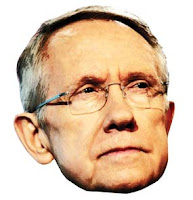
Sen. Harry ReidThe scuttlebutt appears to suggest the possibility that the bill could get tacked on to some other legislation and passed through Congress without extensive fuss, not unlike what occurred with the UIGEA back in the fall of 2006. Or at least that is the most likely short-term scenario by which Reid’s bill will become law, since the current Congress is occupied with more pressing concerns such as whether or not to extend those “Bush-era tax cuts” in some form or another.

I’m not going to attempt to make any sort of exhaustive analysis or summary of the bill in its current form, both because of its status as a draft and because (as always) I feel somewhat out of my element when it comes to understanding the legislative process. Sure, I’m a good enough reader, but this stuff almost never translates into something entirely coherent and/or logical. To my jingle-brain, anyway.

I will, however, share three kind of general reactions to the news of Reid’s bill.

First off, it does not sound as though the bill if passed would be such great news to any of the current “U.S.-facing” online poker sites -- most particularly the two largest ones, PokerStars and Full Tilt Poker -- all of whom apparently will be swiftly swept away from the U.S. market for an extended period of time should Reid’s bill become law.

The bill as written requires that no licenses to operate online poker sites in the U.S. will be issued until 15 months after the bill becomes law. Furthermore, the bill includes provisions to prevent issuing licenses to anyone but U.S.-based casino operators (or other business entities who have been involved in the industry here in the states for five years or more) for the first two years after that. In other words, Stars, Full Tilt, Cake, the Cereus delinquents, and others would all have to sit in the penalty box (so to speak) for at least 39 months before coming back to the U.S.

The idea here is obviously to try to develop this new market of online poker in the U.S. in such a way as to ensure its primary beneficiaries are U.S.-based (and, not incidentally, significant backers of Reid’s campaigns).

Have to say, the prospect of suddenly losing Stars or Full Tilt does not excite me much. Nor does sitting around for a couple of years or more waiting to get back online to play on other sites make me feel any better about that situation. So that’s one response -- perhaps inspired by short-term thinking, but hard to avoid.
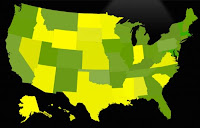
States opting in or outA second reaction is to fret a bit over all the ways states can “opt-in” or “opt-out” when deciding whether or not to allow licensees to operate. In other words, even with online poker becoming licensed and regulated in the U.S., I wonder if my state will still keep me away from the tables.

Added to that are other less crucial concerns about taxation and other specifics that might introduce unwanted changes to the way I play online poker today. I’m not saying I don’t want to pay tax on my winnings -- I do that already. Rather, I’m uncertain about how regulation might negatively affect both my own experience playing and perhaps that of others, too.

I suppose, then, you can file these first two reactions under the general heading of “resistance to change,” with a bit of cynicism thrown in there, as well, inspired by the thought of our federal government successfully managing the complicated process of licensing, regulating, and taxing online poker.

I have one other reaction, too, to share, namely some doubts about whether or not Reid will be able to sneak his bill through during these final days of the 111th Congress.

I could be wrong -- indeed, understanding the political realities affecting the legislative process is perhaps the most nebulous part of all of this for me. But it seems like the situation Reid faces is much different than the one then-Senate Majority Leader Bill Frist enjoyed back in 2006 when he played a major role in getting the UIGEA signed into law.

We all remember how the UIGEA was stealthily appended to that “must pass” legislation, the SAFE Port Act, back in 2006 just as the 109th Congress was closing up shop for that fall’s elections. (Incidentally, I have read analyses of the SAFE Port Act that are critical of it as having been -- like the UIGEA -- mostly impotent with regard to its intended purposes.) We were right to criticize the lack of debate in Congress at the time over the UIGEA in particular -- to feel something undeserved had occurred, somehow, as though we’d played our hand reasonably well and were nonetheless sucked out on in the end.
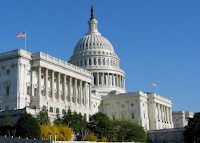
Capitol HillThe SAFE Port Act (with the UIGEA) was passed by Congress late in the evening of September 30, 2006, then later signed into law by President Bush on October 13th. In fact, there had been an earlier attempt to sneak the UIGEA through a few days before. Sen. Frist had tried to append it to a defense spending bill, but was blocked from doing so by other senators. In other words, it isn’t as though one man -- as powerful as he might be -- can alone decide to pass a bill through both houses of Congress. Others have to go along with the plan.

And when it came to the UIGEA, that sucker had been around a long, long time -- in various forms, that is -- having been proposed again and again for nearly a full decade before. And in July 2006, the House of Representatives had passed H.R. 4411, the Internet Gambling Prohibition and Enforcement Act proposed by Jim Leach (R-AZ), by a 317-93 vote (with 22 absent/not voting). That is to say, while the Senate never really debated the UIGEA (a whittled-down version of Leach’s bill) in late September 2006, senators at least knew the thing had been discussed and approved on the other side of Capitol Hill.

It seems to me that the situation surrounding Reid’s bill is entirely different. Neither the full House nor the Senate has been given a chance to discuss or vote on any of Frank’s earlier bills designed to license and regulate online gambling in the U.S. And there really hasn’t been any discussion even on the committee level regarding an online poker-only licensing and regulatory scheme.

So there isn’t really much of a history of legislative debate for Reid’s bill. Nor does there exist any obvious support for the idea it proposes such as that House vote on H.R. 4411 suggested for the UIGEA. All of which makes me think it less likely that Reid’s bill could be successfully snuck through as an add-on to some other legislation over the next few days.

Of course, as I have said (repeatedly), I could well be wrong here with my read. It’s not as though these things tend to follow easily predictable paths.

Even so, my general impression at the moment is to feel mostly ambivalent, and not terribly optimistic -- neither about the idea of Reid’s vision for online poker in the U.S., nor the prospects of such occurring.

(EDIT [added 12/7/10]: There is a new draft of the bill, and F-Train has again broken it down and delivered a handy synopsis translated into regular talk.)

Labels: , , ,


Older Posts

Copyright © 2006-2021 Hard-Boiled Poker.
All Rights Reserved.