Sunday, March 25, 2007

Gambling is Illegal at Bushwood

According to Judge Smails, gambling is illegal at Bushwood“ . . . and I never slice.”

Earlier this week I was sitting at a PLO25 table when out of the blue a player typed those lines. Another minute goes by and he types “what film?” No one responds. A few more Caddyshack quotes followed, including the one from Carl Spackler about Kentucky Bluegrass and Northern California sinsemilla. Come to think of it, I believe the player did have one of those “420” names. Perhaps he was pot committed (yuk yuk).

Like I said, no one took notice of 420’s jabbering, and so perhaps as a result our friend began making more direct comments about the rest of us around the table. He tried to disparage a couple of players’ play, which did elicit a couple of desultory responses. He also complained repeatedly about how long one player with a poor connection was taking to act. Eventually he left, obviously bored with the sedentary lot to which he’d found himself shackled.

His little act caused me to think of a couple more ways PLO plays differently than Hold ’em (at least for me).

One difference, of course, is the amount of time a single hand takes. Looking back at Poker Tracker (a program I haven’t even used for over two weeks since I haven’t been playing HE), I see that on average I’d play around 80-90 hands per hour at a single 6-max limit table. I’ve played nearly 3,200 hands of PLO over the last two-and-a-half weeks, and the total minutes I’ve played comes to nearly 4,000. That’s around 47-48 hands per hour -- about half the pace, really.

One way I’ve mitigated the boredom factor is to multitable. Usually I’ll open up two tables; on a few occasions, I’ve opened three. (By the way, my so-called “Rules of Engagement” for the limit HE game don’t apply here.) Still, even then, the pace can be very slow, as players take more time to evaluate how their holdings relate to the community cards, and almost every single hand reaches a showdown.

420 got me thinking about another difference as well. When he quoted Judge Smails’ “Gambling is illegal at Bushwood” line, I initially thought he was trash-talking about the previous hand, perhaps giving somebody grief for having taken the worst of it in order to get to the river. As I think I might’ve demonstrated in the previous post, there are times in Omaha when one does consciously decide to “gamble.” (There were six of us who made such a decision in the hand I described there.) But even then, there seems to me a relative lack of ambiguity about the terms of such risks when compared to Hold ’em.

To paraphrase Gertrude Stein, the nuts are the nuts are the nuts. You either got ’em, or you’re drawing to ’em, or both, or neither. Same goes for your opponents, and (for most players) their betting patterns tend to reveal fairly clearly to which category they belong. Even in limit hold ’em, there can be a lot more uncertainty about what a check, bet, or raise really means.

I’ve a lot more to learn, obviously, about PLO. But I do feel as though I’m “gambling” a lot less over here than in fixed HE. And, as I’ve said before, I prefer not to gamble if I can help it -- whether or not it is illegal.

Labels:

Friday, March 23, 2007

A Hand Not to Sneeze At

A Hand Not to Sneeze AtAm currently locked in a desperate struggle versus some sort of tree pollen allergy-type invasion above the neck here. Was doing fine on Tuesday, then went for a long walk in the early evening with Vera and now feel like my head weighs a hundred pounds. Endless coughing, sore throat, lungs aflame, fever, runny nose, sneezing, you name it. Keeping the hot soup and Sudafed coming. Not sure, exactly, how large doses of pseudoephedrine have affected my decision-making at the tables, but things are still running well.

Have been continuing with my Omaha adventure. For the last two weeks I have essentially only played pot limit Omaha, either $0.10/$0.25 (with a maximum $25 buy-in) or $0.25/$0.50 ($50 max. buy-in). Differences between the two levels don’t seem as significant as do different levels of fixed limit hold ’em. Nor does being at a 6-max table or full ring seem as important a difference as in limit HE.

As I said, still running well here. I’m logging many more winning sessions than losing ones, with some of the wins being significantly large. I wrote before about some of the reasons why I think I might be winning. I’ve also been perusing advice about starting hands (such as this from Lou Krieger) as well as lurking on the forums a bit to get a better idea of the world of Omaha.

Those of you are interested might go check out a recent podcast on Poker Podcast World in which Max Shapiro interviewed Robert “Chip Burner” Turner, the man credited with introducing the game of Omaha in Vegas in the early 1980s. Turner is an accomplished tournament player, having one WSOP bracelet in seven-card stud, numerous high finishes and cashes in the WSOP main event, as well as other tourney victories under his belt. Others were involved in the creation of Omaha, too. Here’s an interesting discussion the first part of which relates a lot of the particulars regarding how Omaha came to be.

While I’m mostly keeping out of trouble by not calling down with King-high flushes, bottom sets, or the like, I have run into difficulty with one particular scenario that seems to keep cropping up -- flopping high trips. For example, I’ll have an ace (and no four) and the flop will come AA4, then after the flop betting round is complete I’m left with one other player. Little chance that other player does not also hold an ace, correct? (Or fours, perhaps.) Then I’ll get to the river without improvement -- I won’t make a boat, or if I do it may not be the best boat -- though still will have a hard time letting my trips go. My basic strategy here has been to try to keep the pot small unless I hit the unambiguous nuts, but that’s easier said than done sometimes (especially when out of position). Unless I get lucky, I’ll often lose what become decent-sized pots here. Any ideas?

Had a hand Wednesday night that went much better, though, and had to share. I wrote a post about two months ago in which I described what for me had been the single biggest pot I’d ever won -- $51 (in a $1/$2 fixed limit game). Last weekend I exceeded that with a $61 pot in a $0.10/$0.25 PLO game. Then yesterday broke that record. Here’s how the hand went . . . .

This was a loose 9-player game. Several had bought in short, so my stack of $31.20 was the second highest at the table. I was in the big blind and was dealt 5d2h6c5c. Five players limped in (not at all unusual for these low stakes PLO games), then the button raised to $1.05. The small blind called. Even though Krieger would probably list this holding among his “unplayable hands,” I called, anticipating everyone else would as well. I even remember thinking to myself as the preflop pot was taking shape that I had put in 80 cents to win $7.60 -- 9.5-to-1 odds. So there were seven of us -- including the one player with a larger stack than mine -- to see the flop.

The flop came 9s5h2s. I’d flopped middle set (with no real draws to speak of). Both the small blind and I checked. Then something very interesting happened. The player to my left went all-in with his last $4.80. Then the next player did the same with the $4.65 he had left. Three of the next four players (including the big stack) also just called. This pot was going to be huge by the time it reached me. Then the button (who had raised preflop) raised all-in with his remaining $11.22.

I had a decision to make. I had $30.15 behind me, and was staring at a pot of $32.25. Now someone could slowplay a set of nines here, but there’s really only one player at the table (the big stack) that I’m even worried about. With two spades on board, I can’t imagine him not having pushed here with nines. I also doubt the button -- who’d raised preflop -- has nines, either. More likely one of the baby stacks has the nines, I thought, in which case I’m ahead of everyone else. Just have to dodge that flush.

I went for it, pushing my entire stack in the middle. “This is ridiculous,” someone instantly typed. Of the three players with chips left, two of them called. “This is great,” typed someone else. The big stack -- to my delight -- had folded. The pot was a whopping $83.89. There were five players all-in, plus me (with $8.20 returned).

This hand was on Bodog, and so everyone’s cards were turned over before the turn card came. I quickly looked around the table, trying to find the nines. No one had them. There were a lot of pocket pairs -- queens, jacks, eights, sixes, as well as a set of deuces. And just one of the other five players was on the spade flush draw. Using the CardPlayer Omaha Odds Calculator, here’s what I was looking at:

Percentages on the flop

As it turned out I’m looking at 3-to-1 against winning the hand, but looking back that was probably the best I could’ve hoped for when I had pushed. Almost what the pot odds were on the flop, in fact, when I’d put in around $22 to win $83.89.

The 3s came on the turn, completing the flush for one of my opponents, but knocking out everyone else.

Percentages on the flop

Looking at everyone’s cards, I had just five outs available to me (of the 24 unseen cards) -- the 2 nines and the 3 threes. And the 9c came, giving me the boat and allowing me to drag the huge pot.

Table broke up shortly afterwards, since almost everyone had been felted. There was some chatter, but no one seemed upset with how I’d played the hand. The player with the spade flush seemed almost wistful when congratulating me, having come so close himself to taking the chips.

If anyone wants to call me a donk here, please do . . . and tell me how and why you would have played differently. If correct, I’ll gladly take credit. If incorrect, I’m gonna have to blame the Sudafed.

Labels: , , ,

Wednesday, March 21, 2007

Forward-Looking Statements

CardPlayer and Bluff -- Tweedledum and TweedledeeI’d heard with everyone else a few weeks back the rumor that Bluff Magazine was going to get exclusive rights for live coverage of this year’s WSOP. Saw that initial report over on PokerBiz. Also saw that bit where an anonymous commentor using a computer with a CardPlayer IP address slammed the WSOP and Bluff in a comment to PokerBiz. On Monday finally came the press release from Harrah’s announcing a deal -- or at least a “non-binding letter of intent” -- had been arranged between Harrah’s and Bluff.

To spell it out a bit, this here presser informs its audience that Harrah’s “has executed a non-binding letter of intent to form a digital publishing alliance with Bluff Media LLC for online and radio coverage of all World Series of Poker-branded events on a global basis.” Some folks remembering the various ways CardPlayer came up short with its coverage last summer are suggesting this to be good news, but I’m nonplussed. Kind of like choosing between Tweedledee and Tweedledum, as far as I can tell.

The whole idea of an “exclusive content provider” is lamentable, in my view. I realize the necessity, of course. Over the last couple of weeks, I’ve been going back through some of the old Beyond the Table podcasts -- good stuff, by the way. Back in early July, Dan Michalski (of Pokerati) was calling in from the Rio and spoke about CardPlayer’s exclusivity deal. On the 7/5/06 episode, Michalski mentioned how in the past (i.e., Before Moneymaker), the WSOP didn’t need to restrict media access because there wasn’t such a demand for information. Today, of course, things have changed considerably.

Michalski’s comments demonstrate the tension that is necessarily produced when the WSOP attempts to enlist a single media outlet as a way to exert control over how the event gets reported to the rest of the world. “I think poker has gotten to a point where it’s big enough now that it can’t keep its clean and pretty image,” says Michalski. “I’m not saying it’s a dirty game, but c’mon . . . if we think that it’s a lily-white, super-family friendly game . . . the negative stories always come out, because [poker] is so big . . . . Poker is just big enough that there’s no way you can keep it all clean the way CardPlayer Media has tried to keep it for the last several years.”

I fully expect we’ll see a similar tension emerge this summer, with Bluff necessarily assuming CardPlayer’s place as the target of criticism on blogs, forums, and other non-“official” media covering the WSOP.

One other thought occurs to me reading through Harrah’s presser, namely, the depressingly litigious atmosphere surrounding poker these days. To be fair, this release isn’t merely announcing the deal between Harrah’s and Bluff, but also serves as an advertisement to those who may be interested in investing in either company. As such, a lengthy disclaimer is appended to the announcement -- a disclaimer about twice as long as the announcement itself -- that denies both parties any liability should any of its optimistic statements about the partnership prove inaccurate.

For example, Jeffrey Pollack, the WSOP commissioner, says in the release that “this alliance will help us connect with our players and fans in new and exciting ways.” Similarly does Eddy Kleid, co-president of Bluff Media, think that “the consolidation of digital-publishing rights under this agreement will lead to a more cohesive, integrative and compelling product for fans around the globe.” Reading further, we learn that both of these quotes are examples of “forward-looking statements” and thus should be understood in a particular way. According to the release, one “can identify these statements by the fact that they do not relate strictly to historical or current facts.” Such statements “contain words such as ‘may,’ ‘will,’ ‘project,’ ‘might,’ ‘expect,’ ‘believe,’ ‘anticipate,’ ‘intend,’ ‘could,’ ‘would,’ ‘estimate,’ ‘continue’ or ‘pursue’” or variations thereof. As such, “Investors are cautioned that forward-looking statements are not guarantees of future performance or results and involve risks and uncertainties that cannot be predicted or quantified and, consequently, the actual performance of Harrah’s may differ materially from those expressed or implied by such forward-looking statements.” There follows a long, long list of various “risks and uncertainties” that includes just about everything one could imagine might affect how “compelling” their respective “product[s]” turn out to be.

Forgive me if I react with cynicism here. Again, I understand the necessity of such a disclaimer, but it is starting to feel like it has become necessary for every bit of poker news these days to come accompanied with such soul-crushing, legalistic ass-covering. Damned if such a disclaimer doesn’t prove once and for all that there ain’t a thing under the sun that can’t be described as a “game based on chance.”

Speaking of “forward-looking statements,” I think this here release might provide us a clue for why Jamie Gold thought he had a case versus Crispin Leyser. Clearly that voice mail message he left for Leyser a few hours before the final table was incomplete. Gold must’ve continued talking after the tape ran out . . . .

“I promise you -- you can keep this recording on my word -- there’s no possible way you’re not going to get your half . . . after taxes. You’ve trusted me the whole way, you can trust me a little bit more. I promise you there’s no way anybody will go anywhere with your money . . . . [Tape runs out; Gold continues.] Like I said, you can keep this recording, which as you know contains forward-looking statements. You can identify those statements by the fact that they don’t relate strictly to historical or current facts, and they aren’t guarantees of future performance or results and involve risks and uncertainties . . . .”

Labels:

Monday, March 19, 2007

Not That Johnny Moss

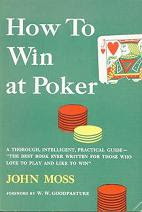
'How to Win at Poker' by John Moss (a.k.a. Jack Potter)Was on the road not too long ago and found myself in a decent used bookstore in a nearby college town. You know the kind. The whole time you’re wandering around the shelves you overhear the owner behind the register chatting it up with a local about Eldridge Cleaver or the Saratoga campaign or My Favorite Martian or the like.

The store had a decent inventory with what appeared to be mostly fair prices. Made my way through the mystery section and was glad to pick up a cheap, tattered copy of Jim Thompson’s Roughneck. There was a smallish selection of vinyl. No jazz to speak of, but I did find an old Be-Bop Deluxe LP for a couple of bucks. Then I thought I’d see if there might be any poker books laying around.

Usually don’t find much in the way of used poker books in these places. I really didn’t expect to see much more than some blackjack books and maybe a copy of Moneymaker: How an Amateur Poker Player Turned $40 into $2.5 Million at the World Series of Poker. Damned if they didn’t have two whole shelves filled with poker books, neatly organized at that. I spent some time perusing and finally picked up three titles.

One was The Education of a Poker Player by Herbert O. Yardley. In Big Deal, Anthony Holden mentions how his poker buddy, Al Alvarez, encouraged him to read Yardley’s book before heading out for his year as a pro. According to Holden, Alvarez called it “the Bible” of all poker books. Holden himself says that “more than any other, [Yardley’s] is the book that has altered poker players’ lives.” The copy I bought was an original 1957 hardcover. Dunno if it’s worth anything or not. Cost me four bucks.

I also picked up a hardback copy of “Amarillo Slim” Preston’s Play Poker to Win (a first printing as well). Like Yardley’s book, Play Poker to Win appears to be a combination of poker advice and anecdotes. Preston published his book in 1973, a year after having won the World Series of Poker Main Event. A time when Preston was appearing regularly as a guest on The Tonight Show with Johnny Carson. A time well before more recent events have tarnished his legacy more than a little.

Finally I grabbed the book you see pictured above, How to Win at Poker by John Moss. I had not been aware that poker legend Johnny Moss had written any strategy books. I had glanced inside the front cover and saw the book had been published in 1950 -- one year after the famous marathon poker game between Moss and Nick the Greek Dandalos. The paperback was cheap enough, so I went ahead and threw it in with the other items without further investigation.

Once I got home I opened up How to Win at Poker and read “A Note About the Author” which told me “there is no such person as ‘John Moss.’ This name hides, for obvious reasons, the identity of an astute midwestern poker player.” The note goes on to say that the author “has spent the forty-three years of his life in Detroit, excepting four years in the armed services.” The Johnny Moss was also 43 years old in 1950 (though, of course, he was born in Texas). So who was this “John Moss”?

A quick internet search tells me John Moss is a pseudonym for a man named Jack Potter. I’ve not been able to find anything further about Potter online. It does seem more than just a coincidence that Potter would employ that name as a pseudonym in 1950. While it would still be years before the country came to know who Johnny Moss was, for poker players seeking out advice, such a name might well have rung a bell. And sold a book or two.

How to Win at Poker doesn’t look to be without some value. The book focuses on draw poker, five-card stud, and seven-card stud, and there are also sections of general advice about limit games as well as “poker etiquette” and other matters. But it sure ain’t what I’d thought it might be.

By the way, while I was searching around for “John Moss” and “Jack Potter,” I kept hitting references to two recent movies featuring characters with those names. One was The Hard Way (1991), in which James Woods (a somewhat accomplished poker player in his own right) plays Detective Lt. John Moss, a “hardboiled New York cop” (as the Internet Movie Database describes him). An actor (played by Michael J. Fox) tags along with Moss in order to research a role in an upcoming film. Before long, the actor discovers detective work isn’t quite what he’d thought it might be.

The other film I kept running into is called Camouflage (2000) and stars Leslie Nielsen. This film -- co-scripted by Billy Bob Thornton, it appears -- may well have gone straight-to-video. What is it about? Tell me if this sounds familiar: Nielsen plays a detective named Jack Potter. An actor researching a part ends up tagging along on a case. Before long, the actor discovers the life of a P.I. isn’t what he’d expected . . . . Weird, huh?

The tagline for Camouflage? “Things are not what they appear.” I suppose I might’ve considered that before picking up How to Win at Poker.

Labels:

Saturday, March 17, 2007

Speaking of . . . Online vs. Live

Speaking of . . . Online v LiveMentioned before how I’m headed to Vegas next month. The trip has gotten me thinking about differences between online poker (where I’ve played a lot) and live poker (where I’ve played very little). Because my experience is so unbalanced, I’ll refrain from drawing any uninformed conclusions here about differences. Instead I thought I’d compile what others have been saying here recently about online vs. live play.

Mike “the Mouth” Matusow: “Online poker is so fake that its funny”


Mike 'the Mouth' MatusowAbout a month ago, Matusow was involved in a high stakes NLH session over at Full Tilt and amid a chat box exchange with a player named Msampoerna articulated his oft-mentioned cynicism about online poker. According to Matusow, “online poker is so fake that its funny . . . this is stupid . . . u think cards just role on ioff likehere inlive game.” A few found it strange Matusow might try to advance the “online poker is rigged” argument on the very site he is paid to represent. Indeed, the second part of Matusow’s quote does suggest something along those lines -- as if he really believes there is something sketchy about how the site’s randomizing program deals out the cards.

The first part, though -- where Matusow says “online poker is so fake that its funny” -- doesn’t necessarily refer (only) to the integrity of the software. Here Matusow is more likely speaking of the way people play online as opposed to live poker. As he pointed out in a 2005 CardPlayer interview, with online poker “the speed of the game is so fast” many players “think they have to play every hand.” Thus come horrific beats and other oddities one doesn’t normally see in the casino. “Online players are the worst players in the history of mankind,” Matusow goes on to say. “Guys put in $13,000, $14,000 when they can’t beat anything. Only online do you see that. That can never happen in a live game. I crush the no-limit online.” (Matusow here is presumably referring to the $50/$100 NLH game he mentions earlier in the interview.) Matusow reiterated that boast in his chat with Msampoerna last month: “i play anyone inpoker live poker any stake anytime.”

Barry Greenstein: “I get pretty bored online.”

Barry GreensteinGreenstein appeared this week on the Pocket Fives podcast, and among other things was asked about differences between online and live play. He mentioned how when he wrote his book, Ace on the River, he hadn’t really played much online, and so relied on conversations with Phil Ivey (who had played a lot online) to write his internet chapter. Now that he’s been signed on to represent PokerStars, he has gotten more online experience.

In the interview, he noted how when he plays online he usually finds himself “playing bridge also or surfing the web, reading news stories, things like that.” He went on to explain: “I don’t get the sensory feedback from playing one or even two games online. It’s not enough for me, because the way I [have] always played poker live, I was always talking to people, looking around the table at what other people were doing. I was reading people, that’s how I spent my time. Now when I play online, I don’t get that same sensory feedback. I get pretty bored online. And the funny thing is, the younger players -- and I’ll use Phil Ivey again as an example -- who’ve played more online than I have, when they come to a live game, they’re so used to playing more hands and multiple games . . . they don’t get the sensory feedback playing live. So it’s like we have opposite problems . . . Phil is more focused online actually than live, and for me it’s just the opposite.”

“Bodog” Ari Engel: “It’s exactly the same game.”

'Bodog' Ari EngelEngel is an online pro who has frequently appeared in the upper reaches of Pocket Fives’ player rankings (today he’s ranked 21st). Recently he’s been playing more live events. After being an early chip leader at the L.A. Poker Classic main event at the Commerce last month, he made a modest cash by finishing in 50th place. During that tournament Engel appeared as a guest on The Circuit where he mentioned that the Commerce event was only his fifth $10K live tournament. (He also talked about having obtained a backer to enter that particular event and, one presumes, subsequent ones as well.)

During the interview, Engel talked a lot about the differences between online and live play, with his choice of words betraying his own background in interesting ways. At one point he characterized having made a mistake in a hand -- he had bet an amount other than what he had intended -- as having “quote-unquote ‘misclicked.’” Ultimately, Engel downplayed the differences: “Rule No. 1 is you have to realize that it’s poker, it’s still the same game . . . I’m talking about [how to advise] a regular online pro wanting to play his first live event. You know, it’s exactly the same game. You cannot approach it differently . . . . There are just minor technicalities that are different.”

Engel’s been thinking further about the issue on his blog lately, with an interesting post this week listing some of his observations from the circuit about live poker. In the post, Engel talks about difficulty estimating stack sizes (something he also discussed on the podcast), the significance of slower blind structures, and bubble play (among other topics). “Above all though,” claims Engel, “tournament strategy does not change between live and online poker.”

* * * * *

Gonna refrain from drawing any conclusions. It is tempting, though, to generalize that while live pros emphasize differences between online and live play, online pros are more likely to stress similarities. Gotta imagine any player’s opinions are largely influenced by his or her relative success playing online and live.

I do know that when I sit down at a table in Vegas next month, there’s little chance I’ll be lacking in “sensory feedback” (as Greenstein says happens to Ivey and other online players). From my past (limited) experience, I’m anticipating the opposite -- sensory overload.

Labels:

Thursday, March 15, 2007

Thoughts on the “Thinking Stage”

Welcome back, Iggy!Went out for dinner Tuesday at that new restaurant right around the corner. Proprietor a friendly Irish woman who comes around to tell you the specials, occasionally referring to this or that dish as “luvly.” On this night I sat outside enjoying the balmy weather and a tasty filet mignon done medium rare. Probably inspired by the host’s accent, I’d ordered a pint of Guinness, and as I raised the glass a thought crossed my mind I know others have shared here recently . . . “Welcome back, Iggy!”

Lots happening on the poker front these days, including the return of Ignatious J. to his former digs at Guinness and Poker. His site is a great way to track the scuttlebutt -- if you aren’t a regular reader, get over there dammit! I find lately my web crawl usually begins with Iggy and other “breaking news” sites like Pokerati, Dr. Pauly, Bill Rini’s, Kick Ass Poker, and a few more. Then I’ll wind through other places where I can additionally find smart commentaries on the news -- places like Calistri’s Corner, the Poker Shrink, Up for Poker, Mean Gene, Haley’s Bl-AAUGH, et al. Then come the forums and other stops where I can parse through reactions, refutations, and rumors.

That’s when I’m looking for news, mind you. Got my other regular reads as well (see below, right column). Anyone with other recommended sites -- for news or other poker-related fun -- do send ’em on.

Earlier this week, Iggy fired off a brand new workplace-productivity-demolishing uberpost. He also yesterday published one of those occasional short posts -- what should we call it, a Lillipuber? -- relating that report from the Financial Times that Barney Frank, the Democratic congressman from Massachusetts who has spoken out before against the UIGEA, is now “working on legislation to repeal” the UIGEA.

Lots of folks pointing to this article, especially those moments where Frank refers to the law as “preposterous” and one of the “stupidest” ever passed. Many seem to be echoing Iggy’s description of it as representing a “glimmer of hope.” I, too, am generally encouraged by the news. Let us not get too excited, though. Not yet.

I especially like hearing Frank say he’s “looking for ways, maybe we can make some money off of” the internet gambling industry. Being able to present Congress with specific, convincing evidence that the industry (1) can be regulated and (2) will generate revenue via tax dollars is (to my way of thinking) the single most direct route toward achieving any sort of repeal or even alteration of the existing law.

Other strategies might be enticing, but all are less constructive. Dubbing the situation a variety of “Prohibition” only gets us so far. Doing so does provide a touch of pathos to one’s position, but (to me) such a tactic has little practical value. (See “The Frank Approach.”) Likewise do arguments about how the UIGEA encroaches on our civil liberties -- as valid as those arguments are -- appear to hold less potential as a method to instigate real action here. Frank has spoken of the UIGEA in those terms in the past. Last May (on the Pocket Fives podcast), Frank noted how “There isn’t a human activity I’m aware of that some people don’t do in excess. Some people drive their cars too fast. Some people drink too much . . . . If that’s a reason to ban [something], [the United States] would be a very boring place.” He’s right, of course. But no matter how well-reasoned such an approach may be, for many it continues to sound “pro-gambling” rather than “anti-civil liberties.”

The more Frank and others -- including the Poker Players Alliance and its newest lobbyist Al D’Amato -- can clearly communicate the message that there’s serious green to be had, then maybe, just maybe, they might one day find themselves in a position to influence those who could vote down or change this here legislation.

A lot of work has to be done before we even get to that point, however. Frank’s spokesperson is quoted in the article saying how those contemplating legislative action are still in the “thinking stage.” And they probably will remain in that stage for quite some time, I’d imagine.

So we have to sit tight, I think. Lots else to occupy us, anyway. When it comes to poker news, that Financial Times story was just one of several worth attending to this week. Got me so distracted I forgot to fill out my NCAA bracket this morning.

Just as well. I’m not a gambler, really. Probably why I know I’ll be ordering that steak and a Guinness again next time I dine around the corner. Luvly, it is.

Labels:

Tuesday, March 13, 2007

Omahallelujah

Omaha . . . Come On In! It's ALL NEW! It's Amazing!Mentioned last post how I’d managed to pick up a nice big bunch of cabbage playing pot limit Omaha the other night -- unprecedented in terms of amount won in a single day. By a whole hell of a lot, in fact. Nearly twice my previous biggest day. So kind of a brag post here (fair warning), though primarily I’m wanting to think out loud a bit about why exactly things went so well.

There was a time when I was playing PLO almost exclusively, but it probably has been at least 18 months since that was the case. Never read any Omaha-specific books, but did start out by following one of those point count systems such as the one devised by Edward Hutchison. Had a lot of fun, but didn’t enjoy the swings so much. Somewhere in there I heard an interview with T.J. Cloutier (I think on one of Phil Gordon’s 2005 WSOP podcasts) where he mentioned how the swings in PLO were much greater than in most games. Not long afterwards I found myself spending more time over at the limit hold ’em tables, then all my time there. Until a couple of weeks ago, that is.

In trying to prepare for that AIPS tournament this past weekend, I got into a few PLO sit-n-go’s and did reasonably well. Was playing solid, but had to get lucky to win. I then took a turn at some cash tables, starting out over on Bodog. At one point early last week I found myself at a full ring, fixed limit game of Omaha high ($0.25/$0.50), the kind of animal you just don’t encounter in online poker that often (as far as I can tell). The table held together for well over two hours (138 hands, all told), and I ended up about $33 to the good.

Over the next few days I kept going back looking for another fixed limit game, but none were to be found. So I moved to the more popular pot limit tables ($0.10/$0.25, $25 max. buy-in). I generally only bought in for $10 or $15, mainly just to lessen the effects of any misstep I was likely to make. And I made a few. But I ran fairly well as the week progressed. Looking back at the stats, I pulled just over $18 for the 494 hands of PLO I played during the first part of the week (something like $3.65 per 100 hands). Not bad. But then came Friday night.

Not gonna be exact about final totals, but I will reveal that among the various $0.10/$0.25 PLO tables I played that night there was one instance of me buying in for $10 and walking away a few hours later with over $110. And there were other lucrative stops as well. Can’t say I’ve ever enjoyed a similar win rate at limit hold ’em, not even during my very best sessions. Was it simply a good run of cards? As Cloutier said, this is a high variance game (usually), so I have to attribute some of my success to simple good fortune. But I think there were three other factors that also might have helped make the night a good one.

For one, I was playing very carefully (i.e., well) after the flop. I actually limped into a lot of pots -- at one point I know I was up around 60% -- but was able to let go of hopeless hands without too much trouble. I wasn’t necessarily playing tight, and would usually stick around if I thought a draw might come (and it wouldn’t cost much to get there). But I tended to avoid the unnecessary risks.

That distinguished me, frankly, from a lot of my opponents. Or I should say from the one or two players at each table who seemed willing to push crazily with two pair, a gutshot draw, or worse. I’m tempted to generalize that a fish at a PLO table is much more likely to get felted (and fast) than his equivalent over at the limit hold ’em tables who not only might last a long time, but sometimes will even come away a big winner. PLO fish often seem to play as if the game is no limit hold ’em; they ignore both that the game is “PL” (and one cannot, generally, push people around preflop or even on the flop) and that the game is “O” (and top pair ain’t usually gonna cut it).

I’ll give you a quick example. I’m UTG with $14.50 in chips and am dealt As6h4hAd. A nice enough hand, but I’m just limping (being out of position, with neither ace suited). Folds to the button who raises to $0.75. The small blind calls and the big blind folds. I call, of course. Harmless little pot of $2.35, and three of us seeing the flop which comes Ah7h2d.

Decent flop for me. I bet $1.20, about half the pot. The button calls me, then the small blind quickly raises pot to $5.75. I put in my remaining $12.55 and he instacalls with QdKhAcJd -- a bare ace and no draw. The turn and river bring a couple of blanks, and I collect a cool $29.65 (about $15 net) without even trying.
So that’s the second reason -- a nice, steady supply of reckless players (with whom I was able to get involved in big pots fairly regularly).

A third reason why I think I did well simply has to do with the fact that I’m playing a different game -- one with which I have some measure of competence -- and when one plays a game other than one’s usual game, there’s a tendency to increase one’s focus. Not only did I feel pretty aware of what others were up to, I was watching myself more closely as well.

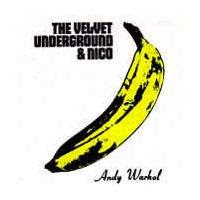
Velvet Underground & Nico's classic 1967 debutI’m tempted (understandably) to stick with Omaha here for a while. Plan to tread carefully going forward, though, and not presume I’ve stumbled upon some hidden, idiot-savant-type greatness of which I wasn’t previously aware.

‘Cos everybody knows Omaha’s a femme fatale. Builds you up just to bring you down (what a clown).

Labels:

Sunday, March 11, 2007

Vegas Bound

The Hard-Boiled Poker World Tour rolls into Vegas next monthParticipated in Event No. 3 of the Ante Up! Intercontinental Poker Series II: Electric Bugaloo yesterday -- Pot Limit Omaha (High). The tourney was a bit of an anticlimax, I’m afraid. In preparation for the event, I’d been playing a lot of PLO (and some fixed limit Omaha) over the last two weeks or so. Won a couple of sit-n-go’s playing against the Ante Up! crowd week before last, then had a decent week at the cash tables. In fact, I may have to write about one particular session I enjoyed Friday night which ended up contributing to my single most-winningest day of online poker ever -- by almost twofold -- a great deal of which involved playing $0.10/$0.25 PLO. (Still trying to come to grips with what exactly happened there, actually.)

As I said, though, the tourney didn’t provide much fodder for your humble self-chronicler. Finished 36th (out of 65), but never really got anything going for the 75 minutes or so I remained alive. I think I won three pots total, all smallish.

So let’s talk about something else. Let’s talk about Vegas, baby!

The Hard-Boiled Poker World Tour will be pulling into Las Vegas in a little over one month. Will only be there for a few days -- from Wednesday, April 18th through Sunday, April 22nd. This isn’t primarily a poker trip, if you can believe that. Rather I’m accompanying the lovely Vera Valmore to the 2007 Rolex FEI World Cup Finals. Vera rides dressage (that’s horse ballet, y’all), and is looking forward to seeing all of the world’s greatest riders coming together for this internationally-recognized event.

Vera plans to attend almost all of the individual events. I’ll be going to one -- the big dressage final on Saturday night. We’ll also likely see a show or two while there, though haven’t planned anything else specific just yet. I will be on my own, though, for those times when Vera is at the earlier jumping and dressage events. Right now there are three things I know I want to do that week . . .

1. Play poker! My live experience is highly limited -- indeed, I’ve only actually played in Vegas one time before. Then I played $2/$4 limit hold ’em and came away a loser, though looking back I think I did well considering my relative inexperience. I recall a lot of limping and chasing going on, typical for the low limit games (as I now know). Usually at least six players saw the flop. One dealer we had would always announce the number of players prior to each street. I recall one hand where every single player at the table had limped in. “Only nine to the flop,” the dealer sarcastically chimed.

This was at the MGM Grand. They rotated the dealers fairly frequently -- some were funny and very competent; others less so. I remember one hand where I held KJ in late position and just limped. The flop came QT9 and someone in early position bet out, another called, and I raised. Both called. The turn was a king, and ultimately all three of us ended up capping it both on the turn and the river. Each of my opponents had a jack in his hand, so the hand ended with a three-way chop (with the casino being the only actual winner thanks to the rake).

What made the hand particularly memorable -- besides the bad luck of flopping a straight, then having to chop -- was how in my inexperience I had committed the sin of reaching for my chips before the action came to me. I probably wouldn’t have even known I was doing it, but THE DEALER POINTED IT OUT TO THE ENTIRE TABLE! I kid you not. I think it was on the turn when the dealer said “he’s already reaching” or something, and suddenly I realized he was talking about me! I was embarrassed (though not overly), but more so miffed that the dealer would say anything at all about such a thing.

Anyhow, I’m looking forward to playing again. Not sure as yet where I’ll play or even at what limits, though being “short-stacked” I’m fairly certain I’ll be sticking to the lower limits again. Not really looking to make the big score or anything -- just want to have some fun and get a little live experience.

2. Visit the Gambler’s Book Shop. Have heard a lot about it, but never been.

3. Check out the Fifth Annual Five Star World Poker Classic at the Bellagio. The main event starts on Saturday the 21st, so I’m imagining there will be a number of pros around during the week. Am going to have to duck in there at some point just to see what I can see.

That’s the plan (for now). I’ll probably be writing again about the trip here before we go, and most certainly will deliver a report (or two or three) after we get back. And anyone with any advice or suggestions, send ’em on! (Can you tell I’m excited?)

Labels:

Friday, March 09, 2007

Why Kreidler Wrote It (and Why We Should Care)

Some take offense when poker is described as a sportDid Mark Kreidler step into it or what?

Kreidler’s ESPN.com column, “D’Amato shows poker face,” has generated a lot of response since it was posted Tuesday afternoon. The column is itself a response (sort of) to an article in Monday’s New York Times reporting former senator Alphonse D’Amato had been tapped as the new Chairman of the Board -- and primary political lobbyist -- for the Poker Players Alliance. Later on Tuesday, Mean Gene wrote a smart analysis identifying several of the articles logical fallacies, as well as shaming Kreidler for a cavalier attitude toward research. Daniel Negreanu also weighed in with a careful rebuttal before the day was through. There has also been a mostly reasonable Two Plus Two thread on the article, and by this morning one can read close to 100 comments on the ESPN site. None of those comments is favorable, and many demonstrate more thoughtfulness than the article itself.

Kreidler’s column is indeed a feat of rhetorical inelegance. (Do check it out, if you haven’t already.) The most baffling question, of course, is why, exactly, Kreidler and ESPN thought it needful to publish such an editorial, particularly since ESPN has such a clear investment in the growth of poker’s popularity in America.

Can’t say I’m completely sure what ESPN was thinking. But I do have an idea about where Kreidler might be coming from.

When I first read the article, my initial response was to think that Kreidler saw an opportunity here to take a shot at D’Amato -- an easy target, frankly. I suspected that in the course of his career as a journalist, Kreidler might well have had occasion in the past to write about D’Amato in a critical way, and that here he saw an opportunity to revisit a former theme. Not really heeding how incongruous it might appear to bash poker on the ESPN website (in the “ESPN Poker Cub” section, no less), Kreidler let himself get carried away while trying to discredit D’Amato.

I thought about that, though, and decided that probably wasn’t it. Kreidler writes about sports, not politics. He’s also located on the west coast, and so probably hasn’t had much occasion to opine in print about the former New York senator. In fact, I now think he essentially borrowed the cynical view of D’Amato from the authors of the original New York Times article, which itself appears at several moments to be looking for ways to criticize the sometimes brash politician.

There must be something else going on here, I reasoned. I read Haley Hintze’s interesting theory that the decision to run Kreidler’s editorial might betray ESPN’s own views regarding online poker and its effect on the popularity of ESPN’s poker programming. Hintze suggests that one reason why ratings are down for ESPN’s poker telecasts is the preponderance of other poker shows on TV -- most of which are sponsored by online sites. Fewer online sites mean fewer shows to compete with ESPN’s loop of WSOP and WSOP Circuit events. Thus might ESPN benefit, albeit indirectly, from online poker’s demise.

This could well be part of the mix, here. But while that idea might help explain why ESPN’s editorial staff allowed the article, we’re still left with the question of Kreidler’s motivation. Why did Mark Kreidler write “D’Amato shows poker face”?

I’ll tell you why. Kreidler is a sportswriter, and he doesn’t like it very much when people talk about poker being a sport.

Early in the article, Kreidler mocks D’Amato for “hailing poker as perhaps America’s favorite sport.” Here he refers to the moment in the New York Times article when D’Amato indeed refers to poker as a sport: “‘It’s really a great sport,’ Mr. D’Amato said, perhaps the country’s favorite sport. ‘You don’t have 70 million people participating in baseball.’”

I’m going to venture to guess that this was the passage that most directly inspired Kreidler’s otherwise unfocused screed. Sarcastic references to poker as “his sport” follow, as do dismissive terms for poker players (“hold ’em junkies”). The most telling moment comes later in the article when Kreidler addresses the PPA’s argument that poker should be distinguished from other forms of gambling that are strictly games of chance. “As they [the PPA and its supporters] see it, poker is a game of skill and chance, which therefore entitles Al to call it a sport, which blah blah blah -- you can see where this is going.”

Kreidler’s “blah blah blah” confirms his impatience with those who want to rate poker alongside other competitive games like basketball or hockey. It could be that Kreidler is less than thrilled that ESPN appears to treat poker a sport. The network covers WSOP tournaments as though they were sporting events, and the website lists poker as an “additional sport” right there next to boxing and horse racing. He probably also doesn’t care much for the way poker columns have begun to occupy precious column inches in newspaper’s sports sections (e.g., those by McManus, Rosenbloom, Negreanu, etc.). Perhaps not quite ready or willing simply to write a column about why poker is not a sport, Kreidler instead communicated his stance via this awkwardly-posed commentary on D’Amato’s appointment.

So that’s why I think Kreidler wrote the piece. So what, right? Is there anything constructive we might take from the mainstream media allowing poker a brief (if not-so-welcome) cameo? I can see at least a couple of useful lessons here.

For one, let us note how Kreidler responds to the argument that the UIGEA is analogous to Prohibition. He calls the comparison “comically misguided” and jokes in a particularly uninformed way about the “unintended consquences” of prohibiting players from playing online poker. Two weeks ago I wrote a post (“The Frank Approach”) pointing out how the Prohibition argument is probably not going to convince a lot of people. I think Kreidler’s contemptuous response to it here clearly demonstrates its limitations. The lesson? Tread carefully when pushing the Prohibition argument, as those whom you are trying to convince are the least likely to see the comparison as meaningful.

The other lesson is aptly summarized in one of the comments to Kreidler’s article. After several dozen criticisms had been posted, a writer named “teag99” had this to say: “Readers and responders beware! It’s fine to call this article misinformed trash, but don’t fall into the common trap of chasing the fish from the table. We need people like Kreidler to continue jabbering so that we can better understand what we’re up against.” The writer correctly notes how people like Kreidler with little interest in poker tend to “take a simpleton’s view of the issue because they don’t have time to care.” The lesson? “KNOW YOUR ENEMY!”

I agree that it is helpful for us to “understand what we’re up against” and that Kreidler’s article does help us in this regard. The situation is, in fact, very much like facing a particularly untutored player -- a “fish” -- and having to adjust one’s style once you’ve figured out how your opponent is likely going to respond to your actions. You keep betting, representing a made hand when you’re only on a draw, but you see players like Kreidler just keep on calling you with their bottom pair. He doesn’t care what you’re representing. What’s that about Prohibition and civil liberties? He cares more about spring training and March madness . . . .

If we don’t adjust, in other words, their trash hands are going to win.

Labels:

Wednesday, March 07, 2007

"Hey Cincinnati": Catching Up With Card Club on Lord Admiral Radio

'Cincinnati' Sean & Brent Stacks, hosts of Card Club on Lord Admiral RadioWhen somebody finally gets around to creating an entry for “Poker Podcasts” over on Wikipedia, Card Club on Lord Admiral Radio will no doubt rate mention as the first long-running podcast devoted to poker. In all, the Admirals produced 84 full episodes (plus a few “golden nuggets” here and there), giving us a new show on an almost weekly basis from November 2004 to August 2006.

Card Club started as a means to chronicle the activities of the Admirals’ poker club (located in Toronto), but soon evolved into a larger virtual “card club” that included listeners, bloggers, reporters, and even a couple of pros. Dr. Pauly (Tao of Poker, Poker News) called in reports to the show during the 2005 WSOP. Poker pro and author Bob Ciaffone once appeared as a guest. And Card Club was the first home of Columbo’s terrific One Minute Mysteries (now relocated to Ante Up!). I wrote a post last September shortly after they signed off -- check it out for more about the show.

Found myself wondering how the Admirals had been doing now that six months had passed since the last show. I figured others might be interested, too, so I sent co-host “Cincinnati” Sean an email asking if he’d give us all an update. He agreed, so I sent Sean a few questions . . .

* * * * *

Short-Stacked Shamus: Card Club on Lord Admiral Radio signed off last August. What have you, Stacks, and the rest of the Lord Admirals been up to since then?

Cincinnati Sean: It doesn’t seem that long since we were doing the show but I suppose lots has happened. Stacks has been to Vegas twice (including a bachelor party) and still hasn’t won big. Headhunter Mark went Scuba diving in the far east and made an effort to go to Macau (the Las Vegas of the east). Our club WPT-generation-punk, Jimmy Q, was also in Vegas and managed a killing in the no limit tables. (He won so much he was taking limos out to buy tonic for his booze.) Mostly, though, we are trying to keep our regular games going. With Scott the Voice, Evan the Terrible, Greg the Professor, Al Dante, and Mrs. Cincinnati and I all becoming first-time parents in the last two years, our priorities have temporarily turned to understanding who the Wiggles are and why everyone can suddenly see Snuffy.

SSS: When Card Club first started out in late 2004, the landscape of poker podcasting was relatively unpopulated. Today there are a number of regularly-produced podcasts, including an entire Internet radio network devoted to poker (Hold 'em Radio). Do you follow any of the current poker podcasts? If so, which ones do you like, and why?

CS: I am on a poker hiatus -- which I have done every few years since I first read Brunson in 1995. I don’t enjoy the game unless I can constantly study and reread. I am just not talented enough to focus on only playing and win consistently. As a result of this hiatus, I have temporarily stopped reading blogs and listening to podcasts. My subway time (usually my podcast time) is right now being spent watching American Civil War lectures on my phone. I kid you not.

SSS: What advice would you give to someone contemplating starting his or her own podcast?

CS: You have to know why you are doing it and set your goals accordingly. You can’t have a podcast that offers advice if you are a losing player. Understand your goals and work towards them every show. We defined success as being able to do a (mostly) weekly show about what we were talking about day to day. The plan was to share it with anyone who wanted to participate in the discussion. We thought we’d get 5 listeners each week and we were OK with that. We knew we exceeded our expectations when we my ISP started shutting down my network traffic.

Success criteria for podcasts are no different than blogs, hobbies, or poker itself. Understand what you want to get out of it before you start. Set your goals and then you have a direction to work from every week.


SSS: If Card Club had not gone off the air last August and you had still been producing shows these last six months, what might you and Stacks be saying about the passage of the UIGEA and its aftermath?

CS: Being Canadian we’d recognize we are out of our turf. None of us are affiliates and all of our accounts are still open and available for playing. Apart from taking a few more minutes for a SnG and fewer tables to choose from, the impact to us is negligible. It is a shame the country that gave this great game to the world is not letting its citizens play.

The Lord Admiral Club's specially-designed poker chipsSSS: Do you still play online?

CS: In theory, yes. In practice, no. My accounts are still there and I plan to play, but until I get more free time I am spending what free time I have on other things. Baseball season is starting and I am excited about that. Dr. Pauly and I have been known to exchange barbs during the season so I expect that will continue.

This makes the prospect of the planned spring special podcast an interesting one. The other guys will have to do most of the talking (not hard for Stacks).


SSS: Card Club frequently brought attention to poker blogs -- both to particular blogs & to the significance of poker blogging, generally speaking. Are you still following any blogs? What role do you see poker blogs playing here in the currently litigious landscape of poker?

CS: This question is for someone way smarter than I am. My poker blog reading is on hiatus -- although I have been known to check in on the Lord Admiral Canon once in a while (the Poker Prof., Iggy, Pauly, Columbo, Gracie, etc). I think the future of poker blogging has the most potential of all sport/game blogging. I say that because Poker still has a lot of dark secrets and blogs are the only way to know what is really going on.

SSS: Any new poker books on your shelf?

CS: I have a bunch I need to get to. Friends and family know I collect poker books (of any quality) so they have an easy idea if they are getting me a gift. I still haven’t been through Miller's No Limit (shame -- my first read when I dive back in). I have Annie Duke’s sitting waiting for a read and a few others. I reread poker books more than any other and I am due to go through all of my collection when I dust off in a year or so.

SSS: Looking back, how would you characterize the experience of producing a poker podcast on a nearly weekly basis for over a year-and-a-half?

CS: It was a hoot. We had no broad/podcast experience (despite Brent’s role as a network exec he was no help), no poker credibility, and no reason anyone should listen. Throughout the 20 months or so we grew with our listeners. Listeners sent feedback on things from sound quality to hand critiques. They started blogs and talked about the show. It was like we were all learning and experimenting together. If I discovered podcasting today and saw what was out there I might not have had the courage to even try to get one off the ground (which would be a mistake -- everyone who wants to should try). Luckily we were one of the first thousand or so podcasts in the history of the medium and so we didn’t know better. Podcasting exploded around us and so we rode the wave.

The key for us was having one of the “legitimate” blogs become a fan early. The Poker Prof. at www.lasvegasvegas.com sent me a message and we talked on the phone for an hour. Next thing I knew he was pimping us on his site and more and more people were giving us a shot.

Oh yeah, and our wives didn’t leave us for playing radio for an hour or two every week. That helped.


Sean violating the 'one player to a hand' ruleSSS: Does the Cincinnati kid know how to calculate pot odds yet?

CS: The over/under on his age when he first finishes higher than me in a SnG is 6 years and 5 months. Take the under.

* * * * *

Big thanks to Sean for taking the time to respond so thoughtfully to these questions. I know we’re all glad to hear the Admirals and their families are doing well. We’ll all be keeping an eye out for that special spring show (over on the Card Club website or via the RSS feed, both of which remain up).

Labels:

Newer Posts
Older Posts

Copyright © 2006-2021 Hard-Boiled Poker.
All Rights Reserved.