Wednesday, March 02, 2016

Cards, Money, and Bluffing

Gonna get a little abstract both in this post and the one tomorrow. I had written something up for another purpose a while back and never used it, and so rather than leave it hidden in an old file on my computer I have decided to share it here.

The first part has to do with defining the game of poker according to its essential elements. It’s something I want to say was first inspired by a conversation with Tommy Angelo from many years back, although it could be I’m associating the author of Elements of Poker with this argument about the elements necessary to the game.

Wherever this started, the question with which we begin couldn’t be more broad in its scope: “What is poker?” And the answer is a list: “Cards, money, and bluffing.”

First, cards. Dating back as far back as the ninth century to imperial China, playing cards were employed in a wide variety of games over the next millennium while spreading throughout Asia and Europe, reflecting a host of cultural symbols and values in their changing designs along the way.

By the early 1800s, most features of the modern deck had been established, including the size and thickness of the cards as well as the four suits, with various games including bouillotte, mus, pochen, and poque having been introduced throughout Europe and carried to North America. Features borrowed from each of these games, including the building of five-card hands as well as discarding and drawing, would be incorporated into poker, a game initially played with 20 cards, then later with the full 52-card deck.

In the United States the game would grow and develop alongside the country itself, expanding to include a multitude of variants linked by the use of similar hand rankings and rules of play. Poker wouldn’t be poker without cards, but then the game has always been about much more than a flush beating a straight.

All of these precursor games offered opportunities for wagering, though it would be the amalgam of poker that would promote money to the status of being a required element of the game, as essential as the cards.

In an essay written about a half-century ago titled “Poker and American Character” (discussed here and here), historian John Lukacs maintains that “Money is the basis of poker: whereas bridge can be played for fun without money, poker becomes utterly senseless without it,” a position which many commentators on the game readily share.

Each hand of poker is like a complicated negotiation, with players forced both to invest in their own hands while weighing prices set by opponents on theirs. Entering into such transactions requires purchasing power -- one must bring money to the table to participate at all -- and just like in negotiations away from the poker table, each player’s personal idea of what money signifies directly affects the amounts set when selling, or the costs agreed to when buying.

“The money staked in poker represents not only our idea of the value of our cards, but our idea of what the other players’ idea of the value of our cards might be,” explains Lukacs, suggesting that money’s importance to the game is even greater than the cards. “Cards count in poker,” the historian acknowledges, “but they count less than in any other game.”

Of course, as anyone who has played even a single hand of poker well knows, such negotiations need not be entered into in good faith, thus making bluffing a third defining feature of the game.

Like the cards and the use of money, bluffing was likewise inherited by poker from most of its immediate precursors. For example, the British game of three-card brag -- one of the few antecedents of poker still played today -- bluffing is literally the name of the game, with players dealt a hand, then “bragging” their cards’ value with bets until just two remain.

“Bluff is the essence of poker,” argues David Spanier in Total Poker, articulating another sentiment with which many poker players would agree. “It is lurking in every single hand of the game,” he continues, alluding to the possibility of a bet or raise misrepresenting a hand’s value: “Has he or hasn’t he got what he says he’s got?” Every instance of a player backing cards with money presents the question to the next player to act, adding layers of complexity to the game that distinguish poker markedly from other card games and forms of gambling.

Poker needs cards, then, and money and bluffing. This argument might be used to exclude some card games that are often referred to as poker, such as liar’s poker (no cards) or HoldemX (no money) or Chinese poker (no bluffing), but to be honest I’m not that interested in drawing hard, angry lines around poker here. Rather I’d like merely to suggest cards and money and bluffing to be core elements of the game, perhaps forcing us to recognize that any variants that lack one of the three is better considered part-poker and part-something-else.

It’s not too complicated of an argument, saying poker is cards and money and bluffing. Of course, when these elements are combined, it is clear poker becomes much more than the sum of such parts, and, importantly, more complicated to describe. Doyle Brunson notes early start of Super/System that “poker is a game of people.” And because poker is a game of people -- and since people are inconsistent, flawed, and self-contradictory -- it perhaps isn’t surprising to find the game itself replete with several seeming incongruities.

These paradoxes of poker I’ll discuss tomorrow when I share the rest of this discussion.

Photo: “Cash Money,” Aaron Jacobs. CC BY-SA 2.0.

Labels: , , , , , , , ,

Friday, December 10, 2010

eBook Gift Ideas (McGuire & Angelo)

eBookI suppose I’m pretty much an “old school” guy. In some respects, anyway.

To give you an idea, it really wasn’t until I was pretty far along in my academic career that I started writing papers on a computer. Up to then used a typewriter, natch. In fact -- if you can believe it -- I would sometimes literally “cut and paste” sentences out of drafts when putting together an essay.

Yeah, I know what your thinkin’. Right, grandpa... and this was all done by candelight, yes? And did you ride on back of the horse or were you pulled in a carriage to get to class?

All of which means when it comes to books, it shouldn’t be that surprising to hear that I’ve yet to try out the Kindle or any of the other many “eBook” readers out there about which I’ve heard such good things. I’ve also resisted making my hard-boiled detective novel, Same Difference, available as an eBook, although perhaps I should consider doing so at some point.

Anyhow, I wanted to share the news about two poker-related titles that have recently been made available in the eBook form. These are both books I like a lot (in the print versions I own), and would certainly recommend either to any of you trying to come up with holiday gift ideas for your poker-playin’ buds who can presently handle this whole eBook thing more comfortably than can I.

'Lost Vegas' by Paul McGuire (2010)One is Dr. Pauly’s chronicle of his Vegas experiences, circa 2004-2008, titled Lost Vegas: The Redneck Riviera, Existentialist Conversations with Strippers, and the World Series of Poker. The book mostly focuses on the good Doctor’s reporting on the WSOP, although there is much else in there, too, that together helps create an interesting and provocative commentary on Las Vegas and its current place in our culture.

I reviewed Lost Vegas for Betfair shortly after it appeared this summer, if you want a more extensive rundown of what you can expect to find in the book. And like I say, if the eBook thing works for you, you can now pick up a copy in that form (click here for more info).

Another fave poker title of mine has also recently become available as an eBook, Tommy Angelo’s excellent Elements of Poker. It has been just about three years since this one first snuck onto the scene, not really a strategy book but more of a “how to think about poker” kind of text that features a lot of insightful, clever writing and discussion.

'Elements of Poker' by Tommy Angelo (2007)I reviewed Elements here on Hard-Boiled Poker some time ago. Just a couple of weeks ago the book became available as an eBook, and you can head over to Angelo’s site for more info on that.

Taking the new eBook version of Elements as an occasion to do so, I interviewed Angelo for Betfair poker, and that interview just went up today. Those familiar with Elements or his articles -- or who might have heard him interviewed elsewhere -- know that he’s an especially interesting (and funny) guy. And if you aren’t familiar with the poker coach and author, the interview should serve as a decent introduction.

Like I say, I’ll get around to this here eBook stuff soon enough. Am actually looking at moving here soon, and am feeling a little sick inside at the thought of boxing up these hundreds and hundreds of books I’ve accumulated during my lifetime and carting them to a new location. I’m thinking this move may very well push me over the edge to give the eBook thing a try. If I survive it, that is.

Labels: , , , ,

Monday, October 04, 2010

Break-Even Poker

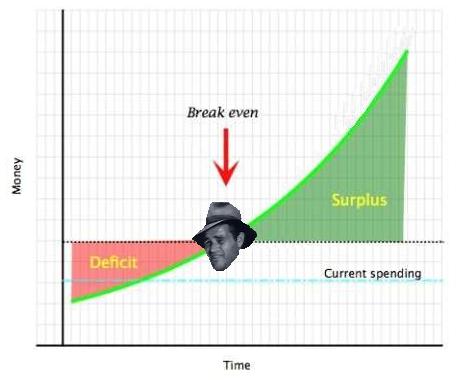
Break-Even PokerWas talking to Vera Valmore some over the weekend about what has become a kind of ongoing frustration for me at the tables. The post title gives you an idea. Ding-dang it I keep runnin’ in place!

I still consider myself a recreational player, one of those part-timers who maybe takes the game a bit more seriously than most but who for a variety of reasons will never likely rise above the micro- and low-limit games where I feel most comfortable.

That said, over the years I’ve consistently managed to eke out some profit from my hobby, ending each year up enough to withdraw some cabbage from my accounts. Nothing too spectacular, but it’s always been nice to recognize that I’m coming out ahead. Better than the alternative, anyway.

That hasn’t really been the case over the last year or so, however, where my records -- which I still carefully keep after every session -- show I have essentially become a “break-even” player for quite some time. Still better than losing, sure. But a little bit trying after having come out ahead previously.

While talking to Vera, I found myself trying to diagnose the problem. I realized soon there were probably multiple explanations for why I’d seemingly hit a wall the way I had. Or, to choose a less violent metaphor, “plateaued.”

But to single out one particular issue, I realized that my thinking with regard to individual sessions had become such that I was virtually guaranteeing I was going to limit my successes at the tables. Let me try to explain what I’m realizing I’m doing...

I wrote a post here early last year called “On Being Results Oriented” in which I confessed to being such. Which, really, is like confessing to being human. In that post I make reference to a chapter in Tommy Angelo’s Elements of Poker in which he addresses the subject -- and makes a similar confession.

“When I win, I think I played better than I did,” he writes. “When I lose, I think I played worse than I did.”

Like a lot of players, I play the same sort of mind games with myself following sessions. And really, a further lack of discipline with regard to reviewing sessions and hands -- something I admit I’m not doing at all these days -- helps make it easier simply to tell myself I “played good” or “played bad” depending on how I ended up at session’s end.

That’s a problem, obviously. But that’s not the one I’m wanting to highlight here. Rather, I want to talk about another issue comes up for me during the session itself, often happening right about the same moment -- that is, just after the session has begun and the first few decisive pots in which I’ve been involved have occurred.

To use Angelo’s terminology, I most often begin my sessions with what feels like my “A-game.” That is to say, that’s when I am almost always paying close attention to my opponents, making what I think are good decisions, and approaching the game in such a way that I believe I have all of my “tools” or plays available to me.

In other words, I’m smart when I start.

I’m not saying I never make any mistakes early in sessions, nor that I’m necessarily going to be a better player than my opponents when I first sit down. But I do think whatever edge I might have is usually greatest there during the early stages of play.

Then come those first few significant hands in which I’m either rewarded for my good play or suffer some misfortune and am not. Such is poker. Here’s the revelation I had, though -- it doesn’t matter which way things turn out in those early hands, I almost always stop playing my “A-game” and descend into my “B-” or “C-game” where I’m no longer drawing on all of my “tools” or moves, my game having become artificially restricted, thus making my decisions less optimal.

It goes differently depending on whether I have started out winning or losing, but I think the consequence is largely the same. I might be smart when I start, but then dumb I become.

If I start out winning those first few pots -- and getting ahead -- I am suddenly conscious of an urge to leave. I don’t want to lose the profit I’ve gained, and I’m certain this fear is affecting everything in a negative way. It’s not that I necessarily tighten up and grow more conservative, but something is happening to knock me off my “A-game” and limit my ability to build on my early profit.

On the other hand, if I lose money early on -- which more often than not happens after coming out on the wrong side of a so-called “coin-flip” or two, or experiencing hands in which I play correctly and get the money in good, but fail to win -- I also start playing sub-optimally, though the reasons for doing so are different. I press a bit, desirous to get back what I’ve lost, and probably too become overly loose and -- even worse -- passive.

And to go back to results, the consequence of all of this seems to have been a lot of short winning sessions and a few longer losing ones. Which currently has been adding up to a whole lotta break-even poker.

I could pull out hand examples and go into all of this in greater detail, but I don’t want to go on much longer here. The point is I’m realizing my sessions almost always seem to be marked by these two distinct stages -- an initial “A-game” period followed by a period in which I play less well.

I’ve talked here before about how Vera is an equestrian who rides dressage and competes on a regular basis, so she’s familiar with the psychology of sports/competition -- and how we often tend to psyche ourselves out of performing at our best. So she’s a good one to talk to, and I think helped me realize this particular problem.

Of course, it isn’t the only problem I’m having, I think. But an important one definitely worthy of some attention.

Labels: , , ,

Thursday, September 17, 2009

Worth a Listen

Tiltless chipYesterday I listened to this week’s Two Plus Two Pokercast. Another good show (as usual), with the second half devoted to a lengthy interview with poker coach, player, and author Tommy Angelo.

I’ve written about Angelo here before, having reviewed his book and even getting the chance to meet and have dinner with him last summer. Smart, funny, friendly guy who has a lot of insight into the psychology of poker.

When I met him last summer, I’d neglected to carry my copy of his book, Elements of Poker, to Vegas with me, and so missed the chance to get him to sign it. But he had a souvenir for me, a “tiltless” poker chip which I subsequently used as a card protector during the weeks I was there.

Not gonna rehearse the whole hour-long interview here, but I did want to share a reaction I had while listening. It was during the first part of the interview when the topic of conversation was tilt and how to avoid it. Co-host Mike Johnson started talking about those great players who seem able to avoid tilt altogether, and that led to Johnson asking Angelo a two-part question.

“The one thing I find fascinating when I sit at a live table is the player who can take a bad beat and just let it roll off them,” Johnson began. “Those are the players you always look at as the premium players -- the ones that just never get bothered by anything.” Then came the two-part question: “Can you tell the difference from somebody who it actually doesn’t bother versus somebody who it is bothering and is stewing on the inside, but they’re just not showing it outwardly and are able to control their image to the rest of the table, but inside they are actually letting it affect their game? And what’s worse, admitting it and actually having outward tilt or keeping it bottled up inside and not having it show to the other players?”

Two Plus Two PokercastAs I listened, I imagined my own responses to the questions. Then, like a poker player waiting for an opponent to act, I found myself anticipating what Angelo would say. I’ll admit to feeling a little overconfident about being able to guess Angelo’s answers. Having read his book, as well as having met him and gotten to know him a bit, I thought I knew what he’d say.

To the first question (I thought) he’d express humility and say, well, of course he couldn’t tell the difference if the player was successfully controlling his or her image. To the second question, I thought he’d say it was better to hide tilt, if you could, given the practical benefits of doing so.

As it happens, that’s how I’d have answered both questions. And as it happens, that’s not how Angelo answered ’em. Not at all.

“The answer to the first question,” said Angelo, “is I do believe I can tell... now.” He went on to explain that while he couldn’t do so before, these days he often (not always) can tell the difference between someone who is not tilting and someone who is tilting but hiding it because he himself is able to remain calm enough at the table to observe his opponents more closely. “I’m able to quiet myself to a degree that I think I can pick up on feelings that are buzzing around the table that I didn’t use to be able to pick up on when my own feelings were more dramatic,” he explained.

Angelo went on to use an analogy involving being seated next to a noisy generator pumping out 60 decibels of sound. Sitting there makes it impossible to hear something nearby that is less than 60 decibels. So, says Angelo, if you’re there at the table generating 50 “decibels” of “mental noise,” it makes it hard for you to notice the guy across the table who is tilting but hiding it and thus only transmitting 20 “decibels” of “negative energy.”

To the second question, Angelo also had a different answer than mine, and different from the one I’d guessed he’d have. But in this case, I think we were hearing the question differently. Rather than say it was best not to “admit it” and have “outward tilt,” Angelo replied that “accepting it is always the best thing.” He went on to talk about how “it is always best to be able to stop and to say ‘I am on tilt now’ -- in fact, that is the cure.”

Like I say, here I believe I was thinking of the question in terms of trying to get along at the table without giving your opponents free information, while Angelo was looking at the notion of “admitting” one was on tilt in a less literal way -- i.e., admitting it to yourself, not necessarily to others.

'Elements of Poker' by Tommy Angelo (2007)Anyhow, check out the show for more. And again, let me recommend Elements of Poker as an entertaining and informative compilation of Angelo’s many ideas. Angelo has built on those ideas in a new series of videos over on Deuces Cracked, titled “The Eightfold Path to Poker Enlightenment.” (I remember him speaking about working on the series when we met back in late May.) I don’t have an account over there, but the series sounds worth checking out, so I may have to get me a trial membership or something. ’Cos reading or listening to Angelo always seems to have a positive effect for me and my play.

Indeed, after listening to the show, I played some online and as I did I very consciously avoided checking email, surfing the web, or doing anything other than try to focus on the game. Was in fact able to open up three tables as a result -- whereas normally I’ll only play one or two -- as I found myself with enough available mental capacity to handle ’em. In fact, the only extraneous activity I did at all was to riffle a few chips here beside the keyboard, including that “tiltless” one.

And the session went well. I played competently, but benefited a lot from a couple of very bad plays by opponents. Dunno if they were tilting or not -- indeed, now that I think about it, they probably were. I think I still had too much of my own mental noise whirring to be able to tell who was tilting and who wasn’t.

Was listening well enough to know I wasn’t, though.

Labels: , , , ,

Tuesday, June 02, 2009

2009 WSOP, Day 6: Shamus Swindles Poker Lesson for Price of Cheeseburger

Lucy offers psychiatric help for a nickelDay off yesterday, although I did end up in the Rio anyhow, where I met poker author and coach Tommy Angelo (Elements of Poker). Angelo is in town this week to do some business, including meeting with some of his clients, at least three of whom -- Jay Rosenkrantz, Phil Galfond, and David Benefield -- were in that $40K event I just finished helping cover.

Angelo and I met for dinner over at the São Paulo Café. Yeah, I know -- not everyone is a big fan of the service over at São Paulo, but we had no problems. The food was fine, too (cheeseburger and fries for me; the salmon for Angelo). And it tends to be a relatively serene place -- compared to other Rio eateries -- to have a conversation. Afterwards we ran over to the Amazon to check out the scene as the World Series of Poker continued on without me. (I’ll be back at work tomorrow, covering Event No. 10, the $2,500 Pot-Limit Hold’em/Pot-Limit Omaha event.)

Some of you know Angelo’s book, or perhaps have heard him appear as a guest on some of the podcasts. For those that don’t, he has a website where you can learn more about him, his poker coaching program, and Elements of Poker. He keeps a very entertaining blog over there, too, where he shares anecdotes from his life and from his experiences at the tables.

Tommy AngeloOn the phone Angelo told me to look for the fellow in the olive cap. I told him to look for the skinny guy with glasses. “Good description,” was his greeting, as we spotted each other there in the Rio hallway.

Had a great time discussing all sorts of topics related to poker and writing. Besides his book, Angelo has written numerous articles for Bluff, the old Poker Digest, and other outlets, and also has been a frequent contributor over on the Two Plus Two forums.

Amid our discussion of the challenge and purpose of book reviews, generally speaking, we talked some about my review of Elements that appeared here back in December. The book continues to do well, Angelo reports, with sales remaining at a steady level from month to month.

We also talked about that post from February in which I commented on a thread about the book that appeared on Two Plus Two earlier in the year. In the post I made a distinction between Angelo’s response to life’s many problems -- including those we face at the poker tables -- and that of others like Mason Malmuth. I said there how in my view Angelo’s approach is generally to keep the discussion going, that is, to investigate questions and seek answers, but remain open-minded enough to accept further possibilities even after we’ve drawn our conclusions. By contrast, the approach of Malmuth (and others like him) most often seems to be to find a single “correct” answer, then do whatever is necessary to curtail further debate.

There are other ways of distinguishing the two mindsets -- if yr curious, you can read that post to see where I went with all of that.

'Elements of Poker' by Tommy Angelo (2007)During dinner, I readily saw why guys like Galfond and his other clients speak so highly of Angelo’s coaching. Think back to your school days and that one teacher who somehow managed to cut through all of the crap and really speak to you clearly -- who actually managed to open yr mind up and make you realize you wanted to learn something. That’s Angelo.

It was still early evening when we parted. Having seen the many cash games going there in the Amazon Room, Angelo had an itch to sit down and play, and so I left him intending at first just to go back to the home-away-from-home and do some reading. I’d caught the bug, however, and so decided to play some myself, again checking in over the MGM Grand for some low limit hold’em.

Just 2/4 again -- they had a list for 3/6 but it never materialized. (I promise I’ll play some higher games and maybe even take a seat at one of the many, many 1/2 NLHE tables before I leave this summer.) Had an especially good session, winning several big pots and coming away almost exactly a hundy ahead in just a little over an hour.

I did catch some cards, natch, but also was the only player at the table who was regularly folding hands preflop. I also was the only one who raised just about every time when entering pots. There were a couple of others who raised now and then, but as often happens in these games, I saw players limping in with pocket jacks, ace-king suited, etc. “Seven players,” was the usual announcement from the dealer when readying for the flop.

The MGM Grand poker roomNothing that exciting, strategy-wise, to report from the 50 hands or so I played, but I’ll relate one hand nonetheless. It was one of those six- or seven-way hands. From middle position I limped in with Ah2h. Flop came Jh4d9h. Checked to me, I bet, got one caller on my left, then a raise. Lots of cold-calls back to me, and my neighbor and I both called, too. Turn the 2s. We all checked to the raiser who bet, and we all called. River the Kh, and when I bet three or four of the remaining players called once again. Final pot probably around $70, to which I contributed just $14.

Saw one fellow show two pair (kings and nines), as he mucked. As Tommy would say, my opponents were very flushstraighted.

Might’ve stayed, but I’d been tired even when I sat down and so once I’d nearly doubled my stack I decided to skedaddle and get some rest. “Walking away is easy,” Angelo says. “The hard part is standing up.” Of course, it’s much, much easier to stand up when your purpose for doing so is to go grab another rack in which to collect yr chips. I cashed out and drove back to the home-away-from-home.

Breathing in, I took the elevator back up to the room and settled in for the night. Breathing out, I kidded myself that it wasn’t just dinner I’d had with Tommy. Breathing in, I decided he must’ve been coaching me for that hour-and-a-half.

Breathing out, I chuckled.

Labels: , , ,

Friday, May 01, 2009

Departing on AA

Departing on AAIt’s May Day. It’s what? May day? Mayday, Mayday! Good Gawd. The World Series of Poker is less than four weeks away!

My plans are still somewhat up in the air, as they say, but I’m a-gonna be there. As they also say, details to come. And speaking of being up in the air, I ain’t even booked a flight to Vegas yet, but that’ll happen soon.

Thought I’d write a short note today about my own play. Been managing to squeeze in short sessions of limit hold’em here and there, generally not playing more than 100-200 hands at a stretch (usually an hour or so, as I’ll often play two tables). That actually is my usual schedule, really, and if I were to look back and study my stats carefully, I would likely discover that is my most profitable modus operandi. That is to say, I do best with the short sessions, ’cos the longer ones tend to be longer ’cos I’m in a hole and trying to get “back to quits.”

The art of quitting is, of course, one of the more important skills in poker. In Elements of Poker, Tommy Angelo writes a longish chapter on quitting. At the start he explains why the chapter is relatively long: “What happened was, I started writing about quitting, and well, you guessed it, I couldn’t quit.”

“In order to quit well,” Angelo continues, “you must be in control of yourself at the end of the session. It can be no other way. To achieve your highest possible score, you must be at your A-performance and your A-mindset all the way to the end.” We all are aware of this idea, I think, but as with most things in poker, easier said than done.

I had one session this week conclude in a particular way, and I realized that I’ve sometimes purposely forced myself to quit simply because I have been dealt one specific hand. Of course, if I’ve only played a short while and get dealt this hand, I won’t quit, because I know I want to play at least an hour or so. But if I’m getting somewhere close to that one hour-mark and pick it up, I know it has happened more than once that I’ll go ahead and put a tic in the “Sit out next hand” box, thereby readying myself to leave no matter how things turn out.

What’s the hand? American Airlines, of course. My ticket outta there.

Why quit on aces? Well, for one thing, while I like to think I don’t get too tilty that often, I do know getting aces cracked generally doesn’t have such a great effect on my overall mood, making it harder to be at my “A-performance” and have my “A-mindset.” Not that I’m expecting to lose the hand, mind you, but I am anticipating those potentially less-than-pleasant side effects should things not go my way.

On the other hand, if I win, well, that’s not a bad way to leave, either, yes? With the memory of having the best of it, and getting paid... in other words, happy poker thoughts to carry me to my next session.

I know it’s a fairly artificial way to make the quitting decision, and, of course, one can’t necessarily sit around and wait to be dealt aces so one can leave. So I ain’t necessarily recommending it as a genuine strategy, though, like I say, I’ve noticed myself doing it every now and then.

What happened earlier this week was I had been two-tabling for a little over an hour, and after having dug a decent-sized hole had gotten back close to even when I picked up AsAh under the gun (6-max., $0.50/$1.00). I think I might’ve already sat out on my other table and so was out the door anyway, but did indeed click “Sit out next hand” as I watched four of my five opponents call my raise.

The flop came Qc9cAd. Top set, but with that board I knew when I led out that most if not all of my opponents would probably stick around. All but one did. Turn a safe 4d, though now we’re looking at another flush draw out there. All four stayed for one more card. The river was the Qh (Flippin’ sweet!), and I led out again. Others seemed to like that river card, too. Here’s how it played out (RSS readers might have to click through):


Easy as A-B-C, 1-2-3. I hit the runway thereafter. Even if I lose that one, I know I ain’t gonna be in the mood to continue.

Hard-Boiled Poker turned three this weekFurther evidence of how busy & distracted I’ve been lately: the third birthday of Hard-Boiled Poker happened earlier this week -- the day I played that hand, actually -- and I forgot to mark the occasion here.

In fact, I didn’t even think of it until this post took me back to one of the very first posts I ever wrote here, a mini-satire called “Folding AA: A 12-Step Program.” Perhaps good for a grin or two.

Here's hopin’ everyone’s weekend ends up aces.

Labels: , , ,

Wednesday, February 11, 2009

What We Talk About When We Talk About Poker

What We Talk About When We Talk About PokerAbout ten days ago, a poster over on Two Plus Two decided to begin a new thread in the “Books and Publications” forums by quoting Mason Malmuth’s review of Tommy Angelo’s Elements of Poker. The review appears in the February 2009 issue of the online Two Plus Two Magazine.

I also recently reviewed Angelo’s book here on Hard-Boiled Poker, despite the book being published over a year ago. I only just got to it last December, and found it highly enjoyable and instructive. Call me a bandwagon guy, but I think it’s one of the best poker books I’ve read in a long while. Here’s my review, if you are interested.

Malmuth’s review of Elements of Poker is much less favorable than mine. He does credit Angelo for being “witty” (and, backhandedly, “cute”), and even calls “worthwhile” some of the strategy advice. Ultimately, though, Malmuth doesn’t see the book as having much value for beginning or intermediate players, and in the end concludes “this text is certainly not recommended, even as supplemental reading.”

The post sharing Malmuth’s review engendered a provocative discussion (I thought), with posters taking sides over the relative value of Elements of Poker, as well as (somewhat tentatively) debating the criteria by which Malmuth based his review. There also emerges what might be called a theoretical divide among the posters that roughly corresponds to the wildly differing positions represented by Malmuth and Angelo -- specifically with regard to each author’s approach to writing/publishing poker books.

Some posters were “disappointed” with Angelo’s book, finding it “overhyped and overrated,” ultimately echoing Malmuth in expressing their belief that reading the book yielded no practical benefits for most poker players. Others defended the book as being of immense help to poker players, especially those with some experience with the game and the many emotional/psychological ups & downs it produces.

One such poster, explaining why he liked Elements of Poker, says that in his view the book is not “a beginner’s guide to playing better poker,” as some appeared to have wanted to read. Rather, said the poster, he believes the book to be “a better player’s guide to being a better person, which will make you a better player as well.” Another poster less specifically praised Angelo’s book as being “much more real than anything published before” -- ostensibly pointing out how the author’s voice manages to connect with the reader more effectively than generally happens with most poker writing.

Still another poster made what I thought was an especially interesting distinction by saying “Tommy Angelo writes poker LITERATURE. Mason writes stiff, clumsily worded cookie-cutter advice.” I’m actually one of those who doesn’t necessarily think Malmuth’s style is “clumsily worded” -- in fact, while it isn’t always flawless, it is for the most part quite clear and precise.

But I think I get what the poster is saying. There is most certainly a more obvious “literary” sensibility present in Elements of Poker than one finds in most poker books (including those Malmuth has written or co-written). And some of us happen to think literary writing and/or modes of expression have something to offer us, too.

Eventually, both Angelo and Malmuth join in the discussion, with the author of Elements of Poker demonstrating humility and graciousness in response to the praises and criticisms directed toward his book, and the owner of Two Plus Two continuing to press his case to devalue the book. (There’s also a brief detour in there where Malmuth appears to be explaining how comedy works -- and, not surprisingly, implying that Angelo fails to be humorous, too.)

The conversation turned toward the subject of editing, and couple of days ago Angelo supplied a bit of background info regarding the editing process for Elements of Poker, prompting Malmuth to fire a tangential (and personal) shot at one of the book’s editors. What had been a provocative, enlightening discussion that pointed up a number of key theoretical issues regarding poker writing and its purposes rapidly derailed.

Malmuth shuts off another debateFinally a poster of the Malmuth camp summed up the thread to that point by saying “Mason did not like the EOP. Most of the posters liked the book. I am not sure that there is more to discuss.” Malmuth agreed, and locked the thread.

Actually, the thread itself, both in the course it took & the way it prematurely ended, well exemplifies what for me is the fundamental distinction between Malmuth and Angelo’s outlooks -- on poker, books, life, what have you.

The former seeks concrete, tangible, readily quantifiable answers to all of life’s problems, and, importantly, believes such answers can be found to all questions worth asking. As a result, the idea of “dialogue” or any sort of inquiry without a specific goal -- the achievement of which unmistakably signals its conclusion -- is to be roundly dismissed as an utter waste of time.

The latter also seeks answers, but additionally values that which is abstract, intangible, and not-so-readily quantifiable. The latter outlook also understands that there are, in fact, some questions worth asking for which there are no single, unambiguous answers. Thus, a premium is placed on the idea of “dialogue” or keeping the conversation going, since value is to be had in the exchange of ideas (even if such value is hard to compute). In fact, rather than wasting one’s time (or other resources), such inquiry is the best possible use of it.

As the poster “jlocdog” (one of those who likes Elements of Poker) put it, Angelo “has a knack for not putting closure on any concepts or ideas he talks about so as to keep you thinking about them and trying to expound on them within your own game/life.” Meanwhile, Malmuth most decidedly has a knack for closing off discussions whenever possible. This had been an interesting thread with a number of intelligent, serious posters contributing (not always so easy to find on 2+2). But as soon as an apparent impasse had been identified, Malmuth decided there was nothing more to discuss.

I guess another, more cynical way of describing the difference between the two thinkers would be to say that while Angelo teaches, Malmuth preaches. The teacher expects you to ask questions, to challenge assumptions, to think. The preacher expects you to sit quietly in the pew. And believe.

Not saying the preacher doesn’t have something to offer us. But you better understand that with this one you’re not expected to raise your hand and ask questions or talk back.

When he’s finished, however, you may shake his hand. On the way out.

Labels: , , , ,

Wednesday, January 28, 2009

On Being Results Oriented

U.S. Airways Flight 1549Had a poker-related thought flash through my mind while running yesterday. It happens.

By the way, I am still doing two miles just about every day. Have gone three on a few occasions, and there have been a couple of rainy or cold days this month when I’ve opted to go to the gym and ride the bike instead of fighting the weather. Getting near month’s end, and I’ve managed to exercise every single day in January.

I suppose I feel somewhat healthier, although to be honest I’m not really seeing any particular “results” from my regimen. I’m already a skinny dude, so we’re not watching weight or anything. I guess I do have a bit more mental energy, oft-cited as a happy consequence of keeping physically active.

Anyhow, as I was running yesterday I was pondering this whole “results oriented” idea we often hear about in poker -- usually as something to be avoided. The idea, we’re told (again and again), is to make correct decisions and not get too caught up in the fact that sometimes we lose anyway. Get yr money in as a 4-to-1 favorite and even if you lose when yr opponent makes his flush you can take solace in the fact that over the long term, if you repeatedly take that gamble, you’ll come out ahead.

What occurred to me as I ran was how the whole “don’t be results oriented” idea is, of course, based on the ultimate goal of achieving better results. So it is good to be results oriented, just not in the short term. Thus does the point of the advice occasionally get misconstrued by not-so-sharp players, as sometimes happens with other poker concepts like “implied odds” or “expected value.”

Tommy Angelo has a nifty little chapter in his Elements of Poker in which he bluntly admits to being results oriented, both with regard to individual hands and to sessions, too. “When I win, I think I played better than I did,” says Angelo. “When I lose, I think I played worse that I did.” We all do.

I won’t repeat Angelo’s examples, but instead just offer a quick one of my own from a hand of six-handed limit hold’em I played yesterday. Hand began with me limping under-the-gun with a pair of deuces. Was one of those passive LHE tables one likes to find (and frequently can find at the $0.50/$1.00 limits), so I wasn’t too worried about raises and reraises behind. The cutoff also limped, then the small blind raised, the BB called, and me and the cutoff called as well. The flop was nice: 9hTc2s. The blinds checked and I went ahead and bet out. All three of my opponents called.

The turn was the Qd. The blinds checked again, I bet a dollar (into the six-dollar pot) and the cutoff raised. The blinds folded and I took a moment to decide whether I’d run into the straight. I decided it unlikely he had K-J or J-8, a judgment I somewhat rashly based on the 30 or so hands I’d played with him. So I three-bet. He paused (something I took as a good sign) and just called. I figured him for two pair here, say Q-T or Q-9.

The Ad on the river changed nothing (according to my read), so I bet out. The cutoff called, showing QsJc, and I picked up a nice $13.50 pot with my set of ducks.

Was patting myself on the back, too, for having grabbed that extra turn bet. Of course, had a king or eight fallen on the river to cause me to lose to the straight, I’d have certainly felt much less heroic. Or even worse, had the guy actually had K-J (which, really, would have been perfectly reasonable given the preflop and flop action) and thus turned his straight, I’d have felt like a moron for having pumped up the pot there with the three-bet.

Thanks in large part to that one hand, I walked away from my brief session (just under 100 hands) with a tidy 16 big-bet profit, recording such in my notebook while experiencing yet another “results oriented”-inspired flush of satisfaction. Sue me.

We’re human. When the day begins and we wake up yet again and are glad for doing so, we immediately start being results oriented. If I were pulling muscles and feeling fatigued all the time, I’d stop running for sure. But I’m not. The results, if not dramatically obvious, have been acceptable. So I keep going.

While we are on the subject, last week I read an interesting article over on Salon by Patrick Smith, an airline pilot who contributes a weekly column over there called “Ask the Pilot.” The article (dated 1/23/09) asks the question “What saved the passengers of Flight 1549?” and in it Smith makes the case that neither Capt. Chesley “Sully” Sullenberger nor the first officer, Jeffrey Skiles, the two co-pilots who safely brought down that U.S. Airways plane onto the Hudson River earlier this month, should be exalted to greater-than-human status on the basis of what happened. Writes Smith, “we are owed a sober discussion of what actually befell them, instead of the vapid and infantile yammering about miracles and the ‘heroics’ of ‘the pilot.’”

Smith’s argument throughout the article is essentially to say the media and public have been way too “results oriented” with this one. Smith maintains that while the pilots should both be commended for having performed well under pressure, “skill was not the issue” that ultimately determined the fate of the 155 aboard that flight. Rather, it was luck. A lot of it. And according to Smith, “nowhere in the public discussion has the role of luck been adequately acknowledged.”

Read the article for the full discussion. Smith has a point, sure. Of course, I don’t think I’d agree with the claim that no one has said anything about “luck” here. And frankly, I’m not so eager to join the side of the dude wanting to diminish claims of the pilots’ skill and/or heroism, either. But I get where he is coming from.

But damn, isn’t this one instance where we can allow ourselves to be a bit more “results oriented”?

That is to say, a bit more human?

Labels: , , , , ,

Friday, December 26, 2008

Tommy Angelo’s Elements of Poker

Tommy Angelo's 'Elements of Poker' (2007)I know I just said I was primed to read some non-pokery stuff, but let me share a quick review of another poker book I recently finished -- Tommy Angelo’s Elements of Poker (2007).

Had been looking forward to reading this one for some time now. And I’ll go ahead and admit I knew I was going to like Elements of Poker even before I started it.

I’d become somewhat familiar with Angelo’s writing (and overall outlook) during the last few months via his blog and website. I’d also heard his interview over on the Two Plus Two Pokercast a while back (the 8/18/08 episode), which I recommend highly to anyone interested in listening to thoughtful discussion about poker and/or getting to know Angelo. On top of that, I’d had a few folks recommend his book to me whose opinions I trust, including Tim Peters who reviewed Elements of Poker for Card Player back in February. (Read his review here.)

There were at least a couple of specific reasons why I knew I’d like Angelo’s book even before I started it. For one, I have read a lot of strategy books this year, perhaps two dozen or more. And, as anyone who has picked up one knows, while strategy books can be interesting and useful, they can also be pretty damned tedious.

Angelo’s book is most definitely not a strategy book per se, although he does have a few moments here and there where he talks about certain situations in ways that resemble straightforward strategic advice. But that really isn’t Angelo’s primary concern. Rather, he focuses more directly on describing and analyzing how poker players think -- both at the table and away from the table -- and then gives us some ideas about applying that understanding in beneficial ways.

All of which means just a glance at the table of contents listing the 144 “elements” covered by the book encouraged me that I was in for something a little more engaging than what one usually finds in a typical poker book these days.

I could see that some of the listed “elements” clearly focused on psychological issues, such as “Emotions,” “Fears,” “Hard Tilt,” “Soft Tilt,” and “Finger Tilt” (the latter specific to online play). Others appeared to concern practical matters with which I knew I personally wanted some help, such as “Quitting,” “Winning, Losing, and Breaking Even,” “The Chat Box,” “Focus,” and “Awareness.” I also saw quite a few “elements” listed which were highly suggestive (and intriguing) even if I had no idea what they’d be about, e.g., “Gobsmacked,” “Low-Hanging Fruit,” “Kuzzycan,” “Mum Poker,” “Fastrolling,” “Fantasy Poker,” “The Path of Leak Resistance,” “A Process of Illumination,” and so forth.

The other reason why I knew I’d like Angelo’s book is because of what I’m going to have to refer to as a decidedly “existentialist” bent to the man’s thinking. This is something I’d picked up on from the earlier pieces by him I’d read as well as the Two Plus Two interview, and which (now that I have read it I can say) also characterizes Elements of Poker. Let me explain.

By referring to Angelo (or his ideas) as “existentialist,” I don’t mean to suggest anything about Angelo he himself doesn’t intend to advance in his writings and coaching. Rather, I am trying simply to point out that Angelo does what many existentialist thinkers and writers tend to do, that is, he makes meaning of himself and the world around him, then presents his interpretation in a way that does not insist itself upon his readers (with the kind of absurd self-righteousness that sometimes seems to guide other poker authors).

Rather, Angelo seems instinctively to understand that we all make our own meaning. And while he might be able to guide his readers (or the “clients” he coaches), ultimately we’re all on our own.

There are several passages in the book that relate to what I’m trying to say here about Angelo, but I’ll just refer to a couple. Both come from the first, long section of “Universal Elements” that Angelo says apply to all forms of poker -- cash games, tournaments, internet poker, and “table poker” (what Angelo calls live games).

Back cover of 'Elements of Poker'One passage concerns “Streaks” and their significance. Angelo thought enough of this one to print it on the back of the book, actually. The passage begins “All of my good streaks and all of my bad streaks of every length and depth have had one thing in common. They did not exist in your mind. They only existed in my mind.”

From there, Angelo explains how “there is no inherent existence to streaks.” In other words, they are invented in the player’s mind -- inevitably, really -- as a way of making meaning out of his or her poker playing, even if “the truth is there is only the hand you are playing.” (And, of course, when it comes to that hand you are playing, you are in charge of deciding what it means.)

Another passage that illustrates this “existentialist” way of thinking about poker comes in a section called “The Object of the Game.” There is one object to poker -- i.e., to collect the most cabbage -- which tends to dominate our thinking about the game. However, there are many, many other objects to poker, too, such as those having to do with playing well (which, as we all know, doesn’t always translate perfectly into netting us the greatest profit).

As a suggestion for reorienting one’s focus in constructive ways, Angelo here tells us to consider occasionally “making up your own object of the game.” For example, one might enter a session with the object to avoid calling raises out of the big blind. Or one might make the object to avoid table talk (or chat). Again, the suggestion here relates back to the (existentialist) idea that we make our own meaning. An incredibly powerful idea, actually. (See my posts from last spring on Sartre’s Gambler -- Part 1, Part 2, Part 3 -- if yr innersted in more on this topic.)

There’s a lot else to recommend about Elements of Poker, including his sense of humor, his uncanny ability to identify and describe various poker-related concepts, and his playful approach to language. I could list several examples of each, but this short quote from the section titled “Fluctuation” succinctly demonstrates all three: “At the poker table, we can’t help but keep track of ‘how we’re doing.’ We assign special meaning to tiny segments of our fluctuation. If you fluctuate down and it gets you down, you’re fluct. That’s why it’s best not to give a fluc.”

Like I said, I was predisposed to like this book before I even began it. And it did not disappoint. Nor will it when I read it again (which I already know I will). And I tend to think most readers of this blog would probably like the book as well. So let me suggest if someone happened to give you a gift card over on Amazon, you might consider using it to pick up a copy of Elements of Poker. You can also just head over to Angelo’s website and buy a copy (personally inscribed) over there.

Up to you, though. Because I know of this (and every post), you will make what you will.

Labels: , ,


Older Posts

Copyright © 2006-2021 Hard-Boiled Poker.
All Rights Reserved.