Tuesday, December 04, 2012

Lou Krieger (1945-2012)

Late last night the family of Lou Krieger posted a note to his Facebook page relating the news of his passing. Many of us who were friends of Lou knew he’d been diagnosed with cancer, and he had kept us all in the loop regarding his treatments ever since. So while I suppose we weren’t altogether unprepared, it was still a shock for a couple of reasons.

One was the short amount of time that had passed since we’d heard about the diagnosis -- just a few months. The other reason was that knowing Lou, we knew that despite the fact he was an incredibly benevolent and kind person, he was also tough as nails.

As his family pointed out in last night’s announcement, “he fought courageously to the end with the same pride and dignity that carried him through his life,” and “he wanted everyone to know that he did not go peacefully in his sleep but fighting like hell.”

While the news was surprising, it was no surprise to learn Lou had fought to the end. Nor that he wanted to be sure we knew that he’d fought to the end. Let me explain.

Like many I first encountered Lou via books like Hold’em Excellence: From Beginning to Winner (1995) and Poker for Dummies (2000). He’d author or co-author 11 poker books altogether, plus hundreds of columns for numerous outlets including Poker Player Newspaper for which he served as editor up until a few months ago.

I think it was around 2006 or so that I started listening regularly to Lou’s podcast “Keep Flopping Aces” which he then co-hosted with Amy Calistri. I remember early on hearing Lou once talk about his experiences growing up in Brooklyn. While I can’t recall all of the details, the story had something to do with Lou getting into fights a lot. It was kind of funny to hear, actually, this sketch of a young, angry Lou seeming to contrast sharply with the obviously kind-hearted fellow we listeners had come to know.

In fact when I first learned about Lou’s diagnosis via his email, that image of the young fighter immediately came to mind. I wrote him back alluding to this “tough guy” I knew he was, and in our last exchange this fall he mentioned his intention to “finish kicking cancer’s ass.” So while his prognosis wasn’t necessarily good, I guess I still had this idea he’d win the fight, as I imagine others did, too. In any event, I took some comfort in knowing that he was battling.

I continued listening to KFA and would occasionally write about the podcast here. At some point along the way Lou and I got in contact with one another over email. We remained in communication that way for awhile, then I ended up coming on KFA as a guest a few times to talk about poker with Lou and his later co-host Shari Geller, most recently this past May.

During one of those appearances on the show I spent half of the program fielding questions from Lou and Shari, then I became the interviewer for the second half and from that came a Betfair Poker interview which you can read here. I asked Lou a lot of questions about being a poker writer and the publishing business, and his answers provided a lot of insight into both his career and the industry.

One of the points Lou makes in the interview is to note how writing “forces you to clarify your thoughts.” “You can’t be ambivalent,” he says. “You can’t believe it’s one way on Tuesday and another way on Wednesday. You have to take a position about something. You have to offer advice that’s clear, concise, works, and holds up, so you have to think it through. As a result, the act of writing, like the act of teaching... the person that often gets the most out of it is the writer or teacher himself. I’ve learned more from writing books than I could have gotten any other way I can think of.”

I’ve been a teacher for a long time, and so know exactly what Lou is talking about when he refers to the teacher also ultimately learning a lot about whatever it is he or she is teaching. Assuming the responsibility to lead a discussion about anything forces a person to learn a lot about the subject beforehand. Then comes the class where the teacher learns still more from the students sharing their thoughts and responses.

And of course writing can work the same way, if one approaches it similarly. I remember way back when I first started the blog and how one of my primary motives was to try to learn more about poker by writing about it. As Lou says, if you’re going to publish your idea to an audience, you not only have to do the work to formulate that idea, but you also have to commit to it. To take a position regarding it. To fight for it.

Lou had lots of great ideas. And he was especially good at conveying them to others. Thus will the books and columns and podcasts be a big part of how we remember him, with Lou successfully “fighting” for all sorts of poker-related positions -- from how to gauge starting hands in Omaha/8 to the various legislative battles in which poker has been constantly embroiled.

But really, most will not be remembering Lou as a fighter, but rather as a person who brought people together. It’s no coincidence that Lou was at the center of so many different poker-related communities, and that so many people last night and today are expressing their fondness for him and sadness at his passing.

When I think of my circle of colleagues and friends in “poker media,” it seems like nearly every one of them has enjoyed some sort of beneficial interaction with Lou somewhere along the way. And of course others in poker did, too. Like all of them, I’m grateful for having known Lou and from having been a recipient of his kindness and generosity.

Lou makes me think of Malcolm Gladwell’s characterization of people who are “connectors” (in The Tipping Point) -- that is, “people who link us up with the world... who introduce us to our social circles -- these people on whom we rely more heavily than we realize... [who have] a very special gift of bringing people together.”

Lou always struck me as someone very mindful of the “poker community” and desirous to be constructive when it came to improving that community. Nolan Dalla today wrote a nice remembrance of Lou in which he calls him “the best listener I have ever met.” I think most who knew Lou understand exactly what Nolan is talking about. He was great at giving others his attention and responding meaningfully and thoughtfully to what others had to say. Nolan also mentions Lou being a big reader and often seeking out opinions that differed from his own in his unceasing study of the world, and I think that is just another example of his genuine interest in others’ opinions and experiences.

It’s this openness -- of mind, of heart -- that helped make Lou a “connector” in the poker community. And which serves us all as a great example to follow.

Lou was a fighter, sure. But he fought not against others, but for things worth fighting for -- ideas, the welfare of others, building communities. Things that make life worth living. And that make life worth fighting for, too.

Labels: , ,

Friday, June 01, 2012

The Big One for One Drop One Month Away

Am settling in after the big trip, looking to relax a bit here over the next two-and-a-half weeks before heading Vegasward. Was able yesterday to catch up with some of the World Series of Poker coverage going on, including checking out updates on PokerNews.

Last night I had a chance to join Lou Krieger and Shari Geller on their podcast, Keep Flopping Aces, which has recently moved over to the newly-relaunched Hold’em Radio network. We talked some about my trip to Uruguay, but mostly about the WSOP. The show is being replayed all week and will be available for download.

I also last night had a chance to enjoy some of the live streaming from the WSOP.com site I mentioned last post. Saw a bit of the end of Event No. 3, the $3,000 Heads-Up NLHE/PLO event won by Leif Force, plus a good stretch of Event No. 4, the $1,500 Seven-Card Stud Hi-Low event won by Cory Zeidman. Couldn’t stay up for the end of the latter as it went until after 3:30 a.m. or so Vegas time, dawn here on the east coast.

After some glitches early on, the live streams appeared to be in working order. David Tuchman led the commentary on Event No. 3, with Steve Gross and Doc Sands helping out. The other feed had no commentary, but the cards and bets were announced well enough to follow the action.

Here’s that page again for the live streams. The next one starts at 2 p.m. today, I believe, as that stacked final table of Event No. 5 gets underway, the $1,500 pot-limit hold’em event with Bryan Pellegrino, Jon Aguiar, Tommy Vedes, John Eames, and Daniel Negreanu among the last nine.

For those looking for daily recaps and highlights from the WSOP, let me recommend “The WSOP Daily Shuffle” that WSOP Media Director Nolan Dalla is putting out each day. You can find those on the “News” page on the site amid other articles, including Dalla’s initial wraps from each event. For more then go over to the individual pages for each tourney and find Nolan’s “Official Report” from each event for all sorts of facts about each.

By the way, the WSOP made another good move this week by hiring Jess Welman as the new Managing Editor of the website. As we’ve come to know via her work with various other outlets, Jess makes everyone with whom she works better, and it’s great to see her teaming up with Nolan and the rest of the WSOP folks in this way.

One of the stories Dalla, Welman, and others are going to be reporting on more and more as the Series goes will be the $1,000,000 buy-in tournament scheduled to begin one month from today (July 1st), a.k.a., “The Big One for One Drop” (Event No. 55).

Guy Laliberté and Jonathan DuhamelIt is sounding more and more like the field for that one may exceed 40 entrants, perhaps even reaching the announced “cap” of 48. At present at least 30 have confirmed they’ll play, and when I spoke to Seth Palansky not too long ago he sounded confident they’ll get several more.

Over the last couple of weeks I’ve had some nice email exchanges with some of those involved with promoting both the event and the One Drop charity, and agreed to make Hard-Boiled Poker a “media partner” for All in for One Drop. There’s a website with lots of information about the tournament and One Drop, now the official charity of the WSOP.

Unlike some charities with dubious organization and/or handling of resources, the One Drop charity, initiated by Guy Laliberté in 2007, seems especially well run and devoted to an unmistakably worthwhile cause to increase access to clean drinking water in countries presently lacking such a basic need to sustain health and life. If 40-plus do participate, with $111,111.11 taken from each entry for One Drop, that’ll translate to around $4.5 million or perhaps $5 million raised.

Was glad to get involved when asked, happy to help folks like 2010 WSOP ME champ Jonathan Duhamel (pictured above with Laliberté) and others looking to promote the tournament and the charity. Besides, I’m as intrigued as anyone by the prospect of a poker tournament with a $1 million buy-in... and, perhaps, a first prize of more than $15 million (or even more than $17 million).

A ton happening at the WSOP between now and then, of course. Looking forward to a little time to enjoy being a fan before heading out to help report on it all.

Labels: , , , , , ,

Friday, February 10, 2012

Onilne Gaming in the U.S.: Reservations from the Reservations

2/9/12 hearing of the U.S. Senate Committee on Indian AffairsI watched that hearing yesterday of the U.S. Senate Committee on Indian Affairs, titled “What’s at Stake for the Tribes.” You might recall this is the second such hearing for that committee, following an earlier one back in November.

If you’re curious you can read the testimony from yesterday and view the hearing yourself over on the committee’s web page, although if you happen to dial up the video skip to about the 44-minute mark because for some reason the actual hearing doesn’t start until there.

With that opinion from the Department of Justice first made public in late December indicating an altered position regarding the Federal Wire Act, the tribes and those representing their interests are now viewing the prospect of online gambling in the U.S. as not just a possibility but likely. And, as I cracked after the first hearing, there appear to be a lot of reservations coming from the reservations when it comes to the possibility of legally-sanctioned online gaming coming to the U.S.

In fact, now there appears to be more explicit fretting over negative consequences for the tribes should individual states start moving forward with offering online gaming. Such appeared to be the sentiment being expressed by some of the witnesses yesterday, anyway.

I. Nelson Rose, the gambling law professor, was there as a witness and his testimony -- outlining his speculative view of what will be happening as we move forward with states lining up to pass legislation, establish regulations, issue licenses, and start offering online gaming (either intrastate or with other states as a “consortium”) -- seemed to me as though it probably mostly confirmed the tribes’ fears that their significant gaming revenues were going to be in danger.

Meanwhile, Patrick Fleming, an attorney who is serving as the Litigation Support Director for the Poker Players Alliance, appeared to be trying assuage such fears, suggesting instead how online gaming need not necessarily eat into the profitability of the tribes’ brick-and-mortar casinos. Fleming also made an effort to distinguish poker from other casino games, but I’m not sure how significant that argument really was in this context.

In the end, the hearing again seemed to demonstrate how discussions about online gaming on Capitol Hill have tended to veer away from being marked by moral objections to gambling, generally speaking, and are becoming more focused on practical questions regarding (1) how it is all going to work, and (2) who is going to benefit financially.

Lou KriegerAs I mentioned yesterday, I was a guest last night on the poker podcast “Keep Flopping Aces” with Lou Krieger and Shari Geller, and we did spend some of the hour talking about the prospects for online poker in the U.S. both on the state and federal levels.

When asked by Lou to predict whether or not we’d see any online poker in the U.S. in 2012, I had to say I didn’t think so. While things are moving on the state level -- having progressed the most in Nevada -- it still feels to me like logistical concerns may require significant time to pass before anyone is actually playing online poker in the U.S.

And as far as the idea of an interstate “consortium” goes, I can’t help but think the feds won’t stand idly by and allow that to happen without some sort of meddling that’ll at least delay such a development if not prevent it altogether. (I could be way off-base in thinking that way, but I guess I’m still mired in a believe-it-when-I-see-it mode for a lot of this.)

Meanwhile, I suppose there always exists the possibility of some surprise addendum to a federal bill to allow for online poker. In fact, there was some of that talk coming out of the rumor mill yet again this week -- i.e., that Harry Reid was again primed to try to do just that by adding an online poker bill to an upcoming payroll tax bill. I might have accounted for that possibility when answering Lou’s request to make a prediction, but I feel like there are so many variables affecting the prospects of a federal bill succeeding that it is hard for any of us amateur prognosticators to foresee that turn of events.

I was reflecting on Lou’s question again today, and thinking how in fact there still are a lot of months to go here in 2012. Still, with all of the various political forces in play -- Indian gaming being just one of them -- it continues to seem like the odds are mighty slim that online poker could be legally offered anywhere in the U.S. before the year is out.

Labels: , , , ,

Friday, May 06, 2011

Exposure

ExposureLast week I had a little “exposure” -- I suppose you might call it -- when I appeared on “Keep Flopping Aces” (the 4/28/11 episode).

From what I learned that night, it was their last live show, as the Rounder’s Radio site on which KFA appears has decided to continue its shows though offer them only as podcasts. If you’re curious to hear it, the episode on which I appeared is now available for streaming or download here.

Near the end of the show we discussed the upcoming WSOP, speculating as well as we could about what effect “Black Friday” might have on this year’s Series. I noted that while I thought it possible that numbers would be down, especially for the Main Event, I believed the WSOP has a “momentum of its own” and thus would probably be okay, relatively speaking.

Of course, as Tony G has been talking about this week on the Hardcore Poker Show, QuadJacks, and elsewhere, if Full Tilt Poker manages to delay cashouts to American players much longer, that may well have some significant effect on how things go at the WSOP.

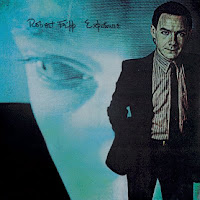
Robert Fripp, 'Exposure' (1979)You might recall how in those first few days after Black Friday when announcements were being made about various cancellations -- including the Onyx Cup, “The Big Game” and “Million Dollar Challenge” on Fox, and ESPN’s coverage of the NAPT -- a rumor was briefly floated that ESPN might discontinue its WSOP broadcasts, although I don’t think many seriously believed that would happen.

In any event, Andrew Feldman rapidly squashed that rumor over on Twitter. And this week we learned that not only will ESPN continue to cover the WSOP, but the network will be expanding its coverage significantly to include a great deal of live and/or “(semi)-live” coverage not just of the Main Event, but also the $25,000 Heads-Up Championship (Event No. 2), the $50,000 Players Championship (Event No. 55), and those WSOP ME rematches, too.

In other words, regardless of how many players the WSOP manages to attract this summer, there will be a lot more exposure as far as coverage is concerned.

Besides the 32 hours’ worth of regular, edited coverage of the ME that will appear on ESPN from July 26th through November 8th (leading up to the November Nine), there will be a total of 126 more hours of poker from this summer’s WSOP shown on both ESPN2 and the internet-only ESPN3. (I still can’t view the latter, dingdangit, thanks to that absurd arrangement ESPN has with ISPs regarding access.)

Pocket acesThere will be live streaming (without hole cards) from the aforementioned preliminary events as well as the Main Event, plus that “(semi)-live” coverage of two feature tables from the Main Event starting on Day 3 and continuing every day until they reach the final nine (July 14-19). The “(semi)-live” coverage will involve showing action from those two tables on a 30-minute delay, with hole cards shown after the flop for players still involved in the hand. (Click here for a FAQ regarding all facets of ESPN’s planned coverage.)

A bit of brouhaha this week regarding that planned “(semi)-live” coverage, with a few players complaining that playing at a feature table during the tournament and having one’s hole cards shown -- even for just a few hands -- could create a competitive disadvantage for the player whose hands were shown.

In other words, not everyone is excited about getting such extra exposure.

Labels: , , , , ,

Thursday, February 18, 2010

Appearing on Keep Flopping Aces Tonight (2/19, 6:00 PT)

Shamus on the airBusy days. Seems like I have a half-dozen things I’m supposed to be doing right now, one of which includes readying to go help cover the North American Poker Tour Venetian event starting this weekend.

Saw the exciting news a couple of days ago that ESPN2 will indeed be airing a number of hours’ worth of NAPT events starting April 19. (Read all about it here.) I also saw the less thrilling news yesterday that apparently Full Tilt Poker doesn’t want its pros playing in the NAPT Venetian. Gary Wise reported on that development over at ESPN, and Dan Michalski adds a few thoughts as well over at Pokerati.

Besides readying for the trip, I’m busily trying to finish some articles and take care of other matters, too. Feeling pulled in a number of directions, but not too stressed, really. (Maybe I’m being inspired by those Olympians to rise to the challenge.)

In any event, all of this stuff has most definitely gotten in the way of my creating a new episode of The Hard-Boiled Poker Radio Show, which I now have to admit is on a hiatus of sorts. But I do have more shows planned!

Speaking of the HBPRS, the show is now being aired -- syndicated, if you will -- over on the fledgling Poker Radio Network. They streamed the first episode over there (Dead Man’s Deal) last week and I had some nice feedback on that. Should get the show a few new listeners, and perhaps some new readers over here, too.

I think the HBPRS gets played over on the Poker Radio Network on Mondays at 5 p.m., Tuesdays at 10:30 a.m., and Fridays at noon (all Pacific times). I believe there’s also a time on Saturday when the show comes on, too. There are some other shows over on PRN as well, covering a variety of poker-related topics.

Lou Krieger's Keep Flopping AcesMeanwhile, I’m going to be turning up over on Rounders Radio tonight when I appear on Lou Krieger’s Keep Flopping Aces podcast. The plan is for him to interview me a bit initially about the blog and other items, then I’m going to be asking him some questions to pick his brain a bit regarding the current status of poker books and print publications. (My plan is to write something up from my interview afterwards for Betfair.)

Krieger, as most of you know, has published numerous poker books -- 11 altogether, I believe -- and so has a particularly informed perspective on the subject. His first poker book was published back in the mid-1990s (Hold’em Excellence: From Beginner to Winner), and his most recent one in 2007 (52 Great Poker Tips). That means he was already on the shelves when the “boom” happened in 2003 (and, I assume, benefited somewhat from that). Here’s a page on his website where you can see all of his books and follow links for ordering.

Krieger also edits Poker Player Newspaper, familiar to anyone frequenting the cardrooms in Vegas and elsewhere, so he has some insight into that side of poker publishing as well.

Should be fun to go on KFA, which is one of the poker podcasts I’ve been following for a long time. I think I first found it three years ago (or so), when Krieger was co-hosting the show with Amy Calistri, and have always enjoyed the variety of guests and discussions. The show airs at 6 p.m. Pacific time tonight, or 9 p.m. for those of us here in the east, and then will be subsequently available for download as a podcast.

Gambling Tales PodcastFinally, you can also hear me crashing the party again over on the latest episode (No. 8) of the Gambling Tales Podcast with Special K and Falstaff, where we have a segment discussing James McManus’s Cowboys Full: The Story of Poker. As I’ve said before, those of you who have listened to and enjoyed my podcast should check out GTP, as it also features some great stories about gambling, delivered via interviews and discussions of such tales from history. Fun stuff.

So there are a few audio snacks to fill the gap between servings of The Hard-Boiled Poker Radio Show. By the way, if you have any questions about poker books & publications you’d like me to bring up on tonight’s Keep Flopping Aces, leave ’em in the comments and I’ll see if I can work them into the conversation.

Be talkin’ to you.

Labels: , , , , ,

Friday, February 20, 2009

The Games of Life

FriendshipYesterday afternoon I found myself stuck between meetings and a bunch of other I’d-rather-be-playing-poker-but-gotta-do-this-other-crap all day and thus missed lunch altogether. Found a small window of time there in the middle of the afternoon and so ran over to the fast food chicken house not too far from where I work for a quick bite.

Grabbed a two-piece dinner and settled over in a corner of the mostly empty dining area with some reading material. After a while I noticed that besides a couple of kitchen workers taking a break over on the other side of the room, the only other people in the establishment were a collection of elderly women -- eight in all -- gathered around three tables. I glanced up briefly from my meal to make a mental guess at their ages. None seemed less than seventy, I was certain.

I went back to the food and reading, but got distracted when I realized that the women didn’t seem to be talking to one another. In fact, only one of them seemed to be saying anything, and she was doing so in a most peculiar way, following an unnatural rhythm of short statements while the others kept quiet. I looked up and saw that none were looking at each other. Strange.

When I discerned the words being spoken, I finally figured out what was going on.

“G-56.... O-72.... O-68.... B-12.... I-22....”

A small purple plastic cube was positioned on the table in front of the lady making the utterances, and between each one she depressed the yellow half-sphere on its top side. She was repeating whatever the voice emanating from cube was saying, and her colleagues were dutifully noting on cardboard cards whether or not they could find a match for the numbers called.

“Bingo,” one eventually answered. “Gotta bingo,” said the caller lady, employing the same monotone she used when calling the numbers. The lady passed her card to another woman who verified its correctness while sipping her tea through a straw.

Bingo, the 'kite' versionI was there long enough to hear several games, and noticed the caller announcing different ones with words like “kite” and “two stamps,” referring to variations that require players to form something other than a straight line. For example, for “kite” you have to make a four-square box in the corner with a diagonal line going from it to the opposite corner (like a kite with a tail -- see the picture).

I thought about the ladies again later in the evening when I went for my run. Still running every day, by the way. Usually two miles. As I motored over the sidewalks, I contemplated that Thursday afternoon bingo game, considering what it probably meant to the women who played it.

Am reasonably sure they weren’t playing for money, although they could have been. No, it seemed like it was mostly just for fun. And to be together. The group’s average age suggested it could very well be the case that most or all had outlived their husbands, if they’d had ’em. In any case, it was easy to see getting together like that -- being with others, and having some activity to provide an occasion for the get-together -- was important stuff. The most important stuff.

As I ran, last week’s episode of “Keep Flopping Aces” came to mind as well (the 2/12/09 show). Host Lou Krieger had Ashley Adams on to talk about the many, many poker rooms the latter has visited in his extensive travels. An interesting hour.

About halfway through the show, they got into discussing various promotions some rooms offer, and Adams brought up Joker’s Wild in Henderson, Nevada as a not-so-great room for atmosphere, but a terrific one for its promotion. As Adams outlines in his recent review of the room over on PokerNews, regulars can get a whopping $599 bonus a month for playing 130 hours. That discussion led Krieger to point out the preponderance of senior citizens regularly playing low limit games who could benefit greatly from such a bonus.

“Certainly, there are so many people in Las Vegas that are retired and on fixed incomes and they’re not getting wealthy,” said Krieger. “They sit in these low limit poker games, day in and day out, hour after hour after hour, trying to supplement their pensions by a couple of bucks an hour and waiting for a tourist or some terrible player to come into the game and spew money around.”

Picking up an extra few bucks an hour could help out a lot for such folks, Krieger concluded. Adams agreed. “It’s not the kind of existence that I’d want or you’d want,” said Adams. “But, hey? If you’re retired and you’re already just sitting around in some other poker room gathering dust, waiting for the bad beat to hit while you’re in there so you can get a fraction of the jackpot, it’s not a bad gig.”

The chicken house bingo ladies reminded me that for many in this crowd there’s another bonus to be had, too -- the non-monetary one that comes from getting out regularly, interacting with others, and being part of the world. That general effort not to be “gathering dust,” one might say.

I suppose I understand what is meant by the idea that such an existence is not necessarily preferable. But really, how different is it from the ones we already lead? What is it we are all running around trying to accomplish? To find something interesting to do, to have fun, to endure. And finding others to do these things with, well, that’s a big part of what’s going on, too. Maybe we’re sometimes playing against each other, but we need each other to have a game at all.

Have a good weekend, friends.

Labels: , , ,

Friday, February 22, 2008

Reporting on Absolute Poker; or, If a Tree Falls

Caught part of Keep Flopping Aces last night. Jennifer Newell (a.k.a. California Jen) joined Lou Krieger as co-host, and they had Todd “Dan Druff” Witteles on to talk more about the Absolute Poker scandal and its aftermath.

I only picked up the show about fifteen minutes after it began. As far as AP is concerned, what I heard essentially reiterated ground already covered several times over. Witteles -- who spoke for just about the entire 35 minutes or so I heard -- made almost all of the same points on Wise Hand Poker back in early November. There was an interesting bit toward the end about bots starting to pop up more frequently on certain sites, but otherwise I’d heard it all before. (If you missed the show, you’ll just have to wait for it to appear in the RSS feed.)

Of course, just because I’ve heard it all before doesn’t mean a lot those listening in have. As was pointed out on the show, not many people are even aware of the AP scandal, never mind up to speed on what happened, how it was discovered, and how AP and the Kahnawake Gaming Commission chose to deal with the matter.

This point briefly came up on the show. Krieger mentioned how he’d been writing about the scandal on his blog, and also referred to the series of articles Newell has written about the scandal for Poker Player (here is the first). He then said [to Newell] “I think that essentially it’s you and me and maybe a little bit of Gary Wise and that’s about it.”

Gonna have to disagree with Krieger there on that last point. Others have written about -- and continue to write about -- the scandal.

It is true the mainstream “poker media” (i.e., the poker mags I wrote about on Wednesday) aren’t really providing much in the way of true, unbiased reporting on the matter. But, come on. It’s not as though no one else is writing about Absolute Poker.

For example . . .

Haley Hintze has written eight articles on the scandal for Poker News:
  • Tough Times for Absolute Poker (October 18, 2007)

  • Absolute Poker: 'We Had a Security Breach' (October 19, 2007)

  • Absolute Poker: Consultant Cited in Latest Statement (October 21, 2007)

  • Absolute Poker Situation: Unattributed Statement Released; Seif Video Names AJ Green (October 31, 2007)

  • Absolute Poker Situation: Unofficial Interim Audit Statement Released (November 9, 2007)

  • Absolute Poker Situation: Q&A with Nat Arem, Part 1 (November 9, 2007)

  • Absolute Poker Situation: Q&A with Nat Arem, Part 2 (November 16, 2007)

  • Absolute Poker Situation: Kahnawake Gaming Commission Releases Final Audit Results (January 12, 2008)
  • Poker Listings has also had a number of articles reporting the scandal:
  • Absolute Poker debacle results in audit (October 18, 2007)

  • Absolute Poker reports security breach (October 20, 2007)

  • Absolute Poker condemned by poker players (October 22, 2007)

  • Absolute Poker fall out far from over (October 30, 2007)

  • Absolute Poker issues update on scandal (November 10, 2007)

  • Poker rooms respond to online security questions (November 20, 2007)

  • Absolute Poker investigation nearing end (November 23, 2007)

  • KGC releases Absolute Poker report (January 13, 2008)

  • Absolute Poker responds to KGC report (January 15, 2008)

  • Final Thoughts on Absolute Scandal, PCA Bannings (January 18, 2008)
  • Additionally, Poker Pages has weighed in on the matter from time to time:
  • Absolute Poker Cheating Blamed On Employee (October 19, 2007)

  • Further Details Emerge in Absolute Poker Scandal (November 9, 2007)

  • Absolute(ly) Poker Scandalous (November 12, 2007)

  • Kahnawake Gaming Commission Releases Absolute Poker Findings (January 12, 2008)

  • Absolute Poker Responds to KGC Report (January 13, 2008)

  • Is There Integrity in Online Poker? (no date)
  • Should also mention this one -- For Cryin’ Out Loud, You Are Not Being Scammed at Absolute Poker! (September 25, 2007). Poker Pages probably regrets jumping the gun, there. But at least they were trying to cover the story.

    Moving on, Life’s a Bluff has offered some poignant commentary:
  • Absolute Mess (October 22, 2007)

  • Happy Halloween (October 31, 2007)

  • War of Words (November 14, 2007)

  • Online Poker Is Rigged (January 11, 2008)

  • Absolute Poker Punished (January 18, 2008)
  • Pokerati, in addition to passing along some of the above-mentioned items, has had a number of posts on the matter, as well. Here are just a few of them:
  • Absolute Issue Raises Serious Questions (October 17, 2007)

  • Mark Seif, Absolute Respond with Call for Investigation (October 17, 2007)

  • Absolute Admissions: You Buyin’? (October 19, 2007)

  • It's On: Mark Seif v. Dan Druff, Round 1 (October 31, 2007), in which California Jen passes along the RawVegas vids

  • Mark Seif Speaks (November 1, 2007)

  • What Cheating Looks Like (November 1, 2007), in which Dan links to the YouTube Potripper vids

  • Absolute Issues Statement Claiming No Super-User Account. Yeah, Right. (November 9, 2007)

  • Absolute Cheating Report Released (January 11, 2008)

  • Unpeeling the Absolute Onion (January 12, 2008)

  • Absolute Poker Releases Statement (January 12, 2008)
  • Big Poker Sundays devoted a lot of time during its initial episodes to the story, as have other podcasts such as Ante Up! and the old Rounders, the Poker Show (now Two Plus Two). Oh, and Dugglebogey was already drawing cartoons about it back in September.

    And, while I’m at it . . .
  • Playing Catch-Up (September 23, 2007)

  • Absolute Crap (October 19, 2007)

  • Would You Like to Leave Absolute Poker? (October 21, 2007)

  • Cleaning Out (October 24, 2007)

  • Poker Still "a Game Subject to Chance" (Even for Cheaters) (October 30, 2007)

  • World Upside Down (November 6, 2007)

  • Update on the Updates (November 11, 2007)

  • Get Ready to Rumble (November 17, 2007)

  • Absolute Apathy (January 4, 2008)

  • Something Is Missing Here (January 14, 2008)

  • CardPlayer Sez Go On & Play at Absolute Poker (February 5, 2008)

  • Absolute Poker "Security Summits" (In Search Of) (February 13, 2008)
  • And I haven’t even mentioned other forums and blogs that have reported (and continue to report) on the scandal.

    No, I think for anyone interested, there’s plenty of information out there about the problems at Absolute Poker. That’s the problem, though. For a variety of reasons, ain’t a lot of folks all that interested.

    A month-and-a-half ago, Gary Carson pointed out the pointlessless of blogging about the Absolute scandal, explaining the generally lackadaisical attitude of most poker players’ towards cheating ensures such efforts will largely fall on deaf ears.

    Carson’s probably right. Indeed, sometimes I think even those who are interested in the scandal aren’t listening all that closely.

    Labels: , , , , , , , , , , ,

    Friday, March 23, 2007

    A Hand Not to Sneeze At

    A Hand Not to Sneeze AtAm currently locked in a desperate struggle versus some sort of tree pollen allergy-type invasion above the neck here. Was doing fine on Tuesday, then went for a long walk in the early evening with Vera and now feel like my head weighs a hundred pounds. Endless coughing, sore throat, lungs aflame, fever, runny nose, sneezing, you name it. Keeping the hot soup and Sudafed coming. Not sure, exactly, how large doses of pseudoephedrine have affected my decision-making at the tables, but things are still running well.

    Have been continuing with my Omaha adventure. For the last two weeks I have essentially only played pot limit Omaha, either $0.10/$0.25 (with a maximum $25 buy-in) or $0.25/$0.50 ($50 max. buy-in). Differences between the two levels don’t seem as significant as do different levels of fixed limit hold ’em. Nor does being at a 6-max table or full ring seem as important a difference as in limit HE.

    As I said, still running well here. I’m logging many more winning sessions than losing ones, with some of the wins being significantly large. I wrote before about some of the reasons why I think I might be winning. I’ve also been perusing advice about starting hands (such as this from Lou Krieger) as well as lurking on the forums a bit to get a better idea of the world of Omaha.

    Those of you are interested might go check out a recent podcast on Poker Podcast World in which Max Shapiro interviewed Robert “Chip Burner” Turner, the man credited with introducing the game of Omaha in Vegas in the early 1980s. Turner is an accomplished tournament player, having one WSOP bracelet in seven-card stud, numerous high finishes and cashes in the WSOP main event, as well as other tourney victories under his belt. Others were involved in the creation of Omaha, too. Here’s an interesting discussion the first part of which relates a lot of the particulars regarding how Omaha came to be.

    While I’m mostly keeping out of trouble by not calling down with King-high flushes, bottom sets, or the like, I have run into difficulty with one particular scenario that seems to keep cropping up -- flopping high trips. For example, I’ll have an ace (and no four) and the flop will come AA4, then after the flop betting round is complete I’m left with one other player. Little chance that other player does not also hold an ace, correct? (Or fours, perhaps.) Then I’ll get to the river without improvement -- I won’t make a boat, or if I do it may not be the best boat -- though still will have a hard time letting my trips go. My basic strategy here has been to try to keep the pot small unless I hit the unambiguous nuts, but that’s easier said than done sometimes (especially when out of position). Unless I get lucky, I’ll often lose what become decent-sized pots here. Any ideas?

    Had a hand Wednesday night that went much better, though, and had to share. I wrote a post about two months ago in which I described what for me had been the single biggest pot I’d ever won -- $51 (in a $1/$2 fixed limit game). Last weekend I exceeded that with a $61 pot in a $0.10/$0.25 PLO game. Then yesterday broke that record. Here’s how the hand went . . . .

    This was a loose 9-player game. Several had bought in short, so my stack of $31.20 was the second highest at the table. I was in the big blind and was dealt 5d2h6c5c. Five players limped in (not at all unusual for these low stakes PLO games), then the button raised to $1.05. The small blind called. Even though Krieger would probably list this holding among his “unplayable hands,” I called, anticipating everyone else would as well. I even remember thinking to myself as the preflop pot was taking shape that I had put in 80 cents to win $7.60 -- 9.5-to-1 odds. So there were seven of us -- including the one player with a larger stack than mine -- to see the flop.

    The flop came 9s5h2s. I’d flopped middle set (with no real draws to speak of). Both the small blind and I checked. Then something very interesting happened. The player to my left went all-in with his last $4.80. Then the next player did the same with the $4.65 he had left. Three of the next four players (including the big stack) also just called. This pot was going to be huge by the time it reached me. Then the button (who had raised preflop) raised all-in with his remaining $11.22.

    I had a decision to make. I had $30.15 behind me, and was staring at a pot of $32.25. Now someone could slowplay a set of nines here, but there’s really only one player at the table (the big stack) that I’m even worried about. With two spades on board, I can’t imagine him not having pushed here with nines. I also doubt the button -- who’d raised preflop -- has nines, either. More likely one of the baby stacks has the nines, I thought, in which case I’m ahead of everyone else. Just have to dodge that flush.

    I went for it, pushing my entire stack in the middle. “This is ridiculous,” someone instantly typed. Of the three players with chips left, two of them called. “This is great,” typed someone else. The big stack -- to my delight -- had folded. The pot was a whopping $83.89. There were five players all-in, plus me (with $8.20 returned).

    This hand was on Bodog, and so everyone’s cards were turned over before the turn card came. I quickly looked around the table, trying to find the nines. No one had them. There were a lot of pocket pairs -- queens, jacks, eights, sixes, as well as a set of deuces. And just one of the other five players was on the spade flush draw. Using the CardPlayer Omaha Odds Calculator, here’s what I was looking at:

    Percentages on the flop

    As it turned out I’m looking at 3-to-1 against winning the hand, but looking back that was probably the best I could’ve hoped for when I had pushed. Almost what the pot odds were on the flop, in fact, when I’d put in around $22 to win $83.89.

    The 3s came on the turn, completing the flush for one of my opponents, but knocking out everyone else.

    Percentages on the flop

    Looking at everyone’s cards, I had just five outs available to me (of the 24 unseen cards) -- the 2 nines and the 3 threes. And the 9c came, giving me the boat and allowing me to drag the huge pot.

    Table broke up shortly afterwards, since almost everyone had been felted. There was some chatter, but no one seemed upset with how I’d played the hand. The player with the spade flush seemed almost wistful when congratulating me, having come so close himself to taking the chips.

    If anyone wants to call me a donk here, please do . . . and tell me how and why you would have played differently. If correct, I’ll gladly take credit. If incorrect, I’m gonna have to blame the Sudafed.

    Labels: , , ,


    Older Posts

    Copyright © 2006-2021 Hard-Boiled Poker.
    All Rights Reserved.