Friday, November 20, 2015

It Was $86, Not $39

Here’s a bit of poker trivia I had not realized until today.

Chris Moneymaker turns 40 years old on Saturday. Was reading around a little about Moneymaker this afternoon and after following a few links learned that one detail from the story of his 2003 WSOP Main Event win has long been misreported. It’s a detail I myself have repeated a few times, I know, both here on the blog and elsewhere.

It has long been passed around that Moneymaker won his $10,000 seat into the WSOP Main Event on PokerStars via a satellite, with the cost of that satellite almost always being referred to as $39. I knew that he didn’t actually win his ME seat in that satellite -- rather, he won entry into a larger satellite, and from there won his seat. But I only just found out that the buy-in for the first one wasn’t $39 -- it was $86.

First, here’s a post by Dan Goldman (former VP of Marketing for PokerStars) on his Braindump v1.0 blog from a couple of years ago in which he originally repeated the $39 figure, then was corrected in a comment by Michael Josem (who currently does PR for PokerStars).

Goldman follows up with a confirmation that Josem is right, the satellite buy-in was $86, despite everyone having repeated $39 for years and years -- including Moneymaker himself!

In Eric Raskin’s oral history of the 2003 WSOP Main Event -- exerpted on Grantland in an article titled “When We Held Kings” -- Moneymaker says that he entered a $39 sit-n-go, winning a seat into a bigger satellite from which he then won his ME seat. In fact, Moneymaker’s autobiography published in 2005 is titled Moneymaker: How an Amateur Poker Player Turned $40 into $2.5 Million at the World Series of Poker, again repeating the incorrect detail (here rounded up) regarding the buy-in.

This page over in the “PokerStars Online Museum” further confirms both the $86 buy-in figure, noting that it “is correct and has been checked against PokerStars’ official tournament records,” as well as that “earlier reports that it was a $39 satellite were mistaken.” The $86 tourney got Moneymaker a seat in a $650 one with 67 players in which there were three ME seats awarded, with Moneymaker getting one.

Trivia, for sure, but perhaps the most interesting part of it is the fact that so many got the detail wrong for so long.

Labels: , , , , , , , , ,

Monday, July 13, 2015

Stories Upon Stories at the WSOP

Yesterday was definitely an interesting day to rail the World Series of Poker Main Event, which I find I’m doing mostly by shuttling between WSOP.com (for live updates and counts), the poker news sites (for spontaneous features), and Twitter (for reactions and discussion).

Lots of interesting stories emerging regarding the players who remain. As the day wore on, I found myself continually seizing on one particular plotline as “the” story of Day 5, then having that one be soon replaced by another and so on right up until the end of play.

Start-of-day chip leader Joe McKeehen spent a good portion of the afternoon on top of the counts, and he finished up with 3.66 million -- above the average (about 2.79 milly) and good for a spot inside the top 20 with 69 players left from the starting field of 6,420. McKeehen intrigues me mostly because I helped cover his win in a WSOP Circuit event in Atlantic City in March 2013, a tournament in which he conspicuously distinguished himself as a talented player and dominated at the close.

Brian Hastings ascent up the counts then led to thoughts about his complicated place in the poker world at present (see “The Battle of Hastings”). He finished the night at 4.74 million and in 10th position, and thus will continue to earn attention going forward, thanks also to his having won two bracelets already this summer which allows him to challenge for the lead in that strangely-calculated WSOP Player of the Year race.

Then it was Anton Morgenstern leaping to the fore, the player who entered Day 7 of the 2013 WSOP Main Event in first position with 27 left only to be ousted in 20th place. It wasn’t exactly a blow-up two years ago for the young German -- he experienced some bad fortune in two big hands against Mark Newhouse -- but still, it was a remarkable turn of events.

I still like to rib my friend Stephen Bartley for his tongue-in-cheek-but-still PokerStars blog post he published during Day 6 declaring “Why Anton Morgenstern will (probably) win the main event.” After leading for a short while yesterday, Morgenstern ended today with 4.2 million (17th of 69). See “Anton Morgenstern Getting the Second Chance of Lifetime” on PokerNews to read what Morgenstern is saying about his return trip to the latter stages of the ME.

Speaking of the PokerStars blog, the deep run of Team PokerStars Pro Daniel Negreanu will continue to keep them occupied over there as it has throughout the Main Event thus far. He has 3.62 million (in 22nd place) and chances are the closer he gets to the final table the more likely his story will be eclipsing everything else.

Then at another break the not-so-familiar name of Bruce Peery appeared in the top slot, with a tweet by Chris Moneymaker quickly helping everyone learn why he might be of interest to WSOP Main Event fans and historians. “Sick sweat at @WSOP #MainEvent,” wrote Moneymaker, “as best friend from 2003 and guy who lost half my action leading with 145 left.”

As Eric Raskin wrote about in his oral history The Moneymaker Effect (2014) as well as in the preview Grantland article “When We Held Kings,” Peery was the fellow who told Moneymaker not to aim for fourth place and a cash prize of $8,000 in that final PokerStars satellite back in ’03 but to try to win one of the three Main Event packages, ensuring his friend he’d give him $5,000 and take half his action. Alas for Peery, he backed out of the deal and thus missed out on being able to claim half of Moneymaker’s $2.5 million score.

Tim Fiorvanti jumped on that story yesterday for BLUFF, talking to Peery to get more details which Tim shared in “Moneymaker Legend Grows as Bruce Peery Takes WSOP Main Event Lead.” Peery will begin today in 35th position with 2.4 million.

But finally it was Pierre Neuville’s story that ultimately pushed past all of these, just as his chip count managed to exceed everyone, too, by night’s end. The 72-year-old finished with 7.105 million to lead all and grab away the Day 5 headlines.

We’ve all gotten to know Neuville over the years as the very amiable Belgian who earned a reputation as the “Serial PokerStars Qualifier” after winning seats in 23 straight EPT events online. He only took up poker seriously after retiring from a lengthy career in business, I believe, and has earned nearly $2.2 million in live tourney cashes (plus a lot online, too) over the last eight years or so including a two runner-up finishes in EPT Main Events and another second-place in a WSOP bracelet event.

If you don’t know Neuville, check out this interview Remko Rinkema did with him at EPT Deauville earlier this year to hear him explain how “poker makes me younger every year”:


Impossible not to pull for Neuville, and his story -- just like his chip stack -- will take precedence when they get going again today. But with all of these other stories -- and players -- still in the mix, the overall narrative should continue to take some interesting turns.

Labels: , , , , , , , ,

Thursday, May 21, 2015

Last Call for Late Night

Along with about 14 million others I watched David Letterman’s show last night, his last after more than three decades of being a fixture on late night television. Was laughing pretty hard from beginning to end thanks to a lot of well chosen and edited clips and other funny business.

I remember when Letterman was late, late night -- as in a 12:30 a.m. start. In fact I even dimly remember his stint with a morning show, too. I was barely a teen when Late Night with David Letterman first premiered in early 1982, at time which happened to coincide with that period in my life when I would be staying up late a lot, too.

Watched enough of him during those years to be as influenced as anyone else by what was then considered a somewhat alternative style of comedy and general TV spoofing. Like most of my generation I continued to pay fairly close attention to Letterman right up until those “late night wars” surrounding Johnny Carson’s retirement in 1992.

Kept watching occasionally after the CBS show began airing in the summer of ’93, although by then whatever late nights I kept were school-related as for the next several years I’d be pursuing graduate degrees. Then came “real life” and full-time employment, and thus fewer late nights watching the tube.

After that came this second career writing about poker which again has me up all hours, although more often watching people play cards than crack jokes on the teevee. So while I occasionally would keep tuning in to watch the Late Show it would only be now and then, and rarely in the elective way I’d watched the NBC show.

I wasn’t paying attention, then, when Letterman had Chris Moneymaker on as a guest after he’d won the 2003 World Series of Poker Main Event -- in June, that is, before that year’s WSOP had aired on ESPN. That episode doesn’t seem to be online anywhere, although Moneymaker told me once how he was pretty sure he had a tape of it somewhere.

I do recall Joe Cada’s turn on Letterman’s show in 2009, where the youngest-ever WSOP ME champ appeared just a day or two before he turned 22. Earlier that same year I wrote something here after a Steve Martin appearance on Late Show which included a funny story about Martin playing online poker after taking Ambien.

I’ve found myself distracted some over the last couple of days reading others’ stories about Letterman’s show and its significance while also looking at various clips, mostly from that first decade or so he was on the air and I was watching practically every night. And I greatly enjoyed the finale, primarily because of how Letterman characteristically downplayed the significance of the event -- entirely expected, and fitting, of course, given the self-deprecating core around which most of his humor has always been based.

I liked the sweet yet not overly sentimental way he acknowledged his mother (whom we all remember fondly, too). And I also liked how he found a spot to include his wife and son (whom we hadn’t met before), saying to them “I love you both and really nothing else matters, does it?” without being at all maudlin about it, but rather just stating a fact.

Others have (and will continue to) assign significance to his contributions to television, comedy, and the culture in general. Like Letterman himself, though, I’m dissuaded from trying to articulate any profundities explaining what it all was about.

Labels: , , , , , ,

Monday, March 30, 2015

Regional Finals, Final Tables, and the Coming Final Four

Not unexpectedly, both my Heels and my NCAA bracket crumbled, and now I semi-dread the inevitable happening a week from today, namely a Kentucky-Duke final. (Others feel similarly?) Some exciting games, though, particularly in the regional finals.

Meanwhile I watched some poker on the computer this weekend, too. On Saturday I frequently dipped in and out of the EPT Live stream of the final table over at EPT Malta, including some of the seven-hour long heads-up battle between the two Frenchmen, Valentin Messina and Jean Montury that Montury ultimately won.

They ended up playing 148 hands total against one another, with the lead swinging back and forth in what turned out to be a hard-fought duel. What stood out the most, however, was the emotion Messina showed during his all-ins in the latter stages (such as pictured above in a screenshot from the stream).

Was hard not to be affected just a little watching him, something mentioned both in the commentary and in the PokerStars blog recap of the final table. The latter includes a nice picture of Montury consoling Messina after the final hand, as well as a good description of the scene by Howard Swains -- check it out.

Then on Sunday I followed a random tweet alerting me to the fact that Barry Greenstein had found his way over onto Twitch, and once on his channel I discovered him playing what turned out to be the priciest play money tournament ever on PokerStars, a 1 billion-play chip tournament that attracted 31 players.

Interestingly, Greenstein’s fellow Team PokerStars Pro Chris Moneymaker also took part, and the two of them ended up making it all of the way to heads-up against one another. Decidedly less emotion was on display for that heads-up match, although it was clear both were battling just as earnestly until Greenstein ultimately emerged the victor, winning 13.95 billion play-chip first prize while Moneymaker picked up 9.3 billion.

Obviously the kitty there was not as significant as what Montury and Messina were playing for (Montury won €687,400 while Messina took away €615,000 following a heads-up deal). Even so, from the rail both were interesting finishes to follow. And I guess the parallels help point up how poker can be meaningful at a wide variety of stakes, high to low.

I guess in both cases I wasn’t necessarily rooting for either player to win, but rather just to see a well-competed contest, which turned out to be so in both cases. Meanwhile we’ll see if that NCAA tournament comes down to the predictable heads-up next Monday, too, where (if does turn out to be the Wildcats and Blue Devils) I guess I’ll also lack any specific rooting interest.

Go Michigan State! Go Wisconsin!

Labels: , , , , , , , , , ,

Tuesday, March 24, 2015

Joining Team Moneymaker

Had great fun last night playing a poker tournament. Feel like I haven’t been able to say that much lately.

If you happen to follow Chris Moneymaker on Twitter, you might have seen him yesterday inviting people to join his new PokerStars Home Game. He has a new website -- Team Moneymaker -- which is part of a few new projects he’s developing, among them the PS Home Game. And the good news for those of us in the U.S. who aren’t able to play real money games, his Home Game is for play chips.

I signed up during the afternoon and then participated in the first of a few tournaments Moneymaker scheduled during the evening. Eventually he got his Twitch channel up and running as well, and provided commentary and feedback as we played.

I have to say I got a big kick out of Moneymaker’s stream, especially one time when I mistyped an opening raise with pocket jacks from UTG -- making it nearly 5x the big blind when I had been aiming for just under 3x -- and a couple of minutes later Moneymaker was commenting and making a note on me about my oversized open.

There were only 17 in this first tournament (including “Money800”). I stumbled early on, with none of my steal attempts or c-bets seeming to accomplish anything other than my dribbling away chips. But then I managed to pick up some decent hands and get paid for them, and eventually made it all of the way to having a chip lead with three players left.

Ran into some hard luck at that point -- if I were tweeting my progress, my followers would’ve gotten an “Out. QQ < AQ, then AJ < A8” note like those we’re all always seeing in our timelines -- and went out in third. The buy-in was exactly 1 play chip, my prize for finishing third was exactly 3, but the entertainment derived from those two hours was considerable.

So was the instruction, as I found myself genuinely challenged by certain decisions along the way and appreciating Moneymaker’s advice to players as he talked about bet-sizing and other decisions made by others (and himself) on Twitch.

I believe his plan will be to host Home Games each Monday night at 8 p.m. Eastern time, and I wouldn’t be surprised to see a couple of hundred at least taking part -- maybe more -- by the time word gets around and some momentum is built up. If you’re curious, you can join Team Moneymaker here, then join his Home Game using the Club ID 1954662 and Invitation Code TeamMoneymaker2015.

Labels: , , , , , ,

Friday, November 29, 2013

Meals and Deals

Still in holiday mode around here after yesterday’s marathon of football and repeated helpings of turkey, stuffing, cranberry sauce, and everything else. Even had a full serving of sushi near night’s end to add a weird (though delicious) twist to the gourmandizing extravaganza.

Got two of three games correct yesterday, having gone with the Steelers in the nightcap and endured that painful almost-but-not-quite finish for Pittsburgh. Feel good about the pick even if it didn’t work out, as it seemed like a reasonable gamble to go with the visitors.

Speaking of taking gambles, this week over on the Learn site I’ve been exploring the topic of final table deal-making, partly inspired by the preponderance of deals I saw being made during the recently concluded MicroMillions 6 series on PokerStars -- the deals, of course, often being proposed and agreed to primarily to avoid taking gambles late in a tourney when the stacks are shallow and the pay jumps steep.

The MicroMillions series can be especially interesting when it comes to final table deals because many of the players involved in the discussions aren’t necessarily that well versed in the nuances of final table deal negotations. With such low buy-ins (many of the events are just a couple of bucks or thereabouts to play), there are a lot of players making the final tables who’ve never come close to winning, say, $1,000 in a single tournament (or more). So it stands to reason some might not have ever dealt with dealing.

Watching some of the discussions take place, I started thinking about how it might be somewhat useful to give a little primer on the process, and so ended up writing a three-parter this week on Learn talking about final table deals, how they work, and some of the pros and cons for making them.

The first part mainly just introduces the topic, then in the second part I spent some time explaining the what “chip count” (or “chip chop”) deals were and what a deal based on the “ICM” (“Independent Chip Model”) method of assigning cash values to stacks was. That latter discussion took a little while to get through, but I hope it comes off as easy enough to read and ultimately helpful.

Then in the third part I got into some of the reasons why people want to make final table deals as well as reasons why others do not. Again, it goes on a while, in part because I spend some time talking about both a wild heads-up deal in Macau from a year ago and the famous story of Moneymaker offering a deal to Farha in the 2003 WSOP Main Event (and Farha refusing).

But like I say, I hope the articles end up being of use to someone who might eventually find him or herself at the final table of a MicroMillions event (or some other tourney) and thankful for having had an introduction to the whole process of such deals.

Here are the links to those three articles:

  • Let’s Make a Deal: Introducing Deal-Making in Tournaments
  • Let’s Make a Deal: “Chip Count” and “ICM” Deals
  • Let’s Make a Deal: Reasons For and Against Final Table Deals
  • Have a good weekend, all. I’m off to see if there’s anything left on that carcass in the fridge.

    Labels: , , , , , , ,

    Tuesday, September 24, 2013

    Poker Among the Ruins

    There’s an interesting piece over on the Salon site today provocatively titled “Has ESPN ruined poker?” The article is by a freelancer named Argun M. Ulgen who provides a fairly well informed judgment on ESPN’s coverage of the World Series of Poker over the last decade. As the title suggests, Ulgen is mostly censorious with regard to the network’s presentation of the game, and in fact he seems ready to blame the network for online poker’s legal woes in the U.S. (even if he doesn’t pursue that idea much beyond just suggesting it).

    Going back to Chris Moneymaker’s big win and the much-repeated, seven-episode presentation of it by ESPN that many point to as having been a necessary component in the “boom” that followed, Ulgen recalls those early days of the hole card camera and what for many was a kind of revelation that it could actually be interesting -- even riveting -- to watch a bunch of people sitting around playing cards.

    The article severely takes ESPN to task for what was always a somewhat obvious inner contradiction in the coverage of the WSOP during those first few post-Moneymaker years, really right up until the brink of Black Friday -- namely, the jarring juxtaposition of the “skill game” argument either explicitly made in the broadcasts or implied by the whole idea of showing poker on a sports network and programming seemingly highlighted by lucky hand after lucky hand with players constantly all in and powerless to affect their fate.

    The coverage “routinely failed to provide by way of non-intrusive info graphics or quick commentary fundamental, skill-based pieces of information,” argues Ulgen. Noting a general lack of context surrounding the showing of all of those key preflop all-ins (not enough about stack sizes, blind levels, and so on), Ulgen laments how viewers were “mostly treated to showdown results, which, whether it is poker, basketball, or finance, is always heavily flavored with luck.”

    Most of us deep within our little niche -- or “cultish game,” as Ulgen calls it -- recognized early on the wide divide between reality and romanticism in ESPN’s WSOP coverage, noting to each other at length how all of those “Degree All-In Moments” (remember those?) weren’t really poker, but added up to a kind of glorified, exaggerated version of the game that seemed to entertain not just us, but the masses, too.

    From there Ulgen moves into a discussion of ESPN’s 2011 WSOP coverage from the first post-Black Friday Series, in particular its showing of uninterrupted play on a couple of Main Event tables for hours on end for several days in July, accompanied by fairly high level commentary by Olivier Busquet and Antonio Esfandiari. I remember writing a little here at the time about ESPN’s coverage that summer, including the weird feeling once of covering the tournament then going back to the hotel room early one night to watch the tourney continue on television.

    Ulgen laments the rapid shift away from that type of coverage -- i.e., the sort that lended itself well to making a much more convincing and coherent “skill game” argument for poker -- that has taken place over the last two years. (He doesn’t mention or draw any conclusions from the fact that 2011 was the year Poker PROductions took over the WSOP coverage for ESPN, taking over from 411 Productions.)

    He points out how the current coverage again fails to provide adequate context when showing hands. He’s a little harsh and not entirely accurate about ESPN not currently providing information about position, blind levels, and stack sizes (they usually do give all three, in fact, although not always). But he still makes a valid point about how the shows often tend to race around from highlight to highlight, having gotten far away (again) from the studied presentation of the game that briefly popped up a couple of years ago.

    Ulgen’s title employs some obvious hyperbole as an attention grab. In truth, many might say that far from “ruining” poker, ESPN on the whole done has a lot more to revive poker, bringing in new players and expanding the game considerably, even if it has done so in a way that has corrupted (perhaps permanently) the mainstream’s understanding of the game in its failure to present a convincing case for poker’s skill component.

    Ulgen’s article is worth a read, but for those of us who’ve been involved with poker over the last decade, the point he’s making is very familiar to us as something we all argued among ourselves at length all through those “boom” years and after. Of course, back then -- pre-UIGEA, pre-Black Friday -- we were so distracted with our multi-tabling most of us probably weren’t as invested in the argument as we might be today, as the fate of the game hardly then seemed threatened.

    We were all like the guy who gets his chips in bad and then draws out anyway. Skill... luck... who cared? We were winning.

    Labels: , , , , , , ,

    Thursday, May 23, 2013

    Moneymaker

    Today’s a special anniversary in the poker world, one that many have been noting had been coming for the last couple of weeks. I’m referring, of course, to it being the 10th anniversary of Chris Moneymaker’s stunning victory in the 2003 World Series of Poker Main Event, an event which many point to as a catalyst of sorts for the subsequent poker “boom” thanks to the way it brought together numerous influential factors -- online poker, newly-revamped televised poker (with hole cards), and the underdog story of an amateur being the pros that further inspired so many to get involved in the game thereafter.

    I’ve written many times about Moneymaker and his win here before, including writing posts marking this very date and its significance, and so am not too interested in scribbling yet another, similar one today. Am also kind of running low on mental fuel, to be honest, thanks to having sat up the entire night following and reporting on an online tournament -- one in which Moneymaker himself actually made a fairly deep run, finishing ahead of about 1,500 other players or almost twice as many as he bested in the 2003 ME.

    I’ve enjoyed reading some of the other pieces that have been posted this week regarding Moneymaker’s win, most particularly that cool, lengthy oral history of the 2003 WSOP Main Event compiled by Eric Raskin for Grantland, titled “When We Held Kings.”

    Nolan Dalla has also been writing a series of entertaining posts over the last several days sharing his memories of that Main Event. As I talked about once with Dalla in an interview for Betfair Poker, it wasn’t that long before Moneymaker’s win that he’d become the WSOP’s Media Director, and he worked for Binion’s then, too, which necessarily put him right in the middle of things when lightning struck 10 years ago today. Check his blog for the series, to which he’s still adding.

    Finally, I very much liked Brad Willis’s piece on the PokerStars blog today in which he shares a more personal account of how Moneymaker’s victory affected him both personally and professionally. In “Ten years later: How Chris Moneymaker changed my life,” Brad tells a story that is familiar to a lot of us, and in fact when I look at his next-to-last paragraph, I could almost quote it verbatim as representative of what also happened me (changing out only the original career):

    “Ten years ago today, I thought I was going to spend the rest of my life working in local TV news. It wouldn't have been a bad career, and I think I could’ve done it with pride. But because of that day in 2003, I’ve seen a big part of the world, been able to report some amazing stories, and met friends I will cherish forever. And, for what it’s worth, I’ve been able to hang out with a poker hero named Moneymaker from time to time.”

    All of those statements apply to me, too. Even the bit about getting to know the champ a little, as I’ve had the opportunity to talk to Moneymaker on several occasions, including about what happened on May 23, 2003. Such a friendly guy and truly a remarkable ambassador for the game -- and, if you think about it, a person who has helped define what we mean by that idea of being an “ambassador” for poker.

    Of course, when I think back to 2003 I don’t remember anything at all about what happened on this date as far as poker was concerned. Like many, many others, it wasn’t until ESPN began showing its coverage of the Main Event in late August -- and I got hooked like everyone else on the weekly one-hour segments -- that I ever paid any attention to Moneymaker and his story.

    If I’m adding up the dates correctly, it would have been Tuesday, October 7, 2003 when the seventh and final installment of ESPN’s coverage was shown for the first time. That was the night it all went “boom,” I’d say, and everyone finally found out about Moneymaker and the WSOP and online poker and everything else.

    Still today’s a day worth noting, and enjoying the memories being shared by others regarding a life-changing event for one 27-year-old accountant and for countless others, too.

    Labels: , , , , , , , ,

    Tuesday, March 19, 2013

    Ordinary People Accomplishing Extraordinary Things: Moneymaker and NCSU

    March Madness is here, with the this year’s NCAA men’s basketball tournament bracket having rapidly consumed the attention of sports fans this week. I’ll be filling out my bracket soon, hoping to repeat my luckbox performance of last year when I somehow managed to nail six of the Elite Eight, all of the Final Four, and also predict the semis and finals correctly to win Pauly’s Pub pool.

    I’d beg forgiveness for the self-aggrandizement, but last year was the first time in decades of filling out these suckers I’d realized any significant success, and the chances of my ever replicating such a performance are most certainly dim. So I’m taking advantage this week of telling the story of my win as many times as I can until my reign as Pauly’s Pub champ likely ends a little less than three weeks from now.

    Speaking of NCAA hoops (and stories about winners), I was mesmerized Sunday night by the latest ESPN “30 for 30” documentary about the incredible run of the 1983 N.C. State Wolfpack team all of the way to the NCAA title. With 10 losses entering the post-season, NCSU had to win the ACC tourney that year even to make the NCAAs, then as a No. 6 seed won six straight games -- several in thrilling, come-from-behind fashion -- to take the title.

    The documentary is titled “Survive and Advance,” employing a mantra oft-used by State coach Jim Valvano to exhort his team through that magical, one-game-at-a-time run. The story of the strong friendship among the players and coaches is quite moving, with the too-soon deaths of Valvano (in 1993) and player Lorenzo Charles (in 2011) adding further poignancy as the surviving team members reminisce about their wondrous experience that spring 30 years ago. (Coincidentally, both Valvano and Charles were just 47 when they passed.)

    I have a lot of personal memories of watching those games as a kid in North Carolina. Those were formative years for your humble scribbler, which perhaps made me even more vulnerable to be affected by the documentary and the way it invited me to think back and relive it all.

    Two days later I am still thinking about “Survive and Advance,” and in fact yesterday was also considering how the Pack’s improbable championship also reminded me of another “Cinderella story,” namely Chris Moneymaker’s 2003 World Series of Poker Main Event win.

    Both were huge underdogs to win their respective titles, and in fact in both cases there were a lot of obstacles and other twists of fate that led to them even participating in the tournaments.

    As the ESPN documentary reminds us, NCSU’s star guard Dereck Whittenburg suffered a broken foot in January of that year, which I well remember seemed at the time to be a career-ending injury for the sharpshooting senior as well as likely dashing the Wolfpack’s hopes for making it through the Atlantic Coast Conference regular season or tourney with a chance to play in the NCAA tournament at all.

    But Whittenburg came back, and after State finished the ACC regular season fourth in the league, NCSU made comebacks in all three tourney games versus Wake Forest, a Michael Jordan-led UNC team, and top-seeded Virginia led by their Goliath, Ralph Sampson, to secure an NCAA tournament spot.

    Meanwhile, we all remember Moneymaker’s story of having won his seat into the WSOP Main Event in 2003 via a $39 satellite on PokerStars. As he relates in the 2012 documentary All in: The Poker Movie, he had but $60 in his PokerStars account at the time he played in the satellite. He also explains how he didn’t even realize he was playing in what was essentially a “step” satellite (getting you into another satellite), having originally thought he was registering for a regular tourney with cash payouts.

    He won that first satellite, “surviving and advancing” to the second satellite in which the top three finishers would win WSOP ME seats. There he reached the final table with the chip lead, but was in fact aiming for a fourth-place finish and a $8,000 cash prize, an amount that just happened to match his current credit card debt.

    At six-handed, Moneymaker began to try to make a deal with other players and/or slowly bleed chips so as to ensure himself that fourth-place finish, but his plans were interrupted by a friend calling him to let him know he’d buy half his action ($5,000) if he were to win the ME seat. Moneymaker went on to win the seat, then his buddy backed out of the deal.

    In other words, like NCSU and Dereck Whittenburg literally limping into the post-season in 1983, cash-poor Moneymaker having secured a spot to play in the $10,000 WSOP ME in 2003 was in and of itself an unlikely turn of events, too.

    Then, of course, as we also well remember from the old ESPN shows that presented us the 2003 WSOP, Moneymaker’s journey to the final table included a number of heart-stopping moments that made his advancing that far also somewhat improbable seeming. And from that journey we might pull a few other parallels with NCSU’s run, too.

    Like State toppling mighty Virginia (again) in the West Regional final, Moneymaker knocked out the great Johnny Chan, an occurrence compared by Norman Chad on the commentary to Buster Douglas knocking out Mike Tyson. In truth, that was what it seemed like when State beat Virginia for the second time in two weeks (this time without the three-point shot) to make the Final Four.

    Like State coming from behind from six points down with 24 seconds left to beat Pepperdine in double-overtime to win their first-round game, Moneymaker hit a two-outer with pocket eights to crack Humberto Brenes’s A-A after the latter was all in on the flop.

    Like State making more comebacks against UNLV and Virginia to reach the Final Four, Moneymaker would hit a seven-outer with one card to come to knock out Phil Ivey (another Goliath) just shy of the final table.

    And like State toppling the seemingly unbeatable, hugely-favored Houston Cougars led by Hakeem Olajuwon and Clyde Drexler in the finals, Moneymaker’s ultimate victory versus Sammy Farha heads-up likewise defied expectations with the underdog gaining the victory. We might even compare the crazy final play in which State ironically won the game on a dunk versus “Phi Slamma Jamma” to Moneymaker’s big bluff versus Farha -- a pro-like play pulled off by the amateur.

    Both victories also proved inspirational to many going forward, a theme that is likewise explored effectively in “Survive and Advance.” A clip that appears in the documentary of Valvano talking about how “every day in every walk of life, ordinary people accomplish extraordinary things” comes to mind here.

    One could probably drill down further into both stories to find still more parallels, but I’ll leave it there for now. After all, I need to go study my bracket and decide if there will be any new underdogs primed to make a deep run this time around.

    Labels: , , , ,

    Thursday, January 24, 2013

    What If Farha Calls?

    A couple of days ago, our friend Kevmath casually tweeted a question to his followers that had been inspired by a conversation between himself and his BLUFF colleague Tim “Timtern” Fiorvanti, a.k.a. “tim00.”

    “Me and @tim00 were discussing this in #BluffHQ,” wrote Kev. “What are some of the biggest ‘What if’ moments in poker?”

    The thought experiment inspired a lot of response with possible examples, with Sam Farha calling Chris Moneymaker’s “bluff of the century” (rather than folding) during heads-up play at the 2003 World Series of Poker Main Event by far the most commonly referenced “What if?” moment.

    You remember it, of course. We’ve seen it so many times...


    That was also the first “What if” moment that came to my mind upon reading Kevmath’s tweet, but by then a few minutes had passed and a half-dozen others had already suggested it, so I didn’t bother. I spent a couple of minutes idly trying to think of others, but to be honest all seemed so much less meaningful when compared to Farha’s fold I soon stopped trying.

    So I thought back to the hand itself. If Farha had called, he would not have won the tournament right there, as Moneymaker had him covered. Indeed, for Farha to have called and discovered Moneymaker had better than his top pair of nines would have meant elimination for the pro, a factor that obviously influenced his decision. But his nines were good, and so calling would’ve meant a big double-up for Farha.

    The pair had begun heads-up play with Moneymaker leading with 5.49 million to Farha’s 2.9 million. I believe the blinds were 20,000/40,000 when they began (with a 5,000 ante, unless they’d jettisoned the antes for heads-up), meaning Moneymaker had about 130 BBs and Farha more than 70 BBs at the moment Dan Harrington had gone out in third.

    Ultimately heads-up play lasted for 28 hands, just three of which made it to TV. We see Farha win a 570,000 pot, then we are told what the stacks are just before the big bluff hand begins -- Moneymaker 4.62 million, Farha 3.77 million.

    The pot Moneymaker won in that hand ended up being 1.8 million, and as a result essentially put their stacks back to where they were to begin heads-up play. If Farha had called, he would have had a stack of more than 7.5 million while Moneymaker would’ve slipped all of the way down to 850,000.

    At some point later came the final hand (the third shown) in which Farha flopped top pair of jacks but Moneymaker made bottom two pair with 5-4. The money went in on the flop, and Moneymaker’s hand held up, improving to a full house by the river.

    All of which is to say, one answer to the question “What if Farha calls?” is that Farha very likely would have won the 2003 WSOP Main Event.

    But the mind can’t help but leap from there to consider other possible answers as one begins imaginatively to construct a Philip K. Dick-like alternate past in which the popularity of poker and the online poker industry followed a different course post-2003. And some of us -- including your humble scribbler -- can’t help but think about how what had once been a hobby strangely evolved into a full-time profession, and perhaps wonder whether that would have been the case had Moneymaker finished runner-up in 2003.

    I suppose a lot of what did happen following Moneymaker’s win probably would have happened anyway, though perhaps less quickly. The WSOP would have continued to attract larger turnouts, online poker would have continued to expand, and televised poker would have probably evolved similarly, too. One can’t help also but contemplate whether or not the UIGEA would have become law in 2006 had there not been such rapid, conspicuous growth in online poker’s popularity in the U.S. during the three years prior. And whether some other legislative course might have been taken instead.

    Poker is always presenting us with these seemingly crucial moments that inspire thoughts about how a particular card or action becomes yet another turning point in the garden of forking paths. Only makes sense, then, that we’d sometimes be inspired to think about poker’s history similarly and ask “What if?”

    Labels: , , , ,

    Monday, May 23, 2011

    The “Boom” Eight Years Later

    Chris Moneymaker wins the 2003 World Series of Poker Main EventSaw a tweet from Bill Rini this morning reminding us all that today marks the eight-year anniversary of Chris Moneymaker’s World Series of Poker Main Event win back in 2003.

    Yeah, I know. Eight years?!

    At that time, the World Poker Tour was already on the air over on the Travel Channel, having debuted almost two months before. (Some time ago I wrote a little about the WPT’s debut here.) And really it wouldn’t be until later in the summer when ESPN aired its coverage of the 2003 WSOP ME in seven weekly installments in July and August that the “boom” truly ignited. At least that is how I remember it.

    As we all know, Moneymaker -- playing as “Money800” -- won his $10,000 entry fee into the 2003 WSOP ME via a $39 satellite on PokerStars, the site for which he’d subsequently become a foremost representative.

    You might have heard about this new documentary, BOOM: The Incredible True Story of Online Poker, currently in the works and scheduled for a 2012 release. It is an incredible true story. Will be especially challenging to tell it in just a couple of hours, too, I imagine.

    That title, of course, is connected to Moneymaker’s triumph, a moment that brought together the truly awesome forces of Moneymaker’s everyman story (and convenient name), televised poker (newly energized by hole card cams), and the burgeoning industry of online poker.

    It just so happens the first trailer for BOOM came out over the weekend, and it begins with Moneymaker’s magical moment. Check it out:


    The trailer -- which I suppose represents an abridged version of the planned-for narrative of the film -- ends with Black Friday, a suitably dramatic twist to the story (and, perhaps, another possible meaning for the title). Here is the Facebook page for the film, for those of you who do the Facebook thing.

    As it happens, I’ll be spending part of today’s anniversary following the Main Events of Stars’ Spring Championship of Online Poker. The three versions of the SCOOP Main Event attracted a total of almost 20,000 entrants (19,667) with the prize pools for all three adding up to nearly $8 million ($7,983,200). Interestingly, that total is almost the same as the prize pool for the 2003 Main Event ($7,802,700).

    Looking back, eight of the nine players who made the final table at the 2003 WSOP Main Event were American, with sixth-place finisher Amir Vahedi of Iran the only exception. And 48 of the 63 players who cashed that year were from the U.S., too. Goes without saying that none of those cashing in the SCOOP Main Events or making today’s final tables will be American. Even Moneymaker, as a U.S. resident, has been precluded from participating.

    By the way, Moneymaker’s colleague, Aussie Joe Hachem, the 2005 WSOP ME Champ about whom I was writing on Friday, is one of the final 22 in the “High” version of the Main Event, the one with an even bigger buy-in ($10,300) than the WSOP ME. (Worth noting, though, that recent scuttlebutt suggests online poker players in Australia may soon be encountering some difficulty, too.)

    Seems like such a long, long time ago, the day Moneymaker won that last hand off of Sammy Farha. I was asked recently to try to picture what poker would be like ten years from now in 2021. I basically dodged the question, inviting the interviewer to think back ten years ago and consider how hard it would’ve been to predict the path poker took to 2011.

    In that interview -- appearing over on CheckRaze -- I also admitted that while I always played cards, it really wasn’t until 2003 and after the “boom” that I got caught up in poker in a serious way. I can still remember watching ESPN that summer, like many being fairly well spellbound by what I was seeing.

    Who knew how much the events of May 23, 2003 would affect the lives of so many of us? I sure didn’t.

    Labels: , , , , , , ,

    Thursday, April 07, 2011

    WSOP Rematches Offer Chance to Look Back

    WSOP Main Event rematchesYesterday the World Series of Poker announced plans this summer to host a few heads-up “rematches” from Main Events past. On Thursday, June 2, three such rematches will be staged, and later (on July 26) ESPN will air two hours’ worth of coverage showing what happens with all three.

    One of the pairings will feature the 2003 WSOP Main Event finale between Chris Moneymaker and Sammy Farha, the tournament that many believe helped change the course of recent poker history thanks to the amateur Moneymaker’s victory.

    With that one the WSOP will have the players play a best two-out-of-three format. In the first match they will start with the same stacks each had when heads-up play began back at Binion’s in 2003, when Moneymaker had the advantage with 5.49 million chips to Farha’s 2.9 million. The second match will begin with the two exchanging stacks prior to the first hand; i.e., Farha will have 5.49 million and Moneymaker 2.9 million. If they split those two matches, they’ll play a third and start with even stacks.

    Chris Moneymaker vs. Sammy Farha, 2003 WSOP Main Event final tableI’m not seeing anything in the press release about what the blinds/antes or scheduled structure will be for these matches. In their original heads-up match, I believe the blinds were at 20,000/40,000 (with a 5,000 ante) when they started, meaning they were quite deep (i.e., Moneymaker had over 130 BBs and Farha more than 70). By the way, that original heads-up match back in 2003 lasted for 28 hands.

    The second rematch will find Johnny Chan and Phil Hellmuth reprising their heads-up battle from the 1989 WSOP, won by Hellmuth. This will be a one-and-done affair, with both starting with even stacks.

    Johnny Chan vs. Phil Hellmuth, 1989 WSOP Main Event final tableNot too sure how exactly heads up went between those two back in the day (anything before 2000 quickly gets fuzzy when it comes to tracking down WSOP details). But it appears to have been a short battle that ended when Hellmuth -- with about a 2-to-1 chip lead -- won a preflop all-in after his 9s9c outlasted Chan’s As7s.

    For the third rematch (another single match with even stacks), the WSOP is soliciting fans to select among four possible pairings of former Main Event heads-up combatants:
  • Johnny Chan vs. Erik Seidel (1988)
  • Greg Raymer vs. David Williams (2004)
  • Jamie Gold vs. Paul Wasicka (2006)
  • Jonathan Duhamel vs. John Racener (2010)
  • Of these, it appears Chan-Seidel is the likely favorite to be selected for the third match. The WSOP is conducting its vote over on Facebook, unfortunately, rather than having the poll on its site, which means I won’t be voting. If I were, I’d probably select Chan-Seidel as the one rematch I’d most like to see of these four. I’m guessing ESPN would not mind if most of those voting think similarly.

    Glancing at other pairings that might’ve been considered, I could see nominating a few others as contenders, including Baldwin-Addington (1978), Ferguson-Cloutier (2000), and Hachem-Dannenmann (2005). One assumes various factors (including player availability) kept those off the list of possibles.

    Incidentally, while I assume the players participating are receiving something for doing so, it is interesting that the press release mentions nothing regarding any sort of cash prize for the winners.

    Perhaps it is just as well that there be no real cash or anything tangible on the line here. ’Cos really, who wins or loses these rematches will matter very little to just about everyone. With the exception of Hellmuth, of course, whom we should expect to speak loudly and often about “defending” his title.

    Rather, these rematches will be more about the spectacle than the sport, mostly functioning as occasions for thinking about and revisiting certain moments in WSOP history -- especially the one that lit the fuse for the “boom” back in ’03.

    Labels: , , , , ,

    Thursday, January 13, 2011

    Captivated by the PCA

    PokerStars Caribbean AdventureGetting interesting down in the Bahamas, where the PokerStars Caribbean Adventure Main Event has now played through Day 4. The plan yesterday had been to play down to 24 players (three eight-handed tables). But the final hand early yesterday evening saw three bustouts happen on different tables, leaving just 22 players to come back for today’s Day 5.

    The top of the leaderboard heading into play today is compelling for a couple of reasons. For one, Ana Marquez of Spain leads the way, the only woman left in the event. And Chris Moneymaker is right behind her in second.

    Marquez currently has only one small cash in a Venetian Deep Stack event last summer on her poker resume. Meanwhile, everyone knows Moneymaker’s previous biggest cash -- his first one, too. Interestingly, the $2.3 million due the winner of the 2011 PCA isn’t that far from the $2.5 million Moneymaker earned for his 2003 WSOP Main Event triumph.

    Will obviously be highly interesting to see if Moneymaker can stick around for the final table of this one. Such is the lot of the man who remains the most famous amateur ever to win the WSOP Main Event.

    Intrigue automatically builds whenever Moneymaker comes within shouting distance of a big final table or bracelet. Heck, even when he survives half the field with an above-average stack, the former Tennessee accountant necessarily gets our attention.

    I remember at the 2009 WSOP where I helped cover the big “Special 40th Annual No-Limit Hold’em Event,” the one with the big $40,000 buy-in. A small, tough field of 201 entered, and after Day 1 just 89 remained with Bruno Fitoussi on top and Moneymaker in second place. (Had a bit to say about that at the time here.)

    If you recall, there was a lot of hype built up around that one, the biggest buy-in NLHE event in WSOP history. And all eyes were on Moneymaker on Day 2. He made it through the dinner break still in relatively fine shape, but lost a big all-in race versus Tony G with pocket queens versus A-K, then ran pocket tens into Ted Forrest’s K-K to get bounced shy of the money in 38th place. (Wrote a little about Moneymaker’s exit from that event here.)

    Chris Moneymaker playing Day 1a of the 2010 WSOP Main EventHe’s well in the money this time, though. And seemingly well positioned to make it to that final eight. Adding to the building excitement here is the fact that the PCA Main Event final table is going to be broadcast from start to finish, beginning on ESPN3.com at 5 p.m. Eastern time, then moving over to ESPN2 at 10 p.m.

    That’s right! Same-day, final table action right there on our teevees!

    I’m not completely sure about how the coverage will be handled, though it sounds like we’ll be seeing the event on a one-hour delay with hole cards being shown along the way. The EPT Live team headed by James Hartigan will be there for the ESPN3 stuff (with Daniel Negreanu commentating as well), then I believe Lon McEachern and David Williams will be in a studio providing some input as well once things move over to ESPN2. A glance at the ESPN2 schedule shows that the network has nothing scheduled for the next eight hours, so it appears the plan will be to show every hand of the sucker right down to the conclusion.

    Poker nuts like you and me will enjoy the show regardless of which eight players make it to the final table. But you gotta think if Moneymaker is there, too, there are going to be a lot more eyes on ESPN2 late Saturday night.

    Listening to the latest ESPN Poker Edge podcast with Andrew Feldman and Bernard Lee (the 1/12/11 episode), it seems once again that poker finds itself situated in that same awkward, uncertain spot it has been for some time now -- the game’s popularity is obviously continuing to rise, but trouble looms.

    Feldman and Lee talked a bit about Moneymaker’s deep run and how fascinating it would be should “the stars and moons align” (as Lee put it) and the 2003 WSOP ME champ somehow take this one down.

    The pair also noted how the turnout of 1,560 for the PCA Main Event, while impressive, hadn’t reached the 2,000 or so some had predicted for the tournament. Since the PCA ME field has traditionally been filled by online qualifiers, Feldman and Lee interpreted the turnout as having perhaps been affected by the fact that the “growth of the online [poker] world is really slowing.”

    All of which would make a Moneymaker final table appearance -- or even a victory -- all the more curious to watch, both for the drama it would create down there at the Atlantis and for whatever “effect” might subsequently ensue.

    In any event, I know I’ll be checking in again today over at PokerNews as well as at the PokerStars blog (from which that pic of Moneymaker at the 2010 WSOP comes, btw) for ongoing coverage of the PCA ME.

    Labels: , , ,

    Saturday, July 10, 2010

    2010 WSOP, Day 43: Following the Action

    Chris Moneymaker and Bryan Pellegrino, each thinking it is the other's turn to actYesterday was the first of two separate Day 2 flights at the World Series of Poker. A total of 2,412 players who made it through Days 1a and 1c came back yesterday to play eight more hours’ worth of poker. Actually not all of them played eight hours; in fact, only a little under half of that group (1,200 even) made it to the end of the night and will return on Monday for Day 3.

    Eight hours -- even with a 90-minute dinner break stuck in there -- makes for a short day of work, relatively speaking. It was intense, of course, but there were many cool hands and incidents to report, making the day quite interesting.

    Probably the most curious hand I reported on happened right as the dinner break had arrived.

    I had spoken to B.J. Nemeth before the break about interviewing him for a future Betfair piece, and so was in no hurry to rush off once the break had come. I was stationed yesterday in the Media box over in the Red section of the Amazon, which curls around one of the “feature” tables. Carlos Mortensen had been playing at that table for much of the day, but following his bustout another WSOP Main Event champion, Chris Moneymaker, was brought over.

    As the break began, I was writing up a hand involving Billy Kopp -- the last hand played before the break at his table -- and when I finished I noticed Moneymaker and another player, Bryan Pellegrino, left behind at their table playing out a hand. Looked like someone was making a big decision, so I checked it out.

    The river had been dealt, Moneymaker had some chips before him as a bet, and Pellegrino sat motionless. It appeared as though Pellegrino was in the tank contemplating what to do. In fact, a tourney official came over at one point and asked me whose action it was, and I whispered to him it looked like it was on Pellegrino.

    A full ten minutes passed. B.J. was there and had time to snap a number of pictures of both players as waited. (That is one of them above.) Moneymaker stood up and began pacing around a little, looking a bit agitated about how long things were taking. Finally -- and apologetically -- Moneymaker said he was going to have to call the clock.

    That’s when Pellegrino said he had already declared himself all in, much to the surprise of Moneymaker, the dealer, and all watching. In fact, Pellegrino said he was about to call the clock on Moneymaker (which would have been something to see). Once the situation was understood, Moneymaker quickly called with just top pair, and Pellegrino instantly mucked his hand -- in fact, he may have mucked even before Moneymaker showed his. (Here is the write-up of that hand over at PokerNews.)

    B.J. and I then spent the first part of the break hanging out with the All 360 Poker guys and eating some El Pollo Loco chicken. Then I interviewed B.J. -- primarily about his experiences photographing the WSOP -- and that was very interesting and should make for a neat piece next week.

    There were some other interesting hands yesterday, including one near the end involving Annie Duke in which she made a straight flush. Things are starting to get a bit more exciting, and of course once the money bubble approaches, then bursts, then the field starts to shrink, that’s when the real excitement starts.

    I get one last day off today, then another tomorrow as the entire Main Event is taking Sunday off to ready for the coming week. Got various things planned, including some visiting with friends and a couple of freeroll tourneys on Sunday. Meanwhile, I’ll be checking in some over at PokerNews’ live reporting today to see how Day 2b plays out.

    Enjoy your weekend, all. The action is on you.

    Labels: , , ,

    Saturday, May 30, 2009

    2009 WSOP, Day 3: Sleepers

    SleepersAfter nearly a week in Vegas, my internal clock has finally completed the shift to the Pacific time zone and I am getting decent rest each night. So I was wide awake and ready to rumble yesterday as I returned to the Rio to help report on the World Series of Poker for PokerNews. I continue to help report on that Event No. 2, the $40,000 buy-in “Special 40th Annual No-Limit Hold’em Event,” which I will be sticking with this weekend on through to tomorrow’s final table.

    The bloggers were again situated in the same spot there in the corner of the Media Box, not too far from the “Orange” section located in the front left quadrant of the Amazon ballroom. That’s where the 89 players reassembled to begin play just after two o’clock Friday afternoon.

    It was a good day, reporting-wise. Although we did get some good feedback on the first day’s reporting, I think we all felt the second day went much more smoothly all around. Which is to be expected. I know I felt more relaxed with the writing side of things, kind of settling back into that groove from last summer.

    Was looking back through the live blog for Day 2 of the event. A total of 66 players were eliminated from the event on Friday, leaving just 23 to come back and play down to the final table today. We actually were able to report elimination hands for almost every one of those 66 bustouts (all but six, I think), which is kind of remarkable, actually. I remember last year for most events we weren’t really able (or expected) to report every elimination hand until we got down to the last three tables or so, if then.

    There’s a lot else in there, too, from yesterday. Let me share just a few other extracurricular items that didn’t necessarily make it into the blog but might be of interest:

    How Am I Doing?
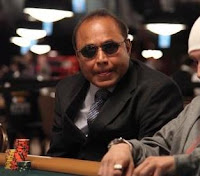
    Doshi SureshOne phenomenon that seems to take place at every WSOP tournament -- even a relatively prestigious one like this here $40K NLHE event -- is for a player to make an especially deep run who obviously had little expectation of doing so. Yr basic “sleeper” story, if you will. Being a reporter on the sideline, I sometimes will get to interact with such a player as he or she checks in with us regarding his or her current status in the event.

    This is always kind of fun and inevitably makes me want to pull for the person to succeed. Yesterday the player filling that role was Doshi Suresh, who lives in Las Vegas and who until this week only had a couple of small cashes in a WSOP Circuit event four years ago. In fact, the buy-in for this tournament rivals his total career tourney earnings (just a little over $60K).

    Before play began yesterday, Suresh -- stylishly dressed in a suit and tie -- came over to ask where he stood among the 89 remaining players. He had an above average stack, which put him about 40th or so. He also wanted to know how many places paid (27) and what the payout was for 27th. He checked back with us a couple more times during breaks as the day wore on. He seemed surprised when I told him with 36 players left that he was still in good shape (about 15th), his expression communicating a kind of reserved excitement about the prospects of actually cashing in this sucker.

    He made it, and in fact to start today is sitting in right in the middle of the pack in 11th place with 23 left. After play had ended on Friday and all of the players had gone, a couple of gentlemen approached my station and asked if I perhaps knew if a player named Doshi Suresh was still in the event. When I told them he’d made it to the cash, both were ecstatic. “How much... how much?” they asked. “What is the least he can win?” I told them he’d guaranteed for himself a payday of $71,858 thus far, and their smiles widened.

    I’m romanticizing all this a bit, I’m sure. Couple of Suresh’s backers, no doubt, gleefully learning they actually were looking to get something back on a highly uncertain investment. Still, kind of cool to witness.

    A Different Kind of Sleeper Story

    ZZZWe had a one-hour dinner break last night (as opposed to 90 minutes). I believe there were 44 players still in the event at that point, and 43 of them made it back for the first hand of the new level following the break. The only empty seat belonged to Ted Forrest. At first it was thought maybe he misunderstood the length of the break, but after an hour had passed -- and a good 20% of his stack had been blinded off -- people started to worry.

    At one point Layne Flack was in the area -- not sure exactly why, but he was enjoying goofing around with the head-turning Lacey Jones while she was trying to do her one-minute update video for the WSOP website. Flack wandered over and started to say how he needed a cell phone... did anybody have a phone he could use? Eventually we figured out he was looking to call up to Forrest’s room to see what was up.

    As we moved into the second hour of play without Forrest, we’d just started to get to the point where darker thoughts began to creep into our minds about the missing player. Something had to have happened. We’re approaching the money bubble of a poker tournament in which 27 players are looking to divide up an $7.7 million prize pool here. Had to be something serious, right?

    Not really. He had been sleeping. Had settled into the comfy hotel bed for a power nap and didn’t hear the alarm. “Are we in the money?” Forrest asked, rubbing his eyes as he rapidly walked back to the table. Change100 wrote the post about Forrest’s adventure and return, giving it the inspired header “Run, Forrest, Run!”

    Moneymaker Misses the Money
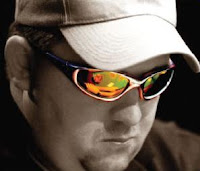
    Chris MoneymakerNot long after Forrest returned, he began getting involved in pots right away and ended up building a nice-sized stack by night’s end. He’s currently in second place with 2.58 million, just behind Justin Bonomo who has 2.67 million.

    Some of those chips Forrest accumulated came from Chris Moneymaker’s stack. Moneymaker started the day with 805,000 (2nd of the 89), and while he never really increased his stack he was sticking around the 600,000-700,000 mark for most of the day until things fell apart for him after the dinner break.

    A huge hit came when Tony G won an all-in race versus Moneymaker with A-K versus Moneymaker’s pocket queens. The flop was safe, but a king rolled out on the turn, prompting a Tony G fist pump as he exclaimed “Yeah baby. Feel the powah!” A much-deflated Moneymaker simply stated “you are blessed, sir,” resigned to losing yet another late-tourney race.

    Not long after that hand, Moneymaker got it all in with pocket tens only to run into Forrest’s K-K. Moneymaker actually walked away from the table as soon as he saw Forrest’s hand, and was passing in front of us in press row on his way out of the Amazon Room as the community cards were being dealt. Might have been a good thing he left, as both a king and a ten flopped. Would’ve been too much to bear, probably. If the case ten had come, they’d be chasing him down the hall to return, but it didn’t, and Moneymaker was out before the cash.

    I was saying yesterday how I couldn’t help but pull for Moneymaker to do well in this one, a sentiment shared by a number of others with whom I spoke. His was the biggest “sleeper” story of them all, really, and we all continue to be affected by it. Additionally, I think a lot of us still identify with him somewhat -- even having scored the big 2003 ME win, he continues to be the underdog. And most of us know what that’s like, I think.

    You gotta know ESPN was hoping Moneymaker would make this televised final table. Greg Raymer is still there, and he has a lot of chips, too. Probably doesn’t matter, though, which nine emerge from these 23 -- it’s going to be a stacked FT, no doubt.

    * * * * *

    Another great shot by B.J. NemethI’d said yesterday I wanted to pass along some links to other sites for following the WSOP. Turned out I was much too busy during our short break last night to do so.

    Today I’m thinking I don’t even want to get too involved with trying to compile such a list. Most of you reading this blog know where to go for yr WSOP info, anyway. However, do allow me to point you to one site some of you may not know about -- the photo blog that B.J. Nemeth is compiling over on PokerRoad.

    I’m seeing B.J. each day and watching him work as he seeks out the best shots, attempting to narrate via pictures what’s happening at the Rio. That photo above is a greatly reduced shot of one of the tables at Event No. 2 yesterday -- click on the picture to go to the PokerRoad site, then scroll down to see the full image. And go ahead and bookmark B.J.’s page now, why dontcha?

    While yr at it, make a note of PokerNews’ Live Reporting page, too (where I’ll be).

    Labels: , , , , , ,

    Friday, May 29, 2009

    2009 WSOP, Day 2: Back in the Saddle

    Back in the SaddleWas talking on Tuesday some about the debate regarding the decision to kick off (essentially) this summer’s World Series of Poker with that $40,000 buy-in “Special 40th Annual No-Limit Hold’em” event (Event No. 2). While doing so certainly meant we’d be seeing a lot of big names and probably some better-than-average poker right off the top, was it wise, overall, to begin this way?

    Would the $40K event be able to match the hype suggesting that we should expect the single greatest collection of no-limit hold’em players ever to compete for a WSOP bracelet? Would it necessarily create a let down (of sorts) once the event ended and most media types went away until July when the Main Event begins? Would it negatively affect turnouts for subsequent tourneys, given that a number of players were necessarily going to start out the WSOP $40K in the hole? And what if the turnout for this one fell short of expectations -- would that stifle early momentum for the Series as a whole?

    As we reported over on PokerNews sometime during the middle of the afternoon yesterday, a total of 201 players ended up playing the $40K. Felt a bit anticlimactic at the time, although to be fair, earlier this month WSOP officials were projecting only 150 entrants in that WSOP Staff Resource Guide. Easy to say this morning, but 201 seems just about right, all things considered, and I’m going to guess officials are probably pleased they did manage to cross that 200-player mark.

    Covering the WSOP, the Sequel

    Covering the WSOP, the SequelOur coverage of the day’s play over on PokerNews went reasonably well, I think. Kind of a challenge on the media side, too, to kick things off this way with what will ultimately be one of the more closely watched events of the Series.

    Even with a relatively small field of 201, it is still a mighty trick to provide something resembling comprehensive coverage of what is going on, regardless of how big or small your crew happens to be. Some, I know, would like hand-for-hand accounts from every table, but that just ain’t gonna happen. And until the WSOP decides to issue name tags or create some other process by which all players are immediately identifiable, there is always going to be a lot of extra energy expended on Day Ones just trying to figure out who the heck is in the seats.

    Of course, in this particular event, we had some advantages that we won’t have in later events. I’d estimate the members of our crew collectively were able to identify a good 75-80% of the starting field of Event No. 2 by sight, including several of the online pros whose faces -- and real names, even -- aren’t as widely known. Lists of starting seat assignments were distributed for this one, although like any such product created by humans, they weren’t error-free. But we had a nice head start, and it helped. Gonna be a bit harder once we get to those 2,000-plus player donkament fields, for sure.

    Was fun to get back into the reporting. I was stationed in a corner of the media press box, on the front row, although now and then I’d climb out of my perch and get out on the floor to gather my own hands and/or color. For various reasons -- including the fact that for some events I’ll be working with fewer colleagues this time -- I’ll probably be doing a lot more of that this summer that last.

    One big difference for me this year was the fact that having done it before, I was missing that large supply of adrenaline that comes from novelty. Our day began about 11 in the morning, and so once we crossed midnight and into that 14th hour, fatigue was setting in. Don’t really remember that being the case last year, when everything was brand new and thus stimulating enough to keep all systems on high alert until well after I’d pulled the rental car out of the Rio parking lot during the wee hours each morning.

    The Moneymaker Effect, the Sequel (?)

    Chris MoneymakerThen again, as any poker player well knows, there’s a certain novelty to every tournament -- or session, or hand -- that keeps us engaged, curious, even fascinated. I, for one, am fairly intrigued by the fact that Chris Moneymaker is near the chip lead heading into Day 2.

    “Moneymaker's here? Really?” I recall hearing someone say that early on Wednesday afternoon, expressing incredulity that he would be part of the elite field. But there he was. And he more than held his own. I didn’t see much of Moneymaker’s play yesterday, but did notice his stack steadily growing from beginning to end, ballooning from the 120,000 with which they started up to the 805,000 he had accumulated by the end of the night.

    As players were bagging their chips about 1:30 this morning, I was watching Moneymaker seal his bag, write the amount on the side, then drop it on the table. He started to step away, but then reached over and picked it up once more, holding it aloft with one hand and cupping the other underneath as if to estimate its weight. He might have just been making sure the bag was fastened properly, but to me it almost seemed like the 2003 WSOP Main Event champ was taking a moment to appreciate an especially productive day’s work.

    That sort of thing is important, you know. Being able once in a while to have the sense that you’ve done something well -- to take pride in your own achievements, regardless of what others might be saying about you. ’Cos really, in the end, that’s all that matters. As the existentialists will tell you, you make your own meaning.

    I’ll admit I’m pulling for Moneymaker to keep it up today. And as some of us were discussing up in the media box yesterday, it would certainly be interesting should he actually go deep or even take the whole thing down. How would that play, ultimately, both in the poker community and elsewhere?

    Looking Ahead

    The start of the 2009 WSOP scheduleAs this is a four-day event, we believe the plan today will be to play down to the money -- i.e., to 27 players -- which could mean a relatively shorter day for those us assigned to the event. On Saturday they’ll play down to nine, then Sunday will be that final table, the only bracelet event other than the Main Event that will get the full ESPN treatment.

    The only other event on the schedule today is Event No. 3, the $1,500 buy-in Omaha Hi-Low Split-8-or-Better event. They’re projecting 916 entrants for Event No. 3 (in that Staff Resource Guide). I’ll go ahead and take the under on that one, although there were quite a few O/8 cash games going in the Rio last night, perhaps suggesting the game’s rising popularity. (They were able to finish up that Casino Employees Event last night, with Andrew Cohen winning the first 2009 WSOP bracelet.)

    I guess I’ll go ahead and make some Fantasy Poker picks for Event No. 3 (in that Full Tilt Poker contest thingy I was mentioning yesterday), although it’s going to be hard to find 15 players among the 300 from which to choose who will even be entering this one.

    How did I do with my picks for Event No. 2? Let’s see....

    Of the 15 players I chose, four did not enter the event: Jacobo Fernandez, Cole South, John Phan, and Mark Vos. Of my remaining 11 horses, only three busted (Andy Bloch, Phil Hellmuth, and Greg Mueller), meaning I have eight players still in the running, four of whom were on my “A” team. Here’s who I have left, with their chip counts in parentheses: from my “A” team -- Phil Galfond (443,000), Nam Le (359,500), Sorel Mizzi (431,000), and Kirill Gerasimov (149,000); from my “B” team -- Justin Bonomo (738,000) and Antonio Esfandiari (292,500); from my “C” team -- David Benefield (70,500) and Brian Townsend (609,000).

    The average chip count heading into Day 2 is about 271,000, I believe, so of these only Gerasimov and Benefield are hurting at the moment. Bonomo is near the chip lead, and if I had to pick one of these guys to make the final table, he’d have to be the one (with Galfond my second choice).

    Am going to try to post another little something later in the day pointing you guys to some of the other sites I’d recommend following if yr interested in all things WSOP. Gets harder and harder for me to keep up with all of the blogs and podcasts when faced with these fourteen-hour work days, but I do have a few faves I am going to still try to check in on now and then, and wanted to pass those along.

    Besides, of course, PokerNews’ live reporting, which cranks back up this afternoon. See you over there!

    Labels: , , ,


    Older Posts

    Copyright © 2006-2021 Hard-Boiled Poker.
    All Rights Reserved.