Tuesday, February 07, 2012

Subject:Poker Signs Off

Subject:PokerAfter about nine months and a little over 70 articles, the investigative news site Subject:Poker has decided to call it quits.

Started in May 2011 as a conscious response to an apparent void created by other poker news sites, S:P presented itself as an independent outlet dedicated to reporting on items of interest to the poker community without bias. As noted in an early post announcing the site’s launch, S:P accepted no advertising from “gambling institutions and their affiliates” so as to eliminate even the perception of influence when reporting on those institutions. That post also explained how its founders, Thomas Bakker and Noah Stephens-Davidowitz, had “no expectation of profit from this site, nor do any of our reporters, nor do any of us have other affiliations that might taint our motivations” when reporting for S:P.

From the start, the site’s motto was “Poker News Done Right,” an obvious jab at other poker news sites that had failed to report on certain scandals, Black Friday-related matters, or other items of significance in poker or had reported on those items in ways that were tainted by various motivations (such as the desire to retain particular advertisers) or at least perceived to have been influenced so.

The site gained a lot of attention during its brief run thanks to several “breaking” stories about the Black Friday indictment and civil complaint, a few articles related to the small U.S.-facing sites that remained after the big ones left, Full Tilt Poker’s spectacular fall to go offline entirely and become subject to additional allegations by the DOJ, reports about the efforts by FTP to find a buyer including the eventual emergence of Groupe Bernard Tapie, as well as other items including occasional interviews with and profiles of prominent figures in the stories on which they were reporting.

Contacts with various “insiders” -- particularly within Full Tilt Poker and even the Department of Justice -- allowed S:P to report certain stories that other sites could not, although in many cases those articles had to be filed with the sources either listed as “anonymous” or without particular reference.

Breaking News!A recent report on “Chris Ferguson’s Secret FTP Bank Accounts and Threats to GBT Deal,” for example, reported a number of provocative statements without much indication of how they had been verified other than to refer obliquely to “multiple sources” confirming items or “one source, whom we believe to be credible” adding information.

Occasionally the site would report on items that caused some to wonder about its self-professed lack of agenda or bias. And every once in a while there would appear posts that raised questions about journalistic ethics, such as last September when the site reported that “‘DOJ Plans Action Against Merge.’”

The headline of that article appeared as a quote, although no attribution was offered in the article which began “Subject:Poker has recently been told....” The story reported that the U.S. Attorney’s Office for the District of Maryland was about to seize assets of payment processors Merge had been using to serve U.S. customers. The report severely affected the traffic at most Merge sites, which in turn had other consequences throughout the industry (including upon other poker media). When no action followed by the DOJ -- a possibility accounted for in the article -- some speculated that the mere appearance of the article might have had some significance in affecting the DOJ’s plans.

Another story from late July reporting “FTP’s Financial Relationship With Two Pros” similarly raised eyebrows by its inclusion of information learned after gaining “access to [Phil] Ivey’s and [David] Benyamine’s account history on Full Tilt’s internal systems.” Among what was reported there, we were told Ivey had borrowed money from FTP a total of 18 times for more than $10 million, about half of which he had paid back. (We have learned in recent days that several other pros -- not all FTP-affiliated -- allegedly borrowed significant sums from the site as well.)

Such stories provide a couple of examples of how Subject:Poker sometimes itself became “poker news” during its brief run -- i.e., while reporting on the news occasionally also being part of the story. In fact, the site rarely reported “poker news” stories that were not somehow “exclusive” thanks to having special access to individuals with information other sites lacked. Thus a lot of the stories often provoked commentary and response both about the content of the articles and about the methods by which that content was obtained and provided.

As a result, the site enjoyed considerable influence, although in the end I think those involved might have found running S:P overly stressful and/or unrewarding (not just financially speaking) to continue. I’m just speculating here, but that is a sense I got from hearing Noah Stephens-Davidowitz interviewed a few times and reading some of his frequent posts as “NoahSD” on Two Plus Two.

As noted in their “Goodbye” post, Stephens-Davidowitz and fellow founder Thomas Bakker are starting a poker security consulting company, which may well be a good fit for them. Indeed, I believe it was after doing similar security-related consulting work for an online poker company that the idea for the S:P site initially arose.

Subject:Poker took as a motto 'Poker News Done Right'I’ll admit I was always a little cynical both about S:P’s claims to objectivity and that “Poker News Done Right” motto. With or without advertisers’ pressure (real or perceived), it is hard for anyone to report on anything without at least some bias, particularly when reporting on the types of stories S:P chose to pursue. And while I don’t disagree with the complaint that many poker news outlets -- often primarily for financial reasons -- haven’t reported as thoroughly as one might wish on certain stories (especially Black Friday-related), I also wouldn’t dismiss such sites as entirely without value or suggest they don’t “do poker news right” from time to time.

That said, S:P’s decision to step aside is worth noting, especially among those of us who find poker news relevant and/or interesting. As is the site’s unique contribution to our understanding of what exactly is happening with regard to the current legal machinations and other items of importance in the poker world, especially online poker.

Labels: , ,

Monday, February 06, 2012

Logic and Emotion, Poker and the Super Bowl

Ahmad Bradshaw backs into winning TDLike many of you, I, too, watched with interest Super Bowl XLVI last night. Didn’t have a particular favorite in the game, nor did I bet on it in any fashion, other than to enter a fantasy team in the Draft Day freeroll, that is. But as a fan of the NFL I was nonetheless riveted from start to finish by yet another dramatic, highly engaging game that literally came down to the final play.

Since the game represented a rematch from four years ago between the New York Giants (again, technically, an underdog) and the New England Patriots -- and since the game turned out quite similarly to Super Bowl XLII in which a late score by the Giants stole the lead from the favored Pats to deliver New York the win -- most of the post-game talk is understandably involving comparisons to the earlier game.

For me, though, the Super Bowl I was remembering most vividly as I watched this one play out was the one in which my Carolina Panthers came up just short versus New England back in early 2004 (Super Bowl XXXVIII).

Remember that one? For some, the game will be forever remembered as the “wardrobe malfunction” Super Bowl. But it was also probably the most friggin’ exciting football game I’ve ever watched, punctuated by a frenzied fourth quarter in which the Panthers scored three touchdowns, New England scored two, with the Pats tacking on a game-winning field goal with four seconds left to seal a 32-29 win.

Despite himself, Ahmad Bradshaw scores the game-winning TD in Super Bowl XLVIWhile last night’s game didn’t have the rush of scoring at the end, there was a similar up-and-down, roller-coastery feel to the second half, with New England appearing on the verge of crushing New York, the tide of momentum then turning the Giants’ way, then that truly wild sequence near the very end in which the Giants didn’t want to score and the Pats wanted them to score, and thus the go-ahead touchdown was made almost despite the effort of Ahmad Bradshaw to stop his forward progress at the 1-yard-line before he fell back into the endzone.

Actually, that particular play -- in which New England allowed New York to score the go-ahead TD in order to get the ball back with sufficient time to try to score themselves -- recalls one from the end of Super Bowl XXXII when Green Bay let Denver score the go-ahead TD with a little under two minutes left in order to get the ball back with time to try to match the Broncos’ touchdown. The Packers couldn’t do so, however, and Denver won 31-24.

That decision by New England to let Bradshaw score will no doubt be the focus of much debate and commentary during the off-season. I can understand the argument against having done so. Given that New York apparently wasn’t looking to try to score a touchdown and thus would’ve played along, the down and timeout situation added up to New England either winning the game on a missed Giants field goal (very unlikely) or getting the ball back with less than 30 seconds left down by a point.

Instead, New England chose to let the Giants score that TD to go up by more than a field goal and thus got the ball back with about a minute remaining needing to score a touchdown, which meant driving 80 yards in a handful of plays in order to win. And that’s the path they took. To clear a path.

A clear path to the endzoneNeither option was particularly attractive for the Pats. The chance of a missed Giants field goal was close to zero (say 5%?). And if they held NY to that go-ahead FG, the chance of hitting a couple of big plays (i.e., totaling 50 yards) to set up their own long winning field goal was also slim (perhaps 10-15%?). Meanwhile, driving 80 yards in just under a minute with one timeout left was probably no better than a 20-25% shot or so (at best).

I’m sure somebody has already crunched the numbers so as to produce exact percentages on all of these, but we don’t really need precise figures to know it was not an outrageous decision to let the Giants score. Or to understand that the Pats were in a pretty desperate spot at the end, no matter how they chose to play it.

Talk about a poker-like decision, though! So many possible analogies to draw to describe what was going on, the most obvious being the way it resembles deciding to fold and concede one hand in order to preserve enough chips to battle for the next one. As the Giants mounted that final drive, it really felt like a heads-up battle in which one player had seized the momentum and suddenly had a significant chip lead, one that ensured the other was going to need to double-up more than once just to have a chance to win.

In any event, it was a thoroughly exciting game to watch. And unlike that Panthers loss from eight years ago, I was able to enjoy the strategic thinking and execution without all the associated anxiety and stress that stems from having a strong rooting interest.

Labels: ,

Friday, February 03, 2012

Playing By a Different Set of Rules

The rules don't apply to meWorked on a couple of different poker-related stories this week that shared kind of a common theme. Both involved people in power -- who, not coincidentally, were people with money and/or access to money -- enjoying considerably greater freedom and influence than the rest of us poor saps (jingle-brained and otherwise).

One appeared over on Epic Poker, an entry for my “Community Cards” column on poker and pop culture that was inspired by the current presidential election. As we watch the Republicans continue with their debates, primaries, and caucuses in an effort to determine who will be their nominee to run against President Obama in November, I was reminded of an old story about another election in which Republicans were also trying to decide upon a nominee, this one for a U.S. senate seat in Minnesota back in the 19th century.

The story appears in a neat 1899 collection of poker tales by David A. Curtis called Queer Luck and describes how two backers of opposing candidates found themselves pitted against each other in a high-stakes poker match.

'Queer Luck' by David A. Curtis (1899)Eventually a five-card draw hand develops in which both pick up huge hands and after betting all of the money they have decide to add another, curious element to the pot -- namely, the promise of one that he’ll leave the state until the nomination and election is over so as not to be able to use his financial influence to promote his candidate.

You can find out what happens in the column, titled “When a Poker Party Influenced a Political Party.”

The other story concerned the recent headlines coming out regarding Full Tilt Poker, including those having to do with ongoing efforts to finalize that deal whereby Groupe Bernard Tapie will be taking over the site.

You’ve certainly been following these stories, too, including the one from last week in which Subject:Poker alleged Chris Ferguson and his lawyer, the appropriately-named Ian Imrich, were seeking payment of about $14.3 million from FTP, with the article suggesting the situation could possibly threaten the deal from being completed. Both Imrich and the GBT lawyer have since refuted S:P’s take on the situation.

Then yesterday Matt Kaufman (a.k.a. PokerSmell) of PokerStrategy shared another very curious bit of news regarding GBT’s lawyer saying Full Tilt Poker is actually owed “between $10 and $20 million” by several pros, including Team Full Tilt guys (Phil Ivey, Erick Lindgren, and Mike Matusow), ex-red pros (Layne Flack and David Benyamine), and perhaps most surprisingly, Barry Greenstein (of PokerStars).

Kind of an odd juxtaposition of stories, with one involving FTP apparently owing a pro and the other concerning players owing Full Tilt. I delved into all of it for a feature over on Betfair that went up today, titled “More Full Tilt Poker Headlines for Players to Fret Over.”

In any case, both of those stories highlight the extreme difference in status between the guys with money and/or access to it -- and the resulting freedoms and influence such status provides -- and the rest of us.

Wimpy's dealWith regard to the FTP situation, I realize certain individuals are obviously at greater fault than others, but I still can’t help but be enormously peeved at the idea that pretty much all along there were those who were able to borrow hundreds of thousands from the very site on which they then played with the money. Never mind the fact that we now know thanks to FTP’s failure to segregate operating expenses from player accounts that the money being loaned to these players came (essentially) from our accounts!

Anyhow, click on those links above for a couple of poker-related stories about corruption and injustice. And about how whenever there is money and power involved, there is generally always going to be a lot going on that is well hidden from the view of most.

Labels: , , ,

Thursday, February 02, 2012

On Endings, Wished For and Otherwise

Hands on the keyboardOver the last eight months or so, I’ve been gradually working my way through a draft of a new novel. Started with an idea back in May, something I originally thought might be just a short story. But the sucker gained momentum and by the time I made it to the World Series of Poker in mid-June I already knew it was a novel-length puzzle I had given myself to try to solve.

That trip, followed closely by another to LAPT Uruguay, introduced what amounted a two-month break from the fiction writing. But I got back to it and have steadily pushed through to where I am now looking at just a couple more scenes to go before I can say the draft is done and begin the work of revising.

I was realizing over the last few days how a small part of me doesn’t want to reach the end of the draft. That is to say, while I have known for some time how the story is going to end, not knowing precisely how I was going to get there allowed me to indulge in the fantasy of my novel having a kind of limitless potential -- that there was still time to include all sorts of scenes or characters or allusions or what have you.

But now that the end is nigh, I’ve started to accept that my options are becoming fewer as far as introducing new elements is concerned. Sure, when I revise I already know of a few new items that are going to have to be brought in as part of the story. But it’ll no longer be a “no-limit” game then, given the considerable constraints of the plotting already in place.

I used to play poker in a similar fashion, not wanting a session to end no matter how long I’d played, or even how the session was going. But more and more I’ve found myself cutting sessions short. In fact, it has gotten to the point sometimes that I find myself starting to think about leaving even during the first orbit of hands.

Congratulations you have been awarded coupon VIP Cash Rebate and your wallet has been credited with $0.02There are several reasons for this change of attitude or lessening of enthusiasm about playing or whatever you want to call it. One, in fact, is that I’ve often preferred to work on the novel than to play.

Also, being relegated to sites with fewer options for game selection, not to mention having to stick with the micros (thanks to my unwillingness to deposit), has made the idea of sitting down to play less inviting. This recent VIP Cash Rebate I earned on Carbon -- for two whole cents! -- is a good indicator of how little time and money I have been investing trying to build my small roll on the site.

Another factor may be simply that the novelty of playing online has long since worn off, too. The “stories” poker used to provide me on a regular basis have mostly gone away or become less interesting. There was a lengthy stretch when I’d play a decent number of hours every week and almost always be guaranteed to come away with some interesting anecdote or hand or something that I would subsequently write about here. But things that are happening at the tables these days just aren’t as inspiring, I’m afraid.

Which is why I go back to the novel. Like Same Difference, it’s a murder mystery, although the protagonist is not a detective. Nor is the story especially “hard-boiled” or as licentious as was the case in the first one. Oh, and again, no poker.

Like I say, the finish line is in sight as far as the draft goes, and I’m hoping to get through the revising and have it out into the world by the spring. At which time we’ll see what new games there are to play.

Labels: , , , ,

Wednesday, February 01, 2012

No November Nine, But Delay Remains for WSOP Main Event

2008 November NineF-Train was the first I remember mentioning last summer how the November Nine -- that four-year long experiment tried by the World Series of Poker to delay the Main Event final table nearly four months from the start of the tournament -- might not be returning again after 2011.

He noticed early on how the move to “almost live” coverage of the Main Event kind of ran against one of the original reasons for the delay, namely, as a means to build interest in the tournament for a close-to-simultaneous presentation of the ME’s conclusion in November.

Indeed, when the prepackaged shows dedicated to telling the story of the Main Event saw a precipitous drop in ratings during August, September, and October from previous years, some pointed to the “almost live” shows back in July as having perhaps negatively affected the size of the audience for the later, edited shows.

2009 November NineThere were certainly other reasons, too, for the drop in numbers, but by the time we got around to November and it was announced that every single hand of the final table was going to be shown in the same “almost live” format, it really did seem as though the whole November Nine concept had perhaps run its course.

In fact, our buddy Kevmath kicked off the conference call we had a few days before the November Nine with that very question, alluding to WSOP Communications Director Seth Palansky’s comment in a PokerListings interview that having both the delay and the sort-of-live coverage “doesn’t quite work.”

There were no WSOP folks on that call, and so only Doug White, Senior Director of Programming and Acquisitions for ESPN, was able really to address the issue. White suggested the delay still had a place insofar as it helped contribute further to “the pomp and circumstance that you get around the final table in November.” Even so, by then many observers were starting to believe we were about to see the last November Nine.

2010 November NineThose suspicions appeared to have been confirmed yesterday when the WSOP cheekily hinted over Twitter that the November Nine would not be part of this year’s schedule.

Initial reactions to the apparent end of the November Nine experiment were mixed, with many seeming to say that while they opposed it at first they eventually came to like the format and were sorry to see it go.

I remember way back at the start of May 2008 when the idea was first announced -- at a relatively late date, if you recall -- I was strongly opposed to the idea as affecting too greatly the overall integrity of the most important tournament in poker. Fired off a few posts suggesting as much, including one titled “Nine Players in Search of a Final Table” and another with the angry-seeming header “The WSOP Main Event: Birth, Build-Up, Boom... Bastardized?

2011 November NineWhile I have eventually come to enjoy certain aspects of the unique (if artificial-seeming) narrative arc created by the delay, I still haven’t entirely accepted the idea of building a whole, strange four-month long “season” out of a two-week long tournament.

As it turned out, when the WSOP finally turned over its hand today we discovered that tweet from yesterday was in essence just some misleading table talk -- in fact they will be keeping the delay in 2012. Indeed, the November Nine is (technically) no more. But that is only because the sucker has been moved earlier to the end of October so as to avoid coinciding with this year’s presidential election.

For details, check out the official 2012 schedule released by the WSOP today. I have to admit I’m a little disappointed to see F-Train’s early suggestion -- subsequently echoed by many -- not coming true and the delay remaining part of the WSOP Main Event schedule.

Four years is a long time in poker, though. More than enough to create the impression of a “tradition.” And so to alter that now would probably seem almost as incongruous as it did when the idea was first introduced.

Labels: , , , , ,

Tuesday, January 31, 2012

Poker Turning the Page

Card Player magazines, 2007-2011Bill Rini offers us a good read today with a post titled “The Death of Poker Media?” There Bill comments at length about how poker publications like Card Player have clearly been affected significantly by Black Friday and the sudden down-sizing of online poker in the U.S. that happened in its wake.

Bill’s post reminded me of one I wrote last May titled “On Spines, or the Lack Thereof” in which I noticed how Card Player had swiftly reduced in size after losing PokerStars, Full Tilt Poker, and UltimateBet/Absolute Poker as advertisers.

In that post I remarked on how it had taken a few issues of Card Player for there to be any comment whatsoever on Black Friday, and when they finally did get around to mentioning it -- only briefly, in the issue dated May 24, 2011 -- it just so happened that was the issue in which the advertising from the indicted sites had stopped. (The fact that the new issue didn’t have a spine but was stapled together encouraged the pun in the title.)

Bill noted in his post that he’d picked up a recent issue of Card Player (dated January 25, 2012) and saw it was a mere 68 pages long, less than half of which contained actual content (i.e., features, strategy articles, etc.). In fact, that issue from last May -- the first one without a spine -- was also just 68 pages, so CP in particular has been scaled down for quite a while.

Having also noticed how the content being provided had slowed to a trickle, it was late last year I finally let my subscription to Card Player run out after many years. Actually the slimming down of the magazine had been happening pretty much over that entire stretch, starting with the signing of the Unlawful Internet Gambling Enforcement Act of 2006.

I still have all of my old issues of CP and so can quickly confirm what Bill is noting in his post about the lack of heft in the new Card Player compared to the good old days. The first issue of 2006 was 164 pages long, more than twice the number of pages of today’s Card Player. And observing the number of pages in the first issue of each year since further reveals the trend: 2007 (156 pages), 2008 (148), 2009 (112), 2010 (100), and 2011 (84).

Other poker-related print publications are struggling, too, of course, and Bill does a good job outlining how too great of a reliance on online sites’ ad revenue and the affiliate game help explain a lot of the wasting away that has occurred. As Bill points out, all poker media outlets are necessarily having to adapt to new circumstances in order to survive, let alone thrive.

I don’t think poker media’s “death” is necessarily imminent, although the future of print publications is understandably highly uncertain. Such is the case for much of print media, generally speaking.

Still, it is interesting to consider how the physicality of the magazines covering our favorite game -- not even their content, but how they feel in our hands -- can be said to provide a kind of literal marker of the game’s currently embattled status.

Labels: , , ,

Monday, January 30, 2012

Stranger Than Fiction

Quad jacks beat quad nines in my 'Poker in American Film and Culture' classI mentioned last post (on Friday) my “Poker in American Film and Culture” class, as well as another class taught by Professor Bruce McCullough over at Drexel University, titled “Poker, Probability and Decision-Making.” When I spoke with Bruce about his class, we talked about various teaching strategies, including the relative usefulness of having students actually play some poker in our classes.

If you take a look at our Betfair poker interview from last week, you’ll see us discussing the various topics Bruce’s course covers, including probability, expected value, Bayes theorem, odds and outs, Sklansky's Fundamental Theorem of Poker, decision trees, expected utility, prospect theory, bankroll management, and more. You’ll also see Bruce describing having set up weekly tournaments online for his students to play, and really it made a lot of sense to me that he had them playing poker as a way of immediately applying various ideas from their course.

In my course, I have the students play a session of poker in class just one time early on primarily to help them understand the rules of the various games -- draw, stud, and hold’em -- that we’ll be reading about and watching being played in films. Not everyone who signs up for the course is a poker player, and indeed even those who are don’t always have a lot of familiarity with five-card draw or other variants.

I mentioned this strategy here a few months ago, sharing an especially boring handout I provide the students detailing the rules of the various games. Knowing that actually handling cards and chips and having to play hands can be much more instructive than simply reading a sheet describing the rules, our little session does a good job getting everyone at least somewhat familiar with the games.

Last week we met for the second time and so as I’ve done before we went ahead and had our day of playing poker in class. I shared on Twitter last week a remarkable seven-card stud hand that occurred in which two students put in a number of bets to force others to fold, and by the end both had incredibly drawn four of a kind. One had quad nines and the other quad jacks.

We all marveled at the hands, and I tried to convey just how unlikely it was for this to have occurred. After all, I was introducing the game to just about all of them, so most had no frame of reference to help appreciate just how crazy a hand it was. I insisted on taking a picture (see above), just to chronicle the moment.

“What are the odds?” I was asked, and I had to tell them I didn’t know. I’ve seen a couple of different attempts to calculate it, both coming up with different yet similarly long odds against. (If any math-minded folks want to work it out exactly, please do -- my students and I would be grateful.)

One reason why I want to make sure the students realize quads over quads is hardly an everyday occurrence is because we are going to be reading a number of stories and watching some films (both clips and entire features) in which these sort of improbable hands are fairly common -- e.g., straight flush over straight flush, four aces over four kings, etc.

In many cases, cheating helps create these unlikely hands, though not always. Of course, we might say that cheating always creates these hands in the stories we read -- that is, either the characters are cheating or the author is “cheating” (in a way) by giving the characters such hands.

But in reality, hands like the one we had in my class last week just don’t happen. Pro player Joe Tall was telling me last week he’d never seen quads over quads in 7CS live, and perhaps once in ten years’ worth of playing online (including 1-2 years of full-time play online).

Quad jacks beat quad nines in 'The Sting' (1973)So I’m preparing today’s class during which I’ll be showing a few different film clips, including the great scene from The Sting in which Gondorff outcheats the cheater Lombard aboard the 20th Century Limited. And as I was looking over my notes and thinking about showing the scene to a new group, I realized what hands are turned over at the showdown.

Quad jacks over quad nines!

A different game (five-card draw), but the same hands as my students last week! Now what are the odds of that?

Labels: , , ,

Friday, January 27, 2012

Teachers Talking Out of School

TeachersOne of the neat consequences of teaching my “Poker in American Film and Culture” class has been getting contacted by others with an interest in the course and/or who are themselves teaching college classes in which poker has a place.

Recently I ended up starting a correspondence with a fellow named Bruce McCullough who has taught a neat honors course over at Drexel University called “Poker, Probability and Decision-Making.” He sent me his syllabus and I sent him mine, and we ended up exchanging a few messages before I suggested possibly interviewing him for a Betfair poker column.

He agreed, and today the interview was posted. His class looks very interesting, and he really makes a great case for how poker serves as an excellent tool for learning about probability and decision-making. His own story about how he got into poker is quite fun, too.

If you’re interested, go check out the interview, titled “Poker in the Classroom: Teaching Probability and Decision-Making.” I’m now imagining perhaps eventually taking to other folks teaching courses involving poker and having a little series of “Poker in the Classroom” interviews with them.

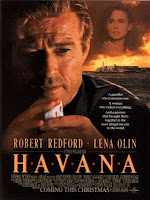
During our exchanges Bruce recommended the 1990 film Havana to me as one I might want to consider including in my course. It’s an interesting and entertaining film starring Robert Redford as an American poker player named Jack Weil who finds himself kind of caught in the middle of the last days before the Castro revolution in Cuba at the end of 1958.

'Havana' (1990)I ended up writing about the film this week over on the Epic Poker blog for my “Community Cards” column where I talked about the way it uses poker to flesh out Jack’s character. I also noted how there seemed to be a connection between poker and American identity being advanced in the film, with Jack -- the supposedly non-political American only interested in playing cards -- getting caught up in the revolution thanks largely to his attraction to a woman.

The movie also has more than a few parallels to Casablanca which make it even more interesting to those of us who are fans of that film. I talk some about that as well in the “Community Cards” piece, but one item I don’t mention there is the fact that Jack owns some high-level textbooks on probability. Bruce found that detail quite interesting, as you might imagine, and so back over in the Betfair piece I asked him a little about that at the end of our conversation.

So if any of these things interest you -- college courses involving poker, the subjects of probability and decision-making, the film Havana -- click them links above and let me know your thoughts.

And if you happen to teach a class that involves poker or know about one, let me know about that, too!

Labels: , , , , ,

Thursday, January 26, 2012

Ivey Showing Up Down Under

Aussie MillionsThree days of play at the Aussie Millions Main Event have seen the starting field of 659 play down to 26, with Phil Ivey (currently in sixth) being the name that stands out most conspicuously among the remaining players.

Ivey has been on the first page of the leaderboard pretty much since the start of the $10,600 (AUD) Main Event. After the first three Day 1 flights, Ivey was in the top 10 overall out of the 305 players who made it to the second day of play. And he was second in chips after Day 2 with 75 players left.

Leading right now is Matt Turk with more than 2.6 million chips, about twice what second-place Tim O’Shea has. Ivey will have a little over 1.1 million when Day 4 begins a few hours from now. I believe they’ll be starting with Level 18 (1,000/5,000/10,000), with the average stack at about 760,000.

Ivey played in the $100,000 event at the Aussie Millions as well, bubbling the final table when Gus Hansen knocked him out. (That’s Ivey playing in the $100K below, as photographed by the PokerNews guys who are there covering several events from the series.) Hansen would go on to be the cash bubble boy by finishing fifth as only the top four spots paid in the 22-person event.

Ivey stayed away from the professional poker circuit for most of 2011, skipping the WSOP in dramatic fashion and stating on his website that as long as Full Tilt Poker’s many players weren’t able to cash out their funds, he didn’t feel as though he should play. At the time Ivey noted that he was “deeply disappointed and embarrassed that Full Tilt players have not been paid money they are owed,” adding “I do not believe it is fair that I compete when others cannot.”

He continued to sit out of events after the WSOP had completed, only surfacing at last in late November in Macau where he participated in the APPT Main Event while joining some of those big cash games there, too. And now he’s in Melbourne, suddenly the focus of poker world’s attention yet again.

Phil Ivey in the $100,000 Challenge at the 2012 Aussie MillionsWhile Ivey and Hansen -- a couple of Team Full Tilters -- played in that $100K event, most of the FTP crowd that participated in the $100K event at the Aussie Millions in 2011 weren’t there this time around. Exactly half of the 38 who played in 2011 were either members of Team Full Tilt or FTP red pros. This time around just Ivey, Hansen, Erik Seidel, and Tom Dwan were among those who played.

Recall also that $250,000 “Super High Roller” added at the last minute to the Aussie Millions schedule in 2011. Of the 20 who participated there, 11 were either Team Full Tilt members or red pros. It is safe to assume the turnout for that one will be smaller this year, too, when it happens this weekend.

Revelations since Black Friday have clued us all into the fact that besides having significant amounts of money seized by the Department of Justice, Full Tilt Poker additionally squandered a lot of funds in other ways, too, including (one presumes) for recompensing the site’s many sponsored players and thus -- directly or indirectly -- enabling them to play in high-stakes events such as the high roller ones at Melbourne last January.

As we all know, Full Tilt Poker players still have not been paid money they are owed. At the time Ivey made that statement, the site was still operating outside of the U.S., but went offline entirely about a month later when the Alderney Gambling Control Commission suspending its license to operate in late June.

Hopes were raised late in the year in response to news of that possible Groupe Bernard Tapie deal to purchase Full Tilt Poker, though nothing has come of that as yet. And yesterday Subject:Poker dropped another drama bomb (sans identifying sources) regarding Chris Ferguson’s various bank accounts and the efforts he and his lawyer, Ian Imrich, apparently have been taking to recover $14.3 million or so he believes he is owed by FTP.

Chris FergusonRemember how according to that September 2011 amendment to the civil complaint (discussed here) the DOJ alleged that Ferguson, Howard Lederer, Rafe Furst, Ray Bitar, and “the other approximately 19 owners of Tiltware LLC” had funneled $443,860,529.89 into various “FTP Insider Accounts” and other personal accounts? The amendment also noted how at the end of March 2011, FTP had only about $60 million on hand at a time when its players worldwide thought they had about $390 million sitting in FTP accounts.

I mentioned on Twitter yesterday how Ferguson’s lawyer having that name -- Imrich -- serves as kind of an uncanny-name-bookend to a guy named Moneymaker starting it all. In other words, when the story of online poker’s meteoric rise and staggering fall in the United States is finally told, it will begin with Moneymaker and end with Imrich.

All of which is to say, I can’t help but feel ambivalent about Ivey -- most certainly among those other “approximately 19 owners” mentioned in the amended complaint -- showing up and doing well at the Aussie Millions this week. His presence obviously adds interest to the story of the tournament, and if this deep run had happened at last year’s Aussie Millions, it would’ve been hard not to have been intrigued by yet another high-level performance by one of poker’s best.

But given what has happened over the last eight months -- and remembering what Ivey himself was saying about what he thought was the right course of action for himself back in late May -- makes it difficult to get too enthusiastic about it all this time around.

Labels: , , , , , ,

Wednesday, January 25, 2012

A Thousand Words (Or So) About Bill Simmons

GrantlandOver the last couple of months I’ve come to appreciate more and more what Bill Simmons and his collection of writers are doing over at Grantland.

I’ve mentioned Grantland here a few times, such as last June when alluding to Rounders co-scripter Brian Koppelman’s interesting op-ed that appeared on the site called “The Beauty of Black Friday.” I brought up Grantland again in late July when referring to the novelist Colson Whitehead’s novella-length account of his experience World Series of Poker that ran on the site.

And last month James McManus did a turn on Grantland to recap the “Full Tilt Boogie” in which he presented the story of Black Friday and its messy aftermath to a wider audience, so I made mention of that, too.

Poker only turns up now and then on Grantland. The site primarily focuses on in-depth analyses of sports as well as some interesting and similarly detailed essays on popular culture. Bill Simmons is the Editor in Chief and lead writer on the site. In one of those earlier posts I characterized Simmons as “some sort of superblogger, one of these endlessly passionate fans who will go on and on and on with little acknowledgment that it might seem self-indulgent or obsessive to do so.”

I wrote that about Simmons with full self-awareness that I, too, have been guilty of such self-indulgence now and then here on Hard-Boiled Poker. But I do try to be mindful of the fact that quality trumps quantity when it comes to any sort of writing, not to mention the fact that readers are much less likely to stop and read thousands of words about anything unless they are similarly passionate and/or interested in the subject.

Grantland was begun back in the spring as kind of a carve-out from ESPN (where Simmons has written for years, including occasionally about poker) to provide a space for long-form writing about sports and entertainment. And as I say, I’m coming around to enjoy the site more and more, including the podcasts.

The B.S. ReportI particularly like Simmons’ own “B.S. Report” podcast, having gotten into it a lot over the last couple of months in order to hear him talk with a variety of guests about the NFL season and playoffs.

On Monday’s show (1/23/12), Simmons was talking with the always funny Cousin Sal about how both of the conference championships that took place on Sunday interestingly turned on player mistakes that created a few more “goats” than “heroes” in the games. Indeed, while the New England Patriots and New York Giants both played well and deserved their victories, both benefited considerably by opponents’ errors that helped make their victories possible.

In fact, both contests saw late-game miscues -- a couple of fumbles in the Niners-Giants game, a muffed catch and missed field goal in the Ravens-Pats one -- that were on the flukey side. That is, they were mistakes to be sure, but it is easy to imagine them having been avoided and the outcomes being different.

Simmons used a poker analogy to explain his point further, bringing up an idea that those of us who play poker know quite well.

“I came to the realization yesterday that… there’s gonna be these NFL seasons where you have four or five or six teams that are all basically the same talent level, and then they play and it becomes a poker hand,” said Simmons. “It’s like everybody can do everything relatively the right way, but it’s still going to come down to… the last card… on the river. And I need this and you need this and our percentages are pretty much equal and then that happens and then you win.”

In terms of a given hand, Simmons is describing one of those “coin flip” situations in which all decisions have been made and players’ fates are now to be decided by whatever card peels off the deck. Both players apparently have played the hand well, and now the odds of each winning is roughly the same.

Of course, the analogy also includes a slightly different observation, namely that when two players of essentially equal skill level sit down to play poker, luck will ultimately decide who walks away a winner. (I think the latter is actually the primary point Simmons was making here.)

All of which I found interesting and relevant as part of an analysis of what happened on Sunday. I’m still a little amazed at how Simmons pours out thousands upon thousands of words each week about a given game, then invites multiple guests on his show to break down the games even more.

The Journal of the American Medical AssociationLast week Simmons’ ESPN colleague Rick Reilly responded to a reader’s email complaining that he’d left out mentioning something in a column by making reference to his desire to keep his columns a reasonable length. “I try to keep all my columns under 900 words so people don’t have to quit their jobs to read me,” wrote Reilly. “It’s just sports, not the American Medical Journal. Not everything fits in 900 words.”

That particular “mail bag” column by Reilly ballooned over 2,800 words, actually, although as he says he usually keeps it around 1,000 words or less, such as he did in the column about 49ers kicker David Akers about which that particular reader was complaining.

One of Simmons’ readers mentioned Reilly’s comment to him, and Simmons shared the message in his own “mail bag” column from last Friday. Referring to Simmons’ prolixity, the reader remarked that Simmons -- who goes by “the Sports Guy” -- might consider changing his nickname to “the American Medical Journal Guy.”

Simmons replied that thanks to that snarky comment he was going to try for 7,500 words in that column. In fact, he almost made it, getting up over 7,200 before signing off.

I’ve already shot past the 1,000 word-mark myself in this post, and since I don’t have the same aspirations -- or inspiration -- to aim much higher, I think I’ll be signing off soon. As I said I do understand and appreciate Simmons’ approach. And while sports or poker probably aren’t as important in a practical sense to the discoveries being shared in the Journal of the American Medical Association, that doesn’t mean they aren’t worthy of close, extended scrutiny.

After all, how we play and experience games tell us a lot about ourselves, and learning about ourselves can be as meaningful to improving our lives as can finding out how to treat a disease. Besides it is hard to be inspired by writers who aren’t inspired themselves. Or, to put it another way, I’m not really that into spending my time reading a sports column only to be told "it’s just sports.”

By the same token, I also think (like I assume Reilly does) that more isn’t necessarily better, and it’s possible to start saying less the more words you pile on. I believe Simmons is plenty aware of that, though. The self-effacing highlighting of his initials -- B.S. -- in his podcast title suggests as much.

Quite succinctly, in fact.

Labels: , , , ,

Newer Posts
Older Posts

Copyright © 2006-2021 Hard-Boiled Poker.
All Rights Reserved.