Wednesday, August 02, 2017

Main Event Memories

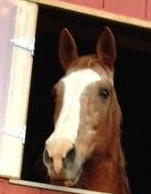
Been back on the farm more than a week now from Las Vegas. I snapped that pic to the left as I left the Rio for the last time following a 16-night stay.

It took me a while, but finally I’m sharing links to some of my favorite features posted during the World Series of Poker Main Event.

Early on I had the chance to chat with New York Times best selling author Maria Konnikova about her current book project. You might have heard something about it -- the story has been passed around the poker world the last few month’s as Konnikova writing a book “about” Erik Seidel, although that isn’t exactly what she’s doing.

Rather, the author of Mastermind: How to Think Like Sherlock Holmes and The Confidence Game is spending a year playing poker on the professional poker tournament circuit as part of an inquiry into how humans make decisions, including when faced with elements outside of our control (such as happens in poker).

Talking with Konnikova was one of my favorite half-hours of the entire trip, to be honest, and while not everything we talked about made it into this post, a lot of it did, including a fuller introduction to her study. You can read it here: “Konnikova seeking answers in the cards about life, poker, and everything.”

A couple of days after that I had another fun conversation with Vanessa Selbst, a player I’ve been covering in tournaments for nearly a decade now.

If you followed the Main Event you probably remember how Selbst found herself in a highly unusual spot only an hour or so into the tournament, running into Gaelle Baumann’s quads to be eliminated halfway through the very first level.

We talked about that hand, of course, but also about one of the very first tournaments I ever covered, the $1,500 pot-limit Omaha event at the 2008 WSOP in which Selbst won her first bracelet. That remains one of my favorite reporting experiences ever -- thanks in large part to the crazy finish -- and it was fun inviting Selbst to remember the scene.

She also neatly tied together with her comments the end of that tournament and her exit hand in this year’s Main -- check it out: “Vanessa embraces the variance.”

The cash bubble burst at the end of Day 3, and just before the start of Day 4 I spoke with one of those who’d made the money -- Kenneth “K.L.” Cleeton.

You might have heard something about this story, too. Cleeton is a 27-year-old player from Illinois who suffers from a rare neuromuscular disorder that leaves him essentially paralyzed from the neck down. He’s anything but handicapped otherwise, though -- very quick-witted and gregarious and also a good poker player, too.

Cleeton entered a contest put together by Daniel Negreanu and along with a couple of other entrants was put into the the Main Event by Kid Poker. With his father at the table providing assistance looking at cards and making bets, Cleeton survived the bubble bursting with a short stack, and both of them were unsurprisingly ecstatic about it all when we chatted just before Day 4 began.

Negreanu shared some comments as well for the post. Read about Cleeton and be energized by one of the cooler stories of the whole Main: “K.L. Cleeton continues inspiring run into Day 4.”

As the tournament wore on, a player named Mickey Craft started to get everyone’s attention thanks to his big stack and especially loose style of play. He was also kind of a character at the tables, chatting it up and obviously enjoying himself immensely.

I happened to be around when Craft won a big pot on Day 4 in an especially nutty hand. I remember watching it play out alongside the ESPN crew, talking a bit with one of them who was marveling at how crazy the poker was. I knew right then they’d be finding a way to get Craft onto a feature table soon, and sure enough that’s what happened later in the day.

Here’s that post describing the wacky hand: “Mickey Craft is must-see poker.”

Finally, if you paid any attention at all to the Main Event -- particularly to the final table -- you certainly heard about the 64-year-old amateur from Bridlington, England named John Hesp.

You couldn’t miss Hesp in his multi-colored, patchwork shirt and jacket and Panama hat. His personality was just as colorful, and by chance I ended up chatting with him on multiple occasions during his deep Main Event run, including about how the Main was a “bucket list” item for him, a bit of a diversion from his usual 10-pound tournaments in Hull.

Just before the final table (where he’d go on to finish fourth to earn $2.6 million), I posted a piece sharing some of what Hesp and I chatted about: “John Hesp’s Vegas vaction continues; or ‘When I’m Sixty-Four.’

These are just some of my favorites among the nearly 100 posts Howard Swains and I wrote over the course of the Main Event. Wanted to kind of bookmark them here, though, and also invite some more eyes to ‘em in case folks missed them before.

Labels: , , , , , , , , , , ,

Tuesday, June 24, 2014

Following the $50K

Been following the $50,000 Poker Players Championship this week (Event No. 46).

This is one that over the past few years I generally have spent at least a couple of days covering, although I don’t believe I ever covered the five-day event from start to finish. Always an intriguing one both because of the rotation of games -- they play it as an “8-game mix” tourney -- and the collection of big names who necessarily populate the field.

Just 102 took part this year, well down from the 132 who played a year ago. Donnie Peters wrote an article for PokerNews about the PPC this week, looking closely at who didn’t play -- including the usuals like Erik Seidel, Huck Seed, and Barry Greenstein -- while also talking to a few players about possible reasons for the drop-off in entries.

The cash games are cited as one reason, with some thoughts about the current state of the poker economy also considered. Seidel had a funny response when asked about not playing, noting “I don’t play triple draw so I thought I would save $48,500 and play this instead,” referring to a $1,500 event playing out this week, too.

The example of Seidel skipping the $50K makes me think also of the steep rise of “high roller” and “super high roller” events over the last three years in which he frequently plays. When the $50K H.O.R.S.E. event was first introduced back in 2006, the buy-in made it the biggest game in town, but nowadays there are two or three dozen events on the calendar with bigger price tags, not to mention that “Big One” coming up this weekend.

Still a compelling event, though, even without all the usual suspects being involved. Gonna check back over at PokerNews to see where it stands.

Labels: , , ,

Thursday, December 15, 2011

Epic Returns

Seidel at EPL Season One, Tournament Series ThreeNo, that title isn’t referring to my having realized any sort of massive ROI. Rather the latest Epic Poker League series is underway, about three months after the last one concluded.

This is the third tourney series so far of the EPL’s first season. A fourth will happen late Jan.-early Feb. of next year, followed directly by the Season One Championship in which the top 27 money winners in the four “regular season” Main Events will play in a $1 million two-day freeroll.

The third EPL Main Event (which kicked off yesterday) adopts an unusual format that recalls a couple of those “mix-max” or “split format” events from the most recent World Series of Poker Europe in Cannes, France.

If you recall, the €3,200 no-limit hold’em shootout Event No. 4 at the WSOPE (won by Tristan Wade) had players playing eight- to ten-handed on the first day, three-handed on the second, then ten-handed for the final table. Then Event No. 5, a €10,400 buy-in event won by Michael Mizrachi, had them play a mix of multi-table tournament poker and heads-up. For that one, Days 1 and 2 were played as an MTT, nine-handed the first day then six-handed the next. Then from Day 3 onward the remaining 16 players played a heads-up tourney, although they carried forward the chips they’d won from the first two days, making for uneven starting stacks for the remaining matches.

The new EPL event kind of resembles that latter WSOPE event in that it begins as an MTT then becomes a heads-up tourney at the very end. Days 1 through 4 are played as a multi-table tournament, eight-handed on the first day, then seven-handed on Day 2, then six-handed on Day 3 (or on Day 2 if they get to 36 players), then four-handed on Day 4 when they will play down to five players.

Those last five will return on Day 5 and play down to two, then those two will play best two-out-of-three heads-up, starting out the first two matches with whatever stacks they had when the third-place player was knocked out. If those two make it to a third match, they’ll reset the stacks to even for the decider. (Make sense?)

Exactly 100 players came out for this third EPL $20,000 buy-in Main Event, up from the 97 who played the second Main Event (an eight-handed MTT, won by Mike McDonald) though less than the 137 who played the first (a six-handed MTT, won by David “Chino” Rheem). Erik Seidel -- surprise, surprise -- was the overnight leader among the 61 who survived to today’s Day 2. (See updates here.)

Not sure what the format will be for the fourth EPL Main Event. It had been originally planned as a “mix max” event (and #3 as a heads-up only event), but I imagine that’s being changed. Probably will end up a straightforward MTT, if I had to guess. (EDIT [added 6:45 p.m.]: Sounds like the fourth one will be a regular nine-handed MTT, but with a shot clock! Thanks, Kevmath, for pointing me to the info.)

Neither am I sure how exactly to interpret the turnout for this week’s Main Event. Or even the relationship between turnouts and the overall health and future of the Epic Poker League. If there had been a huge drop off from the second event, that certainly would’ve been meaningful. But holding steady is a less obvious indicator of where things stand, I think.

The partnering of Epic with USA Today and Big Lead Sports announced a couple of weeks ago -- a move that seems part of that general effort by the EPL to try to move poker more into the mainstream -- is also suggestive of future machinations, though again it’s hard to say what exactly it all signifies.

Meanwhile, the finale of this third EPL Main Event will once again necessarily involve several of poker’s biggest names. Kind of expect it won’t be long before the EPL makes the move others have made to offer live streaming coverage of its final tables, although I don’t believe there is any plan for such this time around. Perhaps for the big freeroll in February?

I know I’d be curious to see that. As I am about where the EPL might be headed, generally speaking.

Labels: , , ,

Tuesday, October 19, 2010

From the Mayfair Club to Poker’s Most Exclusive Club: Harrington, Seidel Newest Poker Hall of Famers

Poker Hall of FameThe votes have been tallied and today comes the announcement that Dan Harrington and Erik Seidel have become the 39th and 40th members of the Poker Hall of Fame. As I mentioned yesterday, the newest inductees will be recognized in a special ceremony at the Rio All-Suite Hotel & Casino as part of the November Nine festivities.

Not a huge surprise to see these two emerge from the list of ten nominees. As was the case for Mike Sexton last year, various factors had combined to make Harrington a favorite this time around. And Seidel, too, had been getting a lot of attention as one of those several “gonna-get-in-eventually” future Hall of Famers whose time appeared to have come.

I think most observers will agree that both players are highly deserving.

Dan HarringtonHarrington’s four WSOP Main Event final tables -- including one victory -- is one of those jawdropping feats that has to be recognized as an accomplishment worthy of praise. The fact that he made those final tables in three different decades (’80s, ’90s, ’00s) and in events with fields of 152 (1987), 273 (1995, the year he won), 839 (2003), and 2,576 (2004) only makes it more impressive.

“Action Dan” has a second WSOP bracelet (also won in 1995) plus a World Poker Tour title (won in 2007), and has racked up about $6.5 million in tourney winnings while essentially being a part-time player. Also, his books -- especially the Harrington on Hold’em series -- have helped further establish his legacy as an important contributor to the game.

Seidel has also enjoyed a long, lucrative career with over $10 million in career tourney earnings and a whopping eight WSOP bracelets. Seidel’s WSOP wins have come in a variety of games, too, including limit hold’em, Omaha/8, pot-limit Omaha, Deuce-to-Seven, and no-limit hold’em.

Erik SeidelThe other part of Seidel’s resume that especially impresses is the fact that not only has he cashed 60 times at the WSOP, but he tends to make the most of his cashes, having made 33 final tables, too. That gets him into the all-time top five of both lists (most cashes, most final tables).

In a response to the news of his induction, Seidel made reference to his having gotten his start playing at the old Mayfair Club in New York with Harrington long ago. “Both of us refined our games at the Mayfair Club in New York,” he noted, saying “it’s an extra bonus for me to be going in with Dan Harrington” with whom he has “been great friends for my entire poker career.”

The fact that Harrington and Seidel are going in together will bring renewed attention to the Mayfair Club, a place where many others also played before becoming stars at the WSOP. Other regulars at the underground club (shut down finally in 2000) included Jay Heimowitz, Mickey Appelman, and Howard Lederer. Stu Ungar apparently would stop in there, too, as would Steve Zolotow, Paul Magriel, and others.

Mayfair Club on 'Poker After Dark'The club was featured one week on “Poker After Dark,” with club goers Heimowitz, Lederer, Appelman, Harrington, Zolotow, and Mike Shictman all playing. The club was apparently a model of sorts for the Chesterfield Club in Rounders (1998), the movie in which Seidel’s second-place finish in the 1988 WSOP Main Event (to Johnny Chan) was forever immortalized.

Both Harrington and Seidel were among the nominees on last year’s ballot, and I think when they did not get in last year just about everyone believed they would both be inducted soon. And as I say, I think the timing turned out right for both this time, partly because of the fact that both compared well to the other eight nominees.

I wrote a piece last week for Betfair Poker in which I discussed “Age and the Poker Hall of Fame.” There I pointed out how the great majority of the 38 individuals who had been inducted into the Poker Hall of Fame -- all but three, in fact -- were aged 50 and above (or were deceased) when they got in. Harrington is 64, meaning only Tom McEvoy at 65 was older among this year’s nominees. And Seidel will be turning 51 a couple of days before the ceremony in November.

Among the other nominees, only McEvoy, Linda Johnson (aged 57), and Barry Greenstein (aged 55) were also more than 50. Even though there is no specific rule regarding a minimum age for induction into the Poker Hall of Fame, I think it still remains a factor for most voters, which means when it comes down to it, those candidates who are older will be competing against one another as long as the WSOP continues to limit the number who can be inducted each year (which I have no doubt they will continue to do).

All of which probably means McEvoy, Johnson, and Greenstein each have a good chance of making it in next year, since it is doubtful there are other players aged 50 or above who will emerge between now and 2011 to challenge them.

I’ve mentioned here before how I had the chance to participate in the voting for this year’s Poker Hall of Fame as one of the members of the media panel. I’m very grateful to have been given the opportunity to participate in the process, and while I’m not going to share specifics of my vote, I will place myself in that group who believe Harrington and Seidel are both highly deserving of the honor. Congrats to both!

Labels: , , , ,

Thursday, June 10, 2010

2010 WSOP, Day 13: The Real Tournament of Champions?

Deuce-to-Seven Lowball“I just hope I don’t deal a flop.”

That’s what a dealer said to me prior to the start of yesterday’s Event No. 19, the $10,000 Deuce-to-Seven Draw Championship (No-Limit).

He had told me he’d only dealt the rarely-spread game once before, and was only half-joking, I think, when noting how he hoped not to slip into the usual routines of hold’em during this event.

Yesterday probably counts as my first superlong day of the WSOP, given that I was up early in the morning, went in to cover an event starting late in the afternoon, and didn’t get back to the home away from home until after 4 a.m. So I was up 20-plus hours, which’ll happen now and again with this gig.

I had gotten to the Rio early for the event, and when I’d mention to people I was on the 2-7 more often than not I’d get sympathetic noises or nods in return, the draw events being for some folks less than desirable to cover.

But I like a diversion from the flop, turn, and river. And with this event -- one that draws (pun intended) just about every top level poker pro one can imagine -- there was constantly something of interest to engage the mind. I’m not going to list all the stars here; go take a quick peek at the chip counts to see how incredibly stacked this field was. You’ll get an idea looking at that list how every single table had four, five, six, or even seven players those of us who are fans of poker would know.

Think about all the bracelets won by the players entered in this event! Not a stretch to claim Event No. 19 to be the real Tournament of Champions.

With all the immediately recognizable names in the field, the chip leader is a fellow named Homan Houshiar, a Canadian player who told us near night’s end that this was only the third or fourth time he’s played deuce-to-seven. You’ll hear stories like that with these less popular games, sometimes. As with the dealers, not all of the players who play an event like this -- even a $10,000 buy-in version of it -- will come to it with a great deal of experience.

Many remember the tale of how Jennifer Harman won a bracelet in this same event in 2000 having never played the game previously, and only receiving a five-minute tutorial from Howard Lederer prior to the event. Indeed, for much of the middle part of play yesterday it was a young player named Stephen Chidwick who’d raced out to the chip lead, and we learned from Maria “Maridu” Mayrinck that he’d only learned the game during the afternoon from David “Bakes” Baker yesterday afternoon!

Donnie and I handled the blogging, with Neil helping us in the field. By the end of the night the three of us had actually managed to enter about 80 of the players’ names into the counts, and were able to keep them all fairly well updated during the latter four levels of play. (During the first four levels players could still use their three allotted “add-on” chips, and so the counts -- while updated -- were not so indicative of how things were going since the chip counts page didn’t show how many of the add-on chips a player had left.)

Probably the funniest hand I witnessed yesterday was one in which Chris “Jesus” Ferguson cheekily raised and stayed pat after being dealt quads. (See the hand write-up here.) Table cracked up afterwards, with the usually stolid-seeming Ferguson laughing the loudest.

There were a lot of other interesting moments during the day as well, not all of which were related to the play.

Erik Seidel at the 1988 WSOPOne was when the dealers quizzed Erik Seidel at the end of the dinner break about the whereabouts of the visor he wore at the 1988 Main Event final table. (That's pic to the left is from Seidel playing that final hand against Johnny Chan -- who busted in Day 1 of Event No. 19 yesterday.)

Seidel said he thought his wife might have thrown it out somewhere along the way, but he agreed with the dealers it would be a hoot if he were to show up wearing it at at some future final table. He will be returning for Day 2 today. Maybe if Seidel makes it back tomorrow he’ll consider some sort of orange visor reprise.

Jeff Lisandro tries on hatsSpeaking of hats... during the dinner break I ate in the Poker Kitchen where I saw Jeff Lisandro with a couple of people who appeared to be a salesman and an assistant (I’m not sure). Last year’s WSOP player of the year was trying on hats -- an assortment of bowlers that evoke that Prohibition-era gangster image his style sometimes evokes.

I could only assume he was looking to purchase one or more. He’d put on one, walk across the hall to the restroom to check it out in the mirror, then return to try another. All looked equally cool to me, but then I would like that hard-boiled style.

Mike Matusow was talking a lot at his table, as he is wont to do. Was relating in great detail to the table the screwing he received at UB where he was cheated out of millions, a story he’s told elsewhere more than once.

Billy BaxterBilly Baxter is in this event, too. Naturally. He holds seven bracelets, all in lowball events, a fact of which just about every other player seemed aware. Many came over during play -- there was a lot of talk and visiting between tables all night -- to acknowledge “Mr. Lowball” (as John Juanda called him).

Tom “durrrr” Dwan is in this one, too, and at one point early on appeared to have successfully crossbooked action with Baxter. Both players return to similar, above-average stacks today that put each in the top ten.

Have to say I wouldn’t mind at all seeing Baxter make it deep in this one. But then, there are a lot of players I’m pulling for here. Hard not to feel like a fan with such a field.

If you want to follow the action from Day 2, skip over to PokerNews for updates as they play down from 72. The goal today is to reach a seven-handed final table today, although they’ll stop before that if it gets too late.

But if it does go late, we’ll handle it. Will happen now and again with this gig.

Labels: , , , , , ,

Sunday, July 02, 2006

A Lack of H.O.R.S.E. Sense

Poor England. Done in by penalty kicks (more accurately, a “penalty shootout”). Hell of an effort to hang in a man down for most of the second half and the two OTs. Still, had a bad feeling for England as soon as the PKs began. I suppose I understand why the penalty shootout was brought in as a way of deciding knockout stage World Cup matches, and I won’t deny they’re exciting to watch. Can’t help but feel there’s something anticlimactic, though, to have two teams battle for 120 minutes only to have the match decided in this fashion. Something like having a basketball game go several overtimes only to be settled in the end by a free throw shooting contest . . . .

Well, there’s always poker. The World Series of Poker is now well underway and like everyone else I’ve got one eye on my table and the other scanning for updated results and stories from the various tourneys on sites like CardPlayer, Poker Wire, Tao of Poker, the WSOP official site, and others. Indeed, as I write this post I’m following the final table of the $2,500 NLH 6-handed event where Joe Hachem, Dutch Boyd, and Jeff Knight are (at this moment) the last three standing.

Probably the most anticipated event at this year’s WSOP -- other than the Main Event, of course -- is Event 20, the $50,000 buy-in H.O.R.S.E. event that begins Wednesday, July 12. As most of you probably know, H.O.R.S.E. is a mixed game that combines Hold ’em, Omaha 8-or-better (also called Hi-Lo), Razz, Stud, and Stud 8-or-better (or Hi-Lo). The game changes each time the blinds go up, and all five of the games -- including Hold ’em -- are played as limit games. Usually, anyway.

Thanks in part to the H.O.R.S.E. event and the other non-Hold ’em events in the WSOP, I’ve found myself drifting over to the other games online over the last couple of days. I’ve even sat on the rail at the Razz tables on Full Tilt Poker a bit, contemplating whether or not to dip my toe in the shallow end. I have a plan of sorts for July to get back into Omaha and Stud (games which I used to play more regularly, but haven’t really played seriously for the last six months or so). Maybe by summer’s end I’ll even give one of those $5.00+$1.00 H.O.R.S.E. tourneys they run on Full Tilt a shot.

Regarding the H.O.R.S.E. event at this year’s WSOP, there have been two main bones of contention. One concerns the high buy-in, which delights some of the pros (like Daniel Negreanu, last spring’s most vocal proponent for adding the event) insofar as it virtually guarantees a field comprised primarily of serious, high-bankrolled professional players. I’ve no idea what the over-under currently is regarding the number of potential entrants. On his new weekly ESPN podcast The Poker Edge, Phil Gordon (citing Erik Seidel as an authority) suggested 85, which sounds about right. I wouldn’t be surprised at all if less than 100 lay down the 50,000 clams for this one. I think the high buy-in is a good idea, not so much because it weeds out the “riff-raff” (as some pros -- e.g., Mike Matusow -- routinely describe non-circuit players), but because it helps distinguish the event even further from the other forty-four. The high buy-in is definitely going to cause more people to pay attention, thereby creating more interest in games like Omaha, Razz, and Stud. And that’s a good thing for poker, I think.

The other controversy concerns the decision by WSOP officials to make the final table of the event No Limit Hold ’em only -- that is, essentially to end the “H.O.R.S.E.” part of the game and revert back to the familiar NLH we’ve seen endless versions of on ESPN, the Travel Channel, and elsewhere already. (Click here to see the WSOP’s official structure sheet that describes how the entire event will go down.) Concerning this issue, I’m strongly opposed to switching the format once they’ve whittled the field down to the last table. Doing so defeats the entire purpose of H.O.R.S.E., a game that allegedly tests players’ abilities to compete successfully in several limit games, none of which allow players to negate post-flop strategic advantages by going all-in. Never mind how switching to NLH for the final table -- the only part of the event that will be televised, of course -- completely counters the event’s ability to foster interest in non-Hold ’em games.

To me, giving up the H.O.R.S.E. format in favor of using NL Hold ’em to decide the winner is a lot like resorting to a penalty shootout to decide who advances in the World Cup. In both cases, you’re essentially taking the “play” out of the contest, adding a much higher degree of chance that ultimately negates (or at least compromises heavily) the test of skill the original game is supposed to represent.

It looks like its Hachem and Boyd heads-up. Ought to make for a story either way.

Hope to see some of you over at the Razz tables soon!

Labels: , , , , , , , ,


Older Posts

Copyright © 2006-2021 Hard-Boiled Poker.
All Rights Reserved.