Friday, April 22, 2016

Poker vs. Chess in Russia

Interesting item from yesterday’s Chicago Tribune regarding the rise of online poker in Russia over recent years, one point of which is to suggest how poker has now more or less overtaken chess as the national game, at least in the view of certain observers.

The article’s title, “Online poker’s killing the Russian chess star,” kind of awkwardly reprises that of the Buggles’ prescient 1980 pop hit “Video Killed the Radio Star,” the effort to do so probably misplacing the article’s emphasis somewhat.

The article does include some generalized nostalgia about the Soviet era’s chess “celebrities” -- people like Mikhail Botvinnik, Garry Kasparov, and Anatoly Karpov (none of whom is actually named in the article). And it does remark on the growth of online poker in Russia, citing figures such as the fact that 16% of Russians in 2013 played poker (up from 11% two years before) and that Russians account for 8.4% of all players on online sites.

But it doesn’t really provide a convincing causal link between the fall of chess and rise of poker. That’s not to say there isn’t a link, but the article doesn’t dig too deeply and thus doesn’t really show how poker “killed” (or is “killing”) chess.

In fact, interestingly, the real emphasis of the article has to do with current legislative efforts in Russia to legalize online poker, which as happened many times over here in the U.S. has led to studies about potential revenue and debates about whether the game’s skill component sufficiently distinguishes it from other forms of gambling.

I say the link between the decline of chess and the ascent of poker isn’t so obviously established in the article, but there is one interesting connection described. Speaking of possible federal regulation of online poker, it sounds like some of the potential revenue would be earmarked to help reinvigorate chess among the country’s population.

“In a nod to sensitivities about the decline of chess,” writes the author, “the government plans to use the tax proceeds that result to fund the National Chess Federation, so that it can foster passion for the game once more.”

In any event, it sounds like the status quo isn’t going to hold much longer in Russia as far as online poker is concerned. It’ll be interesting to see what happens next. And whether or not the government’s next move helps online poker continue to grow in popularity (and chess, too, I suppose). Or, as happened in the U.S., it has the effect of checkmating it away.

Photos: “Chess,” Tame M. CC BY 2.0; “Poker XII,” Bastian Greshake. CC BY-SA 2.0.

Labels: , , , , ,

Tuesday, July 26, 2011

The Impression of Darkness

The Impression of DarknessStill tinkering here with backgrounds. Bear with me. Haven’t quite reached identity-crisis level fretting about it, but getting there.

Longtime readers know that I stubbornly stuck with the light-text-on-dark-background for a long time, even though I knew there were a few who found it hard on the peepers. In fact, I remember a reader telling me once how the black actually made him “annoyed,” that “impression of darkness” kind of jarring with what he considered to be generally positive content.

The scheme fit with the whole noir theme, sure. But we’ve got to keep the mood at least somewhat light around here, right? I mean it is a card game we’re mostly talking about. And while I’m a cynical guy, I’m also not one to indulge too much in boundless brooding.

Speaking of staying upbeat about things, I think some took yesterday’s post as being more pessimistic-sounding than was intended. Not necessarily the impression I meant to give, but I guess it is hard at the moment even to bring up online poker in the U.S. without a touch of gloom getting in the way.

Obviously I don’t think Americans are simply going to stop playing poker anytime soon. But I think it is reasonable to assume that the lack of online options -- especially if we go a lengthy period without ’em -- will slow down the game’s growth somewhat. And from there I think it is safe to think about poker getting pushed back over to the cultural periphery, relatively speaking.

I think of a game like chess and its history in America. I’m obviously a lot more familiar with the history of poker in the U.S. than with chess, but I’m aware of the general outline of chess’s story.

Unlike poker -- a game some elements of which originated elsewhere but is essentially of American origin -- modern chess came to the U.S. via Europe long ago as a game with already established rules as well as a historical legacy. Then in the early 1970s came a “boom” of sorts for chess in the U.S., the catalyst for which being the rise of Bobby Fischer to become the top rated player in the world in 1971.

A year later came the famous Bobby Fischer-Boris Spassky World Championship match, viewed by many as a symbolic battle in the Cold War. Suddenly chess was everywhere, culturally speaking, with Fischer quickly becoming a national icon. Fischer appeared on the cover of Life magazine and other publications, was casually referred to on episodes of “The Mary Tyler Moore” and other shows, and eventually came the appearance of movies, musicals, and other cultural productions centering upon chess and/or Fischer’s story.

And more began playing the game, too. The U.S. Chess Federation boasted about 5,000 members in 1972; a year later 100,000 had joined. Chess remains popular today in America, although it is safe to say the game no longer enjoys the prominence in this country it had forty years ago. (Currently the USCF’s membership is about 80,000.)

Like chess, poker experienced a relatively sudden surge in popularity less than a decade ago. While Chris Moneymaker’s WSOP Main Event victory in 2003 is often cited as the primary catalyst, it was the ready availability of the online game that more than anything ignited the “boom.” Online poker was of course a crucial element of Moneymaker’s story with his having won his ME seat via a $39 satellite on PokerStars. And poker’s emergence on television also was considerably helped along by online poker’s advertising dollars.

Eight years later, we are a nation full of poker players, though many of us live in states without legal poker rooms. And the online options continue to decrease.

While many are wondering about how that Alderney Gambling Control Commission hearing in London regarding Full Tilt Poker is going to turn out, earlier today we learned that one of the very few remaining U.S.-facing sites, Bodog, will be withdrawing its brand from the U.S. market by year’s end. (It appears the group licensing Bodog is prepared to continue operating in the U.S. under a different name [?], but the Bodog brand’s days are now numbered as far as America is concerned.)

Many poker players perhaps don’t care about Bodog so much anymore, the games there having mostly dried up even before Black Friday. But the withdrawing of the once-popular Bodog brand from the U.S. is nonetheless significant, another apparent step toward the (hopefully temporary) shutting off of online poker for Americans. That’s the impression, anyway.

Chess may not enjoy the cultural spotlight today that it did before, but the game remains readily available and has potential for growth anew. However, unlike chess, poker is a gambling game, and thus will always raise various legal and/or moral issues every time it surfaces amid the cultural mainstream.

All of which is to say, it isn’t necessarily pessimistic to say poker’s place in the culture has been negatively affected by what has happened to online poker in this country over recent months. It’s realistic.

Let me make clear that we aren’t talking “lights out” for good as far as poker -- or even online poker -- goes in the U.S. Borrowing my reader’s phrase from before, we might call it an “impression of darkness.” (Such was the inspiration for referring to April 15 as “Black Friday,” yes?)

I think, though, that after a while, our eyes will grow accustomed to it. And then perhaps we’ll be able to see what next to do.

Labels: , , , , ,

Tuesday, August 31, 2010

“Poker and American Character” by John Lukacs (November 1963) (2 of 2)

'Horizon', November 1963Continuing today with my review of an interesting essay about poker appearing in 1963 in a scholarly journal called Horizon. The article is by the historian John Lukacs who grew up in Hungary loving poker, then moved to the U.S. following World War II. In the 17 years since the move, Lukacs had become a bit disenchanted with the development of poker here in its country of origin. (If you missed it, here is the first part of the discussion.)

We left off with Lukacs’ complaints about all games other than what he calls “classic” poker, namely those variations of poker that in his view tend to increase the chance element, making it more of a gambling game and minimizing the “psychological factors” which otherwise make poker different from (and better than) most games.

For Lukacs “classic” poker begins and ends with draw poker, and thus he speaks with equal disdain for Spit in the Ocean as he does for seven-card stud high-low. Noting how these other variations have appeared to take over in mid-20th century America, Lukacs says the “golden age of poker in the United States seems to have been from 1870 to 1920,” at which point poker’s decline began for the historian.

Women in Poker
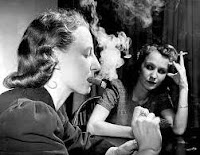
Women in PokerLukacs also isn’t happy about other developments having occurred in poker in the U.S. by the time he arrived in the country, including women starting to be allowed into the games. “This [women playing poker] began around 1920, after the Constitutional amendment ordering female suffrage” was passed. That is also when women smoking in public began to be accepted, too, something else Lukacs ain’t too crazy about.

“I believe that this wide introduction of the female element diluted the character of poker (just as Prohibition led, however indirectly, to the dilution of spirits)” argues Lukacs. Why is he of that opinion? “Women are notoriously bad gamblers,” he explains. “They find it difficult to exclude social considerations from a game that must be organized around a social occasion.” It sounds like he’s saying women are too easily distracted by the special form of socializing associated with poker, a game which he says possesses “strongly masculine characteristics.”

We recall Lukacs writes in the early 1960s, a time when such attitudes about women and even the freestyle gendering of a card game as “masculine” could often pass without being questioned. (How exactly is poker “masculine?” we might jump to ask today.) Even so, it’s easy enough to see how Lukacs’ desire to preserve “classic” poker fits with his backing of other traditions, including conventions associated with “traditional” ideas about men and women (and their not being equal).

The Erosion of the American National Character

The Erosion of the American National CharacterUltimately Lukacs ties the decline of poker to what he calls “the erosion of the American national character.” It’s a complicated, not entirely obvious point he’s making, so let me allow Lukacs to make it himself rather than try to summarize:

“The deterioration of poker, I believe, corresponds very closely to a tendency in modern American life that I find most disturbing and dangerous: the inflation (meaning the increasing worthlessness) of words -- more menacing, even, than the inflation of money. Seven-card stud poker represents a gross inflation of values. It corresponds to the development of a society where everybody goes to college until the value of the college degree is less than that of a high-school degree forty years ago; where everybody nominally owns a house but with less of a sense of permanence and privacy than the owner of a family flat in a Naples tenement; where the Great American Novel of The Generation is published at least twice, and of Our Decade at least five times, a year; and where everybody calls everybody else by their first name.”

While we might object to Lukacs’ characterization of seven-card stud (does he really understand the game?), I think we can see the general point he’s trying to make about American “values” having changed in a troubling way. Lukacs sees this overall “inflation of values” occurring everywhere -- too much reward, not enough work -- and wants to draw an analogy between that trend and the favoring of poker games in which chance is more important than skill.

“Depending on cards rather than one’s own judgment reflects, too, a deterioration of self-confidence,” says Lukacs, further clarifying what he means by that claim about the “erosion” of the American character. “It also represents a form of immaturity, a strange kind of grown-up disorderliness covering up what is fundamentally an adolescent attitude.”

I think Lukacs may well be onto something here when he associates a love of gambling with immaturity, and tries to promote “classic” poker as a “grown-up” game that demonstrates an appreciation of order, custom, and intellectual rigor (even if he’s way too quick to reject seven-card stud high-low as a game with too much gambling.)

The “Scientification” of Poker

'Theory of Games and Economic Behavior' (1944) by John von Neumann and Oskar MorgensternOne other point made by Lukacs in his essay comes out of the Cold War context in which he’s writing, an observation about the application of game theory to poker. Noting the rapid emergence of government-supported research into game theory, Lukacs is very critical of “this relatively recent American passion... for intellectualizing everything, from business to military strategy.”

And Lukacs hates, hates, hates what all this talk about probability and games has done to his beloved poker. “Thus, while on the one hand the playing of poker becomes perverted” by all of the crazy, gambling-centric variations, “on the other hand poker is given an elaborate theory and becomes an object of study -- insufficient seriousness on one end, and overseriousness on the other.”

Making reference to game theory pioneers Oskar Morgenstern and John von Neumann (authors of the 1944 work Theory of Games and Economic Behavior), Lukacs ends his article with a kind of tirade against the intrusion of game theory into poker.

He raises two primary objections here. One is that when talking about poker the game theorists (in his opinion) tend to assume “that all players are of the same temperament,” which is of course untrue.

The other objection is that -- here Lukacs quotes from John McDonald’s famous 1948 book Strategy in Poker, Business, and War -- “‘the theory of games... is based on the assumption that man seeks gain.’” Lukacs points out that when it comes to poker, many people in fact play for reasons other than to profit. “I have yet to see the man, except for the professional cardsharp, who plays poker primarily because he seeks gain. He plays for fun; and he hopes to make some gain.”

Lukacs then concludes with some more discussion of the Cold War and how poker could be said to have informed U.S. strategy while chess informed that of the Soviet Union. And in this context, Lukacs much favors the former. “Poker is a unique game because is approximates life,” says Lukacs. “That is not true of chess, which is circumscribed by a framework of mathematical rules and is therefore irrevocably artificial.”

That’s the view that causes Lukacs to reject attempts at the “scientification” of poker. He notes more than once along the way that one could never play poker against an IBM machine (the way one can play chess). That human element -- the “psychological factors” -- just cannot be replicated by a computer, says the historian.

All in all a very interesting and provocative piece, I thought, that gives the reader a good idea of poker’s place in American culture in the early 1960s -- that is, prior to the advent of the WSOP, the rise of Texas hold’em, and all of the other developments of the late 20th/early 21st centuries which have occurred to affect the game so greatly.

Labels: , , ,

Tuesday, January 26, 2010

Talking Chess, Poker, and AI

Garry Kasparov vs. Deep Blue (1997)The Russian chess grandmaster Garry Kasparov has an interesting new piece in the February 11, 2010 issue of The New York Review of Books, a review of Spanish writer Diego Rasskin-Gutman’s Chess Metaphors: Artificial Intelligence of the Human Mind. Much of the article concerns the book, but toward the end Kasparov makes a couple of interesting references to poker -- comparing it to chess and talking about both games in the context of advancing research in the field of artificial intelligence -- that I thought I’d share here.

Kasparov begins by recounting how back in 1985 -- after he had defeated Anatoly Karpov and become World Chess Champion at age 22 -- he took on 32 chess-playing computers in a much publicized event in Hamburg and beat them all. Then he talks about the later 1997 match that he lost to IBM’s Deep Blue (pictured above) and some of the reactions that event caused, both within the chess world and in the culture at large.

While many outside of chess took Deep Blue’s triumph as “as a symbol of mankind's submission before the almighty computer,” Kasparov explains how the top chess players mostly took it in stride, and were in fact surprised it had taken that long for computers to catch up. And, in fact, among the artificial intelligence community -- “the AI crowd,” as Kasparov calls them -- there was some dismay that Deep Blue, while able to defeat a human at chess, still didn’t really seem to demonstrate human “intelligence.”

“Instead of a computer that thought and played chess like a human, with human creativity and intuition,” writes Kasparov, “they got one that played like a machine, systematically evaluating 200 million possible moves on the chess board per second and winning with brute number-crunching force.” In other words, for some Deep Blue’s win represented more of a programming triumph than a particularly significant advance in the development of AI.

Kasparov notes how today pretty much any home PC has the computing capacity to run a chess program “that will crush most grandmasters.” Even so, chess remains much too complex of a game to be “solved” once and for all argues Kasparov, citing Rasskin-Gutman’s book in a couple of places to support his point. He then moves into a longer discussion of the book, which sounds appealing for those interested in chess and/or discussions of how the human mind works.

I’m not going to summarize that entire discussion here (check it out yourself, if you’re interested), but I did want to share what Kasparov says at the end of the review when he talks about how “the AI crowd” have begun to refocus their efforts away from chess and toward another game.

“Poker is now everywhere,” writes Kasparov, “as amateurs dream of winning millions and being on television for playing a card game whose complexities can be detailed on a single piece of paper.” Indeed, there was a time -- around the early 1970s -- when it looked like chess would experience a “boom” not unlike the one poker has enjoyed this past decade, although it didn’t quite pan out. I wrote a little about that a couple of years ago in a post called “The Failed Ambassador” that was occasioned by the death of Bobby Fischer.

Getting back to the subject of artificial intelligence, Kasparov continues: “But while chess is a 100 percent information game -- both players are aware of all the data all the time -- and therefore directly susceptible to computing power, poker has hidden cards and variable stakes, creating critical roles for chance, bluffing, and risk management.”

Phil Laak vs. Polaris (2007)As such, suggests Kasparov, poker is perhaps a much better game on which to focus AI research. He refers to the efforts of Jonathan Schaeffer, leader of the University of Alberta’s Computer Poker Research Group (CPRG) that has been developing poker-playing programs “Polaris” and “Polaris 2.0” that have taken on top pros like Phil Laak, Ali Eslami, and the Stoxpoker guys over the last couple of years. I actually had the chance a while back to interview Schaeffer (following that first match with Laak and Eslami, see picture), who told me he believed “one of these days -- within 5 to 10 years -- two-person, limit Hold’em will be solved.”

My sense is that Kasparov isn’t quite as confident as Schaeffer regarding the possibility of “solving” even this relatively less complex variation of poker, though he does recognize how Schaeffer’s “digital players are performing better and better against strong humans -- with obvious implications for online gambling sites.”

The question remains, of course, as to whether or not these poker-playing computers are actually thinking “like humans” or not -- that is, when Polaris 2.0 defeated the Stoxpoker guys back in the summer of 2008, to what extent did that victory represent a real advance in the creation of artificial intelligence as opposed to a mere triumph in “programming” (as Kasparov characterizes his defeat to Deep Blue)?

In any event, much as he reacted to the work of the chess programmers as having exciting implications for his game, Kasparov seems enthused about the work of Schaeffer and his colleagues at the University of Alberta, too. Referring again to poker’s growing popularity, Kasparov notes how there is a “current trend of many chess professionals taking up the more lucrative pastime of poker.”

These chess pros are smart guys. They see there’s more money to be made playing poker than chess these days. But some -- like Kasparov -- also see poker as offering other benefits, too, such as the opportunity to test ourselves in “partial information” situations in which we much learn to adapt, to weigh risk and reward, and to act accordingly.

In other words, besides being a game ripe for the study of artificial intelligence, poker can help us develop our actual intelligence, too.

Labels: , , , , ,

Friday, November 07, 2008

The Geometry of Poker

The Geometry of PokerTwo more days and the “November Nine” will finally get back at it over at the Rio. I remember being very disappointed back in early May when those rumors about having a delayed final table were finally confirmed. I was about to go cover my first World Series of Poker. I’d scheduled my return flight on July 17, planning to be there to watch the final table go down (whether or not I’d be involved in covering it). Then came the news.

No way for me to be back in Vegas this weekend, so I’m feeling some vague disappointment again at not being able to see how it all finishes up. I suppose I have gotten to “know” the nine players a bit more than I would have had the table been played back in July. I even interviewed the chip leader, Dennis Phillips, something I surely wouldn’t have been able to do without the delay.

Even so, as Lou Krieger was writing about this week, the planned hype has been fairly underwhelming. Not much in the way of non-poker media coverage, other than perhaps some extra local coverage for each of the nine (as Phillips told me about in his case).

There has been some, scant “mainstream” coverage here and there, if one looks for it. For example, there was an interesting article in The New York Times on Monday about Ylon Schwartz, the 38-year-old chess master who currently sits in fifth place with 12.5 million chips.

I’d heard Schwartz interviewed on a couple of podcasts, where he’s definitely come off as an interesting character. Kind of a hippy type, having worked a succession of low-paying jobs before getting into chess where he excelled, then poker where it sounds like he’s had an up-and-down career. Has cashed a dozen times in WSOP events, though, including more than few tourneys where he’d come close to final tables before.

In those podcast interviews, Schwartz was asked about how chess compares to poker, and the subject comes up again in the New York Times piece. In each case, Schwartz especially emphasizes two parallels.

The first is how both games reward players with good memories. “Chess players are trained to have excellent memories,” says Schwartz in the NYT article. In his interview with Phil Gordon on The Poker Edge (the 10/31/08 episode), Schwartz elaborates that chess players memorize many, many openings and endgames, as well as the history with a particular opponent, and thus must be able to draw on those memories to recognize what one’s adversary might be up to.

That parallel seems fairly understandable. The other one Schwartz makes is perhaps somewhat less straightforward (pun intended). As the author of the NYT article reports, “He said that both games have geometrical aspects. In chess, it is the shape and size of the board and positions of the pieces. In poker, it is the positions of the players betting on the hand and the number of chips they have.”

For those of us who play a lot of poker but have only a rudimentary knowledge of chess, that explanation of the poker’s “geometrical aspects” might not be crystal clear. Indeed, when I first heard him bring it up in the podcasts, I thought he might be using the word “geometrical” in the same way Harrington and Robertie do in the Harrington on Cash Games books, where they talk about the betting in no-limit hold’em being “geometrical” insofar as the bets increase dramatically from street to street (essentially using the word to indicate a steep progression, not to refer to physical space).

But that’s not what Schwartz is talking about. In the Phil Gordon interview, Schwartz elaborated a bit more on the comparison:

“Poker’s a very geometrical game,” Schwartz told Gordon. “You have to slice through a certain portion of a pie to get to a player you may feel is weak. You have to make bets and pot size properly to maybe carve out an angle to that player. And chess is also geometrical. You’re constantly trying to figure out ways to gain space and take over your opponent’s territory.”

That explanation makes a bit more sense to me. Indeed, just yesterday I had a session of PLO where I’d spotted a particularly weak player sitting to my right, and thus became very conscious about trying to size bets and maneuver my way into pots where I could challenge him heads up. Eventually, thanks to his having enjoyed a few very fortunate hands against others at the table, he’d built up a decent-sized stack, thus making him all the more inviting a target.

There are other parallels between chess and poker, such as the need for patience. And important differences, too, such as the fact that chess is a game of “complete information” while poker is not. I do like that point, though, about the “geometrical” aspects of poker. That idea of trying to “carve out an angle” or “gain space” is definitely applicable, I think.

2008 World Series of Poker Main Event final table, chip stacksIn a way, the importance of poker’s “geometry” has been further underscored by the decision not to redraw for the seating at the final table until right before they start up again on Sunday morning. As most of the players have noted in their interviews, that will be a huge factor -- at least as important as stack sizes (if not more) -- that will influence how the tourney will go.

Will definitely be following my buds’ hand-for-hand coverage over on PokerNews. Wish there was a pay-per-view live telecast or some other way to bridge even further this “space” between myself and that final table. Oh, well. I guess we have to live with the angle ESPN has carved out here.

Labels: , , , , ,


Older Posts

Copyright © 2006-2021 Hard-Boiled Poker.
All Rights Reserved.