Friday, June 17, 2016

A Game Seven Hot Take

So the NBA Finals has turned into some kind of weird, twisty-turney soap opera with six fairly non-competitive games resulting in a 3-3 tie between Golden State and Cleveland. Even if Game 7 results in yet another blowout, it will nonetheless provide an intriguing climax to an unexpectedly gripping series to punctuate the season.

One sure-fire prediction -- whoever loses the game will be forced to endure an incredible letdown. For the Warriors, it would mean failing to cap a record-breaking regular season with a title. The Cavs would similarly suffer greatly with a loss, coming one step shy of completing a never-before-accomplished comeback from 3-1 down in the finals to lose in the finals a second straight time.

I’ll add a few other predictions I’m less sure of, but in which I’m still reasonably confident. The Cavs probably won’t be as consistently brilliant as they were in Games 5 and 6. Neither will the Warriors be as consistently bad. Both will likely show some evidence of nerves, too, especially early in the game and perhaps again near the end (depending on the closeness of the score).

But here’s a less obvious prediction I’ll throw on top of the bonfire of “hot takes” that’s already starting to build, will grow higher by Sunday night, then disappear like so much ash in the wind once a result is determined. This one is probably contingent on the game being close at some point beyond the start -- i.e., in the second half, either early or late.

Here’s the “hot take”...

From the referees there will be a judgment call (or non-call) that will be agreed upon afterwards by most viewers to have affected the game’s outcome.

Every sport adjudicated by human beings involves some degree of error. Happens in poker, too, when rulings based on partial or even incorrect evidence sometimes occur, or even incorrect rulings based on clear and complete (and misunderstood or misinterpreted) evidence occasionally arise.

Over the course of an NBA basketball game, refs collectively make hundreds of decisions. They never make it through an entire game getting every decision correct, although generally do hit the mark on most of them. I’m not predicting (necessarily) that there will be an incorrect decision that will affect the outcome of Sunday night’s game; rather, I’m suggesting that some judgment call (which may or may not involve bad judgment and thus an incorrect decision) will be considered by most watching as having inordinately affected the outcome.

I guess my prediction itself involves a kind of judgment, although I’m saying most of those watching will come to the same conclusion that a key call (or non-call) more or less decided the game. It’s a prediction partly about the game and partly about how it will be discussed Monday morning, and it’s based both on the way the NBA games currently are officiated and tend to play out and the way games are scrutinized and discussed today.

Within a minute or two, the call (or non-call) will be a Vine, delivered instantly like an outlet pass starting a fast break all over the web. And many will be hot, hot, hot about what they are sharing.

Image: Emojipedia.

Labels: , , , , , , , , ,

Friday, July 31, 2015

Ten Thousand Tweets

Was noticing over the last several weeks that the total for the number of tweets I’ve sent from @hardboiledpoker was approaching 10,000. Today I got there, with the tweet I sent to announce this post being the one.

It actually has taken me a while finally to reach that milestone after first noticing I was getting close. It took me a little over a month to get from 9,900 to 10,000 tweets. I first opened my Twitter account on April 9, 2009. That was 2,304 days ago which means I’ve been averaging sending out a little over four tweets per day over the last six years-plus.

Went back today to find my first tweet, pictured above. You can see before I even get to the end of that one how I’m distracted by the medium itself, self-reflexively counting down the characters at the end.

Seeing my reference to an article about Twitter by Otis (Brad Willis), I was curious to track it down once more. I headed over to Rapid Eye Reality, the blog Brad started way, way back in 2001 (about five years before I began Hard-Boiled Poker), and found his post dated April 9, 2009 titled “Much Atwitter About Nothing.”

He begins engagingly -- as he always does -- suggesting “Twitter is the Keanu Reeves of the internet.” Then he proceeds to list by category those who were then complaining about Twitter:

  • Advertising and branding people who can’t figure out if it’s important
  • Hipsters who have to hate anything a lot of people like
  • Companies that feel like they have to use it but don’t know why
  • People who don’t know what a Twitter is and are afraid to put one in their pants
  • “My favorite criticisms,” Brad continues, “are those who use Twitter to talk bad about Twitter,” following that with a list of examples I won’t cut-and-paste here, because you’ve been reading the same kinds of statements about Twitter on your feed for the last six-plus years, too.

    “As far as I’m concerned,” Brad says, “you’re better off wringing your hands about Keanu Reeves.” That is to say, in his estimation, Twitter was hardly something to get too worked up over. Sure, like Reeves (then), it was a conspicuous part of our cultural landscape, something hard to avoid if you wanted to. That said, it was (at least then) something more or less innocuous -- an occasionally entertaining diversion.

    “I use Twitter the same as I use the blog,” he concludes. “It’s a way to communicate. If you’re in the business of communication, you should know Twitter. If you don’t, you’re behind.”

    I feel like over the years I’ve mostly thought of Twitter in a similar way, simply viewing it (and using it) as another way to communicate, although I’ve always been more inclined to express opinions here on the blog than over there. Even though I agree Twitter is real, actual communication, it still feels ephemeral to me, despite the fact that I can search back through all 10,000 of my tweets if I wish, as well as the tweets of others. And while I generally like Twitter, I do sometimes experience a kind of Twitter weariness such as I was describing a few months ago in “Time for a Twitter Break?

    If you’ve read any of those 10,000 tweets of mine and looked at the photos and other silliness I’ve broadcast there, you’ve perhaps gotten to know me a bit, much as have those who’ve read what I’ve been posting on this blog over the years. And if that’s the case, thanks for following and responding and communicating with me along the way.

    See you on Twitter, then. And definitely not on Facebook. Speaking of, the occasion of tweet #10,000 is reminding me of tweet #5,000 (pictured at left).

    Labels: , , , , , , ,

    Wednesday, April 01, 2015

    Time for a Twitter Break?

    Like many people -- especially those who have jobs that require them to be online most of the time -- I’ve gotten into the habit of checking Twitter frequently throughout the day to see what messages those I follow are sending out.

    Maybe you do this, too, clicking on TweetDeck (or whatever program) you use many times an hour, such as when a web page doesn’t load instantly or in between (and during) practically every other task you are performing throughout the day. Twitter becomes kind of a constant hum that plays behind everything you do, sometimes getting very noisy and disruptive while other times just providing a kind of mental ambience that may or may not be constructive for you as you try to get other things done.

    Something today made me think about different Twitter “styles” and how they resemble the different styles of poker playing. I think such thoughts might have been inspired by the fact that folks seemed especially argumentative on my timeline today (for whatever reason).

    Some are obviously “loose” with their tweets, like a player who plays more hands than most, while others are “tight” and only get involved occasionally. And of course, some are “aggressive” in the way they engage others on there while many are “passive” with their comments.

    The analogy can be pursued much further, if one wants. Some are clearly there just to have fun, while others perhaps view Twitter more like a job or business -- either literally (e.g., those who are tweeting with the explicit purpose to “monetize”) or in a figurative way (e.g., those who are genuinely trying to “profit” in some way from their interactions over Twitter). In other words, some “play” at Twitter while others “work” at it (or appear to, anyway).

    Twitter is also like a poker game insofar as those who “take a seat” do so voluntarily, and in fact could be said (in a way) to have consciously selected the “game” or at least to have chosen the other players by following them. That said, people can retweet others and can introduce lots of other content into your timeline that you haven’t necessarily “chosen” to read or see. But for the most part we are mostly able to manage the “game” somewhat, not having to “play” with those we don’t wish to.

    This latter aspect of Twitter makes me reluctant to complain about it -- that is to say, if I find the chatter tedious or wearying or in any way unpleasant, I’ve really only myself to blame as no one forced me to log on to read (or “sit down” and “play”). And besides, the people whose tweets I’m reading I’ve willingly chosen to follow, anyway.

    My own Twitter game has become increasingly “tight-passive” over the last year or two, I think. I only occasionally tweet -- I probably average one or two a day -- and usually only to crack jokes, link to new blog posts, or share funny photos from the farm. Perhaps because I became an adult well before social media or even the internet turned into such a big part of our lives, I am mostly hesitant to share much in the way of personal details over Twitter, nor am I that encouraged to engage in even benign conversations about much of anything.

    It still seems odd to me to have a “conversation” with someone with a big crowd “watching” -- a lot more odd than playing a hand of poker in front of a table full of others who aren’t in the hand.

    In other words, I’m content mostly to fold, only playing once in a while in a very low-risk way. Meanwhile I watch others battle over pots, although lately I’ve started to realize I’m not always enjoying that, either.

    I’ve written here before about how I have mostly avoided Facebook entirely, only having had an account over there early on for a short while before deleting it. I’m thinking I might start “sitting out” of Twitter, too, if only just to take a break and see how I like not always having the “game” going.

    Taking breaks from poker is often helpful to stay refreshed and keep one’s level of interest and engagement up. Maybe it’s time to do something similar with Twitter. (And no, this ain’t an April Fool’s gag.)

    Labels: , , ,

    Monday, August 13, 2012

    Zynga Again

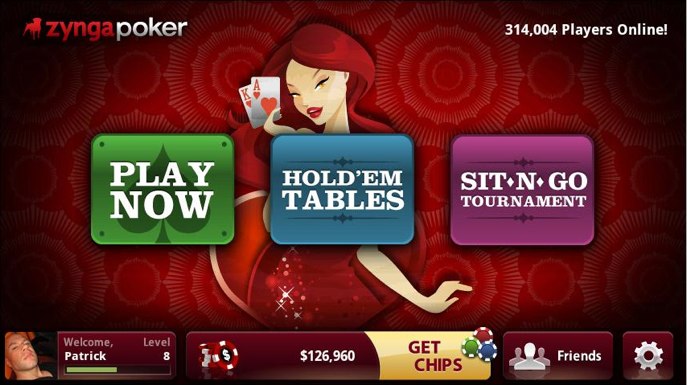
    Zynga PokerA week ago Mark Pincus, co-founder and CEO of the social game provider Zynga, indicated during a conference call with industry analysts that the company would likely be launching a real money online poker game in 2013.

    I’ve mentioned here before my dislike of Facebook and how I don’t have an account. I did once upon a time, although I used it very little and ultimately deleted it once I became uncomfortable with all of the privacy-related issues. Yeah, I saw that story on the Forbes site last week about how some are wanting to suggest that being a “Facebook abstainer” makes a person “suspicious,” but in truth that seemed mostly just another dumb internet story-slash-bit-of-gossip that got passed up and down the virtual grapevine.

    You know, like people often do on Facebook. (And on Twitter, which I do use.)

    When I did have an account I tried out the Zynga poker game a few times. Like just about every online poker game not called PokerStars, I found it clunky and lacking in various ways, thus making hard to stay interested long enough to mess with it for long.

    That said, I nonetheless remain interested in reading about Zynga and its plans. Am kind of fascinated, actually, with the whole idea of players currently spending real money to purchase poker chips with which to play on the site. And intrigued by what might happen when the real money games finally come to those non-U.S. countries (mostly in Europe) where Zynga can presently offer such.

    Zynga stock has been down significantly since its initial public offering last year. A piece on Bloomberg last week about how Zynga’s shares had fallen during the second quarter of this year spelled out how three games -- Farmville, Cityville, and Zynga Poker -- made up 60% of the company’s revenue during that period, with poker representing 18% of it.

    It’s been reported in various places that less than 3 percent of people playing Zynga games (including poker) ever spend any real money on them, and those that do apparently spend very little on average -- like just a couple of bucks a month. Of course, with 33.8 million active players playing 55 million hands of Zynga poker each day (according to Venture Beat), even those modest numbers end up producing some decent cabbage.

    As reported in an article on Tech Crunch about the conference call, Pincus talked about how Zynga had various real money gambling games “in development” (i.e., not just poker), and that they “intend to release them into markets that are regulated and open, subject to our getting licensing.” He also noted how the U.S. is “obviously an attractive market” but also obviously not open for business at present.

    When it comes to online poker, Zynga apparently is looking at possibly buying the Ongame Network -- or at least some of their online platforms -- to help get into the online poker game, as Nick Jones mentions in a report about Zynga for PokerFuse. See Jones’ article for a terrific (and comprehensive) overview of the whole history of Zynga thinking about getting into the business of offering real money games online.

    Other Zynga casino-type games like Zynga Bingo and Zynga Slingo (which sort of mixes slots and bingo) are quite popular, too, and I would imagine versions of them are also being developed for this real money launch next year. No idea what the scene is currently when it comes to online casino sites about which one can learn more here, but I imagine Zynga jumping into it would have significant effect.

    I remember many years ago writing a couple of posts here (Part 1 & Part 2) about online poker and how it had kind of an “outlaw” status in two different ways: (1) it’s gambling, which automatically represents something morally objectionable for some; and (2) it’s online, which also made it suspect for various reasons.

    Feel like that latter issue -- which would include people having once had a lot of hesitation when it came to sending real money to and fro over the internet -- has diminished significantly since I wrote those posts. People seem ready to share a lot more than their credit card or bank info online these days.

    What that attitudinal shift might mean for Zynga, who knows? Like I say, while I don’t play Zynga poker and am essentially on the sidelines when it comes to the company’s plans to move into real money games, I’m curious to see what comes of it all. And what effect Zynga’s next moves might have (if any) on online poker in its current state.

    Labels: , ,

    Friday, January 20, 2012

    A Zynga Zinger

    Zynga PokerI have played Zynga poker a few times on my iPhone. I think I logged onto Facebook once long ago to play, although as I have noted here before I am so strongly averse to Facebook I essentially ignore the account I have. In fact, my distaste over having to log into the Facebook account in order to get to the game on my phone has prevented me from opening it more than just a few times out of curiosity.

    But there are millions who aren’t reluctant like me who love playing Zynga poker. Like eight million a day, or something, and over 30 million playing each month. Thus today’s news regarding Zynga Poker perhaps wanting to get involved with real money games isn’t utterly surprising, though it is still a bit of an eyebrow-raiser given how it follows a long sequence of suggestions to the contrary.

    In fact, it was only just a couple of months ago that Zynga Casino General Manager Lo Toney was telling eGaming Review that his outfit had “no plans to enter the real-money market.” That echoed a sentiment Toney and the Zynga folks had been reiterating for most of 2011, including after Black Friday when the online poker world as it previously existed was suddenly turned upside down.

    The Entities over at Wicked Chops are today pointing us to a story on a site called “All Things D” in which an unnamed Zynga spokesperson is telling them “that there’s an interest in the real money gambling market” among (some? many? a few?) Zynga players and that Zynga is “in active conversations with potential partners to better understand and explore this new opportunity.”

    In an Insider piece the Entities consider the many steps needed before Zynga could enter the real money online poker market outside of the U.S., let alone be part of the game here in the States should legislation allow that to occur. The “All Things D” article actually breaks down the situation quite well itself, if you’re interested in reading more about where things presently stand for Zynga and its prospects.

    Zynga PokerThe timeline would include getting a real money platform together, developing it, launching the sucker outside of the U.S., then following the path of other European sites have done and form a partnership with a U.S. casino brand in anticipation of legislation opening the door to America. All of which would take a while.

    It is interesting to step back and contemplate what this possible crossover by Zynga from “social gaming” to real money gambling might look like. It makes me think of two possible futures for online poker, both very unlike one another and different as well from what we all grew accustomed to during the “rise and fall” of online poker in the U.S. over the past decade.

    There’s the version in which online poker undergoes some sort of transformation to become something more like social gaming as it presently exists, only with real dollars going back and forth in a more conspicuous way than is currently the case with most games. (Real money exchanges do occur in “social gaming” -- in significant amounts in some cases -- although the majority of those who play such games are not part of that segment of the player base engaging in such.) In other words, a future game consisting of a weird “kinda-sorta-poker” that is even further removed from the live game than online poker has been.

    Then there’s the heavily-regulated version of online poker that federal or state governments might allow to happen in which game play options will be necessarily limited, with all sorts of assumptions we grew to make about online poker getting thrown out as no longer permissible (e.g., multitabling, cash transfers, certain game variants, other volume-limiting restrictions, etc.). This version would be like the old game, but with lots of missing pieces players will initially complain about before either accepting the changes or giving up.

    As I think out loud about this, it occurs to me that there is probably a third future for online poker in the U.S. that I’m not smart enough to envision. I still think whatever it turns out to be, it will be so markedly different from what we experienced before as to be unrecognizable in comparison.

    (EDIT [added 8:30 p.m.]: For more on the Zynga speculation -- and why that possible future in which the Facebook game becomes a real money player in online poker is not necessarily likely -- see Bill Rini’s post "Zynga Ready for Real Money Gaming or Trying to Hide Failures?")

    Labels: , , , ,

    Friday, December 02, 2011

    Talkin’ Bitar, Facebook, and Bodog

    Wicked Chops InsiderA few items stood out this week among the various articles and headlines falling under the “poker news” heading.

    F-Train’s lengthy feature on embattled and indicted Full Tilt Poker CEO Ray Bitar that appeared on the Wicked Chops Insider site was damned riveting. He interviewed a number of Full Tilt Poker employees who while remaining anonymous otherwise opined openly about the “rise and fall” of Bitar and FTP.

    It’s an enlightening read start-to-finish, in truth an important part of a larger narrative about the history of online poker that currently exists only in fragments all over the web. Haley Hintze’s forthcoming book on the UB/AP scandals will be another important part of that story, too. (By the way, Haley has an interesting new post up this week regarding Phil “The Chairman of the Board” Tom, father of Absolute Poker’s also-indicted owner Scott Tom, a story that kind of resonates with the Bitar article in a couple of spots.)

    As I was talking about here a couple of weeks ago, one needs a subscription to read the Wicked Chops “Insider” pieces, although the cost for one is quite modest. As indicated by a minor furor on Twitter prompted by the appearance of F-Train’s article earlier this week, there are some who are opposed to the idea of paying anything for this variety of what might be called “intellectual property” online.

    As I think I implied in my post a couple of weeks ago, I definitely share some of that same skepticism. Nonetheless, I have gotten myself a subscription to the Insider Wicked Chops site, partly out of simple curiosity, and partly out of a desire to support some friends and colleagues. Whether you choose to or not is your call, but if you do, a captivating read awaits.

    Facebook logoSpeaking of transitioning into the real-money world, another story of note this week concerned the social media behemoth Facebook contemplating entering into agreements with PokerStars, 888, and a half-dozen other online gaming companies. The report appeared on another subscription-only site, the eGaming Review, the cost of which is much too prohibitive for your short-stacked friend. But Paul Hoppe offered a nice summary on PokerFuse that provides some details.

    It sounds like Facebook may follow the affiliate model and start directing users (not U.S., of course, and over 18 years of age) to the online gambling sites. It’s further possible that the site could let some companies work up apps that would run within Facebook, too. In any case, should Facebook make this step they’d instantly become a massive player in real money online gambling outside the U.S. (and maybe, eventually, in the U.S., too).

    While I have a Twitter account (@hardboiledpoker) I use fairly often, I have continued to resist Facebook pretty much altogether. I do have a Facebook account, created mainly to set up a page for my novel, Same Difference. But don’t bother “friending” me or anything, because I almost never log in.

    Part of it is because I’m too lazy to get in there and learn how to use the site, but I’m mostly staying off because of what sounds like a constant need to update settings in order to keep Facebook (and who knows who else) at arm’s length from my bidness. Not to get all Tao of Fear or anything, but I’m half-convinced if I log into Facebook for more than a minute or two I’ll wind up under such heavy surveillance I might as well be part of a Witness Protection Program.

    Bodog's new anonymous tablesFinally -- to segue to one last story from this week -- this desire to remain anonymous online came up again with Bodog’s announcement that they were suddenly removing all usernames and avatars from cash games and tournaments. Can no longer see mucked cards in hand histories anymore, either (if you can even see HHs at all -- I am not 100% clear on that).

    The move is being dubbed as further underscoring the “Recreational Poker Model” the site is championing since it thwarts the use of HUDs or tracking programs to compile data on opponents. Whether it hurts or helps the recreational player is in fact an issue over which reasonable people might disagree. In any case, this development follows a move back in September to remove full tables from being listed in the lobby, thus making it harder for sites like PokerScout to count players. (Read more on that here.)

    I still have an empty account at Bodog, a site on which I used to regularly back in the day. I haven’t bothered to log in over there in a good while, partly because I tend to work on my laptop (a Mac) and not my desktop (a PC), and Bodog doesn’t run on the Mac.

    While the idea of non-trackable, anonymous play might sound okay, not being able to consult my hand histories seems highly problematic, particularly if any suspicions regarding cheating/collusion were to arise. Again, while I’ve always been highly circumspect about putting cash on an online poker site, I’d be even more so when it came to a site where there were no identifiers at all for players, nor any simple way of keeping track of your play. (For more concern being expressed about the new anonymous tables, see this article over on Pocket Fives.)

    Sure is a wild, weird world online. Thanks again for tripping over to my little corner of it this week.

    Labels: , , , , , ,

    Tuesday, October 12, 2010

    The Urge to Keep Writing

    I have this obviously malfunctioning mechancial pencil...I have this obviously malfunctioning mechanical pencil sitting here next to the computer. There’s a picture of me trying to use it -- again -- even though it doesn’t work properly.

    It’s one of those throw-away, cheap plastic ones that comes with a few pieces of lead which once you get through you’re meant to toss the sucker in the garbage. That is to say, it isn’t designed to be used for very long, as it doesn’t really accommodate adding more lead the way the slightly more expensive ones do.

    When I shake the pencil I can hear a couple of pieces of lead remain, and so am reluctant to get rid of it. But there’s definitely something wrong with it. Whenever I grab the thing to jot down a note, it only takes a few strokes for the lead to disappear mischievously back into the plastic tube. Notice up above how I couldn’t even make it through the last word of my short note.

    I click the top a few times and begin anew, but if I press onto the paper with any force at all the piece of lead gets pushed back in once more. Still, I keep using the stupid thing, usually cursing a couple or five times before I get through whatever it is I was jotting down.

    The note I was taking related to an idea I had for today’s post -- something about the blog itself. Didn’t have anything too definite in mind, but rather just wanted to ask for some feedback about what readers think about blogs such as this one and their current place in the larger scheme of things.

    I’ve remarked before here how when I began the blog more than four years ago, there seemed to be hundreds of folks out there writing about poker on a regular basis, covering an amazingly wide spectrum of styles and abilities -- both writing-wise and poker-wise. But the rise of Facebook, Twitter, and other forms of interacting-slash-communication over the last couple of years has clearly edged blogs over into a more specialized location of this here virtual community we got goin’.

    Such an observation was already being made by many over a year ago -- perhaps even earlier than that. Not just about poker blogs, but blogs, generally speaking. Most directly tied the so-called “decline of blogs” to the rise of other forms of “social media” such as the quick-hitting Twitter or other, non-verbal types of communication (e.g., fast-streaming audio and video, images, even games) with which those of us who use the internet on a regular basis are now very familiar.

    Just think for a moment how you would spend an hour “surfing” on the internet in 2006 and compare it to what you do during that same hour today. How much of that time is spent reading articles (or blog posts) of more than 500 words today? How much in 2006?

    When I began Hard-Boiled Poker, I did so because I enjoy poker and writing, and thought it would be fun to combine those two pursuits in a poker blog. I posted regularly -- even early on, when I wasn’t sure anyone at all was reading -- for no other reason than because it was fun to do. Over time I did attract a few readers, then a few more, then eventually found myself having joined what I experienced as an especially cool community of poker-lovin’ writers and readers.

    My goal at first was to try to post every other day, which I essentially did for the first year-and-a-half of keeping the blog. I finally got wise to how folks read a lot more during the week than on Saturdays and Sundays, and so starting in January 2008 I decided to begin posting every weekday. This I’ve somehow managed to do without fail for what is now almost three years, even sometimes posting more than just weekdays, but adding posts on weekends, too (such as when I’m covering a live event).

    As I sat here this morning fighting with that damned pencil once again, I recognized that there’s something maybe a little stubborn about posting with such regularity. I continue to get lots of hits, and I know from the feedback I receive (both in comments and via other means) that folks are reading. Even so, I can’t help but think I could perhaps change the way I am contributing to our ongoing conversations about poker.

    Not saying I’m planning any big change right away, but just wondering what others might think. I continue to enjoy keeping the blog, and only rarely do I experience writing my weekday post as something arduous. Sometimes I have other writing assignments or responsibilities that make it harder to keep to my schedule -- and occasionally, like today, force me to post a little later in the day than I would otherwise. (Included among those other tasks is the writing of a second novel, to which I’m increasingly wanting to devote more time, too.)

    While I get a lot of personal satisfaction out of writing my posts here, I’m also now very cognizant of having an audience -- much more so than when I began the blog -- and so try with every post to provide something of value to the reader. It is my hope with every post that the reader who makes it all of the way to the end has gotten something from doing so... that is, feels the five minutes or so was time well spent.

    But as I mentioned above, I sense it becoming more difficult these days to tear many away from Facebook or Twitter or other places for those five minutes. So by writing another post here today, am I being inflexible by doggedly sticking to the same routine? Like with the pencil? Or like with my poker playing, where I also tend to stay with the familiar, perhaps to my detriment.

    F-Train wrote a thoughtful piece at the end of last week titled “The Decline of Poker Writing” in which he addressed a few different issues regarding the current state of “poker media” and the availability (and quality) of jobs within that small world. I may be addressing a related issue here when I suggest that the decline in poker writing (in the form of blogs) is related also to a decline in poker reading -- speaking quantitatively, that is.

    If any of these musings inspired some thoughts of your own, do share ’em. Thanks once again to those who took the five minutes and made it to the end of the post. And once again, I sincerely hope it was worth it.

    Labels: , , , , ,


    Older Posts

    Copyright © 2006-2021 Hard-Boiled Poker.
    All Rights Reserved.