Seeking Sequels
I began the week going to see a sequel (George Romero’s Dawn of the Dead). Then yesterday I wrote kind of a belated sequel to a post I’d written long ago. Today I’m still in “follow up” mode, wanting to continue to discuss various items that came up during the week.
 On Tuesday, I wrote a post called “A Heads Up for the WSOP (Courtesy the L.A. Poker Classic)” in which I commented on how over at the L.A. Poker Classic they had followed an interesting double-elimination format for their $10,000 buy-in heads up tournament. I noted that I thought the World Series of Poker might consider following such a format as well since doing so tends to lessen the overall effect of giving players byes, something that becomes necessary if the tourney is not capped at some exponent of two (e.g., 64, 128, 256, 512, etc.).
I heard Vivek “Psyduck” Rajkumar, winner of the LAPC heads up event, interviewed a couple of times this week (on PokerRoad Radio and the Two Plus Two Pokercast). I’d heard Rajkumar interviewed before -- a very likable, smart guy for whom it is no surprise to hear he had a lot of friends and fans pulling for him on the rail.
On one of the shows he was asked how old he is and he answered “22 and a half.” Childlike? Nerdy? Who cares? I personally am a fan of making note of the half-year.
Rajkumar’s win pushed him up over the $2 million mark in career earnings already (he won the WPT Borgata last September), so not only is he likable, he’s obviously a player. On the Two Plus Two show he explained how he made his way through the losers’ bracket at the LAPC to win the sucker, and pointed out how those over on that side had to win more matches than those who managed to stay in the winners’ bracket. That meant by the time he faced Chris Moore in the final, he’d already won nine or so matches while Moore had only had to win six to get to that point. And, of course, Rajkumar had to beat the previously-undefeated Moore twice to take the title.
Sounded like besides reducing the relative significance of byes, there were other ways the double-elimination format further tempered the luck factor -- especially welcome when the event has a $10,000 buy-in (as is the case for the WSOP heads up event this summer). Also sounded like there were some complaints at the LAPC about the unwieldy nature of the event, which took three long days to complete even though only 111 players competed. That latter problem makes me think there is little chance the WSOP will bother with trying any sort of double-elimination format (since they’ve only allotted three days for the tourney). Understandable, but lamentable.
(The pic, by the way, is from a thread on 2+2 celebrating his win -- Rajkumar has lots of friends/fans over there, for sure.)
 On Wednesday, I wrote in “What Do the Numbers Show?” about one statistically improbable session of limit hold’em I had played this week. Had another highly unlikely event occur yesterday while sitting at two six-handed LHE tables ($0.50/$1.00).
I had roared out to a fast start, and in fact was up over 30 bucks within just 100 hands, thanks in large part to having had the good fortune of sitting across from some especially poor players. (The river is no time to bluff check-raise, dontcha know.)
It was right about then when I was dealt
 in the cutoff at one table. Then, at the other table, I received
  in the big blind. Just twenty seconds apart, say the hand histories.
At the first table, I open-raised and had both blinds call me. The flop came

 . The SB bet, the BB raised, I three-bet, and only the BB called. The turn was the
  , and the BB -- now down to just $1.75 -- check-raised with the last of his stack. The river was a five, and he turned over
 to take the nearly ten dollar pot.
Meanwhile, at the other table a late position player had raised and I reraised with my pocket rockets from the BB. He called, the flop came

 , I bet, and he called. The turn was a queen, and we ended up capping it. (I think I was a little agitated from losing at the other table -- not much reason to think I’m good here.) A five came on the river here, too, and I check-called my opponent’s bet. He showed pocket sixes for the flopped set, taking the $13.75 pot.
Nutty stuff. Had a bit more misfortune after that (flopping a set with pocket queens, then losing to 7-4 when he chased down a gutshot), but ended up climbing back up close to my previous high mark for the day before quitting.
February is going pretty well, all things considered. Not as well as January, but still winning. And made Silver Star on PokerStars, too, meaning I’ll have an additional cash bonus to claim once I get to 5,000 FPPs to go along with that deposit bonus I wrote about last week.
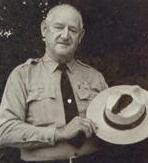
(Guinness Book of World Records fans might recognize the above picture -- that’s Roy Sullivan, the U.S. forest ranger who survived being struck by lightning seven times. Quite the occupational hazard, eh?)
 Then on Thursday, I was once again “Speaking of . . . Online vs. Live.” There I was soliciting others’ thoughts regarding the different skill levels one encounters online versus live. Got a lot of very thoughtful and enlightening comments from several live game players on that one -- check ’em out.
The general consensus appeared to confirm Bart Hanson’s claim that the play at live games is much, much less tutored than what one normally runs into online, with most saying his suggested 10-to-1 ratio rang true. That is, according to Hanson, a live $5/$10 no-limit hold’em game plays about the same as a $0.50/$1.00 online NLHE game in terms of how savvy one’s competitors tend to be.
Interesting, for sure. I have a Vegas trip planned in April, during which I’ll surely try to play some. It’s hard, though, to imagine just jumping into a game the stakes for which I’m not really mentally prepared to play. When one plays live as rarely as I do, one doesn’t want to go drop a large chunk then have to live with that for several months before going back.
(The above graph from GraphJam, natch.)
Finally, while we’re on the subject of continuations, the ongoing saga of The Hard-Boiled Poker Radio Show should be revived here very soon, with episode 14 just around the corner. Will give a shout here & on the show’s blog when that happens.
As they say, to be continued....
 On Tuesday, I wrote a post called “A Heads Up for the WSOP (Courtesy the L.A. Poker Classic)” in which I commented on how over at the L.A. Poker Classic they had followed an interesting double-elimination format for their $10,000 buy-in heads up tournament. I noted that I thought the World Series of Poker might consider following such a format as well since doing so tends to lessen the overall effect of giving players byes, something that becomes necessary if the tourney is not capped at some exponent of two (e.g., 64, 128, 256, 512, etc.).
I heard Vivek “Psyduck” Rajkumar, winner of the LAPC heads up event, interviewed a couple of times this week (on PokerRoad Radio and the Two Plus Two Pokercast). I’d heard Rajkumar interviewed before -- a very likable, smart guy for whom it is no surprise to hear he had a lot of friends and fans pulling for him on the rail.
On one of the shows he was asked how old he is and he answered “22 and a half.” Childlike? Nerdy? Who cares? I personally am a fan of making note of the half-year.
Rajkumar’s win pushed him up over the $2 million mark in career earnings already (he won the WPT Borgata last September), so not only is he likable, he’s obviously a player. On the Two Plus Two show he explained how he made his way through the losers’ bracket at the LAPC to win the sucker, and pointed out how those over on that side had to win more matches than those who managed to stay in the winners’ bracket. That meant by the time he faced Chris Moore in the final, he’d already won nine or so matches while Moore had only had to win six to get to that point. And, of course, Rajkumar had to beat the previously-undefeated Moore twice to take the title.
Sounded like besides reducing the relative significance of byes, there were other ways the double-elimination format further tempered the luck factor -- especially welcome when the event has a $10,000 buy-in (as is the case for the WSOP heads up event this summer). Also sounded like there were some complaints at the LAPC about the unwieldy nature of the event, which took three long days to complete even though only 111 players competed. That latter problem makes me think there is little chance the WSOP will bother with trying any sort of double-elimination format (since they’ve only allotted three days for the tourney). Understandable, but lamentable.
(The pic, by the way, is from a thread on 2+2 celebrating his win -- Rajkumar has lots of friends/fans over there, for sure.)
 On Wednesday, I wrote in “What Do the Numbers Show?” about one statistically improbable session of limit hold’em I had played this week. Had another highly unlikely event occur yesterday while sitting at two six-handed LHE tables ($0.50/$1.00).
 I had roared out to a fast start, and in fact was up over 30 bucks within just 100 hands, thanks in large part to having had the good fortune of sitting across from some especially poor players. (The river is no time to bluff check-raise, dontcha know.)
It was right about then when I was dealt
in the cutoff at one table. Then, at the other table, I received in the big blind. Just twenty seconds apart, say the hand histories.At the first table, I open-raised and had both blinds call me. The flop came
. The SB bet, the BB raised, I three-bet, and only the BB called. The turn was the , and the BB -- now down to just $1.75 -- check-raised with the last of his stack. The river was a five, and he turned over to take the nearly ten dollar pot.Meanwhile, at the other table a late position player had raised and I reraised with my pocket rockets from the BB. He called, the flop came
, I bet, and he called. The turn was a queen, and we ended up capping it. (I think I was a little agitated from losing at the other table -- not much reason to think I’m good here.) A five came on the river here, too, and I check-called my opponent’s bet. He showed pocket sixes for the flopped set, taking the $13.75 pot. Nutty stuff. Had a bit more misfortune after that (flopping a set with pocket queens, then losing to 7-4 when he chased down a gutshot), but ended up climbing back up close to my previous high mark for the day before quitting.
February is going pretty well, all things considered. Not as well as January, but still winning. And made Silver Star on PokerStars, too, meaning I’ll have an additional cash bonus to claim once I get to 5,000 FPPs to go along with that deposit bonus I wrote about last week.
(Guinness Book of World Records fans might recognize the above picture -- that’s Roy Sullivan, the U.S. forest ranger who survived being struck by lightning seven times. Quite the occupational hazard, eh?)
 Then on Thursday, I was once again “Speaking of . . . Online vs. Live.” There I was soliciting others’ thoughts regarding the different skill levels one encounters online versus live. Got a lot of very thoughtful and enlightening comments from several live game players on that one -- check ’em out.
The general consensus appeared to confirm Bart Hanson’s claim that the play at live games is much, much less tutored than what one normally runs into online, with most saying his suggested 10-to-1 ratio rang true. That is, according to Hanson, a live $5/$10 no-limit hold’em game plays about the same as a $0.50/$1.00 online NLHE game in terms of how savvy one’s competitors tend to be.
Interesting, for sure. I have a Vegas trip planned in April, during which I’ll surely try to play some. It’s hard, though, to imagine just jumping into a game the stakes for which I’m not really mentally prepared to play. When one plays live as rarely as I do, one doesn’t want to go drop a large chunk then have to live with that for several months before going back.
(The above graph from GraphJam, natch.)
Finally, while we’re on the subject of continuations, the ongoing saga of The Hard-Boiled Poker Radio Show should be revived here very soon, with episode 14 just around the corner. Will give a shout here & on the show’s blog when that happens.
As they say, to be continued....
Labels: *the rumble, Bart Hanson, limit hold'em, Vivek Rajkumar
posted by Short-Stacked Shamus at 2/27/2009 08:37:00 AM
0 comments


 in the big blind. I checked, and the flop came

 . I was still good, but now there’s the spade flush to worry about as well. I went ahead and pumped $1.60 (a pot-sized bet) in the middle. I’ll admit I’m influenced here by the relatively small stacks. I only had $12.45 when the hand began, so there was not much reason to be cute. Again, both of my opponents just called. One could also have Broadway here, but I’d have expected a raise if so. Pot up to $6.40.
 . Worst I can do is chop. In these Bodog hand histories, there’s a timestamp for every single action, so I can tell you with confidence that I waited exactly ten seconds before acting on that river card. That was deliberate. I then bet one dollar.

 . Wha? He’d flopped a pair of aces (and a pretty hopeless straight draw), turned a flush draw, then rivered a jack-high straight. I won the $28.05 pot -- a nice one by my standards, never mind the stakes.

 . Three limped, I completed, and the big blind checked. The flop came
 . I wasn’t too interested in this one, but when ShowMeMoe bet a quarter into the fifty-cent pot and no one else came along, I decided to take one off. The turn brought the
  . How do you do? Broadway. Nice to meet you again.
 and again I had the good fortune of ending the hand with the nuts. I took four seconds to bet the pot, and ShowMeMoe took half that long to call me. His hand?
 . Top two and another busted flush. $8.95 to Shamus.







